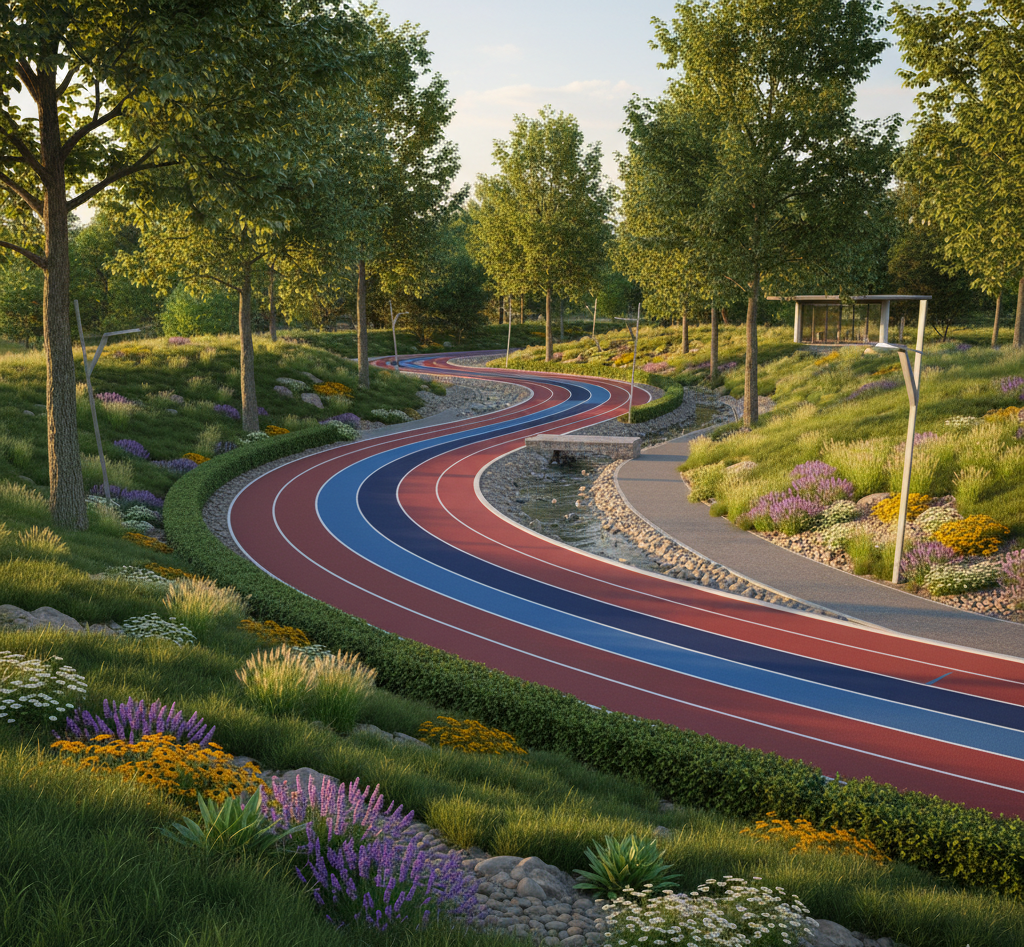
A well-designed jogging or athletic track isn’t just about the surface — the surrounding landscape plays an equally vital role in improving safety, beauty, and usability. Professional track surrounding landscaping transforms a plain sports area into a visually appealing, eco-friendly, and functional fitness environment.
Whether it’s a 400-meter athletic track, school jogging circuit, or community fitness trail, integrating quality landscaping around the track enhances the experience, prevents soil erosion, provides natural shade, and boosts overall sustainability.
This guide covers everything you need to know about track surrounding landscaping design, materials, and standards for modern sports and recreational spaces.
🌿 What Is Track Surrounding Landscaping?
Track surrounding landscaping refers to the planning, planting, and design of the green zones, seating areas, pathways, and drainage systems around a jogging or athletic track.
The goal is to create an environment that:
-
Promotes aesthetic appeal
-
Improves air quality and comfort
-
Ensures proper water drainage
-
Provides safety and functionality for users
Landscaping doesn’t just decorate the area — it integrates nature, design, and engineering to support long-term sustainability and usability of the track.
🏞️ Importance of Landscaping Around Tracks
Landscaping around a track serves multiple purposes beyond aesthetics. Proper design directly affects safety, comfort, and maintenance.
1. Safety Enhancement
-
Soft landscaping (grass, rubber mulch, or turf) around tracks prevents injuries from falls.
-
Trees and shrubs serve as windbreaks and reduce glare.
2. Environmental Benefits
-
Plants improve air quality and reduce heat buildup around the track.
-
Permeable surfaces prevent flooding and erosion.
3. Aesthetic Appeal
-
Beautifully landscaped surroundings increase visual value.
-
Ideal for schools, clubs, and residential complexes where appearance matters.
4. Comfort & Usability
-
Trees offer natural shade for joggers and spectators.
-
Benches, rest zones, and lighting improve user convenience.
5. Low Maintenance & Longevity
-
Controlled landscaping reduces dust, debris, and surface damage.
-
Well-planned drainage prevents water stagnation and surface wear.
🧭 Design Standards for Track Surrounding Landscaping
Every track requires a customized landscape design depending on its type, purpose, and space availability. Below are the standard design elements used in professional track landscaping:
| Element | Specification / Standard | Purpose |
|---|---|---|
| Perimeter Green Belt | 2–5 meters wide around the outer edge | Provides aesthetic buffer and safety zone |
| Drainage Channel | 1–2% slope away from the track | Prevents water accumulation |
| Planting Zone | Non-invasive, low-maintenance plants | Enhances greenery without damaging the surface |
| Walkways / Pathways | 1.2–2.0 meters wide | For spectators and maintenance staff |
| Benches / Sitting Zones | Every 50–100 meters | Rest and relaxation spots |
| Lighting Poles | 15–20 meters apart | Ensures night visibility |
| Safety Fencing / Barrier | 1–1.5 meters high | Prevents encroachment and ensures safety |
🌳 Best Plants and Trees for Track Landscaping
The choice of plants should align with climate, maintenance needs, and visual harmony. Avoid species with large roots or pollen-heavy flowers near the track.
✅ Recommended Plant Types:
-
Shade Trees: Neem, Ashoka, Rain Tree, Cassia Fistula
-
Shrubs: Bougainvillea, Hibiscus, Lantana, Ixora
-
Ground Covers: Carpet Grass, Zoysia, Bermuda Grass
-
Flower Beds: Marigold, Petunia, Lavender for color accents
-
Hedges / Borders: Ficus, Duranta, Acalypha for neat boundaries
🚫 Avoid:
-
Trees with invasive roots (like Banyan or Peepal)
-
Flowering plants that attract excessive bees or insects
-
Water-heavy species that cause damp soil near the track
🪴 Landscaping Zones Around the Track
To maintain harmony and order, the landscape layout is divided into zones, each serving a unique purpose.
1. Inner Perimeter Zone
-
Located between the inner edge of the track and the field area.
-
Ideal for grass turf or decorative hedges.
-
Prevents soil erosion and defines boundaries.
2. Outer Perimeter Zone
-
Surrounds the outermost lane.
-
Typically includes trees, shrubs, benches, walkways, and drainage lines.
-
Adds functionality and aesthetic beauty.
3. Spectator Zone
-
Designed for people watching events or taking breaks.
-
Includes benches, canopy structures, and shaded pavilions.
4. Lighting & Utility Zone
-
Placement of LED or solar poles, CCTV cameras, and signboards.
-
Should be carefully integrated without obstructing movement or aesthetics.
⚒️ Track Landscaping Construction Process
A professional approach ensures safety, symmetry, and sustainability.
Step 1: Site Analysis & Design
-
Measure available area, sun direction, soil type, and water flow.
-
Prepare a CAD-based landscape layout around the track.
Step 2: Surface Preparation
-
Remove debris and level the area.
-
Prepare soil beds for turf and plantations.
: Drainage Installation
-
Install perforated pipelines or slope channels to prevent waterlogging.
-
Add gravel and sand layers for natural filtration.
: Planting & Turfing
-
Lay turf or natural grass on the inner and outer zones.
-
Plant trees and shrubs in pre-defined zones with proper spacing.
: Hardscaping & Furniture Installation
-
Construct pathways, benches, fencing, and lighting poles.
-
Use non-slip pavers or cobblestones for walkways.
: Irrigation & Maintenance System
-
Add sprinkler or drip irrigation systems.
-
Ensure easy maintenance access for long-term sustainability.
💧 Drainage and Water Management Around Tracks
Efficient drainage is the backbone of good track landscaping. Standing water can damage the track surface and roots of nearby plants.
Best Practices:
-
Maintain a 1–2% outward slope from the track edge.
-
Install U-shaped concrete channels or PVC drainage pipes.
-
Add gravel trenches to filter water naturally.
-
Use permeable paving materials in walkways.
💡 Lighting and Aesthetic Features
Nighttime jogging and sports activities require proper illumination.
Recommended lighting standards:
-
Pole Height: 6–10 meters
-
Spacing: 15–20 meters apart
-
Type: Solar LED or energy-efficient floodlights
-
Color Temperature: 4000K–5000K for natural brightness
Optional landscape elements:
-
Decorative bollards
-
Garden sculptures
-
Smart lighting with sensors
-
Pathway reflectors for added safety
🧩 Maintenance Guidelines
Proper maintenance ensures both safety and beauty.
-
Regularly trim grass and hedges.
-
Clean drainage channels and pathways.
-
Replace dead or dried plants immediately.
-
Check lighting and irrigation systems monthly.
-
Apply organic manure and mulch twice a year.
💰 Estimated Cost for Track Landscaping
The cost depends on the area, material quality, and design complexity.
| Facility Type | Approx. Area | Estimated Cost (INR) |
|---|---|---|
| School Track Landscaping | 2,000–3,000 sq. m | ₹5 – ₹10 lakhs |
| Public Park Track | 3,000–5,000 sq. m | ₹10 – ₹18 lakhs |
| Residential Track Area | 1,000–2,000 sq. m | ₹3 – ₹6 lakhs |
| Professional Stadium Track | 5,000+ sq. m | ₹20 – ₹35 lakhs |
Costs include turfing, planting, pathways, lighting, and drainage setup.
🌱 Benefits of Professional Track Surrounding Landscaping
-
Enhances visual appeal and environmental value
-
Improves safety and track durability
-
Reduces heat and glare on track surfaces
-
Encourages outdoor fitness and community engagement
-
Increases real estate and facility value
🏁 Conclusion
Track surrounding landscaping is the key to blending performance with natural beauty. A well-planned and well-executed landscape doesn’t just frame the jogging or athletic track — it transforms it into a complete outdoor wellness ecosystem.
By choosing the right plants, lighting, and drainage solutions, and following professional design standards, you can ensure that your track area remains beautiful, safe, and sustainable for years to come.
Whether you’re developing a school sports ground, corporate wellness zone, or community jogging park, invest in professional track landscaping — where nature meets fitness with function and style.