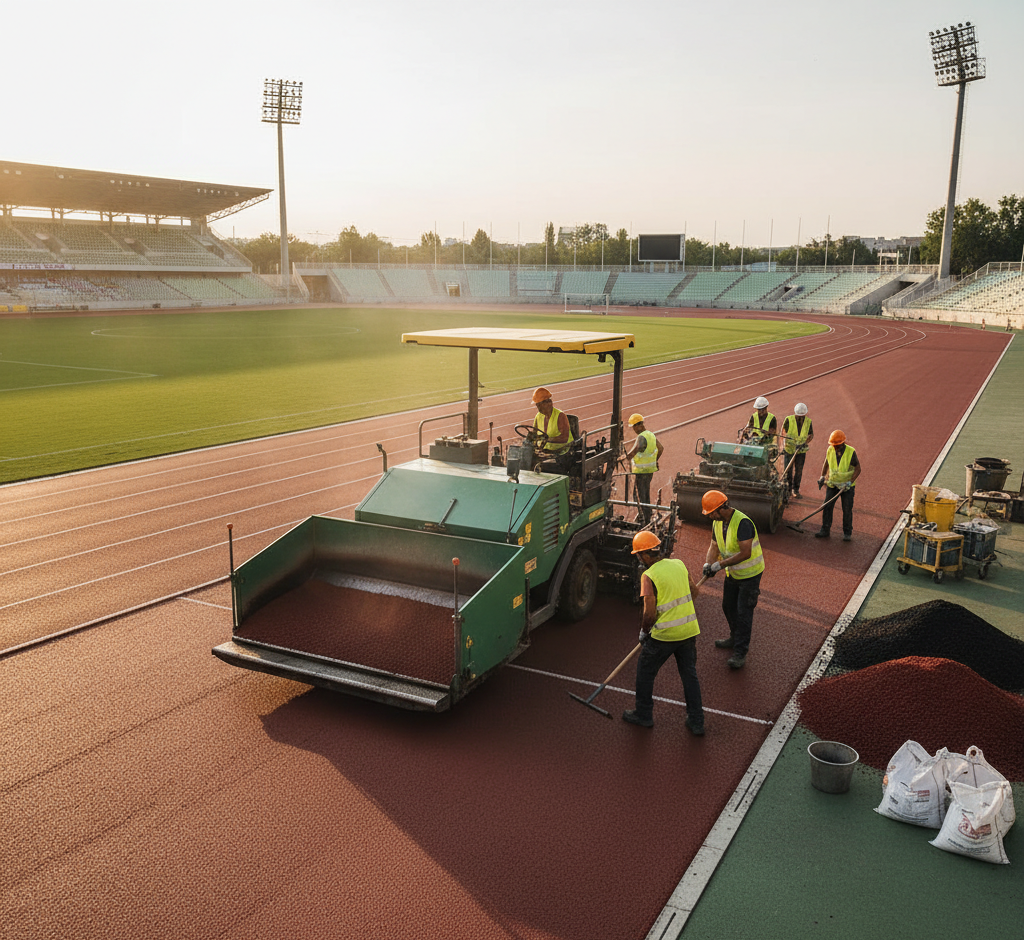
1. Importance of Track Surfacing Installation
-
Enhances Athlete Performance
-
Provides consistent energy return and traction for sprinters, middle-distance runners, and field event athletes.
-
-
Ensures Safety
-
Shock-absorbing properties reduce the risk of injuries to joints and muscles.
-
Non-slip surfaces maintain grip even in wet conditions.
-
-
Protects the Track Base
-
Prevents water infiltration, erosion, and cracking of asphalt or concrete base layers.
-
-
Extends Lifespan
-
Maintains Compliance
-
Installation ensures the track meets World Athletics (IAAF) and national standards for competitive events.
-
2. Types of Track Surfacing Systems
Different athletic facilities require varying surfacing systems based on usage, budget, and performance expectations:
a. Spray-Coated System
-
An economical solution for schools and community tracks.
-
Involves spraying a polyurethane binder with EPDM granules over a shock-absorbing base.
b. Sandwich System
-
Features a lower SBR rubber layer, a polyurethane sealing coat, and a top EPDM layer.
-
Commonly used in professional and semi-professional tracks.
c. Full-Pour Polyurethane System
-
Premium system used in stadiums and Olympic-level tracks.
-
Mixed-in-place polyurethane and EPDM layers create a seamless, durable surface.
d. Prefabricated Track System
-
Factory-made rubber sheets installed on-site.
-
Ideal for smaller tracks or indoor facilities needing fast installation and consistent quality.
3. Steps in Track Surfacing Installation
Step 1: Base Inspection
-
Check asphalt or concrete base for levelness, cracks, and proper slope.
-
Repair any imperfections to ensure a uniform surface.
Step 2: Primer Application
-
Apply a thin layer of polyurethane primer to enhance bonding between base and track surfacing layers.
-
Spread SBR rubber granules mixed with polyurethane binder evenly.
-
Compact to form a shock-absorbing elastic layer that improves athlete comfort.
-
Apply EPDM granules with polyurethane resin for the wearing layer.
-
Ensure uniform thickness and smoothness across all lanes.
-
Allow 24–48 hours for the surface to cure.
-
Curing ensures maximum adhesion, elasticity, and durability.
-
Apply high-quality, weather-resistant paint for lane markings, start/finish lines, and field event zones.
-
Precise markings ensure compliance with international standards.
4. Tools and Equipment for Surfacing Installation
Professional installation requires specialized tools:
-
Mixing Machines – For combining polyurethane with rubber granules or EPDM.
-
Screeds and Trowels – Ensure smooth and uniform surfaces.
-
Laser Levels – Verify flatness and slope across the track.
-
Spray Equipment – For spray-coated systems used in schools or community tracks.
5. Factors Affecting Installation Quality
-
Base Quality – An uneven or weak base compromises surface durability.
-
Environmental Conditions – Temperature and humidity affect curing times and adhesion.
-
Material Mix Ratio – Incorrect ratios of binder and granules reduce elasticity and longevity.
-
Thickness Consistency – Uneven layers can cause poor energy return or premature wear.
-
Installation Expertise – Skilled technicians ensure compliance with standards and a smooth finish.
6. Advantages of Professional Track Surfacing Installation
-
Durability and Longevity – Reduces wear and tear from heavy usage.
-
Athlete Safety – Provides optimal shock absorption and slip resistance.
-
All-Weather Usability – Surfaces resist UV radiation, rain, and temperature changes.
-
Performance Enhancement – Improves traction, energy return, and running efficiency.
-
Aesthetic Appeal – Vibrant colors and smooth textures enhance stadium appearance.
7. Common Challenges in Surfacing Installation
-
Uneven Base or Subgrade
-
Weather Interference
-
Material Separation
-
Solution: Maintain correct mixing and application techniques for uniform layers.
-
-
-
Curing Issues
-
Solution: Follow manufacturer guidelines for temperature and curing times.
-
8. Maintenance of Installed Track Surfaces
Even the best-installed tracks require maintenance:
-
Regular Cleaning – Remove dirt, debris, and leaves.
-
Check for Damage – Inspect for cracks, blistering, or wear spots.
-
Line Repainting – Maintain visibility of lane markings every few years.
Routine maintenance preserves performance, safety, and aesthetics.
9. Applications
Track surfacing installation is essential for:
-
Olympic and International Stadiums
-
University and School Athletic Tracks
-
Community Sports Grounds
-
Indoor Synthetic Tracks
-
Multi-Sport Training Facilities
10. Conclusion
Track surfacing installation is a critical step in constructing a high-performance running track. From base inspection to cushion layer application, top surface installation, and precise line marking, each step ensures the track delivers safety, durability, and performance.