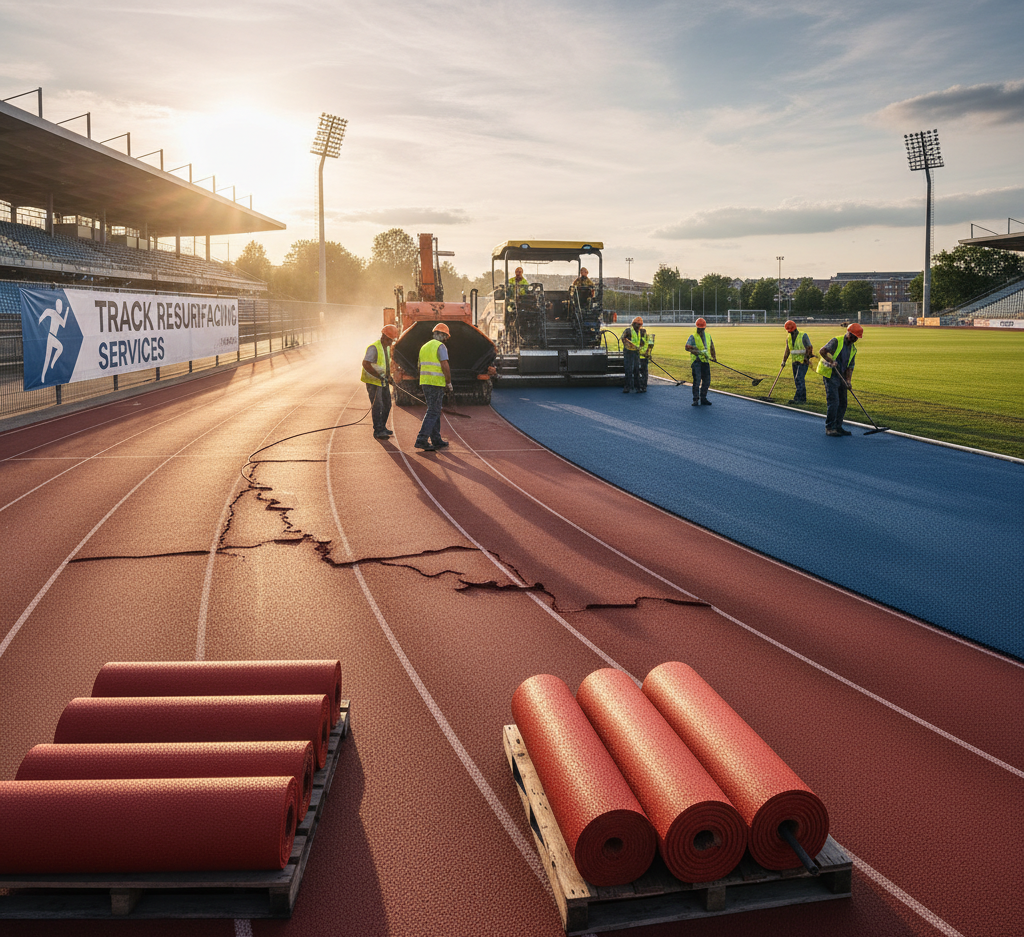
Athletic tracks experience constant wear and tear due to heavy use, weather conditions, and age. Over time, surfaces can become cracked, uneven, or worn out, affecting athlete safety, performance, and aesthetic appeal. Track resurfacing services are essential to restore the integrity, shock absorption, and visual quality of running tracks, ensuring they remain safe, professional, and competition-ready.
Whether for schools, universities, community sports complexes, or professional stadiums, investing in high-quality track resurfacing ensures a long-lasting, durable, and performance-optimized facility.
1. Importance of Track Resurfacing Services
-
Athlete Safety
-
Damaged surfaces increase the risk of slips, trips, and joint injuries.
-
Resurfacing restores smooth, shock-absorbing layers, minimizing impact on knees, ankles, and hips.
-
-
Performance Enhancement
-
A newly resurfaced track provides optimal traction, energy return, and uniform lane consistency, allowing athletes to perform at their best.
-
-
Aesthetic Appeal
-
Faded lanes, cracks, and worn-out surfaces diminish the visual appeal of athletic facilities.
-
Resurfacing revitalizes the track, giving it a professional and competition-ready look.
-
-
Extended Lifespan
-
Preventive resurfacing prolongs the track’s life by strengthening surface layers and preventing further deterioration.
-
-
Compliance with Standards
-
Ensures tracks meet IAAF/World Athletics specifications, making them suitable for official competitions.
-
2. Common Track Surface Problems Requiring Resurfacing
-
Cracks and Depressions
-
Result from heavy usage, weather effects, or poor sub-base drainage.
-
Cause uneven surfaces and potential injury risks.
-
-
Worn or Faded Lane Markings
-
Reduce visibility for athletes and officials.
-
Affect timing, lane discipline, and aesthetics.
-
-
Loss of Shock Absorption
-
Over time, surfaces harden or granules wear off, reducing cushioning.
-
Increases stress on joints and reduces performance.
-
-
Water Accumulation
-
Poor drainage or uneven surfaces cause puddles and slippery areas.
-
Can accelerate track surface degradation.
-
-
Surface Contamination
-
Dirt, debris, or mold buildup compromises grip and safety.
-
Reduces track lifespan if not addressed promptly.
-
3. Types of Track Resurfacing Services
-
Spray Polyurethane Track Resurfacing
-
Multi-layer system with elastic polyurethane base and EPDM granules.
-
Restores shock absorption, durability, and traction for all-weather use.
-
-
Tartan Track Resurfacing
-
Synthetic polyurethane track with rubber base layer.
-
Ideal for professional, school, and college tracks, maintaining consistent performance.
-
-
Mondo Track Resurfacing
-
Prefabricated vulcanized rubber sheets.
-
Provides high energy return and impact absorption, suitable for Olympic-standard tracks.
-
-
EPDM Rubber Track Resurfacing
-
Granule-based system mixed with polyurethane.
-
Offers flexible, weather-resistant, and shock-absorbing surfaces.
-
-
Asphalt Base Repair and Overlay
-
For tracks with structural base issues, asphalt overlays restore level surfaces before applying synthetic layers.
-
4. Steps in Professional Track Resurfacing
Step 1: Site Inspection
-
Assess track condition, surface damage, drainage issues, and sub-base integrity.
-
Determine the most suitable resurfacing method based on usage and budget.
Step 2: Surface Preparation
-
Clean the track thoroughly, removing debris, loose granules, and contaminants.
-
Repair cracks, depressions, or uneven areas to ensure a stable foundation.
-
: Base Repair (if necessary)
-
Address any sub-base or asphalt issues, such as leveling, filling, or compacting.
-
Proper base repair ensures long-lasting resurfacing results.
: Application of Resurfacing Material
-
Apply the chosen surface layer (polyurethane, EPDM, or prefabricated sheets).
-
Ensure uniform thickness, proper bonding, and smooth finishing.
: Line Marking
-
Repaint lanes, starting blocks, and field markings using weather-resistant paint.
-
Maintain IAAF-approved lane widths and distances for compliance.
: Curing and Quality Check
-
Allow sufficient time for curing based on material specifications.
-
Conduct surface uniformity, traction, and impact absorption tests.
5. Benefits of Professional Track Resurfacing
-
Safety Enhancement: Eliminates uneven surfaces and restores shock absorption.
-
Performance Improvement: Provides consistent traction and lane alignment.
-
Durability: High-quality materials withstand heavy use and weather conditions.
-
Compliance: Maintains standards for official competitions.
-
Aesthetic Value: Refreshes faded tracks, improving visual appeal for spectators and athletes.
6. Maintenance After Resurfacing
-
Regular Cleaning
-
Sweep, rinse, or blow debris off lanes to maintain surface integrity.
-
-
Inspection and Repairs
-
Check for minor wear, cracks, or granule loss.
-
Perform touch-ups as needed to prolong surface life.
-
-
Drainage Check
-
Ensure drains are unobstructed to prevent water accumulation.
-
-
Line Marking Maintenance
-
Repaint lanes and markings periodically to retain visibility and compliance.
-
Proper maintenance after resurfacing ensures maximum return on investment and consistent track performance.
7. Factors Affecting Track Resurfacing Costs
-
Track Size and Number of Lanes: Larger tracks require more material and labor.
-
Extent of Damage: Structural base repairs or leveling increase costs.
-
Labor and Equipment: Skilled labor, machinery, and curing time affect pricing.
-
Line Markings and Accessories: Repainting, hurdles, and field equipment impact total cost.
Typical resurfacing costs range from $15–$50 per square meter, depending on materials, track condition, and project scope.
8. Applications of Track Resurfacing Services
-
Professional Stadiums: Maintain Olympic and competition-ready standards.
-
Schools and Universities: Extend track lifespan for training and competitions.
-
Community Sports Complexes: Safe and attractive facilities for recreational use.
-
Indoor Training Centers: Resurfacing supports year-round use in controlled environments.
Resurfacing services are essential for all types of tracks, ensuring safety, durability, and performance for athletes at every level.
9. Advantages of Investing in Track Resurfacing
-
Enhanced Safety: Reduces injury risk for runners and field athletes.
-
Consistent Performance: Uniform surfaces improve speed, stride, and endurance.
-
Cost-Effective Longevity: Prevents expensive reconstruction through preventive care.
-
Compliance with Standards: Meets national and international athletic regulations.
-
Improved Aesthetic Appeal: Restores a professional look for athletes, spectators, and events.
10. Conclusion
Track resurfacing services are a vital investment for athletic facilities seeking safety, performance, and long-term durability.