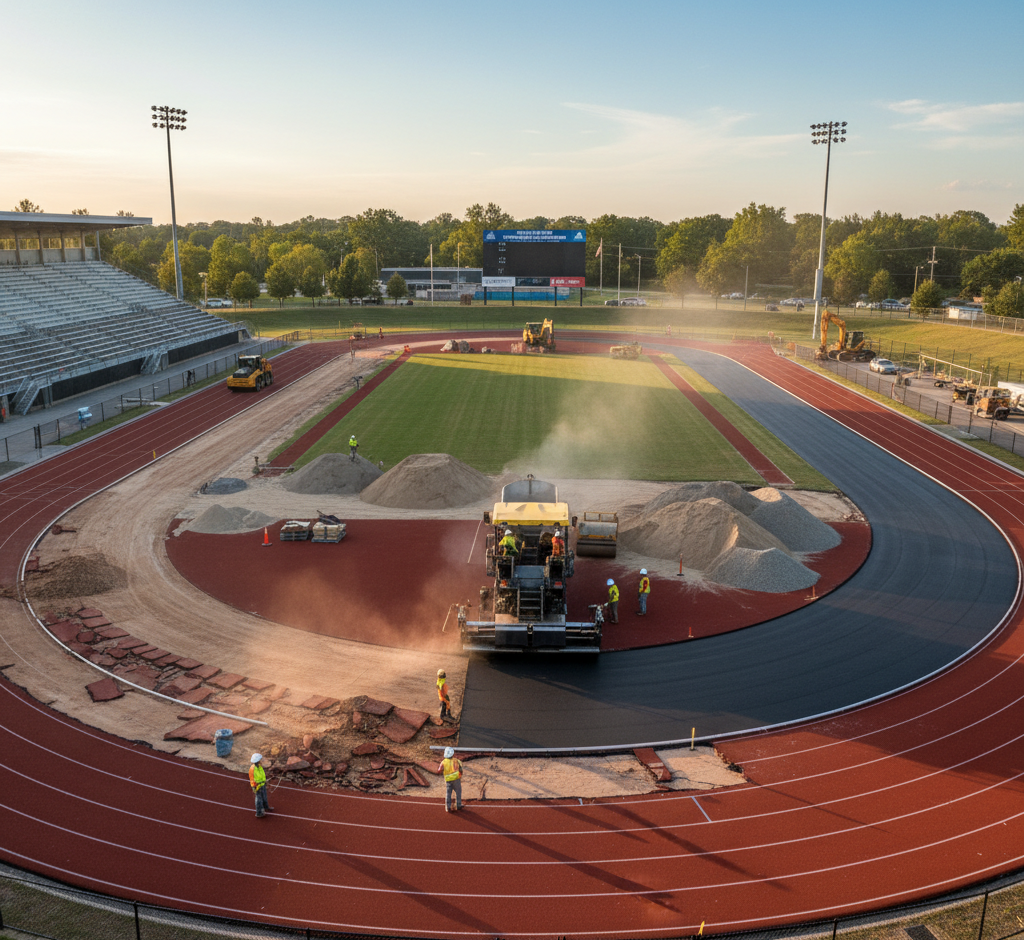
Over time, even the best-constructed running tracks experience wear and tear due to weather, heavy use, and natural aging of materials. Track renovation and resurfacing are essential to restore the performance, safety, and aesthetics of athletic tracks. Regular renovation not only extends the lifespan of the facility but also ensures compliance with international and national athletic standards.
Whether your track is synthetic, polyurethane, Tartan, or EPDM, proper resurfacing revitalizes the surface, provides consistent traction, and maintains athlete safety during training and competitions.
1. Importance of Track Renovation and Resurfacing
-
Enhancing Safety
-
Worn surfaces, cracks, and uneven areas can increase the risk of injuries.
-
Resurfacing restores shock absorption and traction, minimizing joint and muscle strain.
-
-
Maintaining Performance
-
A renewed track surface ensures consistent energy return, grip, and lane uniformity, supporting peak athletic performance.
-
-
Extending Track Lifespan
-
Renovation protects the underlying base from damage, preventing costly repairs and structural issues.
-
-
Compliance with Standards
-
Ensures the track continues to meet IAAF/World Athletics specifications for official competitions.
-
-
Aesthetic Appeal
-
Fresh surfaces, vibrant colors, and clear lane markings improve the overall appearance of the facility.
-
2. Signs That a Track Needs Renovation
-
Cracks or Fissures in the surface
-
Worn or Faded Line Markings affecting lane visibility
-
Uneven or Deformed Areas causing safety hazards
-
Reduced Shock Absorption leading to athlete discomfort
-
Water Pooling or Drainage Issues on the surface
If one or more of these issues are present, it is time to schedule track resurfacing or renovation.
3. Types of Track Renovation and Resurfacing
a. Minor Resurfacing
-
Involves applying a thin new layer of polyurethane or EPDM over the existing surface.
-
Repairs small cracks and worn areas without full track reconstruction.
-
Cost-effective and suitable for school or community tracks.
b. Full Resurfacing
-
Complete removal of the old synthetic or polyurethane surface.
-
Installation of a new base layer if needed, followed by premium synthetic track surfacing.
-
Ideal for professional stadiums or tracks with extensive damage.
c. Line Repainting and Marking
-
Renewal of lane lines, relay zones, start/finish lines, and hurdle placements.
-
Enhances visibility and ensures compliance with competition standards.
d. Drainage and Base Repairs
-
Addressing underlying drainage issues or base instability before applying a new surface.
-
Prevents future surface damage and water pooling.
4. Steps in Track Renovation and Resurfacing
Step 1: Inspection and Assessment
-
Thorough evaluation of the track surface, base, and drainage system.
-
Identify cracks, uneven areas, and areas with compromised shock absorption.
Step 2: Surface Preparation
-
Clean the track thoroughly to remove debris, dust, and loose particles.
-
Remove worn or damaged layers where necessary.
-
Repair cracks, fill potholes, or stabilize weakened base sections.
-
Ensure proper slope and drainage before resurfacing.
-
Spread polyurethane or synthetic materials evenly over the track.
-
Ensure uniform thickness for all lanes and curves.
-
Use specialized equipment to achieve a smooth and consistent surface.
-
Allow the surface to cure properly, typically 24–48 hours for asphalt-based tracks or longer for concrete-based foundations.
-
Avoid usage during the curing period to maintain surface integrity.
-
Apply durable, weather-resistant lane markings, relay zones, and start/finish lines.
-
Verify compliance with official track regulations.
-
Check for surface uniformity, lane accuracy, and drainage efficiency.
-
Ensure the track is ready for safe use and competitive events.
5. Materials Used in Renovation and Resurfacing
-
Polyurethane Resurfacing Layer
-
Provides durability, elasticity, and excellent traction.
-
-
EPDM or Tartan Granules
-
Top layer adds color, grip, and shock absorption.
-
-
Primer and Bonding Agents
-
Ensures strong adhesion between old and new surfaces.
-
-
Line Marking Paints
-
Acrylic, polyurethane, or thermoplastic for clear and long-lasting lane markings.
-
6. Factors Affecting Renovation Cost
-
Track Size and Number of Lanes – Larger tracks require more materials and labor.
-
Extent of Damage – Minor cracks cost less to repair than complete resurfacing.
-
Type of Surface – Premium synthetic layers are more expensive but offer longer lifespan.
-
Drainage or Base Repairs – Repairing subsurface issues adds to overall cost.
-
Line Marking and Additional Features – Includes repainting lanes, hurdle markings, and field event zones.
Typical renovation and resurfacing costs range from $20 to $50 per square meter depending on the project scale, material choice, and labor requirements.
7. Benefits of Professional Renovation and Resurfacing
-
Safety Improvement – Restores shock absorption and smooth surfaces.
-
Performance Enhancement – Ensures uniform energy return and traction for athletes.
-
Compliance – Meets IAAF and national competition standards.
-
Extended Lifespan – Protects the base and reduces future maintenance costs.
-
Visual Appeal – Fresh, vibrant colors and clear lane markings improve the facility’s aesthetics.
8. Maintenance Tips Post-Renovation
-
Regular Cleaning – Remove dirt, leaves, and debris to maintain traction.
-
Inspect for Minor Damage – Promptly repair small cracks or worn spots.
-
Line Maintenance – Repaint lane markings every 2–3 years or as needed.
-
Drainage Checks – Ensure subsurface and perimeter drains are functioning properly.
-
Prevent Heavy Loads – Avoid placing heavy vehicles or equipment on the track surface.
9. Applications
Track renovation and resurfacing are crucial for:
-
Olympic and Professional Stadiums
-
University and School Athletic Tracks
-
Community Sports Grounds
-
Indoor Synthetic Tracks
-
Multi-Sport Training Facilities
10. Conclusion
Track renovation and resurfacing are essential for maintaining athlete safety, performance, and compliance. From surface cleaning and base repair to synthetic layer installation and line marking, professional resurfacing ensures that tracks continue to deliver consistent performance, durability, and aesthetics.
Investing in track renovation extends the life of the facility, minimizes maintenance costs, and supports athletes in achieving peak performance.