
A high-quality running track starts beneath the surface. Proper track leveling and grading is critical to ensuring a safe, durable, and high-performing athletic facility. Whether you are constructing a school track, community sports ground, or an Olympic-standard stadium, leveling and grading form the foundation for long-lasting track performance.
Without precise grading, even the best synthetic surfaces like polyurethane, EPDM, or Tartan tracks can suffer from uneven wear, water pooling, and safety hazards. Correct leveling ensures proper drainage, uniform surface elasticity, and compliance with international athletic standards.
1. What is Track Leveling and Grading?
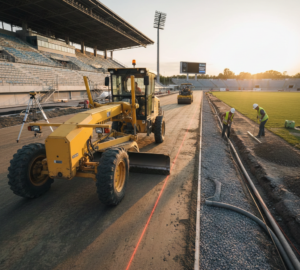
Track leveling refers to the process of creating a smooth, flat base for a running track, while grading involves sloping the surface appropriately to manage water drainage and structural stability.
These processes are essential for:
-
Preventing water accumulation that can damage the track surface.
-
Ensuring consistent lane elevation and surface smoothness.
-
Maintaining uniform shock absorption for athlete safety.
-
Complying with World Athletics (IAAF) or national track standards.
Leveling and grading are applied to the sub-base, usually made of compacted soil, asphalt, or concrete, before installing synthetic track layers.
2. Importance of Track Leveling and Grading
Proper leveling and grading is crucial because it directly affects:
-
Athlete Safety
Uneven surfaces or dips can cause slips, trips, or muscle strain. Leveling ensures smooth transitions across straightaways and curves. -
Surface Durability
Correct grading prevents water pooling, which can lead to erosion or premature wear of synthetic surfaces. -
Consistent Performance
A uniform base ensures optimal energy return, traction, and speed, particularly on professional tracks. -
Drainage Efficiency
Properly graded tracks have slopes that allow rainwater to flow naturally to drainage points, reducing maintenance costs. -
Compliance with Standards
International regulations dictate maximum allowable deviations in track elevation and slope, making leveling a mandatory part of construction.
3. Track Base Preparation
Before leveling and grading, the track base must be properly prepared. Steps include:
a. Site Survey and Soil Testing
-
Identify soil type, stability, and load-bearing capacity.
-
Conduct compaction tests to ensure proper foundation strength.
b. Excavation
-
Remove topsoil, debris, and vegetation.
-
Excavate to the required depth for asphalt or concrete base layers.
c. Base Layer Construction
-
Lay compacted crushed stone or aggregate for strength and stability.
-
Install asphalt or concrete layers to provide a stable platform for synthetic surfacing.
Proper base preparation is critical for long-term performance and supports the track’s grading and leveling requirements.
4. Techniques in Track Leveling
a. Laser Leveling
-
Uses high-precision laser technology to achieve uniform height and slope.
-
Ensures straightaways and curves meet exact specifications.
b. Mechanical Grading
-
Employs graders, bulldozers, or compactors for large-scale track areas.
-
Efficient for professional stadiums and full-size athletic tracks.
c. Manual Leveling
-
Used for smaller or specialized tracks.
-
Hand tools, screeds, and leveling staffs help achieve precise elevations for curves and straight sections.
Each technique is chosen based on track size, budget, and desired precision.
5. Track Grading Essentials
Proper grading involves sloping the track surface to facilitate drainage and prevent water accumulation. Key grading principles include:
-
Slope Direction
-
Standard slope is 0.5–1% along the track’s width for drainage toward gutters.
-
Slight longitudinal slope may be added for longer tracks to ensure water runoff.
-
-
Curvature Adjustment
-
Curves must maintain consistent radius while incorporating proper banking for safety.
-
Cross-slope must remain uniform to prevent uneven energy return for athletes.
-
-
Drainage Channels
-
Integrate channels at edges and bends to collect runoff water.
-
Prevents water damage to base and synthetic layers.
-
Grading ensures the track remains dry, safe, and functional under all weather conditions.
6. Tools and Equipment for Track Leveling and Grading
High-quality leveling and grading require professional equipment:
-
Laser Levels & Total Stations – Ensure precise slope and elevation.
-
Motor Graders & Bulldozers – Efficiently move soil and achieve uniform grading.
-
Compactors & Rollers – Compact base material for stability and durability.
-
Hand Tools (Screeds, Rakes, Spirit Levels) – Provide fine adjustments for curves and small areas.
The combination of technology and skilled labor ensures a flat, stable, and properly sloped base for the running track.
7. Steps for Leveling and Grading a Running Track
-
Mark Track Boundaries – Lay out lanes and curves with stakes, strings, or laser markers.
-
Excavate Base – Remove unsuitable soil and prepare subgrade.
-
Place Base Material – Spread crushed stone, gravel, or asphalt evenly.
-
Initial Leveling – Use graders or screeds to achieve approximate uniform height.
-
Laser Precision Grading – Apply fine adjustments with laser-guided equipment.
-
Check Slopes – Ensure 0.5–1% cross slope and consistent longitudinal slope.
-
Compact Base – Use rollers to stabilize material before installing synthetic track surface.
These steps guarantee structural integrity and optimal performance for the track.
8. Common Challenges in Track Leveling and Grading
-
Uneven Subsoil – Requires additional excavation and stabilization.
-
Waterlogging – Poor drainage can cause soft spots; proper grading and channels solve this.
-
Curve Precision – Maintaining radius and slope is critical on bends.
-
Large Area Management – Full-sized tracks require careful coordination for consistency.
-
Material Settlement – Base materials may settle over time; thorough compaction is essential.
Professional track designers address these challenges using modern equipment and expertise.
9. Benefits of Professional Leveling and Grading
-
Extended Track Lifespan – Properly leveled and graded tracks last longer with minimal repairs.
-
Consistent Athletic Performance – Uniform surface enhances speed, energy return, and training quality.
-
Reduced Maintenance Costs – Good grading prevents water damage and structural issues.
-
Enhanced Safety – Eliminates uneven sections that could cause slips, trips, or injuries.
-
Compliance with Standards – Meets international regulations for competitive events.
Investing in precise leveling and grading is a long-term cost-saving and safety strategy.
10. Applications of Track Leveling and Grading
Track leveling and grading is essential for:
-
Olympic and International Stadiums
-
University and School Athletic Tracks
-
Community Sports Grounds
-
Indoor Running Tracks
-
Multi-Sport Facilities with Synthetic Surfaces
Every type of running track, regardless of material or size, benefits from professional leveling and grading.
11. Conclusion
Track leveling and grading is the foundation of any high-performance running track. It ensures safety, durability, drainage efficiency, and consistent athletic performance. Without proper grading, even the best polyurethane, EPDM, or Tartan tracks can suffer from uneven wear, water damage, and reduced energy return for athletes.
From site assessment and base preparation to laser leveling and slope adjustments, every step is critical for creating a world-class athletic track. Investing in precise leveling and grading not only enhances performance but also protects your facility from long-term maintenance issues, making it a smart investment for schools, sports complexes, and professional stadiums.
(FAQ – Track Leveling and Grading)
1. What is track leveling and grading?
Track leveling and grading is the process of preparing the ground for a running track by making it even, stable, and sloped correctly for proper drainage. It forms the foundation for the track’s sub-base and surface layers.
2. Why is track leveling and grading important?
-
Ensures uniform track surface for safe running and competition
-
Provides proper drainage to prevent waterlogging
-
Enhances track durability and reduces maintenance costs
-
Prevents uneven surfaces that can cause injuries
3. What is the difference between leveling and grading?
-
Leveling – Making the ground flat and even
-
Grading – Creating a slight slope or contour for water runoff and drainage
4. What are the main steps in track leveling and grading?
-
Site clearing – Remove debris, vegetation, and old surfaces
-
Excavation – Remove excess soil or fill low areas
-
Rough grading – Create the desired slope and contour
-
Compaction – Strengthen the soil for stability
-
Fine grading – Smooth the surface to prepare for the sub-base
5. What equipment is used for leveling and grading?
-
Excavators and bulldozers for site preparation
-
Graders for creating slopes and contours
-
Rollers and compactors for soil compaction
-
Laser levels or surveying tools for precision
6. How long does track leveling and grading take?
-
Small school tracks: 1–2 weeks
-
Standard 400m competition tracks: 2–4 weeks
The timeline depends on site size, soil type, and weather conditions.
7. Can existing tracks be re-leveled?
Yes. Tracks with uneven surfaces, water pooling, or base issues can be excavated, leveled, and re-graded before resurfacing.
8. How much does track leveling and grading cost?
-
Costs vary depending on site size, soil condition, and labor
-
Approximate range: ₹100–₹250 per sq. ft for leveling and grading
Additional costs apply for sub-base or surface installation
9. Who should perform track leveling and grading?
Professional track construction companies or civil contractors specializing in sports facilities should perform leveling and grading to ensure:
-
Accurate slope and drainage
-
Stable foundation for track surfaces
-
Compliance with international track standards
10. What is the outcome of proper track leveling and grading?
-
Smooth, safe, and even running surface
-
Efficient water drainage
-
Reduced maintenance and longer track lifespan
-
Compliance with official athletic standards