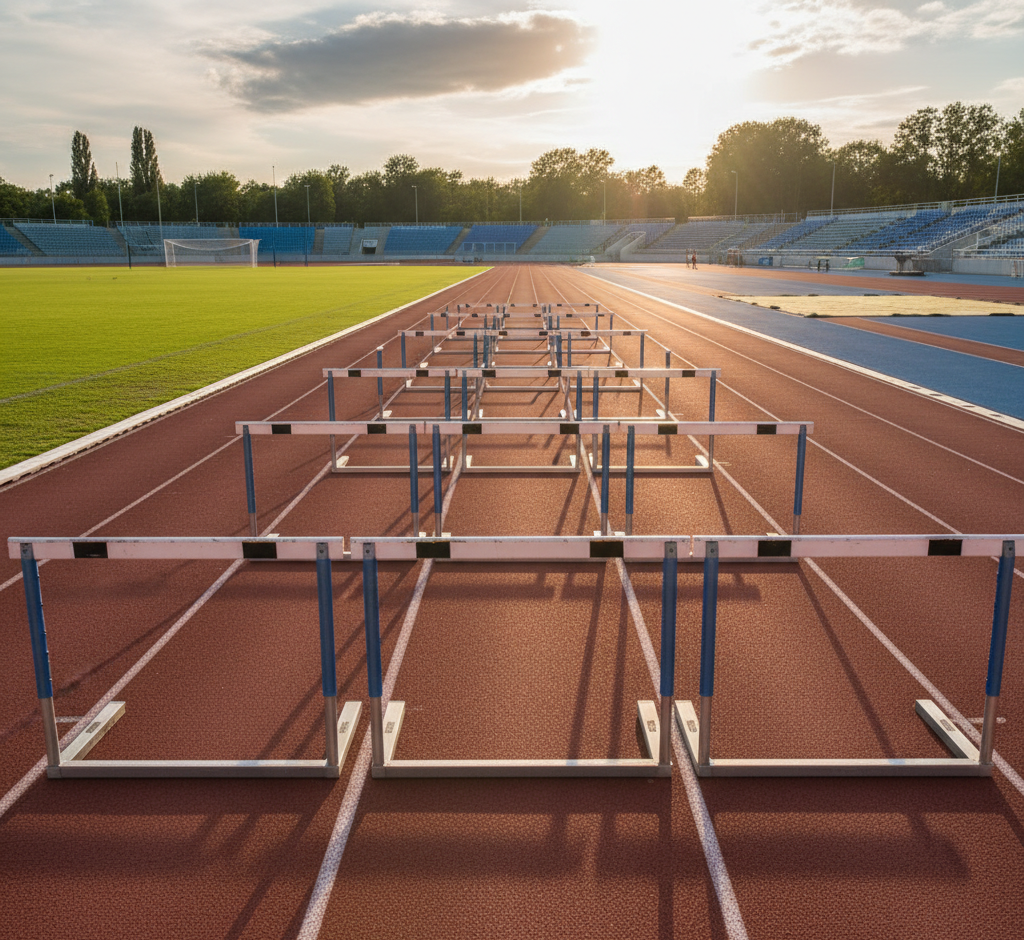
Hurdles are an essential component of track and field athletics, particularly for sprint and intermediate races such as 100m, 110m, and 400m hurdles. Proper track hurdles setup ensures athlete safety, accurate race distances, and compliance with international standards.
Whether setting up hurdles for schools, universities, or professional competitions, correct installation is critical for performance, durability, and event accuracy.
1. Importance of Track Hurdles Setup
-
Athlete Safety
-
Proper hurdle height, spacing, and stability prevent injuries during training and competition.
-
Correct setup reduces the risk of tripping or collisions.
-
-
Regulatory Compliance
-
Hurdles must meet IAAF/World Athletics specifications for height, width, and spacing.
-
Ensures tracks are suitable for official competitions.
-
-
Performance Accuracy
-
Properly aligned hurdles allow athletes to maintain stride rhythm and race pace.
-
Ensures fair competition across all lanes.
-
-
Durability and Maintenance
-
Correct setup reduces damage to hurdles and track surfaces over time.
-
2. Standard Hurdle Specifications
a. Hurdle Height
-
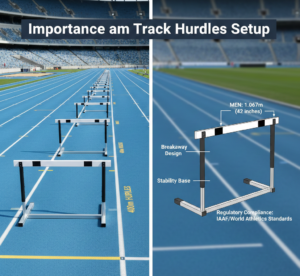
Men (100m / 110m hurdles): 1.067 meters (42 inches)
-
Women (100m hurdles): 0.838 meters (33 inches)
-
400m hurdles: Men – 0.914 meters (36 inches), Women – 0.762 meters (30 inches)
b. Hurdle Width
-
Standard hurdle width: 1.20 meters to match lane width.
c. Hurdle Design
-
Lightweight aluminum or steel frame with adjustable height.
-
Base stability with rubber feet or weighted supports to prevent tipping.
-
Breakaway design allows hurdles to fall safely when hit.
d. Lane Spacing
-
Standard lane width: 1.22 meters, each hurdle aligned to the center of the lane.
3. Steps in Track Hurdles Setup
Step 1: Track Preparation
-
Ensure track lanes are clean, flat, and free of debris.
-
Verify that lane markings for hurdle races are visible and compliant.
Step 2: Measuring Hurdle Placement
-
Hurdles are placed at specific intervals based on race distance:
-
100m/110m hurdles: Start line to first hurdle – 13 meters (men), 13 meters (women).
-
Distance between hurdles – 9.14 meters (men), 8.5 meters (women).
-
Final distance to finish line – 14.02 meters (men), 10.5 meters (women).
-
400m hurdles: Start to first hurdle – 45 meters, space between hurdles – 35 meters, finish to last hurdle – 40 meters.
-
-
Use a measuring tape or laser tool to ensure accuracy.
-
Set each hurdle to the official height according to age, gender, and race category.
-
Ensure the height is uniform across all lanes.
-
Align hurdles at the center of each lane.
-
Check lateral alignment to prevent uneven distances between lanes.
-
Test each hurdle for stability and breakaway function.
-
Ensure that hurdles fall forward safely when struck, minimizing injury risk.
-
Recheck all measurements, lane alignment, and hurdle heights.
-
Confirm hurdles are safe and ready for training or competition.
4. Materials Required for Hurdles Setup
-
Track Hurdles – Adjustable, lightweight, and breakaway design.
-
Measuring Tools – Tape measure, laser measure, or wheel measure for accuracy.
-
Leveling Equipment – Ensure track surface is flat and lane centers are aligned.
-
Markers – Chalk or temporary markers for initial positioning.
-
Safety Accessories – Rubber feet or weighted supports for additional stability.
5. Factors Affecting Hurdles Setup
-
Track Type: Synthetic, polyurethane, or asphalt tracks require careful base handling.
-
Athlete Category: Age, gender, and competition type determine hurdle height.
-
Lane Alignment: Accurate placement is critical for competitive fairness.
-
Event Distance: 100m, 110m, and 400m hurdle races require different spacing.
-
Equipment Quality: Durable, adjustable, and breakaway hurdles ensure long-term use.
6. Maintenance and Safety Considerations
-
Regular Inspection
-
Check for bent frames, worn feet, or broken components.
-
Replace or repair hurdles as needed.
-
-
Surface Protection
-
Avoid dragging hurdles on the track surface to prevent scratches or damage.
-
-
Cleaning
-
Wipe hurdles with damp cloth to remove dust, dirt, or sweat.
-
-
Proper Storage
-
Store hurdles vertically or in racks to save space and prevent deformation.
-
-
Alignment Checks
-
Before each training session or competition, recheck hurdle positions for accuracy and safety.
-
7. Benefits of Proper Track Hurdles Setup
-
Athlete Safety: Reduces injury risks by ensuring breakaway function and stable placement.
-
Performance Optimization: Accurate spacing allows athletes to maintain stride rhythm and speed.
-
Competition Readiness: Tracks meet IAAF/World Athletics regulations.
-
Durability of Equipment: Correct setup minimizes wear and damage to hurdles.
-
Consistent Training Conditions: Athletes can practice with uniform setup every session.
8. Applications of Track Hurdles
-
Professional Stadiums: Olympic, national, and regional competitions.
-
Schools and Universities: Supports track training and inter-school meets.
-
Community Sports Facilities: Recreational hurdling events and athletics programs.
-
Indoor Athletics Arenas: Compact, adjustable hurdles suitable for indoor tracks.
Proper hurdles setup is essential for all levels of hurdling, from beginner training to elite competitions.
9. Tips for Athletes Using Hurdles
-
Practice proper stride pattern between hurdles.
-
Keep consistent rhythm and tempo for optimal race performance.
-
Familiarize with hurdle height and spacing during training sessions.
-
Focus on technique for takeoff, clearance, and landing.
-
Always warm up to reduce risk of hamstring or quadriceps injury.
10. Conclusion
Track hurdles setup is a crucial component of athletic track preparation, ensuring safety, accuracy, and performance. Proper alignment, height adjustment, and stable installation provide a professional training and competition environment for athletes.
With careful installation and maintenance, hurdles contribute to safe, competitive, and successful track events.
(FAQ – Track Hurdles Setup)
1. What is track hurdles setup?
Track hurdles setup refers to the process of placing hurdles correctly on an athletic track according to standard distances and regulations, ensuring safety and fair competition for athletes.
2. Why is proper hurdles setup important?
-
Ensures athlete safety and prevents accidents
-
Guarantees compliance with official track and field rules
-
Supports accurate timing and performance measurement
-
Helps in consistent training for competitive athletes
3. What equipment is needed for hurdles setup?
-
Hurdles (adjustable for height)
-
Measuring tape or wheel to mark distances
-
Chalk or paint markers for lane markings
-
Leveling tools to ensure hurdles are upright and stable
4. What are the standard hurdle heights?
-
Men (110m hurdles): 42 inches (106.7 cm)
-
Women (100m hurdles): 33 inches (83.8 cm)
-
Youth categories: Heights vary depending on age groups (30–39 inches)
5. How are hurdles spaced on the track?
-
Standard spacing depends on the race:
-
110m hurdles (men): Start line to first hurdle 13.72m, 9.14m between hurdles, last hurdle to finish 14.02m
-
100m hurdles (women): Start line to first hurdle 13m, 8.5m between hurdles, last hurdle to finish 10.5m
-
-
Proper measurement is essential for athlete rhythm and safety
6. Can hurdles be adjusted for different skill levels?
Yes. Most modern hurdles are adjustable in height, making them suitable for:
-
Professional training
-
School athletics
-
Youth and beginner athletes
7. How do I ensure hurdles are safe?
-
Use lightweight, breakaway hurdles to minimize injury risk
-
Check stability and alignment regularly
-
Keep the track clear of debris
-
Ensure even height and proper spacing
8. How long does it take to set up hurdles?
-
Small setups (practice lanes): 15–30 minutes
-
Full race lanes (official competition): 1–2 hours
Time depends on track size, number of hurdles, and measurement precision
9. Can existing tracks be used for hurdles without modifications?
Yes, standard synthetic or tartan tracks can accommodate hurdles. Proper lane markings and measurement of hurdle positions are required before official use.
10. Who should set up hurdles?
-
Professional track coaches or athletic facility staff
-
Certified track and field officials for competition setups
-
Experienced personnel ensure accuracy, safety, and compliance with regulations