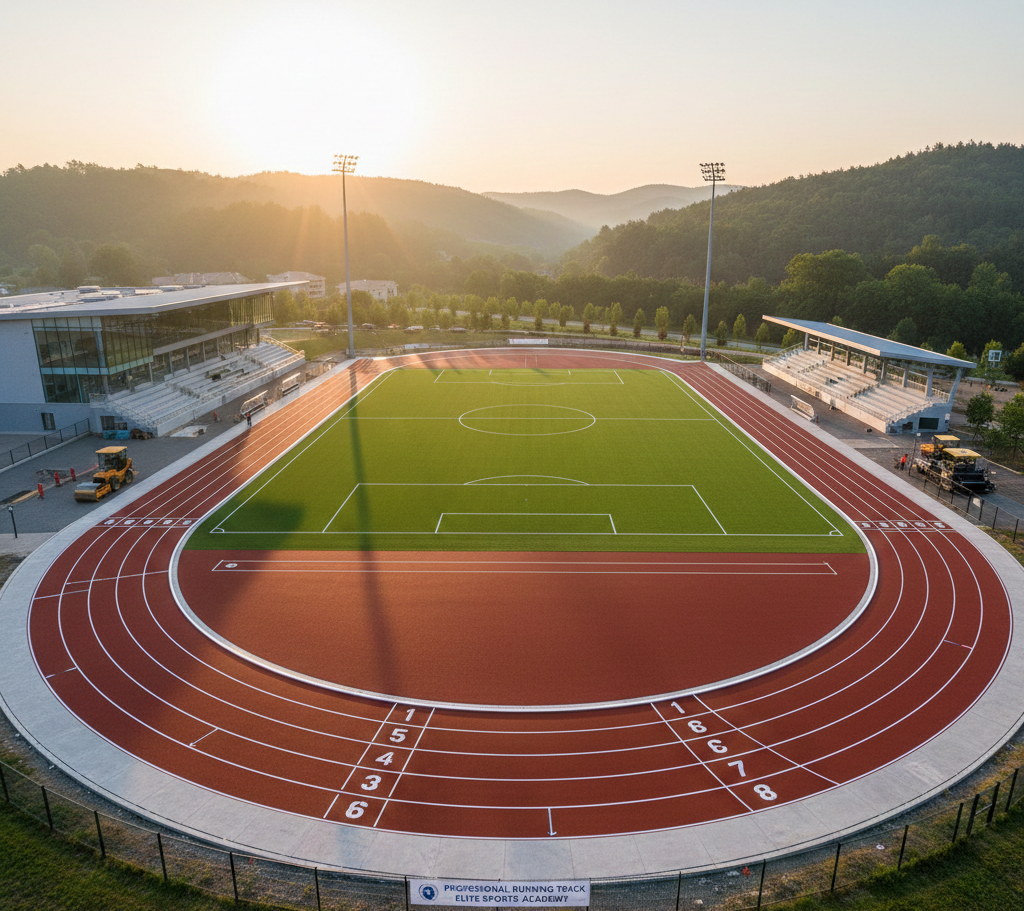
Building a professional running track involves careful planning, high-quality materials, and expert installation. One of the most critical aspects to consider before starting a project is the track construction cost. Understanding the factors influencing cost helps facility owners, schools, universities, and sports complexes plan their budget effectively while ensuring a durable, safe, and competition-ready track.
Whether constructing a synthetic track, polyurethane track, or all-weather athletic track, knowing the costs of materials, labor, and additional infrastructure is essential for long-term investment planning.
1. Factors Affecting Track Construction Cost
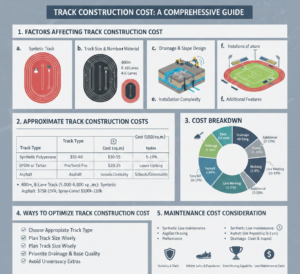
Several key factors influence the total cost of track construction:
a. Track Type and Surface Material
-
Synthetic Tracks (polyurethane, EPDM, Tartan): High durability and low maintenance; more expensive upfront.
-
Asphalt Tracks: Lower initial cost but higher maintenance.
-
Rubberized or Spray-Coated Tracks: Moderate cost, suitable for schools or community tracks.
b. Track Size and Number of Lanes
-
Standard Olympic track: 400 meters per lap with 8–10 lanes.
-
Smaller tracks (200–300 meters, 4–6 lanes) cost less due to reduced material and labor requirements.
c. Base Construction
-
The foundation includes subgrade, aggregate layers, asphalt or concrete base.
-
A stronger, properly graded base increases longevity but adds to the cost.
d. Drainage and Slope Design
-
Proper drainage prevents water pooling and surface damage.
-
Installing perimeter drains, subsurface piping, and slope adjustments impacts the budget.
e. Installation Complexity
-
Professional installation of synthetic layers, surfacing, and line marking requires skilled labor and specialized equipment.
-
Curved lanes, staggered starts, and field event integration can add complexity and cost.
f. Additional Features
-
Line marking, hurdles, lighting, fencing, spectator seating, and landscaping are optional but increase overall expenses.
2. Approximate Track Construction Costs
The cost of track construction varies widely based on location, materials, and facility size. Typical ranges include:
| Track Type | Approximate Cost (USD per sq. meter) | Notes |
|---|---|---|
| Synthetic Polyurethane Track | $35 – $60 | Premium durability, low maintenance |
| EPDM or Tartan Track | $30 – $55 | Suitable for professional and semi-professional use |
| Asphalt Track | $15 – $25 | Lower upfront cost, higher maintenance |
| Spray-Coated Rubber Track | $20 – $35 | Cost-effective for schools and community facilities |
For a 400-meter, 8-lane track (approx. 5,000–6,000 sq. meters):
-
Synthetic track: $175,000 – $360,000
-
Asphalt track: $75,000 – $150,000
-
Spray-coated track: $100,000 – $210,000
These are rough estimates and may vary depending on labor, local regulations, and additional features.
3. Cost Breakdown
a. Base Construction
-
Subgrade preparation, aggregate layers, and asphalt/concrete base.
-
Accounts for 30–40% of total cost.
b. Track Surfacing
-
Synthetic layer installation (polyurethane, EPDM, or Tartan).
-
Accounts for 40–50% of total cost.
c. Drainage System
-
Perimeter and subsurface drains, slope grading.
-
Accounts for 5–10% of total cost.
d. Line Marking
-
Acrylic or polyurethane-based lane and event markings.
-
Accounts for 2–5% of total cost.
e. Additional Features
-
Lighting, fencing, seating, and landscaping.
-
Can account for 10–15% of total project cost.
4. Ways to Optimize Track Construction Cost
-
Choose Appropriate Track Type
-
Schools and community facilities may prefer spray-coated or asphalt tracks to reduce upfront cost.
-
-
Plan Track Size Wisely
-
Smaller or multi-purpose tracks can save material and labor costs without compromising functionality.
-
-
Combine Installation Services
-
Hiring a professional contractor for base construction, surfacing, and line marking reduces errors and long-term repair costs.
-
-
Prioritize Drainage and Base Quality
-
Investing in a strong base and drainage system reduces maintenance costs over the years.
-
-
Avoid Unnecessary Extras
-
Only include lighting, seating, or fencing as per requirements to manage budget efficiently.
-
5. Maintenance Cost Consideration
Track construction cost is not limited to installation. Maintenance also contributes to the overall investment:
-
Synthetic Tracks: Low maintenance, clean regularly, inspect for cracks or worn areas.
-
Asphalt Tracks: Require resurfacing every 3–5 years.
-
Line Marking: Repainting every 2–3 years ensures visibility and compliance.
-
Drainage: Clean and inspect drains to prevent water damage.
Proper maintenance ensures the track remains functional and extends the return on investment.
6. Funding and Budget Planning
-
Schools and Community Tracks: Seek government grants or sports funding.
-
Private Facilities: Allocate a portion of capital for high-quality synthetic surfaces to reduce long-term costs.
-
Professional Stadiums: Consider sponsorships and partnerships to offset premium material costs.
Budget planning should include construction, surfacing, drainage, and maintenance to avoid unexpected expenses.
7. Benefits of Investing in Quality Track Construction
-
Durability and Longevity – High-quality materials and professional installation reduce wear and tear.
-
Athlete Safety and Performance – Proper base, surfacing, and slope provide shock absorption and optimal traction.
-
Event Hosting Capability – Compliance with international standards allows hosting official competitions.
-
Low Maintenance Costs – Investing upfront in a premium track reduces repair and resurfacing expenses.
-
Aesthetic Appeal – Vibrant surfaces and clear line markings enhance facility appearance.
8. Conclusion
Understanding track construction cost is essential for anyone planning a running track project. Costs vary depending on track type, size, surface material, base construction, drainage, and additional features. A well-planned budget ensures that the track is durable, safe, and compliant with international athletic standards.
(FAQ – Track Construction Cost)
1. What is track construction cost?
Track construction cost refers to the total expense involved in building a running track, including site preparation, base construction, surface installation, line marking, and finishing. Costs vary based on materials, size, design, and location.
2. What factors affect the cost of track construction?
The main factors include:
-
Track size and dimensions – Standard 400m tracks cost more than smaller tracks.
-
Type of base – Asphalt, concrete, or specialized sub-base materials.
-
Surface material – PU, EPDM, tartan, or synthetic tracks.
-
Drainage and grading – Proper drainage increases durability but adds cost.
-
Location – Material transport, labor charges, and local regulations.
3. What is the average cost of building a track?
-
School or small tracks: ₹1,500–₹2,500 per sq. ft
-
Standard 400m athletic tracks: ₹2,500–₹4,000 per sq. ft
-
Professional stadium tracks: ₹3,500–₹5,500 per sq. ft
(Prices may vary depending on materials, region, and project complexity.)
4. What are the cost differences between different surfaces?
-
Polyurethane (PU) tracks – ₹2,500–₹4,500 per sq. ft
-
EPDM rubber tracks – ₹2,000–₹4,000 per sq. ft
-
Synthetic tracks – ₹3,000–₹5,000 per sq. ft
-
Tartan tracks – ₹3,500–₹5,500 per sq. ft
5. Does the cost include installation and line marking?
Professional track construction costs generally include:
-
Site preparation and grading
-
Sub-base and base construction
-
Surface installation
-
Line marking according to international or local standards
Optional costs like lighting, bleachers, or fencing may be extra.
6. How long does track construction take?
-
Small tracks: 2–4 weeks
-
Standard 400m tracks: 6–10 weeks
-
Stadium tracks: 10–12 weeks
The timeline depends on base preparation, surface curing, weather, and project size.
7. Can cost be reduced without compromising quality?
Yes, by:
-
Choosing asphalt base instead of concrete
-
Using EPDM or vinyl surfaces for training tracks instead of PU
-
Planning for modular or phased construction
However, cutting costs on the base or drainage may reduce durability and safety.
8. Is maintenance included in track construction cost?
Basic maintenance is not included, but professional companies provide guidance on:
-
Surface cleaning and care
-
Periodic resurfacing or repairs
-
Preventive measures for cracks, drainage, and wear
9. Can existing tracks be renovated instead of building a new one?
Yes. Renovation or resurfacing can reduce costs by 30–50% while extending the track’s lifespan. The final cost depends on the condition of the base and surface.
10. How do I get an accurate estimate for my track project?
Professional track construction companies offer site inspection, design consultation, and a detailed quote. Factors like soil type, drainage, materials, and local labor rates determine the final cost.