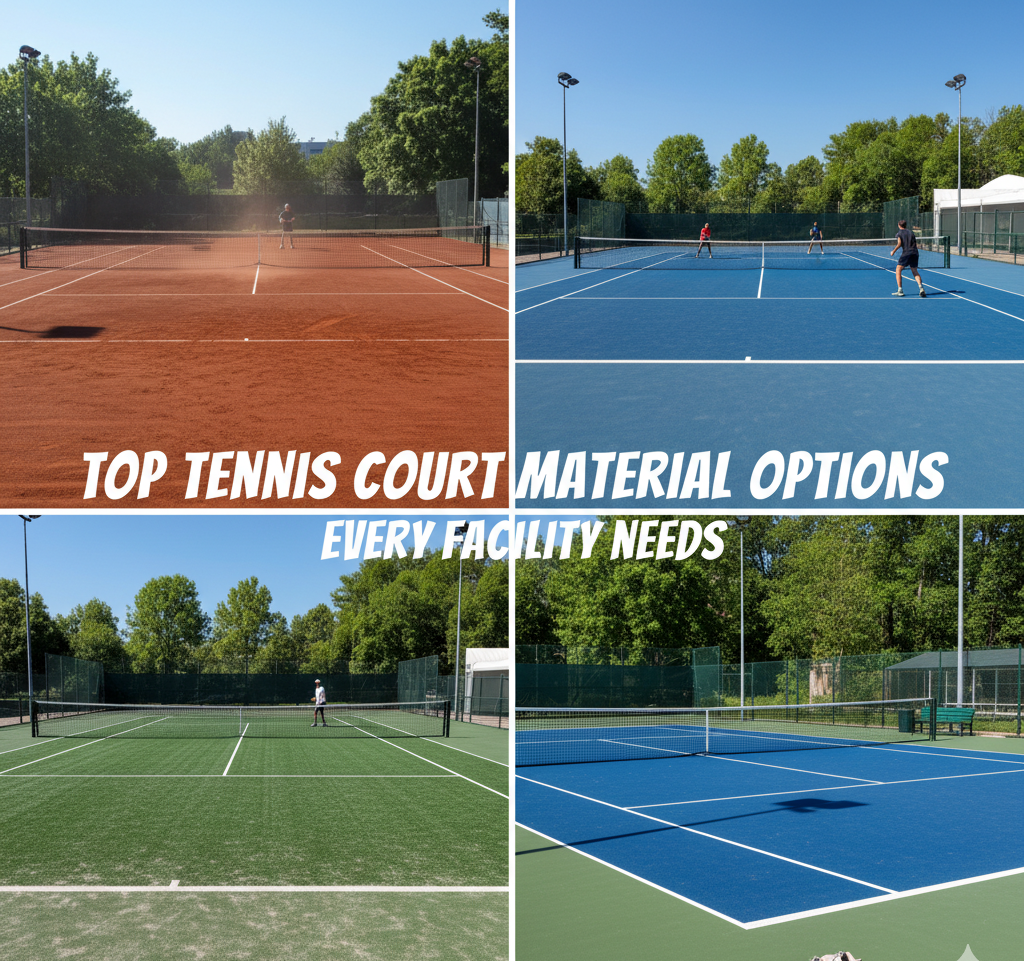
Tennis is a sport of precision, endurance, and strategy — but beyond talent and training, the surface beneath a player’s feet plays a defining role in performance. The right tennis court material not only enhances gameplay but also improves safety, durability, and maintenance efficiency for any facility.
Whether you are planning a court for a sports complex, school, residential project, or professional club, understanding your flooring options is essential. In 2025, modern materials have evolved to deliver superior comfort, better ball bounce, and weather-resistant performance. Let’s explore the top tennis court materials every facility needs to know before making a decision.
1. Acrylic Hard Courts
Overview
Acrylic hard courts are one of the most popular and widely used tennis surfaces in the world. From community parks to international tournaments like the US Open and Australian Open, this surface is known for its durability, versatility, and professional finish.
Built over a base of asphalt or concrete, acrylic courts are coated with multiple layers of acrylic resin, silica sand, and color pigments that offer a perfect combination of traction and bounce control.
Key Features
-
Medium to fast pace.
-
Consistent ball bounce and reliable grip.
-
Suitable for all levels — beginners to professionals.
Benefits
-
Long-lasting and weather-resistant.
-
Easy to maintain and customizable in colors and textures.
-
Can include cushioned layers for added comfort and shock absorption.
Ideal For
Sports complexes, professional academies, schools, and multi-purpose sports facilities.
2. Clay Courts
Overview
Clay courts bring a traditional charm and a slower, more tactical style of play. The French Open is the most famous tournament held on clay surfaces. Made from crushed brick, shale, or stone, these courts encourage players to use strategy, patience, and precision rather than raw power.
Clay courts are typically softer, providing better joint comfort and longer rallies.
Key Features
-
Slower pace with high bounce.
-
Encourages longer baseline rallies.
-
Soft and forgiving surface.
Benefits
-
Gentle on knees and joints.
-
Promotes endurance and consistency.
-
Simple repair and re-leveling process.
Drawbacks
-
Requires regular maintenance — rolling, brushing, and watering.
-
Can be difficult to play on during rainy conditions.
Ideal For
Outdoor academies, tennis training centers, and professional tournaments that focus on developing player technique.
3. Grass Courts
Overview
The most iconic surface in tennis history — grass courts — have hosted legendary matches at Wimbledon for over a century. These courts provide fast play with a low, skidding bounce, favoring serve-and-volley players and those with sharp reflexes.
Constructed over a natural soil base with a layer of carefully maintained grass, these courts deliver both beauty and tradition — but require significant upkeep.
Key Features
-
Fastest surface type in tennis.
-
Soft underfoot, excellent for joints.
-
Natural and luxurious appearance.
Benefits
-
Classic playing experience.
-
Eco-friendly and aesthetically appealing.
-
Great comfort for players.
Drawbacks
-
High maintenance — mowing, watering, and reseeding required.
-
Sensitive to weather conditions.
Ideal For
Luxury resorts, private tennis clubs, and heritage sports venues.
4. Artificial Grass Courts
Overview
Artificial grass courts have emerged as a modern alternative to natural grass, offering similar aesthetics and feel with far less maintenance. Made of synthetic turf fibers filled with sand or rubber granules, these surfaces provide balanced speed and bounce for recreational and semi-professional play.
Artificial turf can be installed both indoor and outdoor, and it withstands heavy usage with minimal upkeep.
Key Features
-
Medium pace, predictable bounce.
-
Weatherproof and UV resistant.
-
All-weather performance.
Benefits
-
Low maintenance — no watering or mowing.
-
Excellent shock absorption.
-
Long lifespan with consistent playability.
Drawbacks
-
Bounce slightly different from natural grass.
-
Periodic brushing required to maintain infill levels.
Ideal For
Residential communities, schools, and multi-sport courts.
5. Polyurethane (PU) Tennis Flooring
Overview
Polyurethane (PU) flooring is a seamless synthetic surface that combines durability with comfort. Designed for indoor or semi-outdoor tennis courts, PU offers an elastic and cushioned base that reduces impact on joints while maintaining excellent ball control.
Its uniform texture and resilience make it an excellent choice for multi-sport halls and modern training facilities.
Key Features
-
Elastic and joint-friendly surface.
-
Smooth, non-slip, and durable.
-
Great for indoor environments.
Benefits
-
Outstanding comfort and safety.
-
High resistance to wear and tear.
-
Easy to clean and maintain.
Drawbacks
-
Higher installation cost compared to concrete.
-
Needs professional installers.
Ideal For
Indoor sports arenas, fitness clubs, and multi-sport facilities.
6. Modular Tile Courts
Overview
Modular tile systems are interlocking polypropylene tiles that can be quickly assembled or removed, making them an ideal solution for temporary or portable tennis courts. They can be placed over existing surfaces like asphalt or concrete, providing instant transformation into a playable area.
These courts are popular for events, schools, and multi-purpose spaces where flexibility is key.
Key Features
-
Easy to install and remove.
-
Durable and weather-resistant.
-
Provides moderate cushioning and consistent bounce.
Benefits
-
Low maintenance and customizable colors.
-
Portable and reusable.
-
Works well in outdoor environments.
Drawbacks
-
Limited elasticity compared to PU.
-
Requires a level sub-base for optimal performance.
Ideal For
Recreational facilities, event venues, and schools with limited space.
7. Asphalt or Concrete Base Courts
Overview
Before coatings or synthetic layers are added, the base of most tennis courts is made from either asphalt or reinforced concrete. While not used alone as a playing surface, these materials form the foundation of all major court systems, ensuring strength and stability.
Key Features
-
Solid, stable base structure.
-
Essential for acrylic or PU coatings.
-
Can be customized for different surface speeds.
Benefits
-
Cost-effective and durable.
-
Long life when properly maintained.
-
Suitable for various weather conditions.
Drawbacks
-
Hard surface may cause joint stress if uncushioned.
-
Requires resurfacing over time.
Ideal For
Foundations of all outdoor tennis courts, especially in institutional or municipal projects.
8. Synthetic Rubber Flooring (EPDM)
Overview
EPDM (Ethylene Propylene Diene Monomer) rubber surfaces are gaining popularity for multi-purpose sports areas, including tennis courts. These surfaces provide high elasticity, slip resistance, and weather durability.
They can be customized in various colors and thicknesses to achieve desired performance levels.
Key Features
-
Cushioned and shock-absorbent.
-
Anti-slip and resilient.
-
UV-resistant and long-lasting.
Benefits
-
Player-friendly and safe.
-
Low maintenance requirements.
-
Sustainable and eco-friendly.
Ideal For
Multi-sport complexes, schools, and fitness centers.
How to Choose the Right Tennis Court Material
When selecting a tennis court material, consider these key factors:
-
Usage Type – Is it for professional tournaments, training, or recreation?
-
Location – Indoor or outdoor, and what’s your local climate?
-
Maintenance Capacity – How much upkeep can your facility handle?
-
Budget – Factor in both initial installation and long-term maintenance.
-
Player Comfort – Prioritize cushioning and grip to reduce injuries.
Acrylic and PU are currently the top choices for 2025, offering performance, durability, and player safety while keeping maintenance low.
Conclusion
From classic grass courts to advanced synthetic options, the world of tennis flooring has evolved dramatically. Today, facility owners have access to materials that combine technology, durability, and playability like never before.