Building an outdoor basketball court can transform your backyard, community park, school grounds, or recreation center into a hub of activity, fitness, and fun. But many people hesitate because of cost—especially when it comes to flooring. Fortunately, cheap outdoor basketball court flooring doesn’t have to mean low-quality. With smart planning, the right materials, and a solid understanding of installation and maintenance, you can have an affordable court that looks great and plays even better.
This guide covers everything you need to know about inexpensive outdoor basketball court flooring—types, pros and cons, cost breakdown, installation tips, and how to make a budget solution last for years.
1. Why Choosing the Right Outdoor Basketball Court Flooring Matters
Before discussing cheap flooring options, it’s important to understand why proper flooring is critical:
-
Safety: A good court surface reduces slip-and-fall accidents and lessens impact on players’ joints.
-
Performance: Consistent bounce, traction, and ball control all depend on the surface.
-
Durability: Outdoor courts are exposed to sun, rain, wind, freezing, and heat—so the right flooring must resist weathering.
-
Maintenance: Some flooring types require frequent care, while others are virtually maintenance-free.
Even on a budget, choosing the best value flooring saves money long-term by reducing repairs, re-coating, and resurfacing costs.
2. Outdoor Court Flooring Basics: What to Consider on a Budget
When choosing cheap outdoor basketball court flooring, weigh these key factors:
Material Cost
Some surfaces are inherently inexpensive, while others carry higher material prices.
Installation Cost
DIY or professional installation affects overall budget.
Longevity
A cheaper floor that fails quickly ends up costing more in the long run.
Performance
Good traction and safe play must not be sacrificed for a low price.
Weather Resistance
Outdoor courts must handle UV, water, freeze/thaw cycles, and debris.
3. Cheap Outdoor Basketball Court Flooring Options
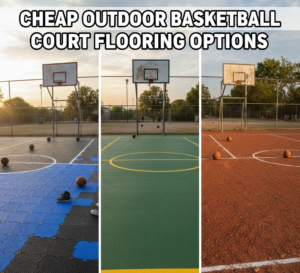
Let’s explore the best budget-friendly options—from lowest cost to more durable alternatives:
A. Painted Concrete or Asphalt (Basic & Cheapest)
Overview:
The most economical approach is to use a standard concrete or asphalt pad and paint it with court lines and surface coating.
Pros:
-
Lowest material cost
-
Easy to install
-
Works well for casual play
Cons:
-
Hard surface—more impact on joints
-
Paint fades with time and weather
-
Prone to cracking
Why It’s Affordable:
Concrete and asphalt are common paving materials often used for driveways or patios already on property, so conversion costs can be extremely low.
Recommended Use:
Backyards, low-traffic neighborhood courts, temporary courts.
B. Acrylic Coatings Over Asphalt or Concrete
Overview:
Applying inexpensive acrylic coatings on top of a basic pad gives color, traction, and weather protection.
Pros:
-
Affordable upgrade from plain paint
-
Improves traction and aesthetics
-
Fairly DIY-friendly
Cons:
-
Needs resurfacing every few years
-
Not as cushioned as premium surfaces
-
Sensitive to water if base cracks
Cost Insight:
Acrylic surface systems cost more than paint but are still one of the most budget-friendly performance upgrades available.
Recommended Use:
Backyard courts, community spaces with moderate use.
C. Rubber Tiles or Pavers (Mid-Range Budget)
Overview:
Rubber tiles are interlocking products that sit on top of a base and provide cushioning.
Pros:
-
Excellent shock absorption
-
Easy to replace individual tiles
-
Comfortable and safer for joints
Cons:
-
Higher upfront cost than paint/acrylic
-
May shift without proper base
-
Can trap heat on sunny days
Cost Insight:
Rubber tiles are mid-budget—not as cheap as acrylic, but still affordable compared with premium systems.
Recommended Use:
Backyards where kids play often, schools, parks.
D. Interlocking Modular Court Tiles (Best Budget Performance Mix)
Overview:
These are polypropylene or composite tiles that snap together to form a court surface.
Pros:
-
DIY-friendly and quick installation
-
Excellent water drainage
-
Good ball bounce and traction
-
Lasts 10+ years with minimal maintenance
Cons:
-
Higher cost than basic coatings
-
Requires precision leveling base
Cost Insight:
Moderate initial investment but low maintenance and long life makes them cost-effective.
Recommended Use:
Home courts, community centers, multi-court facilities.
4. Comparing Flooring Options at a Glance
| Flooring Type | Upfront Cost | Durability | Maintenance | Performance |
|---|---|---|---|---|
| Painted Concrete/Asphalt | Very Low | Low | High | Basic |
| Acrylic Surface Coating | Low | Medium | Medium | Good |
| Rubber Tiles | Medium | Medium-High | Low | Very Good |
| Interlocking Court Tiles | Medium | High | Very Low | Excellent |
5. Step-by-Step: How to Install Budget Outdoor Court Flooring
Whether you choose painted asphalt or interlocking tiles, here’s a simplified installation path:
Step 1 — Prepare the Base
-
Ensure the pad is level, without large cracks.
-
Asphalt or concrete must be structurally sound.
Fix Cracks and Clean
-
Patch any cracks or holes.
-
Pressure-wash the surface and let it dry.
Apply Primer or Base Coating
-
For paint and acrylic systems, apply primer for adhesion.
Step 4 — Surface Covering
-
Paint lines and color coat.
-
Or lay rubber/interlocking tiles according to manufacturer instructions.
Seal and Protect
-
For coatings, use a weather-resistant seal.
-
For tiles, ensure edges are firmly locked.
Let It Cure
-
Allow full drying (usually 24–72 hours) before use.
6. Budget Tips to Save Money
DIY Where Possible
Painting, coating, and installing tiles can be DIY projects with careful planning.
Buy in Bulk
Order extra tiles or coatings to save on unit costs.
Work in Off-Season
Contractors may offer cheaper rates outside peak seasons.
Use Local Materials
Sourcing locally reduces transport and handling cost.
Volunteer Labor
Community courts often benefit from volunteer build-days.
7. Maintenance Tips for Long-Lasting Performance
Even cheap flooring needs care:
-
Sweep regularly to remove debris.
-
Pressure wash occasionally to prevent mold and dirt buildup.
-
Inspect annually for cracks or loose tiles.
-
Repaint faded lines for safety and appearance.
Proper maintenance can extend a budget court’s life beyond 10–12 years.
8. Safety and Comfort Considerations
Cheap shouldn’t mean unsafe. Ensure your court flooring offers:
-
Non-slip surfaces
-
Proper shock absorption
-
Good drainage
-
Temperature resistance
-
UV protection
These factors keep players safe and reduce long-term replacement costs.
9. Real-World Cost Breakdown (Ballpark Figures)
Note: Costs vary by region, materials, and labor. These estimates are meant for planning.
Concrete or Asphalt + Paint
-
Base pad: ₹800–₹1,500 per sq. m
-
Paint lines & color: ₹150–₹300 per sq. m
Approx. Total: ₹950–₹1,800 per sq. m
Acrylic System
-
Base pad: ₹800–₹1,500 per sq. m
-
Acrylic surface: ₹300–₹600 per sq. m
Approx. Total: ₹1,100–₹2,100 per sq. m
Rubber Tiles
-
Base pad: ₹800–₹1,500 per sq. m
-
Rubber tiles: ₹600–₹1,200 per sq. m
Approx. Total: ₹1,400–₹2,700 per sq. m
Interlocking Court Tiles
-
Base pad: ₹800–₹1,500 per sq. m
-
Interlocking tiles: ₹900–₹1,800 per sq. m
Approx. Total: ₹1,700–₹3,300 per sq. m
10. Final Thoughts: Build Smart, Play Long
A cheap outdoor basketball court floor doesn’t mean compromising performance. With the right materials, installation strategy, and maintenance plan, you can have a court that:
✔ Stays within budget
✔ Provides safe play
✔ Looks professional
✔ Lasts for years
FAQ: Cheap Outdoor Basketball Court Flooring
1. What is cheap outdoor basketball court flooring?
Cheap outdoor basketball court flooring refers to cost-effective materials and solutions designed for outdoor courts. These floors offer durability, grip, and performance without the high costs of professional indoor surfaces.
2. What types of affordable outdoor basketball flooring are available?
Common affordable options include:
-
Interlocking modular tiles (plastic or polypropylene)
-
Asphalt or concrete coated with acrylic or polyurethane paint
-
Rubber mats or synthetic sports surfaces
3. Are cheap basketball court floors durable?
Yes, many low-cost outdoor surfaces are highly durable. Interlocking tiles and coated asphalt surfaces can withstand weather conditions, heavy use, and UV exposure while providing good traction.
4. Can these floors offer high performance for competitive play?
While budget-friendly floors may not match professional indoor courts, properly installed affordable surfaces still allow for excellent ball bounce, grip, and player safety. Many outdoor courts for schools, clubs, or community parks use these cost-effective options successfully.
5. How do I maintain a cheap outdoor basketball court floor?
Maintenance is simple:
-
Sweep debris regularly
-
Wash with mild soap and water
-
Inspect for cracks or loose tiles
-
Repaint lines as needed
Routine care extends the floor’s lifespan and keeps it safe.
.