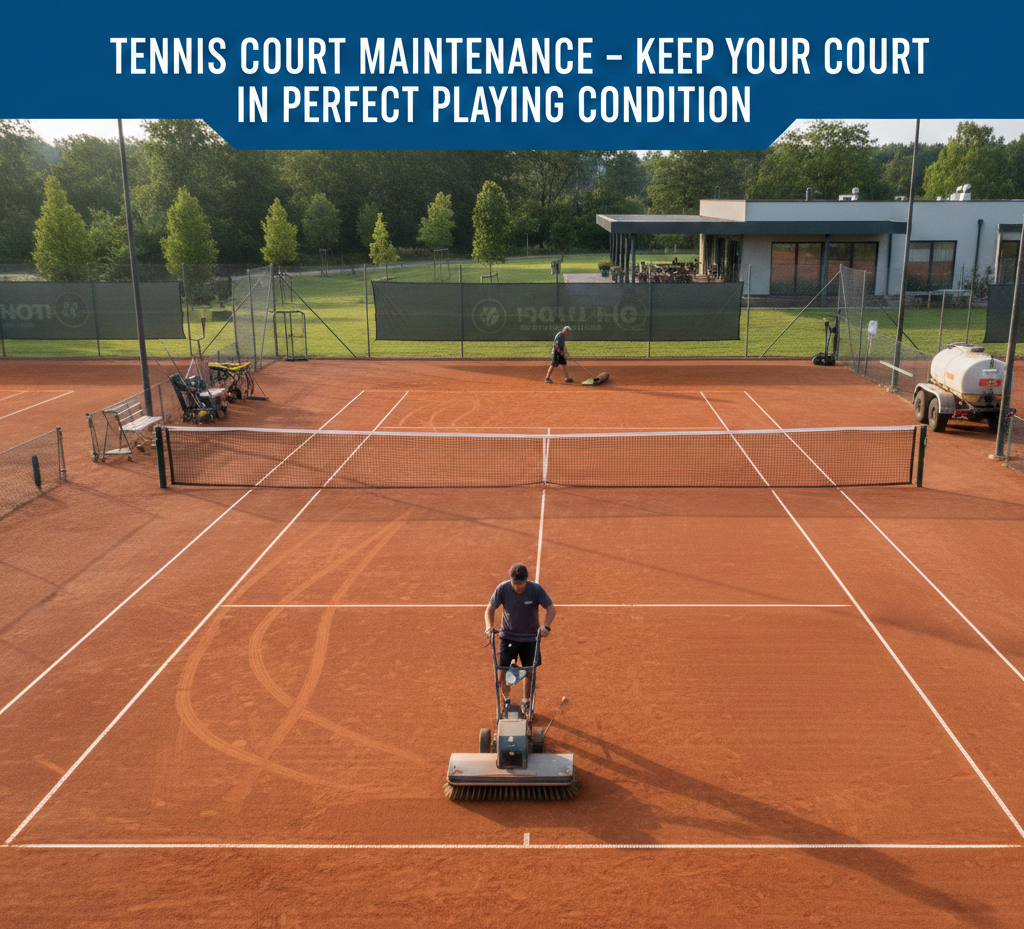
A well-maintained tennis court is essential for performance, safety, and longevity. Whether you own a professional academy, a school facility, or a private tennis court, regular tennis court maintenance ensures smooth play, consistent ball bounce, and extended surface life.
As a leading tennis court construction and maintenance company in India, we specialize in comprehensive upkeep services for all court types — including acrylic, synthetic turf, clay, and indoor courts. From cleaning and resurfacing to crack repairs and line repainting, our maintenance team ensures your court stays match-ready all year long.
Why Tennis Court Maintenance is Essential
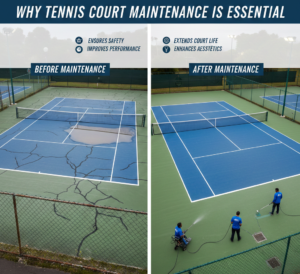
A tennis court faces continuous wear and tear due to weather, UV exposure, and player activity. Without proper maintenance, even the best-built courts can develop cracks, fading, and uneven surfaces — all of which affect playability and increase repair costs over time.
Here’s why routine tennis court maintenance is vital:
-
Ensures Safety – Regular upkeep prevents slippery surfaces, loose debris, and uneven patches that can lead to player injuries.
-
Improves Performance – A smooth, clean, and level surface guarantees consistent ball response and better game quality.
-
Extends Court Life – Preventive maintenance delays the need for expensive resurfacing or reconstruction.
-
Enhances Aesthetics – Freshly cleaned and repainted courts look vibrant and professional, adding to the facility’s appeal.
-
Saves Money in the Long Run – Periodic maintenance costs are far lower than major repairs caused by neglect.
Types of Tennis Court Surfaces We Maintain
Different surfaces have unique maintenance needs. Our experts handle all types with the right care and technical expertise.
1. Acrylic / Hard Courts
-
Regular pressure washing to remove dirt and debris
-
Crack sealing to prevent water seepage
-
Surface touch-up and recoating every 4–6 years
-
Repainting of lines for visibility and accuracy
-
Ensuring drainage channels are clean and functional
2. Synthetic Turf Courts
-
Brushing to keep fibers upright and evenly distributed
-
Replacing infill material (sand or rubber granules) periodically
-
Checking seams and joints for stability
-
Removing moss, weeds, and algae growth
-
Maintaining proper drainage and leveling
3. Clay Courts
-
Daily watering and rolling for surface firmness
-
Regular brushing and sweeping
-
Reapplying top dressing material when necessary
-
Periodic line straightening and replacement
-
Annual leveling and re-compaction
4. Indoor Tennis Courts
-
Dust-free dry cleaning or vacuuming
-
Checking ventilation systems for moisture control
-
LED light inspection and replacement
-
Preventing fungal or bacterial buildup on flooring
-
Maintaining consistent humidity and temperature
Each surface requires a unique approach, and our maintenance packages are customized to match your surface type, usage, and local weather conditions.
Our Comprehensive Tennis Court Maintenance Services
We offer a full range of professional tennis court maintenance solutions to keep your facility performing at its best.
1. Surface Cleaning
Our team uses specialized equipment to remove dust, moss, and debris without damaging the court surface. For outdoor courts, we use high-pressure water cleaning combined with eco-friendly detergents to restore color and traction.
2. Crack Repair and Sealing
Cracks are a common issue, especially on acrylic or concrete courts. We use premium-grade crack sealants and flexible compounds that expand and contract with temperature changes, preventing further surface damage.
3. Repainting & Line Marking
Over time, court lines fade due to UV exposure and heavy use. Our experts repaint all markings using ITF-standard paints for clear visibility and long-lasting results.
4. Surface Recoating / Resurfacing
After 5–7 years of continuous play, most courts require resurfacing. We provide acrylic coating, synthetic turf replacement, or clay topping renewal based on surface type. This restores grip, smoothness, and color vibrancy.
5. Drainage System Maintenance
Poor drainage can lead to puddles and surface damage. We inspect and clean all drains, ensuring proper slope and water runoff for outdoor courts.
6. Fence, Net, and Lighting Inspection
Our maintenance goes beyond flooring. We check:
-
Net posts for alignment and tension
-
Perimeter fencing for safety
-
Lighting systems for brightness and coverage
A complete maintenance approach ensures your court remains safe, durable, and tournament-ready.
Recommended Tennis Court Maintenance Schedule
To keep your court in peak condition, here’s a suggested maintenance frequency based on usage:
| Frequency | Maintenance Task |
|---|---|
| Daily | Sweep or blow off debris, inspect nets, and check for standing water |
| Weekly | Light washing, brushing, and checking drainage |
| Monthly | Crack inspection, moss removal, and line cleaning |
| Quarterly | Deep cleaning, lighting check, surface touch-up |
| Annually | Professional inspection, repainting, or resurfacing as needed |
Regular monitoring ensures problems are identified early — saving you from costly future repairs.
Signs Your Tennis Court Needs Maintenance
If you notice any of these signs, it’s time to schedule maintenance or resurfacing:
-
Visible cracks or peeling paint
-
Faded color or slippery patches
-
Puddles forming after rain
-
Uneven ball bounce or dead spots
-
Moss, algae, or fungal growth
-
Loose or misaligned nets and fences
Ignoring these issues can quickly deteriorate your court’s surface integrity and safety standards.
Benefits of Professional Tennis Court Maintenance
Working with an expert maintenance company ensures precision and long-term results. Our professional approach includes:
-
Use of certified materials and equipment
-
Skilled technicians trained in surface repair
-
Adherence to ITF and ASTM standards
-
Quick turnaround with minimal disruption
-
Affordable maintenance packages
With our expertise, you can focus on the game — while we take care of your court.
How Much Does Tennis Court Maintenance Cost in India?
Maintenance costs depend on surface type, court condition, and service scope. On average:
-
Acrylic courts: ₹15 – ₹25 per sq. ft (for cleaning and recoating)
-
Synthetic turf: ₹10 – ₹20 per sq. ft (brushing, infill, patchwork)
-
Clay courts: ₹1 – ₹2 lakh annually (top dressing and re-leveling)
We provide customized maintenance plans tailored to your budget and schedule, ensuring maximum value and longevity.
Why Choose Us for Tennis Court Maintenance in India
✅ Experienced team specializing in all surface types
✅ Use of eco-safe, ITF-certified materials
✅ Nationwide service coverage
✅ Quick response and transparent pricing
✅ Preventive and corrective maintenance programs
✅ Trusted by schools, clubs, and sports academies across India
We’re committed to helping you protect your investment and enjoy flawless tennis court performance — season after season.
Keep Your Court Match-Ready Year-Round
Your tennis court deserves professional care. With our expert maintenance solutions, you can ensure lasting beauty, consistent playability, and superior safety standards.
Whether you need a one-time surface renovation or an annual maintenance contract, we’re here to provide reliable, cost-effective, and expert service across India.
📞 Contact us today for a free site inspection and maintenance estimate.
Let’s keep your tennis court looking new, performing flawlessly, and ready for
(FAQ) – Tennis Court Maintenance
1. Why is tennis court maintenance important?
Regular maintenance ensures:
-
Safe playing conditions by preventing slips and surface damage
-
Consistent ball bounce and performance
-
Extended lifespan of the court
-
Prevention of costly repairs due to cracks, moss, or water damage
2. How often should a tennis court be maintained?
-
Routine cleaning: Weekly or monthly, depending on usage
-
Surface inspection: Every 6–12 months for cracks, wear, or peeling
-
Resurfacing: Every 4–8 years, depending on the type of court and usage
-
Line repainting: As needed, usually every 2–3 years
3. What does tennis court maintenance include?
-
Cleaning dirt, dust, leaves, and debris
-
Checking and repairing surface cracks
-
Repainting court lines
-
Resurfacing acrylic or cushioned surfaces
-
Maintaining drainage and slope to prevent water pooling
-
Removing moss, algae, or mold in humid areas
4. How do maintenance needs differ by court type?
-
Acrylic & cushioned courts: Require periodic resurfacing, cleaning, and line repainting
-
Synthetic/modular courts: Light cleaning and inspection for wear; minimal resurfacing
-
Clay courts: Daily brushing, watering, rolling, and line marking to maintain proper texture
5. How can I prevent damage to my tennis court?
-
Avoid using the court in extreme weather conditions
-
Keep heavy objects and sharp tools off the surface
-
Clean regularly to prevent moss, algae, or debris buildup
-
Ensure proper drainage to avoid waterlogging
6. How much does tennis court maintenance cost?
Costs vary depending on:
-
Court type and size
-
Frequency of maintenance
-
Extent of repairs or resurfacing required
-
Local labor and material costs
Routine cleaning is relatively inexpensive, while resurfacing and major repairs are higher-cost maintenance items.
7. Can I do maintenance myself, or should I hire professionals?
-
Routine cleaning: Can be done by the owner or staff
-
Surface repairs, resurfacing, and line repainting: Should be done by professional tennis court maintenance contractors to ensure quality and longevity
8. How long does resurfacing a tennis court take?
-
Acrylic or cushioned courts: Typically 1–2 weeks, depending on weather and court size
-
Synthetic/modular courts: 3–7 days, often ready immediately after installation
-
Clay courts: Several days including rolling and settling
9. What is the lifespan of a well-maintained tennis court?
With proper maintenance:
-
Acrylic courts: 8–12 years
-
Cushioned acrylic courts: 10–12 years
-
Synthetic courts: 10+ years
-
Clay courts: 5–8 years
Regular maintenance ensures the court remains safe and playable throughout its lifespan.
10. Why hire professional tennis court maintenance services?
Professional maintenance services ensure:
-
Safe and high-performance surfaces
-
Proper use of materials for repairs and resurfacing
-
Timely inspections to prevent major damage
-
Compliance with international playing standards