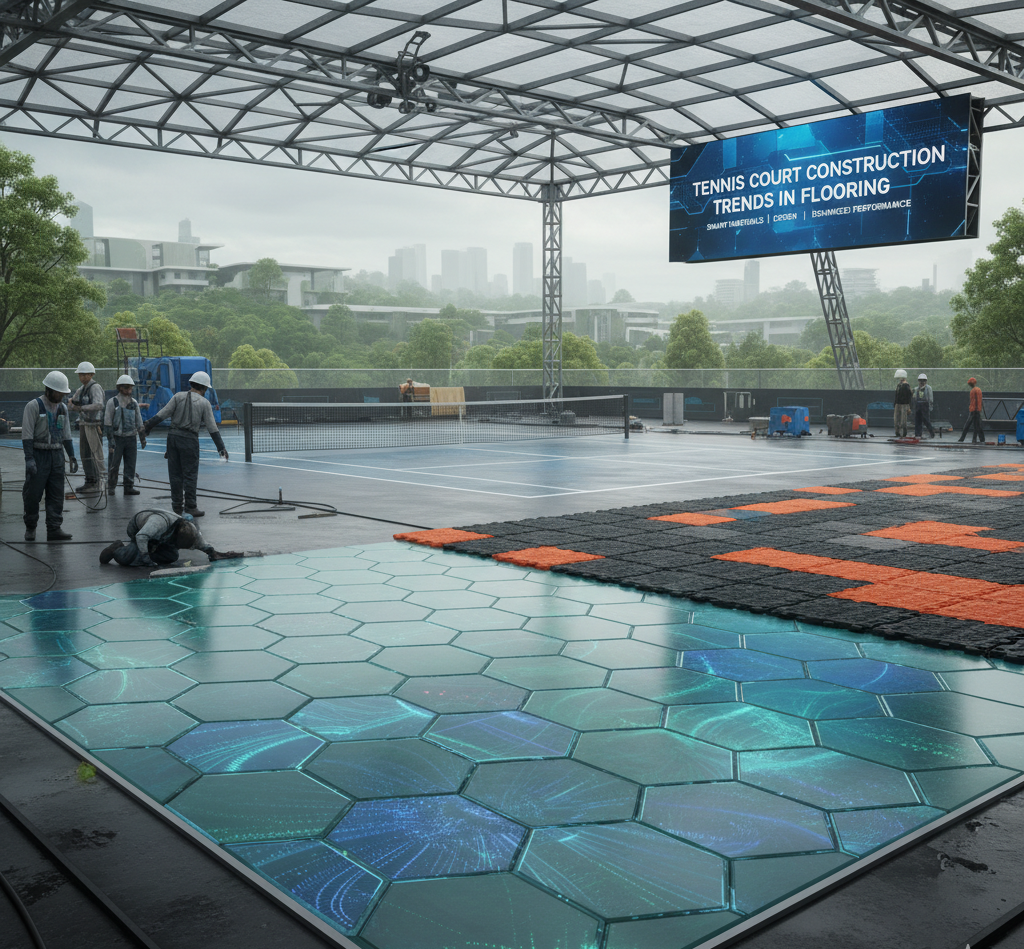
Tennis is one of the world’s most dynamic and enduring sports — and with the growing demand for professional and recreational sports infrastructure, tennis court construction has seen major advancements in recent years. From surface technology to eco-friendly materials, the flooring trends of 2025 are redefining how courts perform, look, and last.
Whether you are planning a tennis court for a school, sports academy, club, or residential complex, understanding the latest flooring innovations can help you make a smart, future-ready investment. This article explores the latest trends in tennis flooring, the best materials to use, and the construction practices shaping modern sports surfaces in 2025.
1. Evolution of Tennis Court Flooring
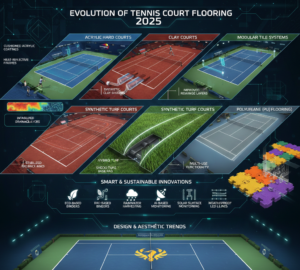
For decades, tennis courts were limited to three traditional types — grass, clay, and hard courts. However, modern needs and technology have transformed how these surfaces are built and maintained. Today, flooring solutions are designed for:
-
All-weather durability
-
Player safety and comfort
-
Low maintenance
-
Sustainability and performance consistency
In 2025, sports flooring has evolved beyond aesthetics — it’s about creating a smart surface that supports athletes, resists wear, and performs equally well in all conditions.
2. The Most Popular Tennis Court Flooring Options in 2025
Each flooring type offers a unique playing experience, construction requirement, and maintenance level. Let’s explore the trending materials used for modern tennis court construction.
A. Acrylic Hard Courts – The Global Standard
Overview:
Acrylic hard courts continue to dominate the tennis flooring market. Known for their consistent bounce, vibrant color finish, and all-weather resistance, they’re the surface of choice for many international tournaments like the US Open and Australian Open.
Construction Method:
Multiple layers of acrylic resin are applied over an asphalt or concrete base, often including cushioning layers to reduce player impact.
Trending Features in 2025:
-
Cushioned Acrylic Systems: Multi-layer coatings with elastic underlays for joint comfort.
-
Eco-Friendly Coatings: Low-VOC acrylic materials that reduce environmental impact.
-
Heat-Reflective Finishes: Innovative surface pigments that reduce temperature build-up by up to 10°C.
Best For: Outdoor tennis courts, schools, clubs, and sports facilities.
B. Clay Courts – Tradition Meets Technology
Overview:
Clay courts have a long-standing reputation for promoting strategic and endurance-based play. However, maintaining them has historically been labor-intensive. That’s changing in 2025.
Modern Innovations:
-
Synthetic Clay Systems: New artificial clay surfaces mimic traditional clay’s slow bounce without heavy maintenance.
-
Improved Drainage Layers: Prevent water logging and ensure quick drying.
-
Stabilized Red Brick Mixes: Provide long-lasting color and texture with less dust.
Advantages:
-
Soft on joints
-
Excellent for training and professional play
-
More durable thanks to new material engineering
Best For: Professional academies and regional-level tournament facilities.
C. Synthetic Turf Courts – The Future of Multi-Sport Flooring
Overview:
Artificial grass has rapidly gained popularity as a versatile and cost-effective alternative to natural grass. It combines the lush aesthetics of a traditional lawn with superior durability and weather resistance.
Trends in 2025:
-
Hybrid Turf Systems: Combine synthetic fibers with natural grass for a realistic playing experience.
-
Shock-Absorbing Base Pads: Offer comfort while maintaining true ball response.
-
UV-Stabilized Fibers: Prevent color fading and material breakdown.
Advantages:
-
All-weather usability
-
Low maintenance
-
Suitable for multi-purpose sports
Best For: Residential complexes, schools, and community centers.
D. Polyurethane (PU) Flooring – The Modern Indoor Solution
Overview:
PU flooring systems have revolutionized indoor tennis court construction. This seamless, cushioned surface delivers high performance, comfort, and durability.
Key Features for 2025:
-
Enhanced Cushioning Layers: Reduce impact and fatigue during long matches.
-
Seamless Finish: Ensures a smooth, non-slip surface ideal for indoor environments.
-
Multi-Use Functionality: Can be used for tennis, badminton, volleyball, and other indoor sports.
Advantages:
-
Excellent shock absorption
-
Non-slip texture
-
Long lifespan with minimal maintenance
Best For: Indoor tennis academies, sports halls, and multi-sport facilities.
E. Modular Tile Systems – The Portable Revolution
Overview:
Interlocking modular tile courts are one of the most exciting trends in tennis flooring. These prefabricated polypropylene tiles can be installed quickly on existing bases and provide excellent grip and shock absorption.
Emerging Trends in 2025:
-
SnapLock Technology: Ensures seamless alignment and easy replacement of damaged sections.
-
Enhanced Cushioning Grids: Offer better joint support and ball response.
-
Weatherproof Coating: Ensures longevity in outdoor settings.
Advantages:
-
Portable and easy to install
-
Ideal for temporary or seasonal courts
-
Available in vibrant, customizable colors
Best For: Temporary courts, events, or schools with multi-use areas.
3. Smart & Sustainable Flooring Innovations
The tennis flooring industry is embracing sustainability and smart technology. Here are the latest innovations driving tennis court construction in 2025:
-
Eco-Based Binders: Replacing petroleum-based materials with plant-derived polymers.
-
Rainwater Harvesting Systems: Integrated underfloor drainage and water reuse systems.
-
AI-Based Surface Monitoring: Smart sensors to track surface temperature, friction, and wear.
-
Solar-Powered LED Lines: Energy-efficient lighting integrated into court boundaries.
These innovations not only reduce environmental impact but also enhance court safety, longevity, and playability.
4. Design & Aesthetic Trends
Modern tennis courts aren’t just functional — they’re also designed for visual appeal and player engagement.
2025 Design Highlights:
-
Dual-Tone Color Schemes: Contrasting borders for better visibility and style.
-
Matte Finishes: Reduce glare under bright sunlight.
-
Custom Logos & Branding: Applied using long-lasting, UV-stable paints.
-
Perimeter Enhancements: Use of recycled rubber and non-slip pavers for added safety.
Such designs are increasingly popular among premium clubs, international schools, and real estate projects focusing on lifestyle sports amenities.
5. Choosing the Right Flooring for Your Project
Selecting the right flooring depends on location, budget, player level, and maintenance capacity.
| Factor | Recommended Flooring | Why |
|---|---|---|
| Outdoor Durability | Acrylic / Synthetic Turf | Weatherproof and long-lasting |
| Indoor Comfort | PU / Modular Tile | Cushioned and non-slip |
| Training Focus | Clay (or Synthetic Clay) | Improves endurance and control |
| Luxury Appeal | Grass / Hybrid Turf | Premium aesthetics |
| Quick Installation | Modular Tiles | Easy setup and relocation |
Partnering with a professional tennis court construction company ensures correct installation, leveling, and surface finishing — essential for achieving optimal performance and lifespan.
6. Maintenance Trends for 2025
Modern courts require less upkeep thanks to advanced materials. However, regular care still extends the life of your surface.
Maintenance Best Practices:
-
Inspect drainage systems every 3–6 months.
-
Recoat acrylic surfaces every 5–7 years.
-
Clean debris weekly to avoid surface damage.
-
Use professional-grade non-abrasive cleaners.
-
Brush synthetic turf to maintain infill uniformity.
Predictive maintenance tools using IoT sensors are becoming a trend, helping facility owners plan servicing proactively.
Conclusion
As we move deeper into 2025, tennis court flooring is shifting toward sustainability, innovation, and performance-driven design. Surfaces like cushioned acrylics, PU floors, synthetic turfs, and modular tiles are setting new standards for durability, comfort, and style.
FAQ-Tennis Court Construction | Trends in Flooring
1. What are the latest trends in tennis court flooring?
Modern tennis court construction focuses on:
-
Cushion acrylic surfaces for enhanced comfort
-
Synthetic turf systems for low maintenance
-
Eco-friendly and water-based coatings
-
Advanced shock-absorption layers
-
UV-resistant and weatherproof materials
These trends aim to improve durability, player safety, and long-term performance.
2. Why are cushion acrylic tennis courts becoming popular?
Cushion acrylic flooring systems are trending because they:
-
Reduce joint impact
-
Improve player comfort
-
Provide consistent ball bounce
-
Extend surface lifespan
They are widely used in clubs, schools, and professional training academies.
3. Is synthetic turf a good option for modern tennis court construction?
Yes, synthetic turf is gaining popularity due to:
-
Low maintenance requirements
-
Faster installation time
-
Natural grass-like appearance
-
Good drainage performance
It is ideal for residential and multi-sport facilities.
4. Are eco-friendly materials used in tennis court flooring?
Yes, sustainable tennis court construction now includes:
-
Low-VOC acrylic coatings
-
Recyclable rubber granules
-
Energy-efficient LED lighting
-
Water-saving drainage systems
Eco-friendly solutions reduce environmental impact while maintaining performance.
5. What is the ideal base for modern tennis court construction?
Current construction standards recommend:
-
Asphalt base for flexibility
-
Concrete base for strength and stability
Proper base preparation ensures durability and prevents surface cracking.
6. How important is shock absorption in new tennis flooring systems?
Shock absorption is a major trend in tennis court construction. Modern flooring systems incorporate cushioning layers that:
-
Reduce stress on knees and ankles
-
Improve player endurance
-
Lower injury risks
-
Enhance playing comfort
7. What color trends are popular in tennis court flooring?
Modern tennis courts often use:
-
Blue playing area with green outer zone
-
Red and green combinations
-
Custom branding colors for clubs
Color contrast improves visibility and enhances aesthetics.
8. How long do modern tennis court flooring systems last?
With advanced materials, modern tennis courts can last:
-
6–10 years for acrylic systems (before resurfacing)
-
8–12 years for synthetic turf systems
Regular maintenance extends lifespan.
9. Is drainage technology improving in tennis court construction?
Yes, advanced drainage systems are a key trend. Proper slope design and permeable sub-base layers ensure:
-
Faster water runoff
-
Reduced surface damage
-
Year-round playability
10. What lighting trends are associated with modern tennis courts?
LED sports lighting is now standard because it:
-
Reduces energy consumption
-
Provides uniform illumination
-
Minimizes glare
-
Supports night tournaments
Smart lighting systems are also becoming popular.