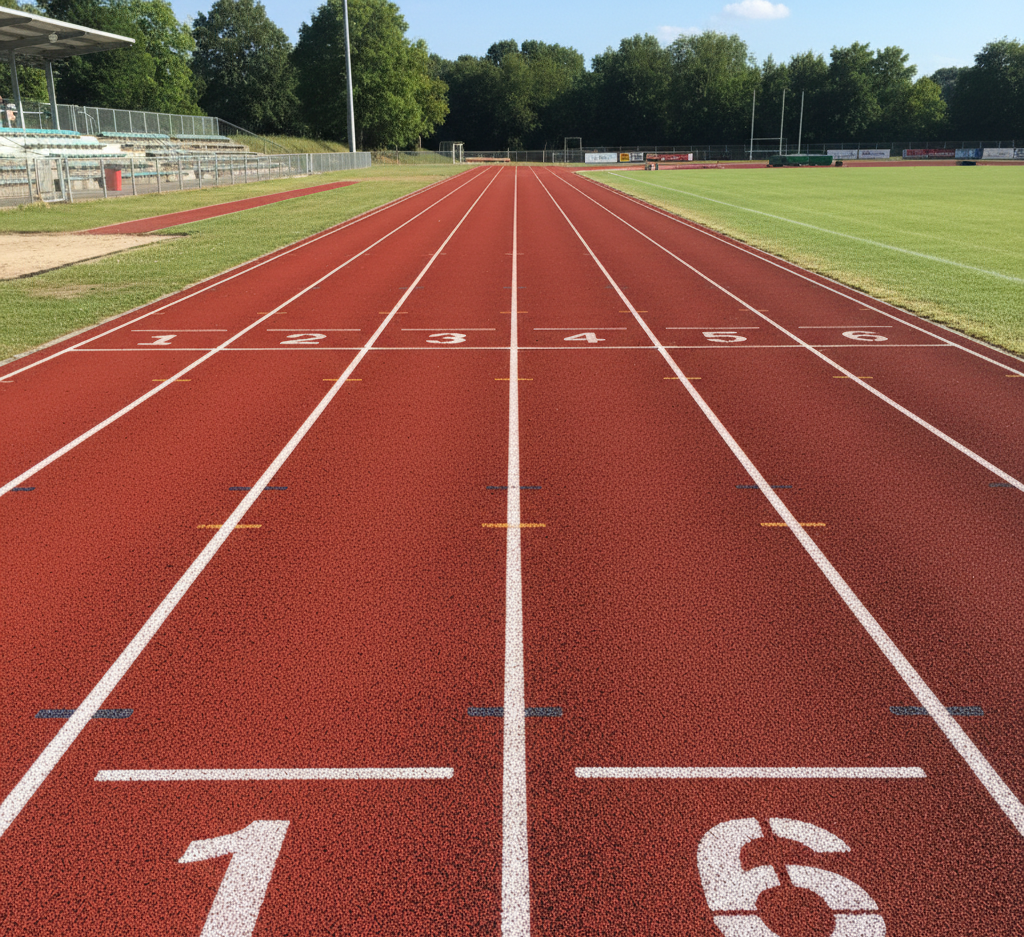
Athletic excellence depends on more than just training—it also relies on the quality of the surface athletes run on. Among all types of synthetic tracks, the Tartan track surface stands out as the pioneer and industry benchmark for performance, safety, and longevity.
Developed in the 1960s by 3M, the Tartan track revolutionized global athletics by replacing traditional cinder tracks with a synthetic, weather-resistant, and resilient surface. Since then, “Tartan track” has become a global term for polyurethane-based synthetic running tracks used in Olympic and professional-level sports facilities.
1. What Is a Tartan Track Surface?
A Tartan track is a synthetic running surface made primarily from polyurethane and rubber granules. It is designed to offer consistent performance, superior shock absorption, and excellent traction in all weather conditions.
The surface is usually built in multiple layers, combining elastic rubber materials with a durable polyurethane binder, creating a seamless, resilient, and high-grip track that meets World Athletics (IAAF) performance standards.
Tartan tracks are now standard across Olympic stadiums, universities, schools, and community sports complexes because of their unmatched balance of comfort, speed, and durability.
2. History and Evolution
The original Tartan Track was developed by 3M Company in 1967 and first used in the 1968 Mexico City Olympics, where it gained global recognition for its performance benefits over traditional cinder surfaces.
This innovation marked the beginning of the synthetic track era, setting new benchmarks in sports surface technology. Today, while the term “Tartan” was once a brand name, it is now widely used to describe all synthetic polyurethane running tracks with a rubberized structure.
Over time, manufacturers improved on the original formula, introducing variants such as sandwich systems, full-pour PU tracks, and EPDM surfacing—all inspired by the original Tartan design.
3. Composition and Structure of a Tartan Track
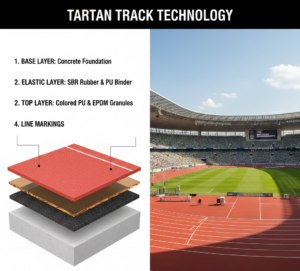
A Tartan track consists of multiple engineered layers, each contributing to performance, safety, and durability:
-
Base Layer:
A stable asphalt or concrete foundation that ensures proper support and drainage. -
Elastic Layer (SBR Rubber + PU Binder):
Made from recycled black SBR granules mixed with polyurethane binder. This layer provides flexibility, cushioning, and shock absorption. -
Top Layer (Colored PU + EPDM Granules):
A durable wear-resistant surface composed of colored EPDM granules bound with polyurethane resin. This layer provides excellent traction, UV stability, and a vibrant finish. -
Line Markings:
Permanent markings made with high-quality polyurethane or acrylic paint resistant to wear and weather.
The combined structure creates a smooth, resilient, and consistent track ideal for competitive and recreational running.
4. Key Advantages of Tartan Track Surfacing
Tartan track systems are designed for both performance and safety, offering multiple benefits:
-
✅ All-Weather Performance – Resists rain, heat, and frost without losing traction.
-
✅ Shock Absorption – Reduces strain on joints and muscles during high-impact sports.
-
✅ High Traction – Provides excellent grip for sprinters and distance runners alike.
-
✅ Seamless Surface – Ensures consistent running conditions across lanes.
-
✅ Low Maintenance – Easy to clean and maintain compared to traditional cinder or asphalt tracks.
-
✅ Long Lifespan – Can last over 10–15 years with proper maintenance.
-
✅ Eco-Friendly Options – Modern materials are non-toxic and recyclable.
These properties make the Tartan track a trusted choice for schools, colleges, stadiums, and athletic federations worldwide.
5. Types of Tartan Track Systems
Depending on usage, performance level, and budget, Tartan tracks are built in different configurations:
a. Spray-Coated PU Track
A cost-effective system featuring a base layer of SBR rubber and a spray-applied polyurethane top layer with EPDM granules. Ideal for schools and training grounds.
b. Sandwich System
Includes a base layer of SBR rubber, a middle sealing coat of polyurethane, and a top EPDM granule layer. Offers excellent elasticity and professional-grade performance.
c. Full-Pour Polyurethane System
It provides maximum energy return, uniformity, and durability, making it ideal for international-level competitions.
d. Prefabricated Tartan Sheets
Factory-made sheets installed directly onto the base. Ensures uniform performance and is suitable for indoor or smaller installations.
6. Installation Process of Tartan Track Surface
The installation of a Tartan track requires precision and adherence to quality standards.
Step 1: Base Preparation
This ensures stability and prevents water accumulation.
Step 2: Priming
A polyurethane primer is applied to improve adhesion between the base and the rubber layers.
Step 3: Laying the Cushion Layer
SBR granules mixed with PU binder are spread evenly to form the shock-absorbing base.
Step 4: Applying the Top EPDM Layer
Colored EPDM granules are mixed with polyurethane resin and applied using a paver or roller for a seamless finish.
Step 5: Curing and Finishing
The surface is left to cure for 24–48 hours to achieve optimal strength and elasticity.
Step 6: Line Marking
Track lanes and event zones are marked with durable, UV-resistant paint that maintains color even under heavy use.
7. Performance Features
| Feature | Benefit |
|---|---|
| Shock Absorption | Reduces injury risk and improves comfort |
| Energy Return | Enhances athlete performance |
| Weather Resistance | Suitable for all climates |
| Slip Resistance | Safe traction in wet or dry conditions |
| Longevity | 10–15 years of performance |
| Maintenance | Easy to clean and repair |
These features make Tartan tracks suitable for both elite competitions and recreational training.
8. Applications of Tartan Track Surfacing
-
Olympic and International Stadiums
-
School and College Athletics Fields
-
Professional Training Centers
-
Community Sports Complexes
-
Jogging and Walking Tracks
-
Multipurpose Sports Arenas
Their adaptability makes them a smart investment for long-term athletic infrastructure.
9. Maintenance and Durability
Tartan tracks require minimal maintenance while providing long-lasting performance. To preserve quality:
-
Regularly remove debris, dust, and leaves.
-
Clean periodically with mild detergent and water.
-
Avoid sharp objects or heavy equipment on the surface.
-
Inspect and repair worn sections promptly.
-
Reapply markings as needed.
With proper maintenance, a Tartan track can easily exceed 15 years of service life while maintaining peak performance.
10. Tartan Track vs Other Track Surfaces
| Property | Tartan Track | Asphalt Track | Rubber Track |
|---|---|---|---|
| Shock Absorption | Excellent | Poor | Good |
| Weather Resistance | High | Low | Moderate |
| Traction | Excellent | Average | Good |
| Lifespan | 10–15 years | 5–7 years | 8–10 years |
| Maintenance | Low | High | Moderate |
| Performance Level | Professional | Basic | Recreational |
The Tartan track’s superior properties make it the preferred surface for professional and competitive use.
11. Environmental and Safety Features
-
Non-toxic, lead-free materials
-
Low-VOC polyurethane binders
-
Recyclable rubber granules
-
Superior drainage for dry surfaces
-
Anti-slip texture for maximum safety
These attributes make Tartan tracks a sustainable choice for sports facilities looking to reduce environmental impact.
12. Certification and Standards
Professional Tartan track installations are certified under World Athletics (IAAF) standards for:
-
Shock absorption
-
Vertical deformation
-
Friction coefficient
-
Force reduction
-
Surface evenness
Such certifications ensure that the track provides consistent, safe, and performance-oriented conditions for athletes at every level.
13. Conclusion
The Tartan track surface remains the gold standard in athletic flooring—offering durability, performance, and safety unmatched by traditional materials. Its combination of elastic cushioning, UV resistance, and weatherproof design makes it suitable for any environment, from Olympic stadiums to school fields.
FAQ-Tartan Track Surface
1. What is a Tartan track surface?
A Tartan track surface is a synthetic polyurethane-based running track system designed for athletics and multi-sport facilities. It provides excellent shock absorption, durability, and consistent performance for professional competitions, schools, universities, and sports complexes.
2. What materials are used in a Tartan running track?
Tartan track surfaces are typically made from:
-
Polyurethane (PU) binder
-
EPDM rubber granules
-
SBR rubber base layer
-
Primer and sealing coats
These layers combine to create a resilient, slip-resistant, and weatherproof athletic surface.
3. Why is Tartan track surface preferred for athletics?
Tartan tracks are preferred because they offer:
-
Superior shock absorption
-
Consistent energy return
-
Anti-slip texture
-
Weather resistance
-
Long lifespan
They meet international performance standards for competitive athletics.
4. What types of Tartan track surfaces are available?
Common types include:
-
Sandwich system
-
Full PU system
-
Spray coat system
-
Prefabricated rubber track
The selection depends on budget, performance requirements, and usage frequency.
5. What is the standard thickness of a Tartan track?
The standard thickness typically ranges from 13mm to 15mm for competition tracks. Training tracks may vary depending on design and budget requirements.
6. Is Tartan track surface suitable for outdoor use?
Yes, Tartan track surfaces are specifically designed for outdoor athletics. They are:
-
UV-resistant
-
Weatherproof
-
Water-draining
-
Temperature-resistant
This ensures year-round performance in various climates.
7. How long does a Tartan track surface last?
With proper installation and maintenance, a Tartan running track can last 8–12 years or more. Lifespan depends on:
-
Usage intensity
-
Maintenance routine
-
Climate conditions
-
Quality of materials
8. What base is required for Tartan track construction?
A strong and stable base is essential. Common base options include:
-
Asphalt base
-
Concrete base
Proper leveling and compaction are critical for long-term durability and performance.
9. Is Tartan track surface safe for athletes?
Yes, Tartan tracks are designed to reduce impact stress on joints and muscles. Their shock-absorbing properties help minimize injury risks and improve running comfort.
10. What is the cost of installing a Tartan track surface?
The cost varies depending on:
-
Track size (200m, 400m, etc.)
-
System type (sandwich, full PU, spray coat)
-
Base construction
-
Thickness
-
Site conditions