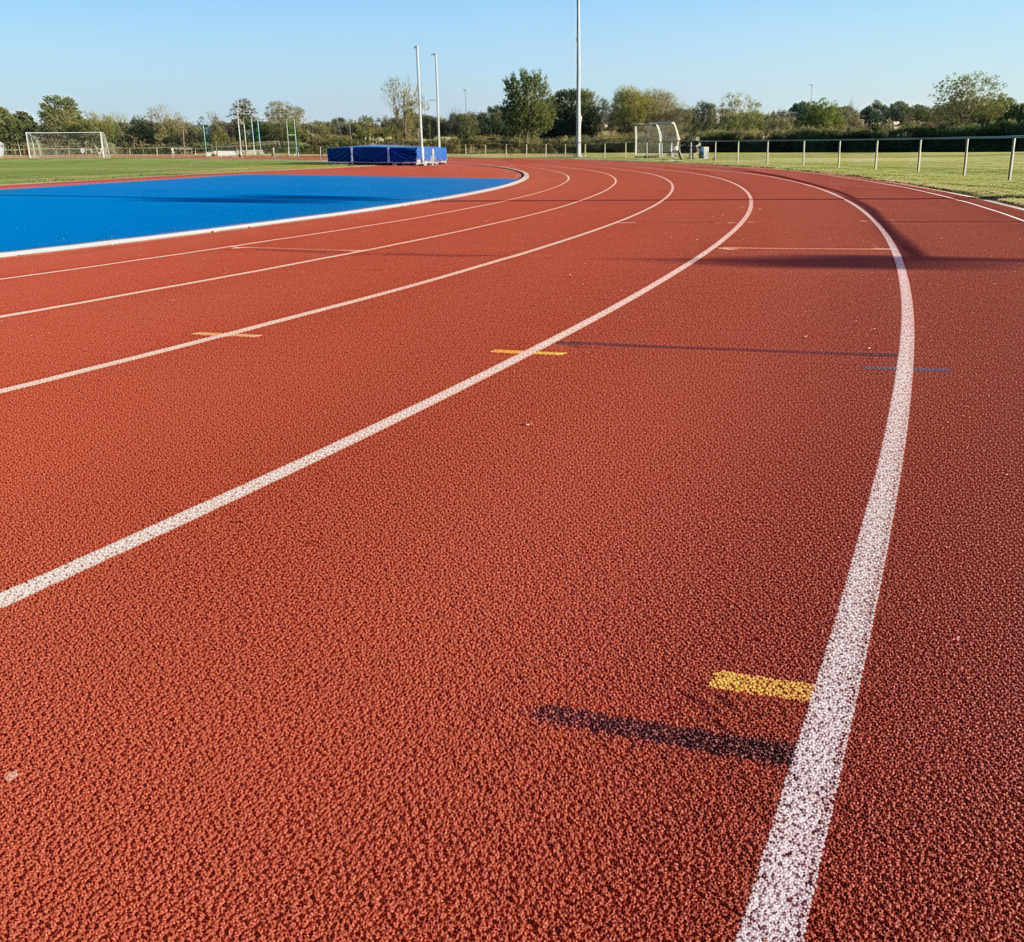
A synthetic track surface has become the global standard for athletics facilities, replacing the traditional cinder or grass tracks that once dominated stadiums. Designed for performance, safety, and durability, these surfaces allow athletes to train and compete in all weather conditions while ensuring consistent results and reduced risk of injury. Whether for international sporting arenas, school grounds, or community projects, synthetic running tracks represent the perfect balance between technology and human performance.
1. Introduction to Synthetic Track Surfaces
Synthetic track surfaces are made from high-performance polymers such as polyurethane or latex-bound rubber granules. These materials are engineered to deliver optimal shock absorption, traction, and energy return. The system is typically laid in multiple layers, creating a resilient and seamless surface that can withstand years of heavy athletic use.
Unlike natural tracks, synthetic systems are weatherproof, low-maintenance, and uniform across all lanes. This uniformity ensures that every athlete competes under identical conditions, which is crucial for fair competition and record certification.
2. Types of Synthetic Track Systems
There are several types of synthetic running track systems, each offering unique performance characteristics and price points. The most common include:
a. Polyurethane System
The polyurethane system is among the most popular due to its superior elasticity, weather resistance, and long lifespan. It consists of multiple layers of polyurethane resin, mixed with rubber granules, that form a smooth, joint-free surface. This system provides excellent shock absorption and energy return, making it ideal for professional athletics tracks.
b. Sandwich System
The sandwich system combines a base layer of pre-fabricated rubber granules with a top coating of polyurethane. This hybrid approach balances cost-effectiveness with high performance. It delivers a comfortable running experience, excellent traction, and resilience against wear and tear.
c. Prefabricated Synthetic Track
These tracks offer precise thickness and consistent density, ensuring even performance across the surface. They are easy to install, maintain, and are commonly used for both indoor and outdoor tracks.
d. Spray-Coated System
This is an economical system where a base mat of rubber granules is coated with a polyurethane spray. Although less durable than full-pour systems, it is suitable for school or community-level tracks with moderate usage.
3. Key Features and Benefits
A well-designed synthetic track surface delivers multiple advantages for athletes, coaches, and facility owners alike.
Performance Efficiency
Synthetic surfaces enhance athletic performance by providing a uniform platform with superior traction and shock absorption. The surface minimizes energy loss during foot contact, allowing athletes to run faster and more efficiently.
Safety and Comfort
One of the major reasons for using synthetic tracks is to reduce injuries. The cushioning properties protect joints, muscles, and ligaments by absorbing impact forces, making training safer and less strenuous.
All-Weather Usability
Unlike natural tracks, synthetic surfaces maintain their grip and structural integrity even during rain or heat. The porous design allows for quick water drainage, ensuring that the surface remains usable year-round.
Durability
High-quality synthetic tracks are resistant to UV rays, heavy foot traffic, and weather fluctuations. With minimal maintenance, they can last over 10–15 years, depending on the system and usage intensity.
Aesthetic Appeal
Synthetic tracks are available in multiple colors—commonly red, blue, or green—offering a visually appealing look that enhances any sports facility. The vibrant tones remain intact for years without fading.
Low Maintenance
Once installed, synthetic surfaces require minimal upkeep compared to natural alternatives. Regular sweeping and occasional cleaning are usually sufficient to maintain performance and appearance.
4. Construction and Installation Process
Building a synthetic running track requires technical precision and expertise. The process involves several critical steps:
-
Site Preparation:
The ground is leveled and compacted to create a stable base. Proper slope and drainage systems are installed to prevent water accumulation. -
Base Layer Construction:
A solid asphalt or concrete base is laid, serving as the foundation for the synthetic layers. -
Application of Cushion Layers:
Rubber granules mixed with polyurethane are applied and leveled. This forms the elastic layer that provides cushioning and shock absorption. -
Surface Coating:
Depending on the system type, a polyurethane or spray coating is applied. For sandwich or full-pour systems, multiple layers ensure consistency and durability. -
Line Marking:
The final step includes precision marking of lanes, start and finish lines, and other track details using weather-resistant paint. -
Quality Testing:
The completed track undergoes performance testing for friction, hardness, and elasticity to ensure it meets international standards such as IAAF/World Athletics specifications.
5. Maintenance and Care
Even though synthetic tracks are low-maintenance, regular care helps preserve their performance and longevity:
-
Routine Cleaning: Remove debris, dust, and organic matter regularly to prevent surface deterioration.
-
Avoid Sharp Objects: High heels, metal spikes, or sharp equipment can puncture or damage the surface.
-
Proper Drainage: Ensure that drainage systems are clear and functional.
-
Regular Inspection: Periodic checks by professionals can identify early signs of wear or damage, allowing timely repairs.
6. Applications of Synthetic Track Surfaces
Synthetic tracks are versatile and used in a wide range of facilities:
-
Olympic and International Stadiums
-
University and School Grounds
-
Training Centers
-
Community Sports Parks
-
Indoor Athletic Arenas
Their adaptability and performance characteristics make them suitable for all levels—from grassroots training to professional competition.
7. Environmental and Economic Advantages
. Many surfaces use eco-friendly binders and recycled rubber materials, minimizing environmental impact. Additionally, their long lifespan and low maintenance needs reduce overall operational costs for facility owners.
This combination of performance and sustainability makes synthetic tracks a responsible and future-ready investment.
8. Why Choose a Professional Track Installer
The performance of a synthetic track surface depends not only on materials but also on installation expertise.
9. Conclusion
Combining advanced materials, precision installation, and aesthetic appeal, it provides athletes with a safe, fast, and reliable surface to reach their full potential