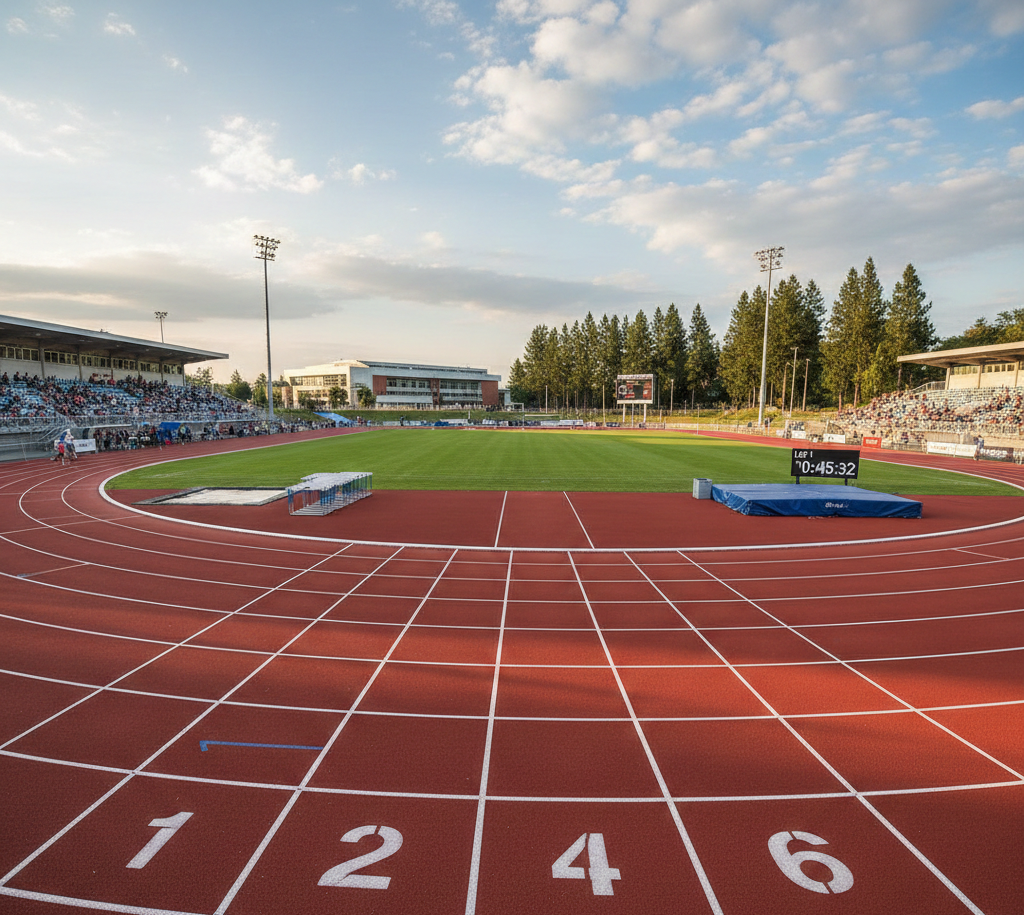
The standard running track size is a critical aspect of athletic facility planning. Proper dimensions ensure athlete safety, fair competition, and compliance with international regulations. Whether constructing a professional stadium, school athletic field, or community sports facility, adhering to standard track dimensions allows athletes to train effectively and compete under official rules.
Running tracks are carefully designed to include curves, straight sections, lanes, and field event zones, all integrated to maximize performance, safety, and spectator experience. Understanding the standard sizes and specifications is essential for track construction, renovation, and maintenance projects.
1. Importance of Standard Running Track Size
-
Compliance with Regulations
-
Tracks built according to IAAF/World Athletics standards are suitable for official competitions.
-
Ensures lane widths, staggered starts, and total lap distance meet international norms.
-
-
Athlete Safety
-
Standardized curves and lane widths reduce the risk of injuries during sprints, middle-distance, and relay races.
-
-
Performance Optimization
-
Proper geometry and uniform lane distribution enable consistent energy return and traction.
-
-
Event Management
-
Facilitates accurate timing, hurdle placement, relay exchanges, and other competition logistics.
-
-
Uniform Training Conditions
-
Athletes can train on tracks that simulate official competition environments.
-
2. Standard Track Length and Shape
a. Total Lap Length
-
Standard outdoor running tracks are 400 meters per lap, measured along the innermost lane.
-
Indoor tracks are generally 200 meters per lap, suitable for schools, universities, and indoor arenas.
b. Track Shape
-
Oval shape with two straight sections and two curved sections.
-
Curves are designed with a consistent radius to maintain lane uniformity and energy efficiency.
c. Straight Sections
-
Each straight section typically ranges from 84 to 100 meters depending on the track design.
d. Curved Sections
-
Standard curve radius: 36.5 meters for a 400-meter outdoor track.
-
Curves are engineered to ensure smooth transitions between straights and minimize lateral stress on athletes.
3. Lane Width and Configuration
-
Lane Width
-
Standard lane width: 1.22 meters (4 feet).
-
Allows athletes sufficient space to run without interfering with adjacent lanes.
-
Number of Lanes
-
Typical outdoor tracks: 6–10 lanes, depending on the facility.
-
Professional stadiums usually have 8 lanes for competitive events.
-
School and community tracks may have 4–6 lanes.
-
Staggered Start Lines
-
Curved lanes require staggered starts to ensure equal running distance in races.
-
Stagger calculations are based on lane width and curve radius.
4. Track Width and Total Area
-
The total width of an 8-lane track: approximately 9.76 meters, including lane markings.
-
A standard 400-meter oval track requires a total area of 5,000–6,000 square meters depending on the design and surrounding safety zones.
-
Adequate space around the track is essential for field events, drainage, and spectator pathways.
5. Track Surface Considerations
Standard running tracks can feature various surface types based on usage, budget, and level of competition:
-
Synthetic Surfaces
-
Polyurethane, Tartan, EPDM granules provide shock absorption, weather resistance, and consistent traction.
-
Preferred for Olympic, professional, and university tracks.
-
-
Asphalt Tracks
-
Lower initial cost; suitable for schools and community tracks.
-
Requires regular maintenance and may be resurfaced with a synthetic layer.
-
-
Rubberized or Spray-Coated Tracks
-
Economical and suitable for recreational or training tracks.
-
The choice of surface affects track durability, athlete performance, and maintenance costs.
6. Standard Markings on Running Tracks
-
Lane Lines
-
Clearly marked and measured for accuracy.
-
Essential for sprints, relays, and middle-distance events.
-
-
Start and Finish Lines
-
Sprint starts (100m, 200m) and finish lines are precisely located.
-
-
Relay Zones
-
Typically 20 meters in length, clearly marked for baton exchange.
-
-
Hurdle Placement
-
Tracks designed for hurdle events include properly measured positions for hurdles.
-
-
Staggered Starts
-
Required for races with curves (200m, 400m) to equalize lane distance.
-
7. Safety and Accessibility Considerations
-
Safety Zones: 1–2 meters of clear space around the track perimeter.
-
Drainage: Slopes of 0.5–1% ensure water runoff.
-
Accessibility: Entry and exit points for athletes, officials, and emergency access.
8. Indoor vs Outdoor Track Standards
| Feature | Outdoor Track | Indoor Track |
|---|---|---|
| Lap Length | 400 meters | 200 meters |
| Lanes | 6–10 | 4–6 |
| Curve Radius | 36.5 m | 17–20 m |
| Surface | Synthetic or Asphalt | Synthetic or Rubberized |
| Usage | Professional & Recreational | Training & Competitions |
Indoor tracks have tighter curves and may include banked bends to maintain speed and minimize injury risk.
9. Applications of Standard Running Track Size
-
Olympic and Professional Stadiums
-
University and School Athletic Tracks
-
Community Sports Complexes
-
Indoor Sports Facilities
-
Recreational and Training Grounds
Adhering to standard dimensions ensures compatibility with official events, athletic training, and long-term usability.
10. Conclusion
Understanding the standard running track size is essential for designing safe, durable, and competition-ready athletic facilities. From lap length, lane width, and curve radius to surface type and markings, every specification plays a crucial role in athlete safety, performance, and facility compliance.
Standard Running Track Size – FAQs
1. What is the standard length of a running track?
-
Official standard: 400 meters per lap (oval shape) for professional stadiums, as per IAAF/FIA regulations.
-
Smaller or recreational tracks may range from 200–300 meters per lap depending on space.
2. What is the standard width of a running track?
-
Lane width: 1.22 meters (4 ft) per lane (minimum)
-
Number of lanes:
-
Professional tracks: 6–8 lanes
-
School/recreational tracks: 2–4 lanes
-
-
Proper lane width ensures safe spacing and prevents collisions during training or competitions.
3. What shapes are standard for running tracks?
-
Oval: Most common for professional and stadium tracks (two straights, two curves)
-
Circular: Sometimes used in parks or smaller facilities
-
Custom designs: For space constraints or multi-purpose stadiums
Oval tracks are ideal for pacing and accurate distance measurement.
4. What surfaces are used for running tracks?
-
Synthetic PU (Polyurethane) tracks: Professional, durable, and weather-resistant
-
Tartan tracks: Standard for athletics competitions
-
Rubberized tracks: Soft, reduces joint impact, suitable for schools and recreational use
-
Asphalt/concrete tracks: Cost-effective, less shock absorption, used in parks or multi-purpose fields
5. Why is a shock-absorbing surface important?
-
Minimizes stress on joints, knees, and ankles
-
Reduces the risk of injuries from repeated running
-
Improves running comfort and performance
-
Ensures long-term durability of the track surface
6. What is the recommended curve radius for a standard track?
-
Inside lane curve radius: 36.5 meters for a standard 400 m track
-
Straights: Approximately 84.39 meters each
-
Curve radius may vary slightly for recreational tracks or smaller stadiums
7. How is a running track constructed?
-
Sub-base: Compacted gravel or crushed stone for stability
-
Binder/Base layer: Asphalt or concrete for structural support
-
Top layer: Synthetic PU, tartan, or rubberized surface for shock absorption and smooth running
Proper installation ensures safety, performance, and longevity.
8. What drainage measures are needed?
-
Slight slope of 1–2% along track surface for runoff
-
Subsurface drainage for synthetic tracks to prevent water accumulation
-
Proper drainage avoids slipping hazards and surface damage
9. What markings are required on a running track?
-
Lane lines for each track lane
-
Start and finish lines for sprints (100 m, 200 m, 400 m, etc.)
-
Staggered start lines for curved lanes
-
Inner and outer edge markings for safety and regulation
10. What maintenance is required for running tracks?
-
Regular cleaning of dirt, leaves, and debris
-
Inspection for cracks or surface wear
-
Resurfacing synthetic tracks every 7–10 years
-
Maintaining slope and drainage for longevity
11. Can running tracks be multi-purpose?
Yes. They can also be used for:
-
Jogging and walking lanes
-
Fitness drills and warm-up zones
-
Recreational sports or events
12. Are lighting requirements necessary for running tracks?
-
Recommended for evening or early morning use
-
Uniform illumination with minimal glare
-
LED floodlights are preferred for energy efficiency and visibility