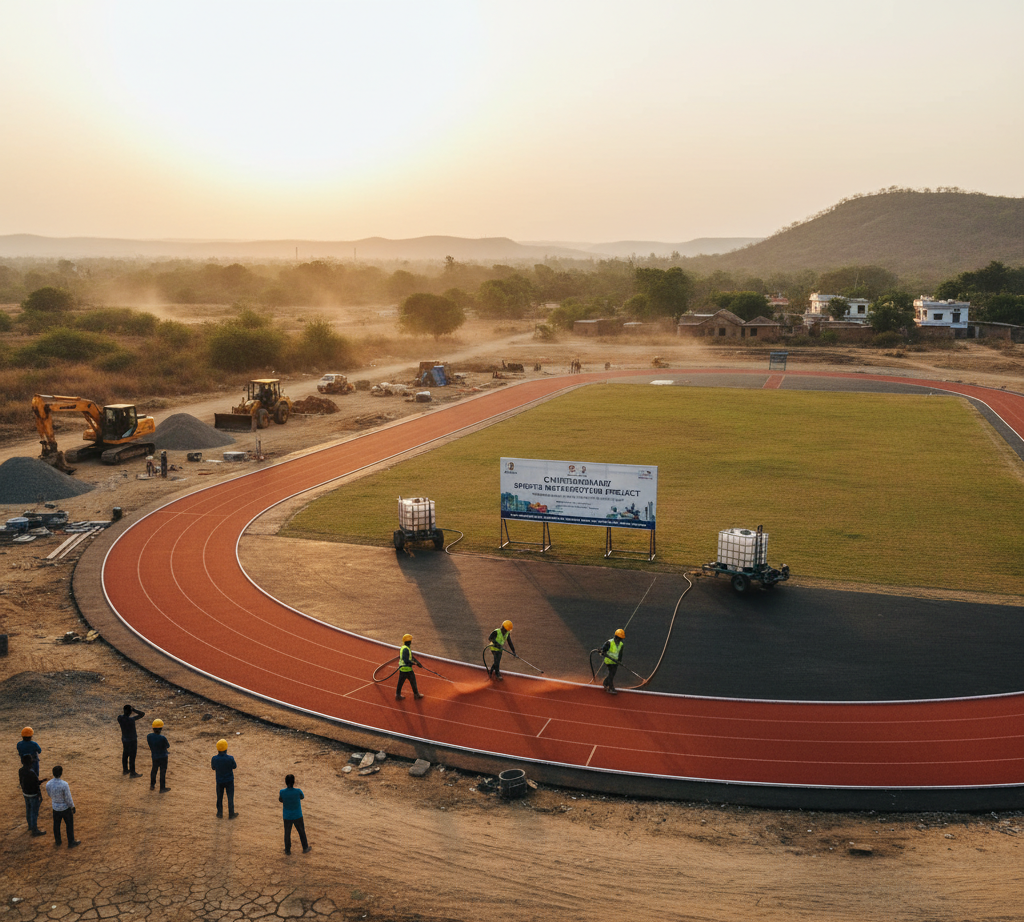
Spray-coating running track construction in Chhattisgarh is gaining rapid popularity for schools, universities, stadiums, and fitness parks. With a growing focus on sports infrastructure under the Khelo India initiative and state-level athletic programs, modern spray-applied systems provide durable, weather-resistant, and safe surfaces that meet international standards. This page outlines how spray-coated running tracks are built, their advantages in Chhattisgarh’s tropical climate, material options, application methods, and maintenance practices.
Why spray-applied track systems suit Chhattisgarh
Chhattisgarh experiences hot summers, intense monsoons, and variable soil conditions, making it essential to use track surfaces that resist heat, moisture, and wear. Spray-applied running track systems offer:
- Seamless waterproofing: The monolithic surface prevents water seepage and damage from heavy rains common across Raipur, Bilaspur, and Durg.
- High UV and heat resistance: Polyurethane and acrylic spray coatings withstand direct sun exposure without softening or cracking.
- Slip-resistant texture: Provides superior grip and athlete safety, even in humid or wet conditions.
- Quick installation: Polyurea and polyurethane spray systems cure rapidly, reducing project downtime.
- Low maintenance: Minimal cleaning and long service life, ideal for public institutions and sports academies.
Typical running track systems used in Chhattisgarh
- Polyurethane (PU) System: A multi-layer structure with an elastic base and colored EPDM topcoat. It offers excellent resilience, durability, and shock absorption — perfect for competitive tracks.
- Acrylic Spray System: A water-based system ideal for budget-friendly or multi-purpose tracks, ensuring good grip and weather resistance.
- Hybrid Polyurea System: A high-performance coating that combines flexibility and rapid curing — used in stadiums and professional sports complexes.
- Cementitious + Elastomeric Overlays: Applied on old concrete or asphalt bases to level, waterproof, and prepare for the final sprayed surface.
Step-by-step process of spray-coating running track construction
- Survey and design: Engineers inspect site conditions, soil compaction, drainage, and level tolerance to finalize design and slope.
- Sub-base preparation: The base (usually asphalt or concrete) is cleaned and leveled. Proper drainage channels are installed to avoid water pooling.
- Primer application: A bonding primer enhances adhesion between the substrate and the spray coating.
- Base layer installation: Spray-apply the resilient layer, typically using a polyurethane binder mixed with SBR or EPDM rubber granules.
- Wearing course application: Spray or broadcast EPDM granules into the top polyurethane coat for a textured, slip-resistant finish.
- Curing: Allow sufficient curing time before line marking and surface testing.
- Quality testing: Check for uniform thickness, adhesion, slope accuracy, and water drainage efficiency.
Performance features
- Shock absorption: Complies with international standards for athlete comfort and injury prevention.
- Skid resistance: Tested to ensure safety under both dry and wet conditions.
- Thermal stability: Maintains performance under temperature fluctuations typical in Chhattisgarh.
- Water permeability: Seamless surface prevents infiltration and base deterioration.
Applications across the state
- Schools and Colleges: Durable, safe tracks for student athletics and PE training.
- District and State Stadiums: Competitive tracks meeting IAAF specifications.
- Community Fitness Parks: Low-maintenance walking and jogging tracks.
- Industrial and Institutional Campuses: Recreational fitness areas for employees.
Maintenance practices
- Regular cleaning: Remove dust, leaves, and debris to maintain traction.
- Post-monsoon inspection: Check for cracks, ponding, or discoloration.
- Minor repairs: Address local wear with compatible resins and granules.
- Re-topcoating: Depending on usage, reapply the topcoat every 8–12 years.
Environmental and safety standards
Modern spray systems use low-VOC, eco-friendly materials that meet environmental norms. Contractors must:
- Use PPE and controlled spray techniques to prevent overspray.
- Ensure adequate ventilation in enclosed applications.
- Dispose of waste safely to protect local water bodies.
Cost considerations
Project cost depends on:
- Area and thickness of the track
- Choice of system (PU, acrylic, or hybrid)
- Site condition and accessibility
- Local material availability
Typically, a standard 400-meter, 8-lane spray-coated track in Chhattisgarh can cost between ₹700–₹1,200 per square meter depending on specifications. Long-term savings come from reduced maintenance and extended service life.
Selecting a contractor in Chhattisgarh
Before finalizing a spray-coating contractor, verify:
- Experience with sports flooring projects in the state
- Availability of certified applicators and equipment
- Adherence to international standards (IAAF, ASTM, BIS)
- Warranty and after-sales support for repairs and recoating
Local contractors familiar with the region’s climate and soil types can ensure better quality control and timely completion.
Conclusion
Spray-coating running track construction is an ideal solution for Chhattisgarh’s sports infrastructure — combining durability, performance, and quick installation. From school grounds to state stadiums, spray-applied PU and acrylic systems provide a reliable surface that supports athletes while withstanding harsh weather. For best results, select experienced applicators, follow prescribed curing times, and conduct regular maintenance. This ensures that your running track remains safe, vibrant, and competition-ready for years.
Spray‑Coating Running Track Construction in Chhattisgarh – FAQ
1. What is spray‑coating running track construction?
Spray‑coating running track construction is a system of building athletic tracks by applying a polyurethane (PU) spray coating mixed with EPDM rubber granules over a prepared base. The result is a textured, durable, weather‑resistant surface designed for jogging, athletics, training, and sporting events.
2. Where are spray‑coated running tracks used in Chhattisgarh?
They are suitable for:
-
School, college, and university athletics tracks
-
Public sports complexes and stadiums
-
Community jogging and fitness tracks
-
Training grounds for athletes
Cities like Raipur, Bilaspur, Durg, Korba, Bhilai, and smaller towns can benefit from this cost‑effective solution.
3. What materials are used in spray‑coated running tracks?
Typical components include:
-
PU binder – Acts as the adhesive and base material
-
SBR (rubber) base layer – Provides cushioning and elasticity
-
EPDM granules in the spray layer – Adds traction, durability, and color options
Together, these materials deliver a resilient and safe running surface.
4. How is a spray‑coated running track constructed?
The construction process involves:
-
Site inspection and base preparation (concrete or asphalt)
-
Primer application for proper adhesion
-
Rubber base layer installation for shock absorption
-
PU + EPDM spray coating application to create the top surface
-
Line marking as per athletics specifications
Accurate execution at each step is essential for performance and longevity.
5. How long does installation take in Chhattisgarh?
Installation time depends on:
-
Track size (e.g., 200 m or 400 m)
-
Ground condition and preparation work
-
Weather conditions
-
Project complexity
Generally, a standard track project can take 1–3 weeks to complete.
6. Is spray‑coating suitable for Chhattisgarh’s climate?
Yes. With proper drainage planning and quality materials, spray‑coated tracks can withstand:
-
Seasonal rainfall
-
Heat and UV exposure
-
Humidity variations
Good drainage is important, especially during the rainy season.
7. What are the key benefits of spray‑coated running tracks?
Advantages include:
-
Good shock absorption and traction
-
Durable and uniform surface
-
Weather and UV resistance
-
Lower cost than full pour systems
-
Custom colors and design options
This makes it a practical choice for educational institutions, clubs, and community facilities.
8. How long does a spray‑coated track last?
With professional installation and regular upkeep, spray‑coated surfaces can last 8–12 years or more, depending on usage and local weather exposure.
9. Does a spray‑coated running track require maintenance?
Yes. Basic maintenance includes:
-
Routine cleaning (surface brushing and debris removal)
-
Periodic inspection for wear or damage
-
Spot repair and touch‑ups when necessary
Proper care enhances longevity and performance.
10. Can existing tracks be resurfaced with spray coating?
Yes. If the base layer remains structurally sound, an old track can be resurfaced by applying a new PU spray layer and updating lane markings.
11. Are spray‑coated running tracks safe and performance‑oriented?
Yes. They are engineered to provide:
-
Impact cushioning for athletes
-
Good traction for starts and turns
-
Reduced risk of slips and injuries
-
Consistent performance for training and competition
Professional installation ensures compliance with performance expectations.
12. Why hire a professional contractor for spray‑coating track construction in Chhattisgarh?
A professional contractor ensures:
-
Accurate base assessment and site grading
-
Selection of high‑quality PU and EPDM materials
-
Skilled spray application with even coverage
-
Precise lane marking and standard compliance
-
Long‑term durability and warranty support
Professional execution is key to a track that performs well year after year.