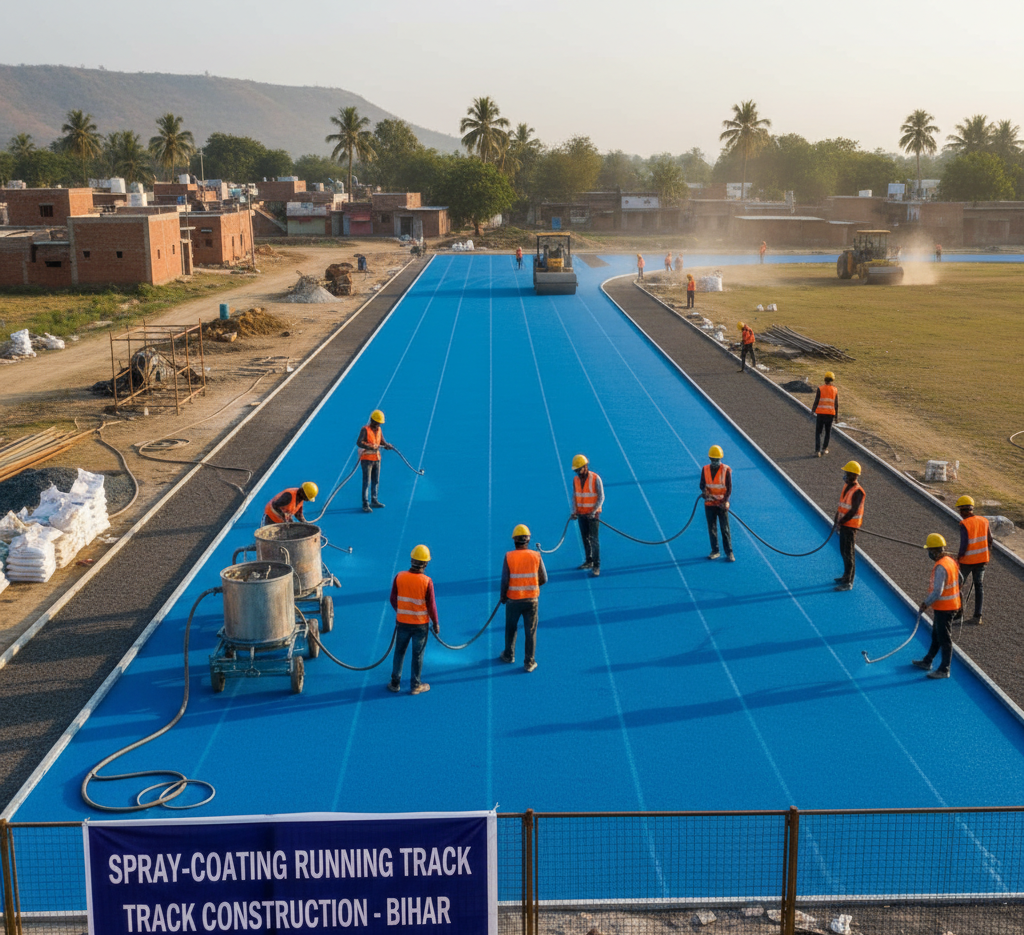
Constructing a high-performance running track requires careful selection of materials, precise application, and attention to local climatic challenges. In Bihar — where hot summers, heavy monsoon rains and variable site conditions prevail — spray-applied sports surfaces using polyurethane, acrylic, polyurea, or hybrid systems offer a dependable combination of traction, shock absorption, weather resistance and long-term durability. This page outlines spray-coating track systems suitable for athletic fields, school grounds, stadiums and community running tracks across Bihar.
Why choose spray-applied track systems in Bihar?
Bihar’s climate and usage patterns make durability and water management paramount. Spray-applied track systems are particularly suited because:
- Rapid installation and return to service: Plural-component spray systems (polyurethane/polyurea) cure quickly, reducing downtime during limited construction windows between monsoon events.
- Seamless, monolithic surface: Eliminates seam-related failures and water ingress — important during heavy rains.
- Excellent grip and resilience: Engineered binders with EPDM or SBR granules produce a textured surface that balances traction and shock absorption for athletes of all ages.
- UV and weather resistance: Proper topcoats resist sun bleaching and hydrolysis, keeping tracks safe and visually appealing.
- Low life-cycle maintenance: Durable surfaces need periodic cleaning and minor repairs rather than full replacement.
Typical spray-applied running track systems
- Polyurethane (PU) bound granule system: A two-layer system with a base wet pour (binder + SBR/EPDM) for shock absorption and a wearing course of colored EPDM granules broadcast into a polyurethane binder. Suitable for schools, colleges and community tracks.
- Polyurea/Hybrid spray system: Fast-curing, high-elasticity membranes that can be combined with EPDM granules. Best for projects demanding quick opening and high durability (stadium renovation, heavy-use courts).
- Acrylic (water-based) textured coatings: More cost-effective for multipurpose tracks where competition-level specifications are not required. Offers good UV stability; may need more frequent recoats.
- Cementitious leveling + spray waterproofing + wearing course: For substrate repair on old concrete/asphalt surfaces prior to installing the elastomeric wearing layer.
Site preparation and construction steps
- Substrate assessment: Evaluate existing asphalt or concrete for cracks, voids, drainage, and slope. Poor substrates are the most common cause of track failures.
- Repairs and leveling: Use cementitious or polymer-modified repair mortars to fill cracks and level depressions. Ensure a stable, load-bearing base with correct cross-fall for drainage.
- Primer application: A compatible primer promotes adhesion of the spray-applied system to asphalt or concrete.
- Shock-absorbing base (if specified): Spray or pour the base layer (binder + rubber granules) to achieve required shock absorption and thickness.
- Wearing course: Broadcast colored EPDM granules into the binder or apply a sprayable wearing coat to provide the finished texture and color.
- Curing and topcoat: Allow adequate curing; apply seal/topcoat for UV protection and to lock in granules. Line marking is done with compatible paints after full cure.
- Quality checks: Measure thickness, perform adhesion and skid resistance tests, and check evenness and drainage.
Technical and performance considerations
- Shock absorption and force reduction: Choose systems tested to athletic standards if the track will host competitions. Schools and community tracks can use slightly relaxed parameters but should still prioritize athlete safety.
- Skid resistance: Surface texture must balance grip and slipperiness in wet conditions; EPDM granulated wearing courses are effective here.
- Drainage: Ensure base construction and cross slope allow rapid water runoff to avoid ponding and premature deterioration.
- Thermal movement and crack bridging: Use flexible binders capable of accommodating thermal expansion of asphalt under Bihar’s high temperatures.
Maintenance and care
- Routine cleaning: Remove debris, leaves and soil annually and after monsoon season to keep drainage clear and surface friction consistent.
- Minor repairs: Fill localized delamination or thin patches with compatible touch-up materials; avoid temporary fixes that hide underlying substrate issues.
- Periodic assessment: Conduct inspections after the monsoon and before major sporting seasons to identify early degradation.
- Re-surfacing schedule: Depending on system and usage, wearing courses often require renewal every 7–15 years.
Safety and environmental practices
- Use certified installers with PPE and containment for overspray.
- Prefer low-VOC or water-based binders in ecologically sensitive or school environments.
- Manage waste and granule runoff during installation to prevent environmental contamination.
Cost factors and budgeting
Costs vary with system selection, site condition, access, and required performance level. Key cost drivers include:
- Base repairs and surface preparation (often 20–40% of total cost)
- Material choice (EPDM with PU binder and polyurea base are higher cost but longer lasting)
- Project scale and site access (remote or restricted school grounds increase mobilization costs)
Obtain multiple detailed quotations that include substrate diagnostics, warranties, and maintenance packages to compare life-cycle costs, not just initial price.
Choosing a contractor in Bihar
Look for contractors who provide:
- Local project references and a portfolio of completed running tracks
- Laboratory test reports for shock absorption, slip resistance and aging
- Clear warranty terms and post-installation support
- Trained crews and certified equipment for plural-component spray systems
Local contractors familiar with Bihar’s monsoon schedule can plan work windows and curing times to avoid rework.
Conclusion
Spray-applied running track systems offer Bihar schools, colleges and municipalities a cost-effective way to create durable, safe and low-maintenance athletic surfaces. Success depends on correct system selection, meticulous substrate preparation, weather-aware scheduling, and experienced applicators. If you’d like, I can convert this into an SEO-ready webpage, prepare a contractor evaluation checklist, or draft a simple bill of quantities and ballpark cost estimate for a typical 400m track in Bihar.
Spray‑Coating Running Track Construction in Bihar – FAQ
1. What is spray‑coating running track construction?
Spray‑coating running track construction is a method of building outdoor and indoor athletics tracks by applying a polyurethane (PU) spray system blended with rubber granules over a prepared base to create a textured, shock‑absorbent, weather‑resistant running surface.
2. Where can spray‑coating running tracks be used in Bihar?
This system is suitable for:
-
School and college athletics tracks
-
Stadium tracks
-
Sports complexes
-
Community jogging tracks
-
Training facilities
in cities like Patna, Gaya, Bhagalpur, Muzaffarpur, and other districts.
3. What materials are used in spray‑coating running tracks?
Typical components include:
-
PU binder: Provides adhesion and flexibility
-
SBR rubber base layer: For cushioning and elasticity
-
EPDM granules in the top spray coat: Improves traction, durability, and color options
These combine to give athletes a safe and resilient surface.
4. How is the spray‑coating track constructed?
The basic steps in construction are:
-
Base preparation: Leveling and cleaning of concrete or asphalt
-
Primer application: Enhances bonding
-
Rubber base layer installation: For cushioning
-
PU + EPDM spray application: Creates the textured running surface
-
Line marking: According to athletics specifications
Proper sequencing ensures performance and durability.
5. How long does installation take in Bihar?
The time varies based on:
-
Track size (e.g., 200 m, 400 m)
-
Base conditions
-
Weather (especially during monsoon)
-
Project complexity
In general, a full track installation can take 1–3 weeks from preparation to finishing.
6. Is spray‑coating suitable for Bihar’s weather conditions?
Yes. When quality materials and proper drainage systems are used, spray‑coating systems withstand:
-
Monsoon rains
-
High humidity
-
Temperature variations
Good drainage is especially important in Bihar’s rainy season.
7. What are the advantages of a spray‑coated track?
Benefits include:
-
Good shock absorption and traction
-
Uniform textured surface
-
Weather and UV resistance
-
Lower cost than poured PU systems
-
Color options and customizable markings
This makes it ideal for community and institutional facilities.
8. How long does a spray‑coated running track last?
With professional installation and routine maintenance, spray‑coated tracks typically last 8–12 years or more, depending on usage and climate exposure.
9. Does a spray‑coated track need maintenance?
Yes. Basic maintenance includes:
-
Regular cleaning (removing debris)
-
Surface inspection
-
Repair of cracks or worn areas
-
Touch‑up coating as needed
Routine care prolongs performance and life.
10. Can existing tracks be resurfaced with spray coating?
Yes. If the base layer is firm and stable, an existing track can be resurfaced by applying a fresh PU spray layer and re‑marking lanes.
11. Are spray‑coated running tracks safe and performance‑oriented?
Yes. These tracks are designed to:
-
Provide impact cushioning
-
Offer traction for acceleration and turns
-
Reduce injury risks
-
Meet performance expectations for training and competition
Professional contractors ensure compliance with performance criteria.
12. Why hire a professional contractor for spray‑coating track construction in Bihar?
A qualified contractor will ensure:
-
Accurate base assessment and grading
-
Selection of high‑quality PU and rubber materials
-
Correct spray application for even surface texture
-
Standard‑compliant line measurements and markings
-
Long‑term durability and warranty support
Professional execution is key for a safe and long‑lasting track.