
Spray coating has emerged as a versatile, fast and durable solution for a wide range of construction needs across Andhra Pradesh. From coastal ports and aquaculture farms to commercial buildings and highway infrastructure, spray-applied materials — including polyurethanes, epoxies, acrylics and cementitious coatings — protect structures from water ingress, corrosion, abrasion and thermal stress. This page explains what spray coating is, why it matters in Andhra Pradesh’s climate and geography, common applications, materials and processes, quality checks, maintenance tips, and how to choose the right contractor.
What is spray coating?
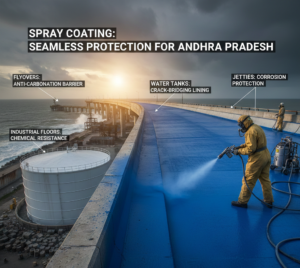
Spray coating is the application of liquid protective materials using high-volume low-pressure (HVLP), plural-component or airless spray systems. The materials cure to form a continuous, seamless membrane or a dense protective film that bonds to substrates such as concrete, steel, timber and masonry. Unlike roll-on or sheet systems, spray-applied coatings can reach complex shapes, penetrate joints and produce consistent thickness across large surfaces — making them ideal for large-scale civil and industrial projects.
Why spray coating matters in Andhra Pradesh
Andhra Pradesh stretches from coastal belts along the Bay of Bengal to inland plains. The region experiences high humidity, long hot periods, and heavy monsoon rains — conditions that accelerate corrosion, concrete spalling and roof leakage. Key reasons to prefer spray-coating solutions here include:
- Superior waterproofing: Seamless membranes prevent leak paths at joints and penetrations common on terraces, podiums and water tanks.
- Corrosion protection: Coastal salt-laden air aggressively attacks steel structures; spray-applied epoxies and polyurethanes extend service life.
- Abrasion and chemical resistance: Industrial floors, silos and wastewater structures benefit from dense, wear-resistant coatings.
- Rapid application: Large areas such as warehouses, flyovers and reservoirs can be coated faster than with manual methods, reducing downtime.
Common applications in the state
- Roof and terrace waterproofing — both new construction and retrofit of existing buildings.
- Water tanks and reservoirs — potable and non-potable tanks that require hygienic, crack-bridging linings.
- Marine and coastal structures — jetties, piers and pump houses facing saline exposure.
- Industrial floors and chemical bunds — production units, ports and fertilizer warehouses.
- Bridge decks and flyovers — protective wearing courses and anti-carbonation barriers.
- Agricultural and aquaculture installations — ponds, feed silos and storage structures.
Materials used and their benefits
- Polyurethane coatings: Excellent UV resistance, flexibility and long-term durability — good for exposed roofs and terraces.
- Epoxy systems: High chemical and abrasion resistance — preferred for floors, tanks and areas with heavy mechanical stress.
- Acrylics and elastomeric coatings: Cost-effective, UV-tolerant and flexible — suitable for building facades and parapets.
- Cementitious spray mortars: Bond well to concrete, used for sloping, patch repairs and for protective overlays where high compressive strength is required.
- Polyurea and hybrid polyurea: Fast-curing, extremely durable membranes used in structures needing immediate return-to-service.
The spray-coating process — step by step
- Site survey and specification: A qualified engineer inspects substrate condition, moisture, cracks and expected exposure to select the right system.
- Surface preparation: Removal of loose material, laitance and rust by grit blasting, shot blasting, grinding or pressure washing. Proper preparation is crucial for adhesion.
- Priming: Application of a compatible primer to promote adhesion and seal porous surfaces.
- Spray application: Using suitable spray equipment, coatings are applied to specified thicknesses. Plural-component systems are mixed at the spray gun for consistent cure.
- Quality inspection: Non-destructive thickness checks, adhesion tests and visual inspection ensure compliance with specifications.
- Topcoat/finish: For UV-exposed surfaces, a protective topcoat may be applied to preserve aesthetics and performance.
Quality checks and standards
To ensure durable results, contractors should follow manufacturer instructions and recognized practices for construction coatings. Important quality checks include:
- Surface cleanliness and profile (measured in microns)
- Ambient and substrate temperature and humidity during application
- Coating thickness (dry film thickness measured with gauges)
- Adhesion testing (pull-off tests where necessary)
- Cure times and handling instructions followed strictly
Ask for product data sheets, material certificates and past project references before selecting a contractor.
Safety and environmental considerations
Spray coating involves solvents, reactive chemicals and fine aerosols. Good practices include:
- Using trained applicators with personal protective equipment (PPE)
- Controlling overspray with masking and containment
- Ensuring adequate ventilation for enclosed spaces
- Proper disposal or recycling of solvent waste and containers
Many modern systems offer low-VOC, water-based or solvent-free alternatives — consider them where environmental impact and worker safety are priorities.
Maintenance and life-cycle care
A well-applied spray coating reduces maintenance needs but does not eliminate them. Routine inspections reveal early signs of wear such as blistering, chalking or local delamination. Minor repairs with compatible materials extend service life. For critical infrastructure, schedule inspections after monsoon season and after any structural movement or impact.
Choosing the right contractor in Andhra Pradesh
When evaluating a spray-coating contractor, consider the following:
- Proven experience with the chosen material and local exposure conditions (coastal, industrial, agricultural)
- Trained applicators and on-site supervision by qualified engineers
- Quality assurance: provision of test reports, warranties and references
- After-sales support: maintenance contracts and emergency response
Local presence in Andhra Pradesh — familiarity with municipal approvals, monsoon schedules, and local supply chains — is a practical advantage.
Cost considerations
Costs vary by material, area, surface condition and access. Although some high-performance coatings have higher upfront costs, their extended service life and reduced repair frequency usually produce lower life-cycle costs. Always compare total cost of ownership rather than only the initial price.
Conclusion
Spray-coating is a modern, effective choice for protecting construction assets across Andhra Pradesh’s varied environments. Whether you are waterproofing terraces, protecting coastal infrastructure from chloride attack, or building abrasion-resistant industrial floors, selecting the right material, proper surface preparation and a proven applicator will deliver long-term value. If you’d like, we can prepare a tailored specification, estimate, or a short checklist to evaluate contractors and materials for your specific project.
Spray‑Coating Construction in Andhra Pradesh – FAQ
1. What is spray‑coating construction?
Spray‑coating construction is the process of applying protective or functional coatings to surfaces such as concrete, metal, walls, floors, roofs, or industrial structures using specialized spray equipment to achieve uniform coverage, enhanced durability, and performance.
2. Where is spray‑coating commonly used in construction?
Spray coating is frequently used for:
-
Floor protection and industrial flooring
-
Concrete and structural protection
-
Waterproofing roofs and terraces
-
Corrosion resistance on metal components
-
Protective coatings in buildings and infrastructure
-
Decorative finishes on large surfaces
3. What types of spray coatings are available?
Common spray coatings include:
-
Polyurea and polyurethane coatings – strong, abrasion and chemical resistant, quick curing options.
-
Epoxy coatings – durable and ideal for industrial floors.
-
Acrylic coatings – weather‑resistant and suitable for exterior surfaces.
-
Zinc and anti‑corrosion coatings – protect metal structures from rust.
4. Why choose spray coating over traditional painting?
Spray coating offers several benefits over brush or roll application:
-
Faster and more uniform coverage
-
Better adhesion and finish quality
-
Reduced material waste
-
Improved surface protection and longevity
-
Can be applied on large or complex surfaces efficiently
5. Is spray‑coating suitable for Andhra Pradesh’s climate?
Yes. Properly selected spray coatings—especially waterproof and weather‑resistant systems—can withstand the varied climate in Andhra Pradesh, including monsoon rains and UV exposure in coastal cities like Visakhapatnam and Vijayawada.
6. What surfaces can be spray‑coated?
Spray coating is versatile and can be applied on:
-
Concrete floors and walls
-
Metal structures and equipment
-
Roofs, terraces, and balconies
-
Industrial machinery
-
Structural beams and pipes
-
Civil infrastructure elements
7. How long does spray‑coating application take?
The duration depends on:
-
Area size
-
Surface condition
-
Type of coating used
-
Weather conditions
Small areas may be done in a day, while larger industrial or building projects can take multiple days.
8. Does spray‑coating construction require surface preparation?
Yes. Proper surface preparation such as cleaning, grinding, removal of loose material, or priming is essential to ensure strong adhesion and long‑lasting results.
9. Is spray coating environmentally safe?
Many modern spray coating materials are low in volatile organic compounds (VOCs) and designed to be more environmentally friendly while meeting performance requirements.
10. Can spray coating protect against water and moisture?
Yes. Certain spray coatings—especially polyurethane, polyurea, and acrylic systems—provide excellent waterproofing and moisture resistance for roofs, terraces, and exposed surfaces.
11. How long does spray coating last?
With professional application and proper maintenance, quality spray coatings can last several years, depending on the surface, exposure conditions, and coating type.
12. Why should I hire a professional spray‑coating contractor in Andhra Pradesh?
A professional contractor ensures:
-
Correct surface assessment
-
High‑quality materials and equipment
-
Skilled application for uniform coating
-
Compliance with safety and industrial standards
-
Long‑term performance and warranty support