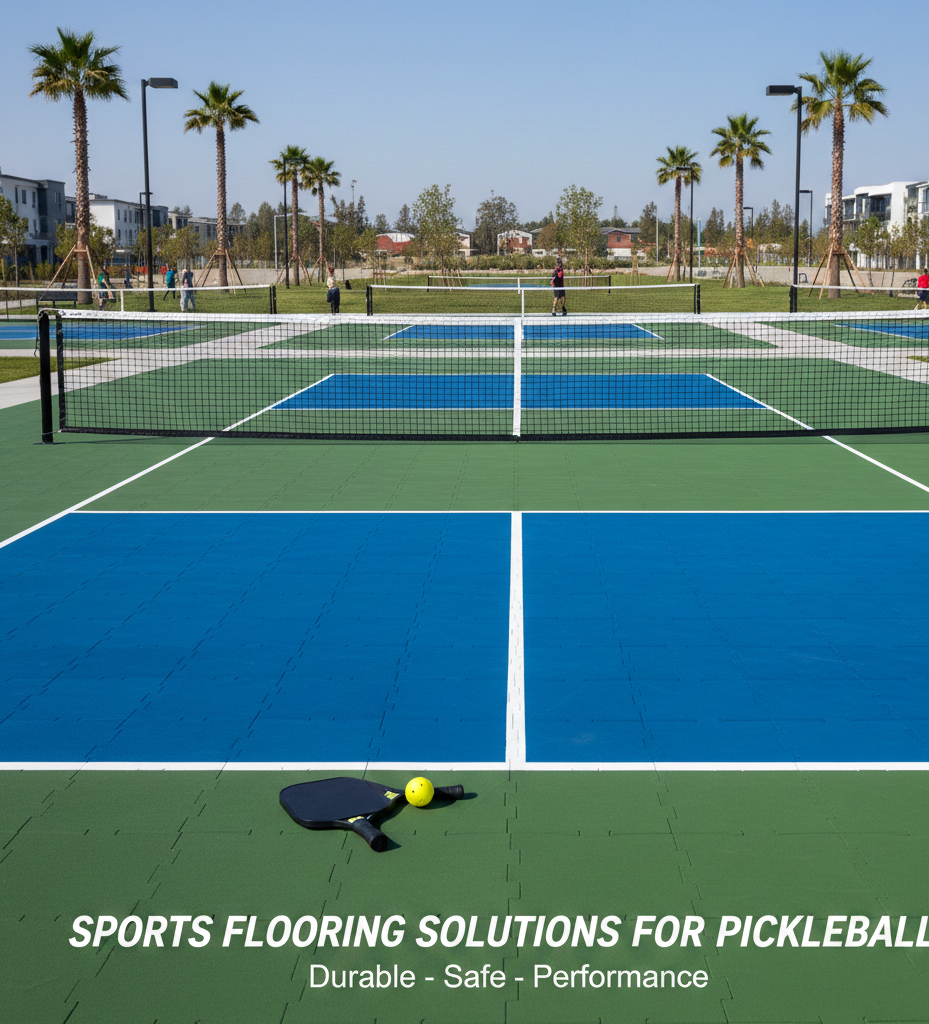
The right sports flooring is essential for creating a safe, durable, and high-performing pickleball court. A properly installed surface enhances gameplay, provides consistent ball bounce, reduces injury risk, and ensures long-term durability. Whether you are setting up a residential, commercial, or professional facility, selecting the ideal flooring is key.
1. Acrylic Sports Flooring
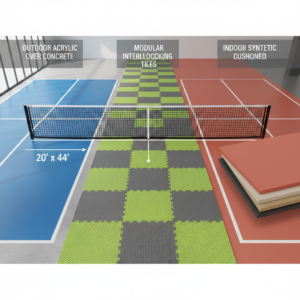
-
Description: Multi-layer acrylic coatings applied over concrete or asphalt
-
Advantages:
-
Smooth, even playing surface
-
Weather-resistant and UV-stable
-
Available in multiple colors for aesthetic appeal
-
Low maintenance and long-lasting
-
-
Best For: Outdoor courts exposed to sun, rain, or heavy use
2. Modular Sports Flooring
-
Description: Interlocking polypropylene or polymer tiles
-
Advantages:
-
Quick and easy to install
-
Excellent drainage for outdoor use
-
Anti-slip and cushioned options for injury prevention
-
Can be relocated or upgraded easily
-
-
Best For: Indoor courts, multipurpose sports courts, temporary setups
3. Post-Tension Concrete Flooring
-
Description: Reinforced concrete with tensioned steel cables for added strength
-
Advantages:
-
Extremely durable and long-lasting
-
Provides a level, crack-resistant surface
-
Ideal for high-use professional or tournament courts
-
-
Best For: Permanent outdoor pickleball courts
4. Synthetic Sports Flooring
-
Description: Cushioned polyurethane or rubber blend surfaces
-
Advantages:
-
Shock absorption to protect joints
-
Excellent traction for safe play
-
Suitable for both indoor and outdoor use
-
-
Best For: Indoor courts, gyms, and high-traffic recreational areas
5. Hybrid Flooring Systems
Some courts combine multiple flooring types to enhance both performance and durability:
-
Example: Acrylic coating over concrete with modular tiles in high-wear areas
-
Offers durability, comfort, and versatility for multi-sport use
-
Can be customized for specific player requirements and climate conditions
Key Considerations When Choosing Flooring
-
Traction & Safety: Non-slip surfaces reduce the risk of injury
-
Ball Bounce & Performance: Ensures consistent, competitive play
-
Durability & Weather Resistance: Long-lasting against heavy use and outdoor exposure
-
Maintenance Requirements: Ease of cleaning, recoating, and repair
-
Player Comfort: Shock absorption reduces fatigue and protects joints
Maintenance Tips for Sports Flooring
-
Sweep and remove debris regularly
-
Inspect for cracks, uneven surfaces, or drainage issues
-
Resurface acrylic floors every 3–5 years
-
Keep modular tiles clean and secure to avoid shifting
-
Maintain proper lighting and net installations for safe play
Summary Table: Sports Flooring Options for Pickleball
| Flooring Type | Advantages | Best Use |
|---|---|---|
| Acrylic Coating | Smooth, UV-resistant, low maintenance | Outdoor courts |
| Modular Tiles | Easy installation, cushioned, versatile | Indoor or multi-purpose |
| Post-Tension Concrete | Durable, crack-resistant, level surface | Professional outdoor courts |
| Synthetic Flooring | Shock absorption, safe, traction | Indoor courts, gyms |
| Hybrid Systems | Combines durability and comfort | Multi-sport facilities |
Why Professional Installation Matters
-
Ensures proper leveling, drainage, and surface finishing
-
Guarantees regulation-compliant dimensions and line markings
-
Enhances safety, durability, and playing performance
A high-quality sports flooring system is the foundation of any excellent pickleball court. Selecting the right type of flooring tailored to your space, usage, and budget ensures a safe, long-lasting, and enjoyable playing experience.
Contact us today to explore the best sports flooring solutions for your pickleball court.
Sports Flooring Solutions for Pickleball – FAQ
1. What type of flooring is best for pickleball courts?
The most commonly recommended surfaces are:
-
Acrylic Sports Flooring (ideal for outdoor courts)
-
PU (Polyurethane) Sports Flooring (best for indoor courts)
-
Synthetic cushioned systems for enhanced shock absorption
These systems provide proper ball bounce, slip resistance, and player comfort.
2. Is acrylic flooring suitable for outdoor pickleball courts?
Yes. Acrylic sports surfaces are UV-resistant, weatherproof, and durable, making them ideal for outdoor pickleball courts in varying climates.
3. What flooring is recommended for indoor pickleball courts?
For indoor facilities, PU (polyurethane) sports flooring and cushioned synthetic systems are preferred because they offer better shock absorption, noise reduction, and player safety.
4. Can pickleball courts be installed on existing concrete?
Yes. Most pickleball flooring systems can be installed over properly prepared concrete bases after surface grinding, crack repair, and priming.
5. What is the standard size of a pickleball court?
According to the USA Pickleball guidelines:
-
Court size: 20 feet x 44 feet
-
Recommended total play area: 30 feet x 60 feet (minimum)
For tournament-level play, larger clearance is recommended.
6. Is pickleball flooring slip-resistant?
Yes. Professional sports flooring systems are designed with anti-slip textured coatings to ensure safe lateral movements and quick directional changes.
7. How long does pickleball sports flooring last?
With proper installation and maintenance, pickleball court surfaces can last 8–12 years or more, depending on usage and climate conditions.
8. Does pickleball flooring require cushioning?
While not mandatory, cushioned systems are recommended for high-usage courts as they reduce joint stress and improve player comfort.
9. How long does installation take?
Installation time depends on:
-
Court size
-
Surface condition
-
Weather (for outdoor courts)
-
Type of flooring system
Typically, installation takes 3–7 days for a standard court.
10. Can multi-sport line markings be added?
Yes. Pickleball courts can be combined with tennis or badminton courts using professional line marking systems, ensuring accurate dimensions and color differentiation.