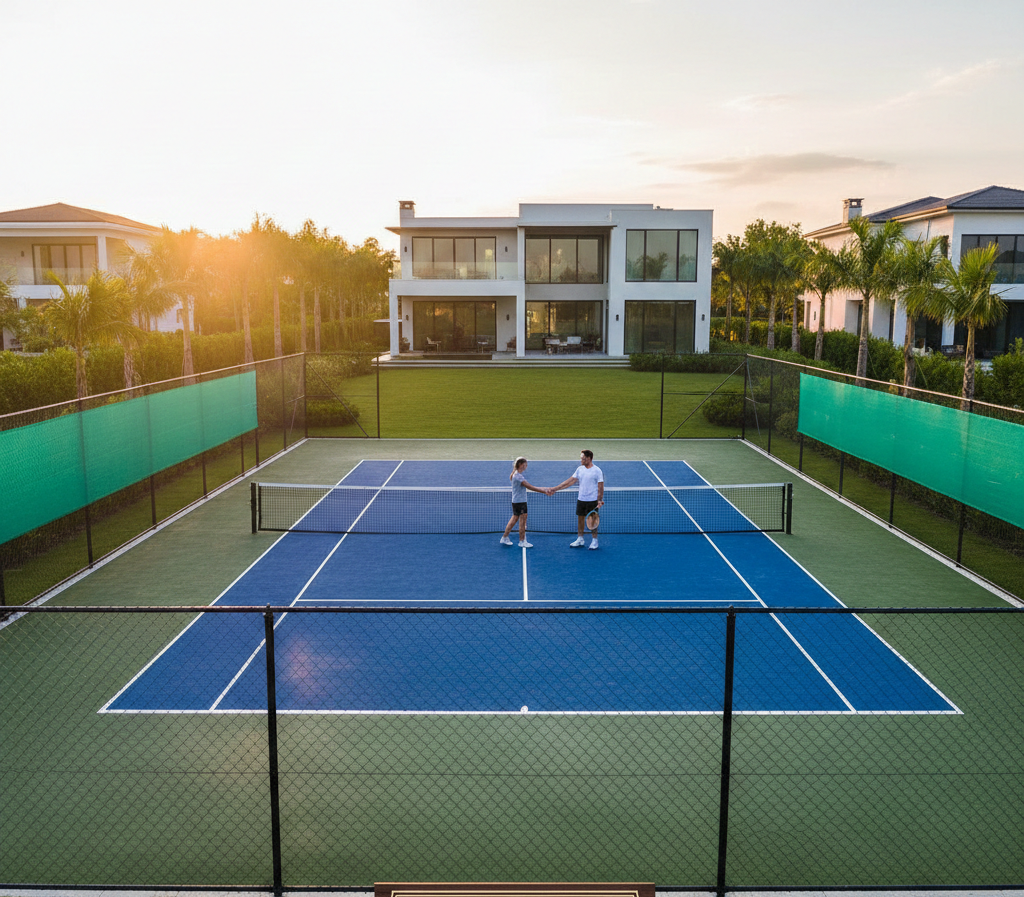
Tennis has grown into one of the most popular and competitive sports worldwide. For sports clubs, schools, resorts, and recreational centers, providing high-quality tennis courts is essential for attracting players, hosting tournaments, and promoting healthy lifestyles. A professionally installed tennis court in a sports facility is more than just a playing surface—it reflects the quality, professionalism, and standards of the entire facility. This guide explores everything about sports facility tennis court installation, from planning and construction to maintenance and enhancements.
Why Sports Facilities Need Tennis Courts
Tennis courts in sports facilities serve multiple purposes, benefiting both the organization and its members:
-
Promoting Athletic Excellence: High-quality courts provide athletes with consistent playing conditions, aiding skill development and competitive performance.
-
Attracting Members and Visitors: Sports facilities with well-constructed tennis courts appeal to professional and recreational players, increasing memberships and engagement.
-
Revenue Generation: Hosting tournaments, coaching programs, and membership subscriptions centered around tennis can provide substantial financial returns.
-
Enhancing Reputation: International-standard tennis courts demonstrate commitment to quality and safety, enhancing the credibility of the sports facility.
-
Multi-Functional Use: Modern courts can often be adapted for other sports like pickleball, badminton, or mini-soccer, maximizing utility.
Planning a Tennis Court for Sports Facilities
Proper planning is crucial for sports facility tennis court installation. A poorly designed court can lead to safety hazards, increased maintenance costs, and dissatisfaction among players. Key considerations include:
1. Court Size and Layout
-
Standard Dimensions: According to ITF (International Tennis Federation) standards, a singles court measures 78 feet long and 27 feet wide. For doubles matches, the width increases to 36 feet.
-
Run-Off Areas: Additional space of 12–21 feet behind baselines and 6–12 feet along sidelines ensures safe movement and adequate player clearance.
-
Orientation: Courts should ideally run north-south to reduce sun glare during morning and evening play.
2. Surface Selection
Surface type impacts performance, maintenance, and cost. Common surfaces for sports facility courts include:
-
Hard Courts: Made of asphalt or concrete, coated with acrylic or polyurethane layers. They are durable, low-maintenance, and suitable for multi-use sports facilities.
-
Clay Courts: Provide slower ball speed and softer impact on joints. Require daily maintenance such as rolling and watering.
-
Grass Courts: Offer a traditional playing experience but are expensive to maintain and sensitive to weather conditions.
-
Synthetic/Artificial Turf: Combines aesthetics with medium-level maintenance. Provides a cushioned feel ideal for recreational facilities.
3. Lighting and Night Play
For sports facilities with evening operations, high-quality lighting is essential. LED floodlights with uniform distribution prevent shadows, glare, and eye strain, enabling safe, enjoyable night play. Lighting should be designed to cover the entire court area evenly.
4. Fencing and Safety
Perimeter fencing, usually 10–12 feet high, prevents balls from leaving the court. In sports facilities, safety is a priority—additional padding on posts, gates, and fencing reduces the risk of injury. Windbreaks or mesh screens can protect players from excessive wind and enhance privacy.
5. Drainage Systems
Effective drainage prevents water accumulation, surface damage, and moss growth. Sports facility courts typically include a slight slope, permeable base layers, or subsurface drainage pipes to direct water away efficiently.
Step-by-Step Sports Facility Tennis Court Installation
Professional tennis court installation in a sports facility involves several critical stages:
1. Site Assessment and Preparation
The first step is evaluating the terrain for slope, soil quality, and drainage. The site is cleared of vegetation, rocks, and debris. Grading ensures a flat, level surface, which is essential for consistent ball bounce and player safety.
2. Base Layer Construction
A stable foundation is crucial for longevity. A compacted sub-base of crushed stone or gravel provides structural support and allows effective water drainage. This layer minimizes cracks, unevenness, and long-term damage.
3. Surface Application
Depending on the chosen surface:
-
Hard Courts: Asphalt or concrete is poured and cured, followed by acrylic or polyurethane coatings to provide color, grip, and smoothness.
-
Clay Courts: Layers of clay and crushed stone are installed, leveled, and compacted.
-
Synthetic Turf: Installed with cushioning layers beneath, then rolled and fixed for durability.
4. Net Posts and Fencing Installation
Net posts are installed at regulation distances with proper anchoring for tension stability. Fencing surrounds the perimeter to contain balls and improve player safety. Mesh screens or windbreaks can be added to reduce environmental disturbances.
5. Line Marking and Finishing
Lines are precisely marked using durable paint or thermoplastic materials. These markings define singles, doubles, and service areas. Final inspection ensures that the surface is level, net tension is correct, and drainage systems are operational.
6. Lighting Setup
LED or metal halide lights are mounted to provide uniform illumination for night play. Professional layout ensures no shadows or glare interfere with players’ vision.
Maintenance of Sports Facility Tennis Courts
To ensure longevity and performance, regular maintenance is essential:
-
Cleaning: Remove leaves, dust, and debris. Wash surfaces occasionally to prevent buildup.
-
Surface Repairs: Patch cracks, repaint lines, and recoat surfaces periodically.
-
Net and Fence Checks: Inspect for sagging nets, loose posts, or damaged fencing.
-
Drainage Management: Keep drains clear to prevent water accumulation.
-
Seasonal Adjustments: Grass and clay courts require specialized seasonal maintenance to maintain optimal playing conditions.
A well-maintained court can last 15–25 years, making proper care an investment in durability and safety.
Enhancements for Sports Facility Courts
Sports facilities often invest in additional features to enhance usability and comfort:
-
Seating and Viewing Stands: For spectators and coaches during tournaments or training sessions.
-
Player Amenities: Benches, water fountains, shade structures, and locker areas improve player experience.
-
Landscaping: Trees, shrubs, or ornamental plants around the court improve aesthetics and privacy.
-
Multi-Purpose Design: Courts can be designed to host other sports such as pickleball, badminton, or mini-basketball.
-
Digital Features: Scoreboards, cameras for match recording, and automated irrigation systems modernize facility offerings.
Cost Considerations
The cost of installing tennis courts in a sports facility varies depending on multiple factors:
-
Surface Type: Hard courts are generally the most cost-effective, whereas grass or high-quality clay courts require more investment.
-
Site Preparation: Extensive grading, soil replacement, or challenging terrain increases cost.
-
Lighting and Accessories: LED lights, fencing, wind screens, and seating add to the budget.
-
Drainage Systems: Advanced drainage solutions may raise initial investment but prevent costly damage later.
-
Maintenance Requirements: Some surfaces, like clay and grass, demand higher ongoing costs.
On average, a standard sports facility tennis court in India can range from ₹30 lakh to ₹1 crore, depending on surface type, size, and additional features.
Why Hire a Professional Contractor?
Sports facility tennis court installation is a specialized project that demands precision, experience, and quality materials. Hiring a professional contractor ensures:
-
Expert site assessment and planning aligned with ITF standards.
-
Proper base construction and surface installation for long-term durability.
-
High-quality fencing, lighting, and net installation.
-
Efficient project management and timely completion.
-
Guidance on post-installation maintenance for maximum lifespan.
Professional contractors also have experience in multi-court installations, tournament-ready standards, and large-scale projects that meet safety and regulatory requirements.
Conclusion
Installing a tennis court in a sports facility is a strategic investment in athletic development, member satisfaction, and facility reputation. From meticulous planning and precise construction to ongoing maintenance and enhancements, every step contributes to creating a world-class playing environment.
For sports clubs, schools, resorts, and recreational centers, a professionally constructed tennis court elevates the facility’s standard, attracts players of all levels, and provides a platform for competitive excellence. By focusing on quality, safety, and durability, a sports facility tennis court becomes a long-term asset that combines recreation, training, and community engagement—all in one premium package.
A professionally installed tennis court is more than a sporting surface; it is a symbol of commitment to excellence, health, and the joy of the game. Start planning today and transform your sports facility into a hub for champions.