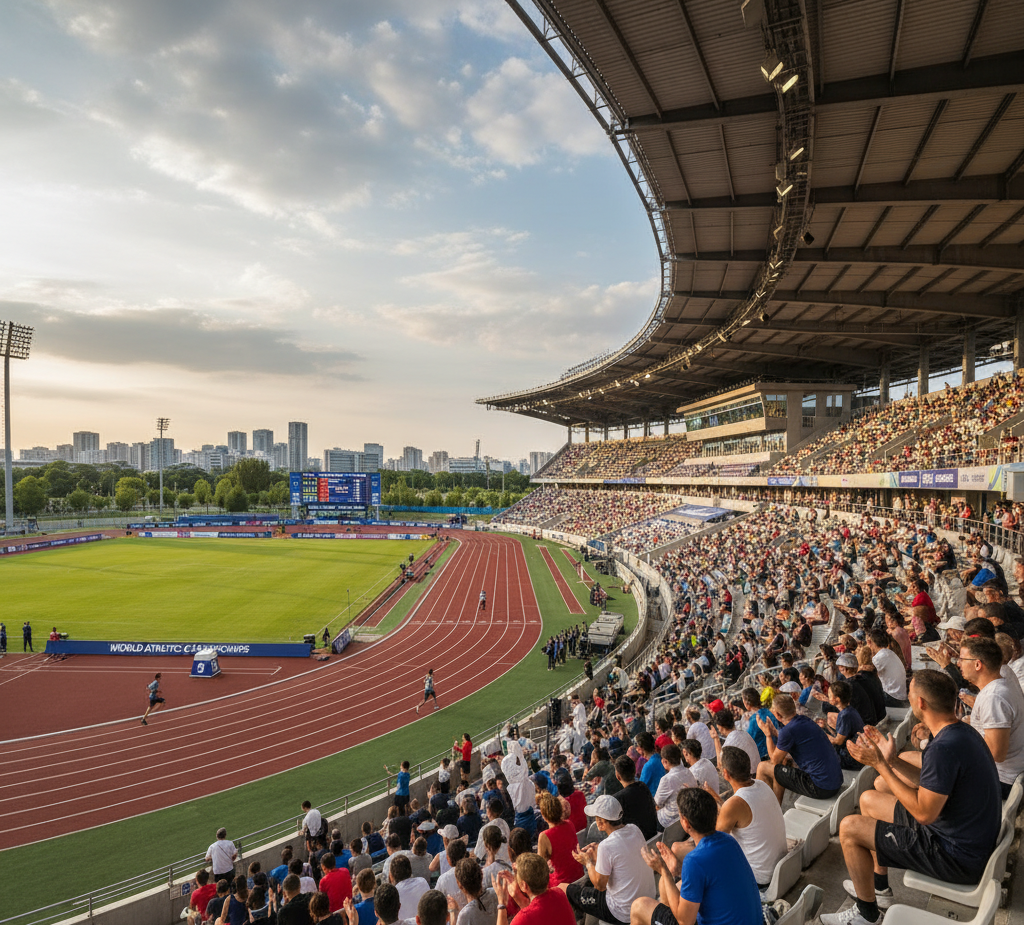
A well-designed spectator stand is an essential component of any athletic track or stadium facility, providing comfort, safety, and an unobstructed view of events. From schools and universities to professional stadiums, spectator stands enhance the overall experience for audiences while ensuring compliance with safety regulations and accessibility standards.
Whether you are constructing permanent or temporary stands, attention to design, materials, and capacity planning is crucial for functionality, aesthetics, and long-term durability.
1. Importance of Spectator Stands for Track Events
-
Comfortable Viewing Experience
-
Properly designed stands provide comfortable seating, good sightlines, and protection from the elements.
-
Elevated seating ensures spectators can clearly see the track and field events.
-
-
Safety and Compliance
-
Adherence to building codes, fire safety, and crowd management standards is essential.
-
Handrails, non-slip surfaces, and designated aisles enhance spectator safety.
-
-
Capacity Management
-
Stands are designed according to expected audience size, preventing overcrowding.
-
Ensures a smooth flow of entry and exit during events.
-
-
Enhanced Atmosphere
-
Well-arranged stands contribute to a lively and engaging atmosphere, motivating athletes and improving event experience.
-
-
Multi-Purpose Use
-
Can be used for sports events, school functions, concerts, or community gatherings, maximizing facility utility.
-
2. Types of Spectator Stands
-
Permanent Concrete Stands
-
Built from reinforced concrete for long-term durability.
-
Suitable for professional stadiums and high-capacity venues.
-
Can include tiered seating, VIP boxes, and integrated amenities.
-
-
Modular or Prefabricated Stands
-
Made of aluminum, steel, or composite materials.
-
Can be assembled and dismantled quickly, ideal for temporary events or seasonal usage.
-
-
Bleacher Stands
-
Tiered seating without individual chairs, commonly used in schools and community tracks.
-
Offers cost-effective and high-capacity solutions.
-
-
Covered or Roofed Stands
-
Provide shade and protection from rain or sun.
-
Enhances spectator comfort and allows events in varied weather conditions.
-
3. Standard Features of Track Spectator Stands
-
Seating Arrangement
-
Tiered or stepped seating ensures clear sightlines from every row.
-
Seat width: Typically 45–50 cm per person.
-
Row spacing: Approximately 80–90 cm for legroom and accessibility.
-
-
Accessibility
-
Ramps and designated spaces for wheelchair users.
-
Handrails and marked pathways improve safe movement.
-
-
Safety Features
-
Non-slip flooring, guardrails, and emergency exits.
-
Compliance with local building codes and international safety standards.
-
-
Lighting and Signage
-
Adequate lighting for evening events and safe navigation.
-
Signage for exits, restrooms, and first aid enhances spectator convenience.
-
-
Amenities
-
Optional features include VIP seating, press boxes, concession stands, and restroom access.
-
4. Steps in Spectator Stand Construction
Step 1: Site Planning
-
Assess available space, expected audience size, and orientation relative to the track.
-
Determine stand height, tier spacing, and accessibility features.
Step 2: Foundation Preparation
-
Excavate and prepare the foundation according to soil type and load requirements.
-
Pour reinforced concrete or install base frames for modular stands.
-
: Structure Installation
-
Permanent Stands: Build concrete tiers and supports.
-
Modular Stands: Assemble aluminum or steel frames and attach seating planks or chairs.
: Seating Installation
-
Install individual seats, benches, or bleacher boards.
-
Ensure alignment, spacing, and secure attachment for safety.
: Safety Features
-
Install handrails, guardrails, and emergency exits.
-
Apply non-slip coatings or materials on steps and aisles.
: Finishing Touches
-
Add lighting, signage, shade structures, and optional amenities.
-
Conduct a final inspection to ensure compliance with safety and design standards.
5. Materials Used for Spectator Stands
-
Concrete – Long-lasting and suitable for permanent, high-capacity stands.
-
Aluminum – Lightweight, corrosion-resistant, ideal for modular or portable stands.
-
Steel – Provides strength and stability, often used in combination with aluminum.
-
Plastic or Composite Seats – Comfortable, durable, and weather-resistant.
-
Protective Coatings – Anti-slip paint, weatherproofing, and UV-resistant finishes.
6. Factors Affecting Construction Cost
-
Stand Type: Permanent concrete is more expensive than modular aluminum or bleachers.
-
Seating Capacity: Larger audiences require more materials and structural support.
-
Amenities: Roofs, VIP sections, lighting, and restrooms add to costs.
-
Accessibility Features: Ramps, handrails, and specialized seating increase construction complexity.
-
Labor and Equipment: Skilled labor and machinery affect overall cost.
Typical costs range from $200–$600 per seat, depending on materials, design, and features.
7. Maintenance Considerations
-
Regular Cleaning
-
Remove dust, debris, and litter from seating and walkways.
-
-
Structural Inspection
-
Check for cracks, corrosion, or loose fasteners.
-
Repair or reinforce structures as needed.
-
-
Seating Maintenance
-
Inspect seats for damage; replace broken or worn-out chairs.
-
-
Safety Checks
-
Ensure guardrails, handrails, and emergency exits are functional.
-
-
Lighting and Signage
-
Replace faulty lights and update signage as necessary.
-
8. Benefits of Properly Designed Spectator Stands
-
Enhanced Viewing Experience: Clear sightlines and comfortable seating.
-
Safety and Compliance: Reduces risk of accidents and adheres to regulations.
-
Increased Attendance: Comfortable and accessible stands attract more spectators.
-
Versatility: Can host sports events, concerts, and community gatherings.
-
Aesthetic Appeal: Well-designed stands improve the overall look of the facility.
9. Applications
-
Professional Stadiums: National and international track events.
-
Schools and Universities: Inter-school competitions and sports days.
-
Community Sports Complexes: Recreational track meets and fitness events.
-
Temporary Events: Modular stands for seasonal sports events or local tournaments.
Spectator stands are an essential feature that enhances the overall functionality and appeal of any athletic facility.
10. Conclusion
Spectator stands for track events play a vital role in ensuring comfort, safety, and visibility for audiences. Properly designed and constructed stands enhance the overall experience of spectators, contribute to event success, and comply with safety regulations.
From schools and community sports facilities to professional stadiums, investing in high-quality spectator stands provides a durable, safe, and visually appealing structure that supports both athletes and spectators alike.
With careful planning, robust materials, and regular maintenance, spectator stands become a long-lasting asset that elevates the standard of any athletic venue.