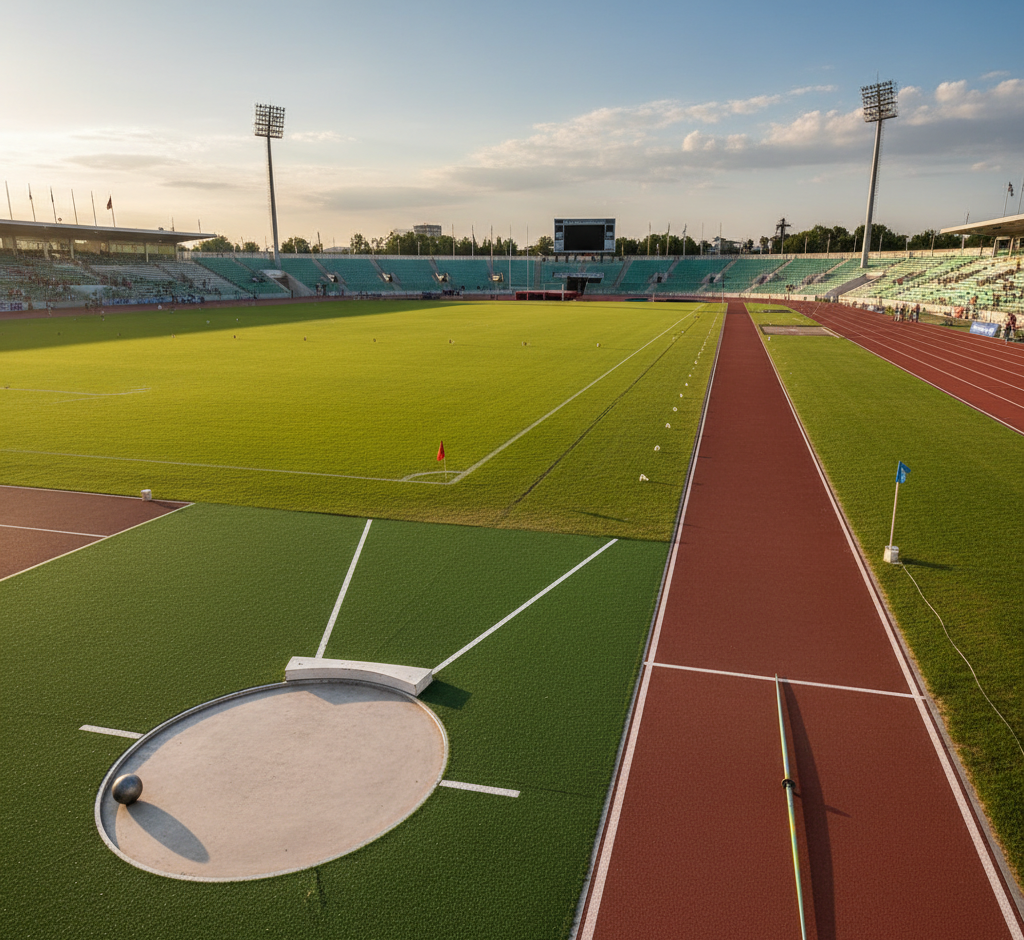
The shot put and javelin area is a crucial part of any athletics facility, providing athletes with safe, standardized spaces for throwing events. Proper design, layout, and installation of these areas ensure athlete safety, regulatory compliance, and optimal performance.
Whether constructing facilities for schools, universities, community sports centers, or professional stadiums, following international standards is essential for functional and durable throwing areas.
1. Importance of a Proper Shot Put and Javelin Area
-
Athlete Safety
-
Throwing events involve high-speed projectiles, making safety zones essential to prevent accidents.
-
Proper layout and netting reduce risk to athletes, officials, and spectators.
-
-
Performance Optimization
-
Standardized runway, throwing circle, and sector angles allow athletes to maximize throwing distance.
-
Uniform surfaces ensure consistent footing and balance during the throw.
-
-
Regulatory Compliance
-
Areas must comply with IAAF/World Athletics specifications for official competitions.
-
Ensures eligibility for hosting national and international events.
-
-
Facility Versatility
-
A well-designed shot put and javelin area can accommodate training, school competitions, and professional events.
-
2. Shot Put Area Design and Specifications
a. Throwing Circle
-
Diameter: 2.135 meters (7 feet) for standard competitions.
-
Surface: Smooth concrete or synthetic to provide grip and prevent slipping.
b. Toe Board
-
Height: 10 cm (4 inches) above the circle surface.
-
Material: Concrete or durable synthetic.
-
Function: Prevents the athlete from overstepping while providing leverage during the throw.
c. Landing Sector
-
Sector angle: 34.92 degrees from the center of the throwing circle.
-
Surface: Grass or synthetic turf for landing, with markings for distance measurement.
d. Safety Considerations
-
Buffer zone: Minimum 10 meters around the sector.
-
Protective netting: Optional for training facilities to prevent errant throws.
3. Javelin Area Design and Specifications
a. Runway
-
Length: 30–36.5 meters for international competitions.
-
Width: 4 meters standard.
-
Surface: Synthetic track, polyurethane, or well-compacted clay to provide traction.
b. Throwing Arc
-
Width: 8 meters from runway center to sector lines.
-
Angle: 28.96 degrees for standard javelin sector.
c. Landing Sector
-
Surface: Grass or synthetic turf, free of obstacles.
-
Markings: Distance markers every 5 meters for measurement during competitions.
d. Safety Measures
-
Ensure no spectators, officials, or athletes are inside the sector during throws.
-
Fencing or barriers around practice areas reduce risks.
4. Materials Used in Shot Put and Javelin Areas
-
Throwing Circles – Concrete or synthetic surfaces for durability and grip.
-
Toe Boards and Arc Markers – Reinforced materials for repeated impact.
-
Runway Surface (Javelin) – Synthetic or polyurethane for traction and stability.
-
Landing Sector – Grass, synthetic turf, or sand for safe landings.
-
Safety Equipment – Netting, fencing, and barriers for protection.
-
Measurement Tools – Steel tapes, laser devices, or markers for accurate distance measurement.
5. Steps in Installing Shot Put and Javelin Areas
Step 1: Site Planning
-
Evaluate available space, topography, and soil type.
-
Allocate sufficient buffer zones around both areas for safety.
Step 2: Excavation and Base Preparation
-
Excavate landing and runway areas.
-
Compact soil to prevent uneven surfaces and ensure durability.
-
Shot Put Circle: Install concrete or synthetic surface and toe board.
-
Javelin Runway: Lay polyurethane or synthetic track material for traction.
-
Ensure smooth transitions and level surfaces
-
Shot Put Sector: Draw 34.92° angle lines from circle center.
-
Javelin Sector: Draw 28.96° angle lines from runway center.
-
Place distance markers at regular intervals for measurements.
-
Install protective netting around throwing areas, especially for training zones.
-
Ensure spectators and officials are outside the safety perimeter
-
Verify dimensions, sector angles, and surface quality.
-
Test surfaces for grip, stability, and durability before competitions.
6. Factors Affecting Installation Cost
-
Surface Type: Synthetic surfaces cost more than grass or clay.
-
Equipment Quality: High-quality toe boards, runways, and netting increase expenses.
-
Space Requirements: Larger buffer zones require more land preparation.
-
Maintenance Needs: Synthetic surfaces are durable but may require occasional repairs.
-
Labor and Equipment: Professional installation ensures compliance and safety.
Typical installation costs vary based on surface type, equipment quality, and area size, ranging from $15,000 to $50,000 for a standard combined facility.
7. Maintenance Considerations
-
Surface Cleaning
-
Remove debris and keep landing sectors smooth for safe throws.
-
-
Toe Board and Runway Inspection
-
Check for cracks or uneven surfaces; repair immediately.
-
-
Measurement Accuracy
-
Regularly recalibrate distance markers for competitions.
-
-
Safety Equipment Check
-
Ensure netting, fences, and barriers are intact.
-
-
Grass/Turf Maintenance
-
Mow grass and maintain synthetic turf to prevent tripping hazards.
-
8. Benefits of Proper Shot Put and Javelin Area Design
-
Athlete Safety: Minimizes risk of injury during training and competition.
-
Accurate Performance Measurement: Ensures precise throw distances.
-
Regulatory Compliance: Meets IAAF standards for official competitions.
-
Enhanced Training Environment: Provides athletes with professional-grade facilities.
-
Long-Term Durability: Proper installation and maintenance extend lifespan.
9. Applications
-
Professional Stadiums: Hosting national and international competitions.
-
Schools and Universities: Supports athletics programs and student competitions.
-
Community Sports Complexes: Encourages recreational throwing events.
-
Indoor Athletics Arenas: Compact, synthetic throwing areas for indoor training.
10. Conclusion
A well-designed shot put and javelin area is an integral part of any athletics facility. Proper layout, surface selection, safety measures, and equipment installation ensure athlete safety, regulatory compliance, and optimal performance.
From schools to professional stadiums, investing in high-quality shot put and javelin areas provides a safe, durable, and professional environment for training and competitions. With regular maintenance and adherence to standards, these areas support athlete development, accurate performance tracking, and long-term facility use.