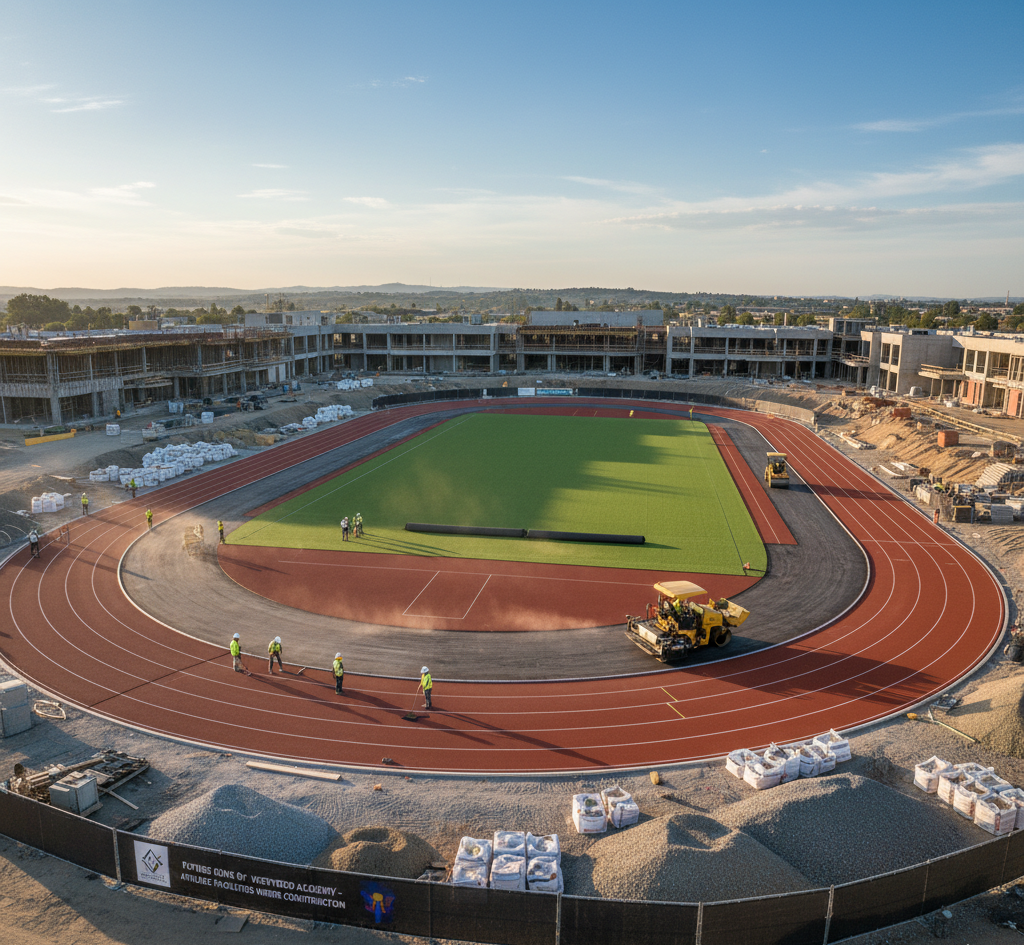
Creating a high-quality running track in schools is an essential investment in student health, athletic development, and overall sports infrastructure. A well-designed and professionally constructed school running track provides safe training environments, enhances athletic performance, and supports a variety of sports and physical education activities.
Whether it’s for track and field events, daily physical education classes, or inter-school competitions, constructing a reliable running track requires careful planning, material selection, and professional execution.
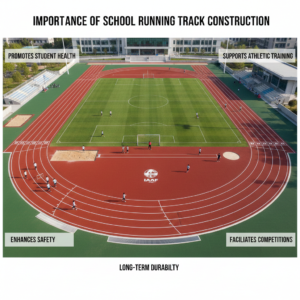
1. Importance of School Running Track Construction
-
Promotes Student Health
-
Encourages regular exercise, cardiovascular fitness, and physical development.
-
Provides students with a safe environment for running, jogging, and other physical activities.
-
-
Supports Athletic Training
-
Essential for schools with athletics programs, sports teams, and competitive events.
-
Tracks allow students to train on surfaces that mimic professional standards.
-
-
Enhances Safety
-
Proper construction ensures shock absorption, traction, and smooth surfaces, reducing the risk of injuries.
-
-
Facilitates Competitions
-
Adheres to IAAF/World Athletics guidelines for school-level competitions.
-
Provides a professional-grade track for hosting local, regional, or inter-school meets.
-
-
Long-Term Durability
-
Quality construction reduces maintenance costs and ensures a lasting athletic facility.
-
2. Key Considerations in School Track Construction
-
Track Design and Layout
-
Standard school tracks usually have 4 to 6 lanes, depending on space availability.
-
Oval or circular layouts are preferred for sprint and middle-distance running events.
-
Proper lane widths and curve radii ensure athlete safety and competition compliance.
-
-
Surface Selection
-
Common materials include:
-
Synthetic Polyurethane Tracks – Durable, weather-resistant, and shock-absorbing.
-
EPDM Rubber Tracks – Soft, flexible, and all-weather.
-
Tartan Tracks – Multi-layered polyurethane for high-performance schools.
-
-
Material choice depends on budget, expected usage, and weather conditions.
-
-
Track Base and Foundation
-
A strong base ensures surface stability, drainage efficiency, and long-term durability.
-
Typically involves compacted gravel or asphalt layers, followed by shock-absorbing underlayers.
-
-
Drainage System
-
Essential to prevent water accumulation, which can damage the track and pose safety risks.
-
Incorporates curbs, drains, and proper grading to direct water away from lanes.
-
-
Safety and Shock Absorption
-
Elastic layers under the track reduce impact on joints and prevent injuries.
-
Surface textures provide traction in wet or dry conditions, ensuring student safety.
-
-
Line Marking and Field Integration
-
Lane markings, start/finish lines, and field event areas (like long jump or shot put) must be accurately measured and painted.
-
Integration with sports fields, playgrounds, and school facilities is important for multi-use functionality.
-
3. Steps in School Running Track Construction
Step 1: Site Assessment and Planning
-
Evaluate available space, soil type, and drainage conditions.
-
Decide on track size, number of lanes, and layout.
-
Plan for field events, spectator areas, and access pathways.
Step 2: Ground Preparation
-
Clear debris, level the site, and compact the soil.
-
Install sub-base layers (gravel or asphalt) to provide stability.
-
Grade the site for proper drainage and slope.
: Shock Absorption Layer Installation
-
Add elastic layers, rubber mats, or polyurethane underlayers.
-
Provides cushioning to reduce joint stress and enhance safety.
: Surface Application
-
Apply the chosen synthetic surface material.
-
Ensure uniform thickness, proper curing, and smooth finishing.
-
Multi-layer systems combine durability, weather resistance, and shock absorption.
: Line Marking and Lane Layout
-
Measure and paint lanes, start/finish lines, and event-specific areas.
-
Use durable, UV-resistant paint for longevity.
-
Confirm compliance with school and athletic standards.
: Quality Checks and Testing
-
Conduct traction, shock absorption, and evenness tests.
-
Ensure safety, performance, and IAAF-compliant lane dimensions.
4. Maintenance and Upkeep
-
Regular Cleaning
-
Remove dirt, leaves, and debris to maintain surface traction and visual appeal.
-
-
Inspection and Repairs
-
Check for minor cracks, granule loss, or fading markings.
-
Address issues promptly to prevent major damage.
-
-
Drainage System Maintenance
-
Keep drains clear to prevent waterlogging and surface deterioration.
-
-
Surface Recoating
-
Every few years, consider resurfacing or recoating to maintain shock absorption and durability.
-
-
Safety Monitoring
-
Ensure starting blocks, hurdles, and field event areas remain safe for student use.
-
5. Benefits of a Professionally Constructed School Track
-
Safety First: Shock-absorbing surfaces minimize injury risks for students.
-
Enhanced Performance: Smooth, uniform lanes allow consistent running efficiency.
-
Versatility: Supports athletics training, physical education, and competitions.
-
Durability: High-quality materials withstand heavy daily use and weather conditions.
-
Aesthetic and Professional Appeal: A clean, well-marked track enhances the school’s sports infrastructure reputation.
6. Cost Considerations for School Running Track Construction
-
Track Size and Lanes: More lanes increase material and labor costs.
-
Surface Material: Polyurethane and Tartan tracks are more expensive than basic EPDM surfaces.
-
Site Preparation: Soil leveling, drainage, and base layers impact cost.
-
Line Markings and Accessories: Additional paint, hurdles, starting blocks, and field equipment add to expenses.
-
Maintenance Plan: Budgeting for cleaning and repairs ensures long-term cost savings.
7. Applications of School Running Tracks
-
Physical Education Classes: Daily use for fitness and conditioning.
-
Track and Field Training: Sprinting, long-distance, and field event practice.
-
Inter-School Competitions: Provides a professional-standard venue.
-
Community Sports Programs: Allows schools to host local athletic events.
A well-constructed track serves both educational and community purposes, maximizing student and facility benefits.
8. Advantages of Professional School Track Construction
-
Safety Compliance: Tracks built to proper specifications minimize accidents.
-
Long-Term Investment: Durable tracks reduce frequent repair and resurfacing costs.
-
Performance Enhancement: Supports student athletes with high-quality training conditions.
-
Versatile Usage: Can accommodate various track and field events.
-
Reputation Boost: Enhances the school’s image as a sports-friendly institution.
9. Conclusion
School running track construction is an investment in student health, athletic development, and school sports infrastructure. From careful site planning and ground preparation to high-quality surface installation and precise line marking, professional construction ensures a safe, durable, and performance-optimized track.
School Running Track Construction – Frequently Asked Questions (FAQ)
❓ 1. What is a school running track?
A school running track is a specially designed track constructed within school premises for students’ physical education, fitness activities, and sports training. It promotes healthy lifestyles and provides a safe environment for running and jogging.
❓ 2. Why is constructing a running track important for schools?
School running tracks help:
-
Improve cardiovascular health of students
-
Encourage daily physical activity
-
Support school sports programs and competitions
-
Reduce obesity and sedentary lifestyle issues
-
Promote mental well-being and concentration
❓ 3. What is the ideal size for a school running track?
Size depends on campus space:
-
200m – Smaller schools or limited space
-
300m – Medium-sized campuses
-
400m standard track – Large schools or inter-school competitions
-
Custom loops – Designed to fit available areas, often around playgrounds or school boundaries
❓ 4. What materials are commonly used?
Materials depend on budget and safety requirements:
-
EPDM rubber flooring – Soft, shock-absorbing, and safe for children
-
Polyurethane (PU) system – Durable and long-lasting
-
Acrylic coating – Budget-friendly and lightweight
-
Asphalt or concrete base – Supports synthetic surface installation
❓ 5. What type of surface is best for school tracks?
For schools, rubberized surfaces like EPDM or sandwich systems are ideal because they:
-
Reduce injury risk
-
Offer good traction
-
Provide shock absorption for joints
-
Allow multi-color customization for fun and engagement
❓ 6. What are the key steps in school running track construction?
-
Site survey and planning
-
Ground leveling and compaction
-
Sub-base installation (WMM or asphalt/concrete base)
-
Primer application
-
Synthetic surface installation (PU/EPDM/Acrylic)
-
Line marking and finishing
-
Final inspection and curing
Proper drainage planning is critical to prevent water pooling.
❓ 7. How long does construction take?
-
Small jogging or practice track: 2–4 weeks
-
Full 400m running track: 6–8 weeks
Weather and curing time can slightly affect these timelines.
❓ 8. How much does school running track construction cost?
Costs vary depending on:
-
Track size and number of lanes
-
Surface type (EPDM, PU, Acrylic)
-
Base preparation quality
-
Drainage and safety features
-
Custom markings and logos
EPDM and acrylic systems are generally more economical for schools.
❓ 9. What safety features are included in school running tracks?
-
Shock-absorbing surfaces
-
Anti-slip texture
-
Proper drainage slope (~1%)
-
Clearly marked lanes
-
Safety buffer zones around the track
These features reduce the risk of student injuries.
❓ 10. How long does a school running track last?
With proper maintenance:
-
PU systems: 10–15 years
-
EPDM tracks: 8–12 years
-
Acrylic tracks: 5–8 years
Regular inspection and cleaning significantly extend lifespan.