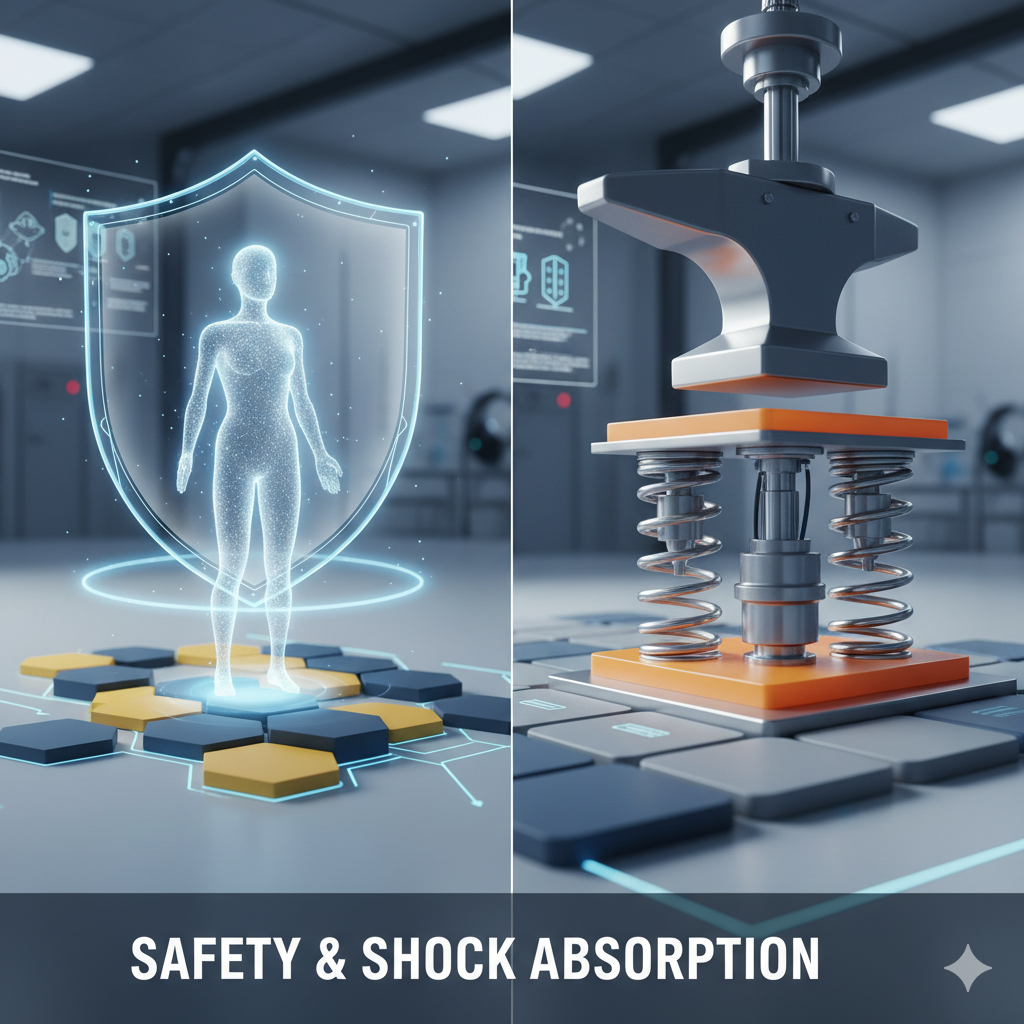
Safety and shock absorption are critical components of athletic track design, directly impacting athlete performance, injury prevention, and long-term facility durability. Modern track surfaces are engineered to provide optimal traction, cushioning, and energy return, creating a safe and comfortable environment for runners and other athletes.
Whether you are installing a school track, professional stadium, or community sports facility, prioritizing safety and shock absorption ensures that athletes can train, compete, and perform at their best without undue risk of injury.
1. Importance of Safety and Shock Absorption
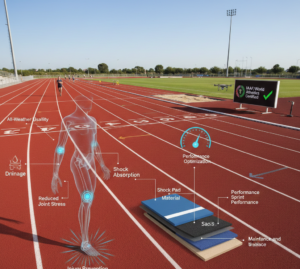
-
Injury Prevention
-
Hard or uneven surfaces increase the risk of stress fractures, sprains, and joint injuries.
-
Shock-absorbing tracks reduce impact forces on knees, ankles, and hips, protecting athletes during repetitive running or jumping.
-
-
Performance Optimization
-
Properly cushioned tracks allow athletes to maintain speed, stability, and stride efficiency.
-
Energy-return surfaces enhance sprint performance and endurance by reducing fatigue.
-
-
Compliance with Standards
-
Athletic tracks must meet IAAF/World Athletics safety standards for official competitions.
-
Ensures facilities are suitable for training and sanctioned events.
-
-
Long-Term Track Durability
-
Shock-absorbing materials prevent surface cracking and wear, extending the lifespan of the track.
-
Reduces maintenance costs over time.
-
2. Key Components of Track Safety
-
Surface Material
-
Synthetic polyurethane, EPDM, or Tartan surfaces provide cushioning and traction.
-
Non-slip textures reduce sliding and accidental falls.
-
-
Shock Pads and Underlayers
-
Elastic layers beneath the track absorb impact forces from running and jumping.
-
Materials include rubber granules, polyurethane foam, or prefabricated mats.
-
-
Edge Safety
-
Smooth transitions between track lanes, field areas, and curbs reduce tripping hazards.
-
-
Drainage and Water Management
-
Proper drainage prevents water accumulation, which can lead to slippery surfaces.
-
Reduces the risk of accidents in rainy or wet conditions.
-
-
Maintenance and Inspection
-
Regular surface checks ensure no cracks, debris, or uneven areas exist.
-
Timely repairs maintain safety and shock absorption properties.
-
3. Shock Absorption Technologies in Track Surfaces
-
Spray Polyurethane Tracks
-
Multi-layer system with elastic polyurethane base and EPDM granules on top.
-
Offers excellent cushioning, durability, and traction.
-
-
Mondo Tracks
-
Prefabricated vulcanized rubber surfaces with high energy return and impact absorption.
-
Widely used in Olympic and professional stadiums.
-
-
EPDM Rubber Tracks
-
Mixed with polyurethane to create a shock-absorbing, all-weather surface.
-
Ideal for school, college, and community tracks.
-
-
Tartan Surfaces
-
Multi-layer polyurethane tracks with a rubber base for cushioning.
-
Provides consistent performance in all weather conditions.
-
4. Benefits of Shock-Absorbing Tracks
-
Reduced Joint Stress
-
Cushioned surfaces decrease impact on knees, ankles, hips, and lower back, preventing long-term injuries.
-
-
Enhanced Sprint Performance
-
Energy-return surfaces improve running efficiency and reduce fatigue.
-
-
Safety in Field Events
-
Discus, javelin, and long jump runways benefit from shock-absorbing surfaces to prevent slips and accidents.
-
-
All-Weather Usability
-
Tracks maintain traction and performance in rain, heat, or cold, ensuring athlete safety.
-
-
Durability and Longevity
-
Shock-absorbing tracks withstand heavy usage and maintain performance characteristics for years.
-
5. Installation Considerations for Safety and Shock Absorption
-
Sub-base Preparation
-
Ensure a leveled and compacted foundation to prevent surface deformation.
-
Correct grading improves drainage and structural stability.
-
-
Layering System
-
Multiple layers with elastic shock pads and polyurethane surfacing optimize impact absorption.
-
Top layers provide durability and weather resistance.
-
-
Thickness and Density
-
Track thickness and rubber density are designed to absorb impacts efficiently while providing energy return.
-
Varies depending on usage type – sprinting, middle-distance running, or training.
-
-
Edge and Lane Design
-
Smooth transitions at curves and lane dividers reduce tripping hazards.
-
Curved lanes may require additional cushioning for lateral forces.
-
-
Regular Testing
-
Use impact tests and force sensors to ensure proper shock absorption.
-
Periodic testing maintains performance and safety compliance.
-
6. Maintenance for Safety and Shock Absorption
-
Surface Cleaning
-
Remove dirt, leaves, and debris to prevent slips and surface wear.
-
-
Periodic Inspections
-
Look for cracks, uneven patches, or worn areas.
-
Repair damaged sections promptly to maintain shock absorption.
-
-
Environmental Protection
-
Avoid standing water, excessive heat, or chemical exposure that can degrade surface elasticity.
-
-
Drainage System Maintenance
-
Ensure water flows correctly away from track surfaces.
-
Prevents water pooling and reduces accident risks.
-
-
Professional Resurfacing
-
Every few years, tracks may require resurfacing or recoating to maintain optimal safety and shock absorption properties.
-
7. Applications of Shock-Absorbing Tracks
-
Professional Stadiums: Olympic, national, and regional competitions.
-
Schools and Universities: Safe training and inter-school events.
-
Community Tracks: Recreational running and fitness programs.
-
Indoor Training Facilities: Cushioned indoor tracks for year-round use.
Shock-absorbing surfaces are essential for all levels of athletic activity, ensuring that both elite and beginner athletes can train safely and perform optimally.
8. Advantages of Prioritizing Safety and Shock Absorption
-
Reduced Injury Rates: Protects athletes from acute and chronic injuries.
-
Enhanced Training Quality: Comfortable surfaces allow longer training sessions without fatigue.
-
Compliance with International Standards: Suitable for official competitions.
-
Increased Facility Lifespan: Shock-absorbing surfaces reduce wear and tear.
-
Improved Athlete Confidence: Safer surfaces encourage better performance and risk-taking in training.
9. Conclusion
Safety and shock absorption are indispensable elements of modern athletic track design. Properly engineered surfaces protect athletes, enhance performance, and extend the lifespan of track facilities.
FAQ: Safety & Shock Absorption of Rubberized Outdoor Jogging Tracks
❓ 1. What is shock absorption on a rubberized track?
Shock absorption refers to the track’s ability to absorb impact forces when your feet strike the surface. A rubberized track spreads out and softens the force, reducing the stress on your feet, ankles, knees, and hips compared to concrete or asphalt.
🧠 2. How does a rubberized track improve safety for runners?
A high-quality rubberized surface:
-
Reduces injury risk by cushioning impact
-
Improves traction, lowering slip risk in sweat or rain
-
Supports joints, especially helpful for beginners and older runners
-
Helps manage fatigue, since the body experiences less repetitive shock
🦵 3. Can running on a rubberized track prevent injuries?
It can reduce risk of overuse injuries (like shin splints, runner’s knee, stress fractures) compared with harder surfaces — but it doesn’t eliminate injury risk entirely. Proper warm-up, shoes, and training habits matter too.
🌧️ 4. Are rubberized tracks safe in rainy or wet conditions?
Yes — most rubberized tracks have textured surfaces that help with slip resistance. However, safety still depends on:
-
Track maintenance (no pooling water)
-
Runner awareness (wet still means more slip risk than dry)
So go a bit slower on rainy days to stay safe.
👟 5. How does shock absorption affect performance?
More cushioning can:
-
Feel more comfortable for longer runs
-
Lower muscle vibration, helping endurance
But a too soft surface might feel unstable to some — best to try it yourself.
🧪 6. How is shock absorption measured?
Sports surfaces are tested using standards (e.g., percentage of shock absorption and energy return). Higher shock absorption means more cushioning; balanced energy return helps the runner feel responsive rather than “sinking” into the surface.
🚶 7. Is every jogging track equally safe?
No. Safety varies with:
-
Material quality — premium EPDM/polyurethane has better charm
-
Installation — uneven or poorly bonded surfaces can pose trip hazards
-
Maintenance — cracks, loose debris, and water-filled gaps increase danger
Before you run, visually inspect the surface or run during times when it’s well-lit and visible.
🏙️ 8. How does track design influence safety?
Good design means:
-
Proper drainage to avoid puddles
-
Even surface without potholes
-
Clear boundaries and markers
-
Adequate lighting for dawn/dusk runs
🩹 9. Are there age or fitness limitations?
Rubberized tracks are beneficial for all ages — especially beginners, older adults, or those returning after injury — because the cushioning lessens joint stress. Still, listen to your body and avoid overtraining.
🦺 10. How do I choose a safe route at a park?
Pick tracks that:
-
Are well-maintained and evenly surfaced
-
Have dedicated jogging lanes separated from pedestrian stroll paths
-
Are in parks with regular footfall (better visibility and safety)