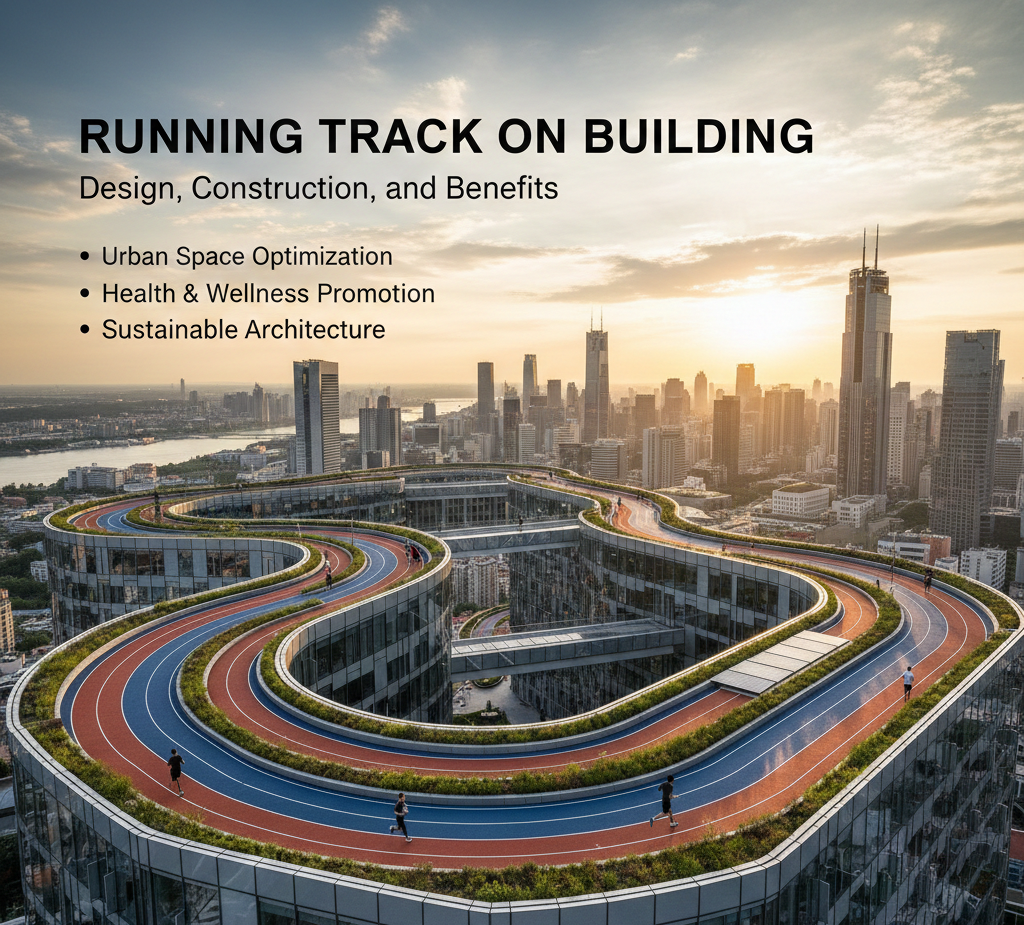
As cities grow denser and open spaces become scarce, the idea of bringing fitness closer to where people live and work is transforming modern architecture. One of the most innovative concepts in this movement is the running track on a building — a rooftop or terrace-based track designed to promote health and wellness while maximizing underutilized spaces.
These elevated tracks combine urban design, structural engineering, and sports architecture to create a one-of-a-kind experience — running with a view of the skyline.
🏙️ What Is a Running Track on a Building?
A running track on a building is a specially designed path built on the roof, terrace, or podium deck of a residential, commercial, or institutional structure. It provides a safe and convenient place for residents or employees to jog, walk, or run without needing to visit a park or gym.
Such tracks are often seen in:
-
Luxury apartments and gated communities
-
IT campuses and corporate offices
-
Hotels and resorts
-
Universities and sports complexes
-
Mixed-use commercial buildings
These rooftop tracks are designed to be lightweight, weatherproof, non-slip, and structurally safe, allowing users to enjoy daily fitness routines even in the heart of the city.
🧱 Construction of a Running Track on a Building
Building a running track on a terrace or podium deck involves specialized planning and materials to ensure comfort, safety, and long-term durability.
Let’s look at the step-by-step process of construction.
🧭 Step 1: Structural Assessment
Before construction begins, structural engineers assess whether the building can handle the additional load of the running track and users.
Key aspects include:
-
Load-bearing capacity of the roof slab
-
Existing waterproofing system and drainage slope
-
Wind exposure and safety barriers
-
Accessibility for users via lift or staircase
The engineer ensures that the total weight — including flooring, equipment, lighting, and people — remains within safe design limits.
💧 Step 2: Waterproofing and Surface Preparation
Because the track is exposed to weather, waterproofing is critical. The process typically includes:
-
Cleaning and repairing the surface.
-
Applying a liquid or sheet membrane waterproofing system.
-
Adding a protective screed layer (50–75 mm thick).
-
Ensuring proper slope (1–2%) for rainwater drainage.
This step prevents leaks into the building structure and increases the life of the terrace surface.
🧩 Step 3: Base Layer Formation
After waterproofing, a base layer is installed to create an even, durable foundation for the track.
Base layer options include:
-
Lightweight concrete screed or mortar bed
-
Shock-absorbing rubber underlay for extra comfort
-
PU primer coat for strong adhesion with the top surface
The base must be smooth, level, and properly sloped toward drainage points.
🌈 Step 4: Surface Material Selection
The surface material is the most visible and functional part of the running track. It must be weatherproof, non-slip, UV-resistant, and comfortable for joints.
Here are the best materials used for rooftop or podium tracks:
1. EPDM Rubber Flooring
-
Material: EPDM (Ethylene Propylene Diene Monomer) granules with PU binder.
-
Thickness: 15–25 mm.
-
Features:
-
Excellent shock absorption
-
UV and weather resistance
-
Soft underfoot feel
-
Available in various colors (red, blue, green)
-
-
Best for: Residential buildings and mixed-use rooftops.
2. PU (Polyurethane) Synthetic Surface
-
Preferred for professional-grade running tracks.
-
Seamless finish, high elasticity, and excellent traction.
-
Long lifespan and easy to maintain.
3. Acrylic Sports Flooring
-
A cost-effective alternative for lighter use.
-
Provides good grip and comes in multiple layers for durability.
4. Interlocking Rubber or PVC Tiles
-
Modular and replaceable surface option.
-
Easy installation and maintenance.
-
Best suited for small rooftop fitness areas.
Tip: Avoid heavy concrete or brick paving — it increases load and reduces flexibility.
💡 Step 5: Safety Features and Accessories
Safety is paramount when constructing a running track on a building.
Essential safety features include:
-
Protective railing or parapet wall (minimum 1.2 meters high).
-
Anti-slip surface to prevent accidents during rain.
-
LED track lights for night-time visibility.
-
CCTV and emergency lighting for added security.
-
Signboards showing direction, distance, and safety rules.
Optional amenities like benches, planters, or hydration stations can be added for comfort.
💧 Step 6: Drainage and Water Management
Proper drainage ensures the surface remains safe and dry.
-
Maintain a 1–2% slope throughout the track.
-
Install drain outlets or scupper drains at low points.
-
Use gratings or perforated mats below the surface to guide runoff.
This prevents waterlogging and protects both the flooring and the building’s roof membrane.
🏗️ Step 7: Design and Dimensions
Recommended design guidelines:
-
Track width: 1.5 – 2.5 meters (single lane)
-
Perimeter track: Can be circular, oval, or rectangular based on terrace shape.
-
Surface thickness: 15–25 mm (EPDM or PU).
-
Slope: 1–2% for drainage.
-
Markings: Lane markings or distance markers can be added for professional use.
Some modern buildings also integrate the running track with rooftop gardens, open gyms, or yoga decks, creating a full wellness zone.
💰 Cost of Construction
| Material Type | Approx. Cost (₹/sq.ft) | Durability | Maintenance Level |
|---|---|---|---|
| EPDM Rubber Flooring | ₹250 – ₹350 | 8–10 years | Low |
| PU Synthetic Surface | ₹400 – ₹500 | 10–12 years | Moderate |
| Acrylic Coating | ₹150 – ₹250 | 5–7 years | Low |
| Interlocking Tiles | ₹200 – ₹300 | 6–8 years | Low |
Note: Costs may vary based on city, surface thickness, and brand used.
🌇 Advantages of a Running Track on Building
Installing a running track on a building provides multiple functional and lifestyle benefits:
-
Efficient Use of Space
-
Converts unused terrace areas into active zones.
-
-
Year-Round Fitness Access
-
Safe, private, and convenient exercise option regardless of weather or park access.
-
-
Enhanced Property Value
-
Modern amenity that attracts health-conscious residents and tenants.
-
-
Better Health and Well-being
-
Promotes daily physical activity, mental relaxation, and stress relief.
-
-
Scenic Running Experience
-
Enjoy panoramic city views while exercising.
-
-
Sustainability
-
Encourages eco-friendly living and reduces dependency on vehicular travel for fitness.
-
🧰 Maintenance Tips
A rooftop running track, if well-maintained, can last over a decade.
Maintenance checklist:
-
Clean regularly to remove dirt and debris.
-
Inspect joints and edges for cracks or peeling.
-
Reseal or recoat every 5–7 years depending on usage.
-
Ensure drainage outlets are not blocked.
-
Avoid placing heavy objects directly on the surface.
Routine care ensures safety and extends lifespan significantly.
🏁 Conclusion
A running track on a building is a modern architectural innovation that seamlessly blends fitness, functionality, and design. With the right materials, structural planning, and waterproofing, rooftops can transform into dynamic wellness spaces — perfect for jogging, running, or even high-performance training.
Whether in a residential society, office tower, or hotel, rooftop running tracks not only encourage an active lifestyle but also enhance the building’s aesthetic and environmental value.
In a world where space is luxury, the rooftop running track proves that fitness and architecture can rise together.
Running Track on Building: Design, Construction, and Benefits – FAQ
❓ 1. What is a running track on a building?
A running track on a building is a specially designed jogging or athletic track constructed on rooftops, terraces, podium decks, or elevated structures. It is commonly installed in commercial buildings, schools, residential complexes, corporate campuses, and sports facilities to maximize space utilization.
❓ 2. Is it safe to construct a running track on a rooftop?
Yes, when properly designed. Safety depends on:
-
Structural load-bearing capacity of the building
-
Proper waterproofing system
-
Shock-absorbing surface materials
-
Anti-slip texture
-
Protective railings and edge barriers
Structural engineers must approve the load calculations before installation.
❓ 3. What materials are used for rooftop running tracks?
Common surface systems include:
-
PU (Polyurethane) synthetic system
-
EPDM rubber flooring
-
Sandwich system (SBR + EPDM)
-
Acrylic sports coating (for lighter usage)
The material must be lightweight, durable, UV-resistant, and waterproof-compatible.
❓ 4. What are the key design considerations?
Important design factors include:
-
Structural load capacity
-
Drainage slope (around 1%)
-
Waterproof membrane protection
-
Expansion joints
-
Wind exposure
-
Safety railings
-
Emergency access
Proper integration with building design is critical.
❓ 5. How thick is a rooftop running track surface?
Thickness depends on usage:
-
Jogging track: 8–13 mm
-
Athletic training track: 13–15 mm
-
Professional competition track: 13–15 mm (Full PU system)
Thicker systems provide better shock absorption.
❓ 6. How much weight does a rooftop track add to a building?
The weight depends on:
-
Surface thickness
-
Base preparation
-
Protective layers
On average, synthetic systems are lightweight compared to concrete flooring. A structural engineer must calculate the load impact before construction.
❓ 7. What are the benefits of installing a running track on a building?
Key benefits include:
-
Efficient space utilization
-
Promotes fitness and wellness
-
Adds property value
-
Modern architectural appeal
-
Ideal for urban areas with limited land
-
Encourages community engagement
It is a popular feature in premium residential and commercial projects.
❓ 8. How is waterproofing handled?
Waterproofing is crucial. The process includes:
-
Installing a waterproof membrane before surface application
-
Protecting membrane with cushioning layers
-
Designing proper drainage outlets
-
Regular inspection to prevent leakage
Waterproof integrity must not be compromised.
❓ 9. How long does construction take?
Typical timelines:
-
Small rooftop jogging track: 2–4 weeks
-
Larger podium track systems: 4–8 weeks
Time depends on area size and weather conditions.
❓ 10. How much does a running track on a building cost?
Cost depends on:
-
Surface type (PU, EPDM, Acrylic)
-
Thickness
-
Structural modifications (if required)
-
Waterproofing system
-
Safety installations
Rooftop tracks generally cost more than ground-level tracks due to engineering and safety requirements.