Introduction
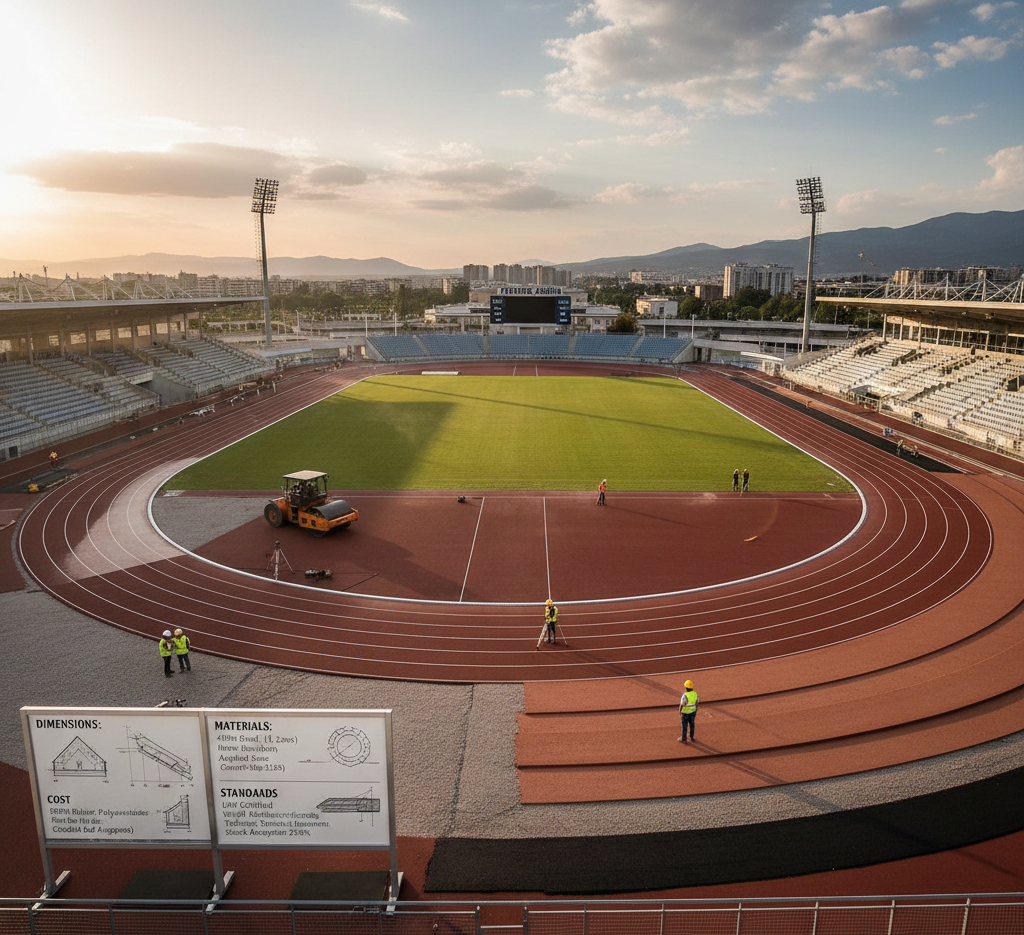
Running tracks are far more than circular paths for athletes—they are precision-engineered sports surfaces designed to deliver speed, safety, durability, and fairness. Whether built for schools, universities, training academies, or international stadiums, a well-constructed running track plays a vital role in athletic performance and competition standards.
From grassroots sports development to elite Olympic-level events, the quality of a running track directly impacts athlete safety, injury prevention, and performance outcomes. Every detail—from dimensions and materials to construction techniques and maintenance—must comply with strict international guidelines to ensure consistency and fairness across competitions.
This comprehensive guide explores everything you need to know about running track construction, including standard dimensions, layout, materials, construction process, costs, maintenance, and future trends.
What Is a Standard Running Track?
A standard running track is a closed-loop oval surface designed primarily for track and field events. According to World Athletics (formerly IAAF) regulations, the internationally recognized standard track measures 400 meters in length, calculated along the inner edge of Lane 1.
These globally accepted standards ensure that athletes can compete under identical conditions anywhere in the world, allowing fair comparison of times, records, and performances.
Standardized tracks are essential for hosting national and international competitions, while even school or college tracks benefit from following these guidelines for safety and longevity.
Key Dimensions of a Standard Running Track
Precise dimensions are the foundation of any professional running track. Even minor deviations can affect fairness, timing accuracy, and eligibility for official competitions.
Core Measurements
-
Total Length: 400 meters (measured 30 cm from the inner edge of Lane 1)
-
Number of Lanes: Typically 8 lanes (6–9 lanes possible)
-
Lane Width: 1.22 meters per lane
-
Total Track Area: Approximately 176.91 m × 92.5 m
These measurements ensure enough space for athletes, officials, safety zones, and field events such as long jump, high jump, and javelin throw.
Accurate dimensioning also ensures compatibility with electronic timing systems and photo-finish equipment.
Track Layout and Markings
A standard running track consists of a symmetrical oval layout designed to balance speed and safety.
Track Geometry
-
Straights: Two parallel straight sections, each measuring 84.39 meters
-
Curves: Two semicircular curves, each contributing 115.61 meters
This design allows smooth transitions between straights and curves, reducing stress on athletes’ joints.
Track Markings
-
Staggered starting lines for curved events
-
Lane numbers and relay exchange zones
-
Finish lines and break lines
-
Field-event markings (hurdles, steeplechase, etc.)
Precision in line marking is critical. Incorrect markings can lead to unfair advantages, disqualification, or rejection of the track for official events.
Materials Used in Running Track Construction
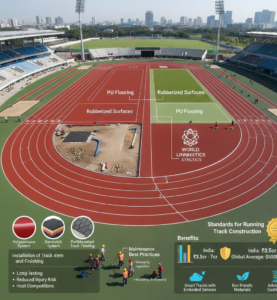
Modern running tracks use advanced synthetic materials designed to enhance performance while minimizing injury risk.
Common Track Surface Materials
1. Polyurethane (PU) Flooring
-
Highly durable and weather-resistant
-
Excellent grip and energy return
-
Preferred for professional and competition-level tracks
2. Rubberized Surfaces
-
Shock-absorbent and flexible
-
Suitable for schools and training facilities
-
Good balance between performance and cost
3. Eco-Friendly Composites
-
Made from recycled or sustainable materials
-
Reduced environmental impact
-
Increasingly popular in modern sports infrastructure
The choice of material significantly affects athlete comfort, traction, speed, and the overall lifespan of the track.
Running Track Construction Process
Constructing a running track requires technical expertise, careful planning, and strict quality control at every stage.
1. Planning and Site Selection
-
Selection of a flat or gently sloped site
-
Soil testing and drainage analysis
-
Alignment with competition standards
2. Base Preparation
-
Excavation and leveling
-
Installation of drainage systems
-
Laying asphalt or concrete foundation for structural stability
3. Installation of Track Surface
-
Application of PU, sandwich, or prefabricated systems
-
Controlled layering for thickness and elasticity
-
Proper curing time between layers
4. Line Marking and Finishing
-
Accurate lane markings using certified paints
-
Installation of logos, numbers, and event lines
-
Final inspection and testing
Each stage must meet World Athletics specifications to ensure durability, performance, and safety.
Running Track Flooring Options
Choosing the right flooring system is one of the most important decisions in track construction.
Polyurethane System
-
Seamless surface
-
High resistance to UV rays and weather
-
Ideal for elite competitions
Sandwich System
-
Combination of rubber granules and PU layers
-
Enhanced shock absorption
-
Suitable for training and competition
Prefabricated Track Flooring
-
Factory-manufactured sheets
-
Faster installation
-
Consistent quality and minimal on-site work
The selected system should align with usage intensity, budget, and performance requirements.
Standards for Running Track Construction
Compliance with World Athletics certification standards is essential for any track intended for official competitions.
Certified tracks ensure:
-
Accurate dimensions and markings
-
Approved surface thickness and material properties
-
Safe traction and shock absorption
-
Long-term durability
Only certified tracks are eligible to host national, continental, and international athletic events.
Cost of Running Track Construction
The cost of building a running track varies based on several factors:
Cost-Influencing Factors
-
Type of surface material
-
Number of lanes
-
Site conditions and drainage requirements
-
Labor costs and geographical location
-
Certification and testing requirements
Estimated Costs
-
India: ₹3.5 crore – ₹7 crore
-
Global Average: $500,000 – $1 million
While the initial investment is significant, a professionally built track offers long-term value, safety, and performance benefits.
Benefits of Professional Running Track Construction
Investing in professional construction delivers multiple advantages:
-
Long-lasting, durable surface
-
Accurate measurements and markings
-
Compliance with international standards
-
Reduced injury risk for athletes
-
Eligibility to host national and international competitions
-
Enhanced reputation of the facility
Professional installation ensures that the track performs consistently under heavy use and varying weather conditions.
Maintenance of Running Tracks
Regular maintenance is essential to preserve track quality and safety.
Maintenance Best Practices
-
Regular sweeping and cleaning
-
Removal of debris and standing water
-
Periodic inspection for cracks or surface wear
-
Recoating or resurfacing every 8–10 years
Proper maintenance not only extends the lifespan of the track but also ensures optimal performance for athletes.
Challenges in Running Track Construction
Despite careful planning, several challenges may arise:
-
Weather Conditions: Rain, humidity, or extreme temperatures can delay installation
-
Budget Constraints: High-quality materials and skilled labor increase costs
-
Material Availability: Imported surfaces may face shipping or customs delays
Addressing these challenges requires experienced contractors and realistic project timelines.
Future Trends in Running Track Flooring
The future of running track construction is driven by innovation and sustainability.
Emerging Trends
-
Eco-friendly and recyclable materials
-
Advanced cushioning systems for injury prevention
-
Smart tracks with embedded sensors for performance tracking
-
Enhanced UV-resistant and weatherproof coatings
These advancements aim to improve athlete safety, performance analytics, and environmental responsibility.
Conclusion
Constructing a high-quality running track is a sophisticated process that goes far beyond laying a surface. It requires precision engineering, certified materials, expert installation, and ongoing maintenance. Whether for schools, universities, training centers, or international competitions, investing in a professionally built running track ensures safety, durability, and world-class performance standards.
A well-designed track not only supports athletic excellence but also becomes a long-term asset that promotes sports development and competitive success.
Here is a comprehensive and SEO-friendly FAQ section for:
🏃 Running Track Construction: Complete Guide to Dimensions, Materials, Cost, and Standards – FAQ
❓ 1. What is a standard running track size?
The most common standard running track is:
-
400 meters (outdoor track) – Measured in Lane 1
-
Typically includes 8 lanes, each 1.22 meters wide
Other formats include:
-
6-lane 400m tracks
-
200m indoor tracks
-
Custom training or school tracks
Standard dimensions follow World Athletics (WA) guidelines for competitive use.
❓ 2. What are the basic dimensions of a 400m running track?
A standard 400m track consists of:
-
Two straight sections (approximately 84.39 meters each)
-
Two semicircular curves (radius approx. 36.5 meters for Lane 1)
-
Lane width: 1.22 meters
-
Safety zone outside the track: 1–2 meters
Exact measurements must follow certified athletic standards for competitions.
❓ 3. What materials are used in running track construction?
Common materials include:
-
Polyurethane (PU) Systems – Professional athletic tracks
-
EPDM Rubber Granules – UV-resistant colored surface
-
SBR Rubber Granules – Shock-absorbing base layer
-
Acrylic Coating Systems – Budget-friendly alternative
-
Asphalt or Concrete Base – Structural foundation
-
WMM (Wet Mix Macadam) – Sub-base layer
Material selection depends on budget, usage, and performance requirements.
❓ 4. What are the different types of synthetic running track systems?
There are mainly three types:
-
Full PU System – Premium, seamless, highly durable
-
Sandwich System – SBR base + EPDM top layer
-
Spray Coating System – Cost-effective solution
-
Prefabricated Rubber Track – Factory-made rolls installed on-site
Full PU systems are preferred for international competitions.
❓ 5. What are the key construction steps?
Running track construction typically includes:
-
Site survey and soil testing
-
Earthwork and compaction
-
Sub-base installation (WMM)
-
Asphalt or concrete base laying
-
Primer application
-
Rubber/PU surface installation
-
Line marking
-
Curing and quality inspection
Proper drainage planning is critical during base preparation.
❓ 6. What standards must a running track follow?
Professional tracks should comply with:
-
World Athletics (WA) Standards
-
Athletics Federation of India (AFI) Guidelines
-
ISO-certified material standards
Compliance ensures eligibility for official competitions.
❓ 7. What is the recommended slope for a running track?
To ensure proper drainage:
-
Cross slope: approximately 1%
-
Longitudinal slope: minimal to maintain fairness in competition
Incorrect slope can impact athlete performance and surface durability.
❓ 8. How much does running track construction cost?
The cost depends on:
-
Track size and number of lanes
-
Type of surface system (Full PU, Sandwich, Acrylic)
-
Base preparation quality
-
Drainage system
-
Location and logistics
A professional 400m synthetic athletic track costs significantly more than a jogging or school track.
❓ 9. How long does construction take?
Estimated timelines:
-
Jogging track: 3–6 weeks
-
400m synthetic track: 8–12 weeks
Weather conditions and curing time affect project duration.
❓ 10. How long does a synthetic running track last?
With proper maintenance:
-
Full PU systems: 10–15 years
-
Sandwich systems: 8–12 years
-
Acrylic tracks: 5–8 years
Regular inspection and maintenance extend lifespan.