Introduction
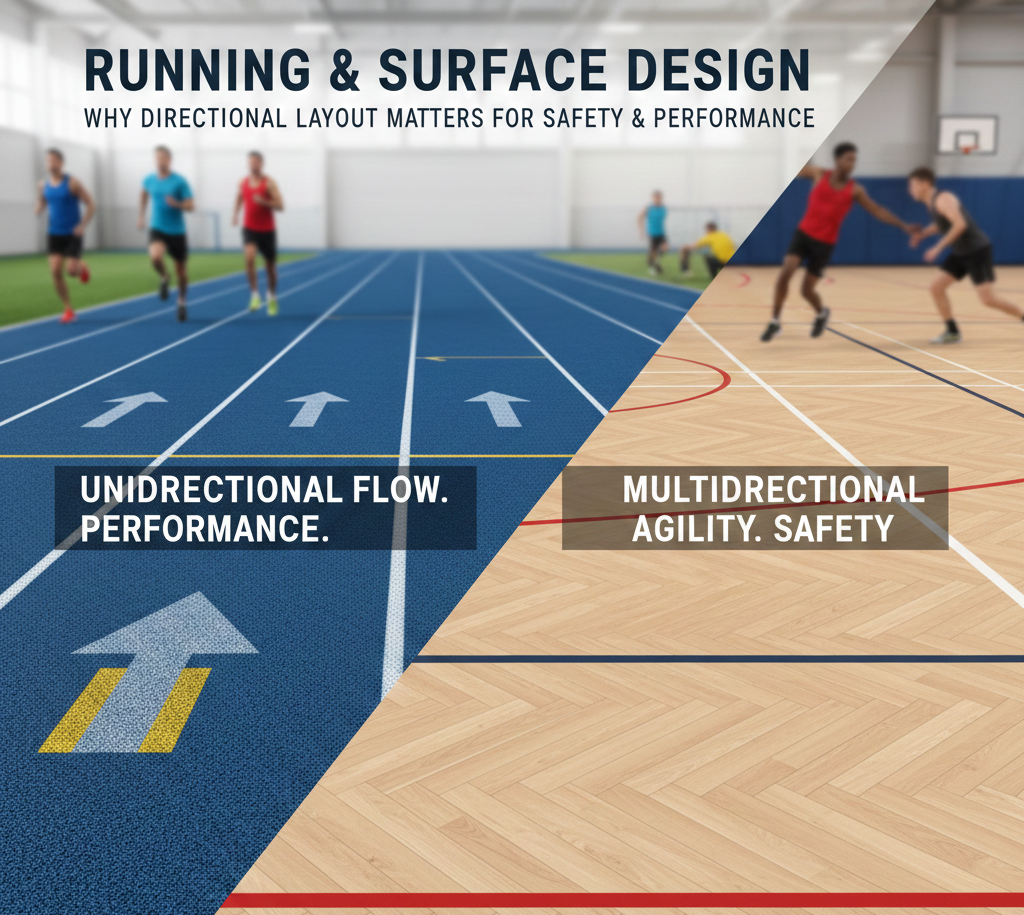
Running is one of the most fundamental forms of physical activity, forming the backbone of fitness training, sports performance, and rehabilitation programs. Whether an athlete is sprinting on an indoor track, performing agility drills in a gym, or engaging in functional training exercises, the surface beneath their feet plays a critical role in determining safety, comfort, and performance.
While most discussions about running flooring focus on shock absorption or durability, one crucial factor is often overlooked—the direction of movement. Running is not always linear. Athletes frequently move forward, backward, sideways, diagonally, and in circular patterns. Each of these movements places different stresses on the flooring surface.
This blog explores why running flooring in different directions is so important, how flooring materials respond to multi-directional movement, the best flooring options for versatile use, and how proper planning and maintenance can ensure long-term performance.
Why Running Flooring Direction Matters
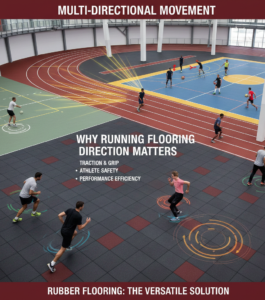
Running in a straight line places predictable, repetitive stress on a surface. However, modern training methods and sports demand much more than forward motion. Lateral sprints, quick pivots, backward running, and curved paths introduce shear forces, rotational pressure, and uneven load distribution on flooring systems.
Key Reasons Direction Matters
1. Traction and Grip
Some surfaces perform well for forward motion but lose grip during lateral or rotational movements. Poor traction during side shuffles or pivots increases the risk of slipping and injury.
2. Athlete Safety
Multi-directional running places higher strain on ankles, knees, and hips. If the flooring does not provide stable footing and controlled energy return, athletes are more prone to sprains, strains, and falls.
3. Surface Durability
Directional stress can cause uneven wear. Pivot-heavy zones—such as corners, curves, or agility drill areas—tend to degrade faster if the flooring is not designed for multi-directional use.
4. Performance Efficiency
Athletes rely on consistent surface response. Flooring that behaves differently depending on direction can disrupt balance, reduce speed, and negatively affect agility and confidence.
Understanding how running flooring responds to different movement patterns is essential for gyms, indoor tracks, sports academies, and multipurpose athletic facilities.
Common Scenarios of Multi-Directional Running
Multi-directional running is common across a wide range of environments and activities:
Indoor Running Tracks
Athletes run straight sections, tight curves, and sometimes banked turns. Flooring must maintain traction and elasticity across changing angles of motion.
Gyms and Fitness Centers
Functional training programs include lateral shuffles, backward sprints, cutting movements, and rapid pivots. Flooring must support explosive, unpredictable motion.
Sports Courts and Indoor Arenas
Sports such as basketball, volleyball, badminton, futsal, and handball involve constant changes in direction, sudden stops, and quick accelerations.
Training and Rehabilitation Centers
Rehabilitation exercises often include controlled multi-directional movements to rebuild balance and coordination, requiring safe, forgiving surfaces.
In all these settings, flooring must perform reliably regardless of the direction of movement.
How Flooring Responds to Multi-Directional Movement
Different flooring materials react differently to directional forces:
-
Forward running primarily compresses the surface vertically.
-
Lateral movement introduces sideways shear forces.
-
Pivoting and turning create rotational stress at contact points.
-
Circular running applies uneven pressure across curves.
If a surface lacks flexibility or grip, these forces can lead to surface damage, athlete instability, or long-term structural failure.
Best Types of Running Flooring for Multi-Directional Movement
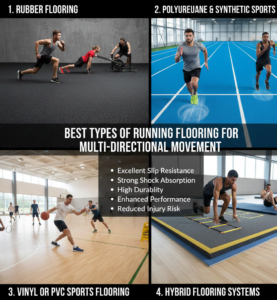
Choosing the right flooring material is essential for facilities that support varied movement patterns.
1. Rubber Flooring
Rubber flooring is one of the most versatile options for multi-directional running and is widely used in gyms, training zones, and indoor tracks.
Advantages:
-
Excellent slip resistance in all directions
-
Strong shock absorption, reducing joint stress
-
High durability under repeated lateral and rotational forces
-
Easy maintenance and cleaning
Considerations:
-
Quality matters—low-grade rubber may wear unevenly
-
Interlocking rubber tiles work well for modular spaces
Rubber flooring is ideal for functional training and agility-focused environments.
2. Polyurethane and Synthetic Sports Flooring
Polyurethane (PU) and synthetic track surfaces are engineered specifically for athletic performance. These systems are commonly used in professional indoor tracks and sports facilities.
Advantages:
-
Consistent traction across all directions
-
Superior energy return and resilience
-
Seamless surface reduces tripping risks
-
Long lifespan even under intense usage
Considerations:
-
Requires professional installation
-
Higher initial investment
PU flooring is the preferred choice for high-performance and competition-grade facilities.
3. Vinyl or PVC Sports Flooring
Vinyl flooring is commonly used in multi-purpose gyms and recreational spaces.
Advantages:
-
Smooth surface allows easy pivoting
-
Cost-effective and quick to install
-
Suitable for light to moderate multi-directional activity
Considerations:
-
Lower shock absorption compared to rubber or PU
-
Can become slippery if wet or poorly textured
Vinyl flooring works best for recreational use rather than high-impact training.
4. Hybrid Flooring Systems
Hybrid systems combine cushioning layers with durable top surfaces, offering enhanced performance across movement directions.
Advantages:
-
Balanced grip, comfort, and durability
-
Suitable for multiple sports and training styles
-
Handles high-impact and multi-directional stress
Considerations:
-
Higher installation and maintenance costs
-
Requires expert design and planning
Hybrid systems are often used in professional arenas and rehabilitation facilities.
Key Factors to Consider When Installing Multi-Directional Running Flooring
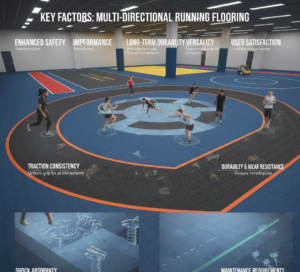
1. Traction Consistency
Flooring should offer uniform grip during forward, lateral, and rotational movements. Direction-specific slippage increases injury risk.
2. Shock Absorption
Multi-directional movements amplify joint impact. Adequate cushioning reduces fatigue and protects muscles and ligaments.
3. Durability and Wear Resistance
High-traffic zones—such as corners, curves, and pivot points—must resist tearing, indentation, and surface breakdown.
4. Surface Uniformity
Seamless or properly joined surfaces prevent tripping hazards during rapid changes in direction.
5. Maintenance Requirements
Facilities with intense use need flooring that is easy to clean, inspect, and repair without frequent downtime.
Tips for Optimizing Flooring for Different Running Directions
-
Plan the layout carefully by identifying pivot-heavy zones and reinforcing those areas
-
Use activity zoning to separate straight running, agility drills, and lateral exercises
-
Maintain consistent surface texture across movement zones
-
Inspect flooring regularly for loose tiles, worn spots, or surface irregularities
-
Encourage proper footwear to maximize traction and reduce flooring damage
These strategies help extend flooring life while maintaining athlete safety.
Benefits of Proper Multi-Directional Running Flooring
Investing in the right flooring delivers long-term benefits:
-
Enhanced Safety: Reduced slips, falls, and joint injuries
-
Improved Performance: Stable footing boosts speed, agility, and confidence
-
Long-Term Durability: High-quality surfaces withstand heavy use
-
Versatility: Supports multiple sports and training programs
-
User Satisfaction: Comfortable flooring encourages consistent participation
Conclusion
Running flooring in different directions is a critical yet often underestimated aspect of sports facility design. Forward running, lateral movements, pivots, and circular patterns each place unique demands on flooring systems. Selecting materials that provide consistent traction, shock absorption, and durability ensures that athletes can train and perform safely and effectively.
Running Flooring in Different Directions: Why Surface Design Matters for Safety and Performance – FAQ
❓ 1. What does “running flooring in different directions” mean?
Running flooring in different directions refers to how the track surface is designed to handle movement patterns such as straight sprints, curved running, lateral motion, sudden turns, and multi-directional training. The surface texture, elasticity, and structural layers must support these varied movements safely and efficiently.
❓ 2. Why is surface direction important for athlete safety?
Surface direction impacts:
-
✅ Traction and grip during turns
-
✅ Shock absorption while sprinting
-
✅ Stability during lateral movement
-
✅ Reduction of slip and fall risk
Improperly designed surfaces can increase stress on knees, ankles, and hips, leading to injuries.
❓ 3. How do curved track sections differ from straight sections?
Curved sections require:
-
Higher lateral grip to prevent slipping
-
Stronger structural bonding to withstand centrifugal force
-
Even thickness to avoid uneven foot strike
Straight sections focus more on forward propulsion and energy return.
❓ 4. What materials are best for multi-directional running surfaces?
Common materials include:
-
EPDM Rubber Granules – Provides cushioning and UV resistance
-
SBR Rubber Base Layer – Cost-effective shock absorption
-
Polyurethane (PU) Systems – Seamless and high-performance
-
Sandwich or Full PU Systems – Ideal for professional athletic tracks
These systems are engineered to balance flexibility and durability.
❓ 5. How does surface texture affect performance?
Surface texture directly influences:
-
Foot grip during acceleration
-
Energy return efficiency
-
Water drainage during rain
-
Anti-slip performance
A well-textured surface enhances speed without compromising stability.
❓ 6. Why is proper base preparation important?
The base layer ensures:
-
Even load distribution
-
No surface cracks or depressions
-
Long-term durability
-
Proper slope for water drainage
Without a strong asphalt or concrete base, directional stress can damage the surface.
❓ 7. How does directional stress affect track durability?
When athletes repeatedly run in the same direction (common in tracks), the inner lanes and curve areas experience higher wear. Proper layering and material thickness help resist:
-
Surface tearing
-
Granule loss
-
Delamination
-
Uneven compaction
❓ 8. Is directional flooring important for jogging parks and public tracks?
Yes. Even recreational tracks must handle:
-
Morning joggers
-
Walkers
-
Interval training
-
Group fitness activities
A surface designed for multi-directional use ensures safety for all age groups.
❓ 9. How does surface elasticity impact performance?
Elasticity helps in:
-
Reducing muscle fatigue
-
Minimizing joint impact
-
Improving stride efficiency
-
Enhancing energy return
Too hard surfaces increase injury risk, while overly soft surfaces reduce speed efficiency.
❓ 10. What slope is recommended for outdoor running tracks?
Typically:
-
1% cross slope for drainage
-
Balanced leveling to avoid water pooling
Improper slope can affect running posture and surface longevity.