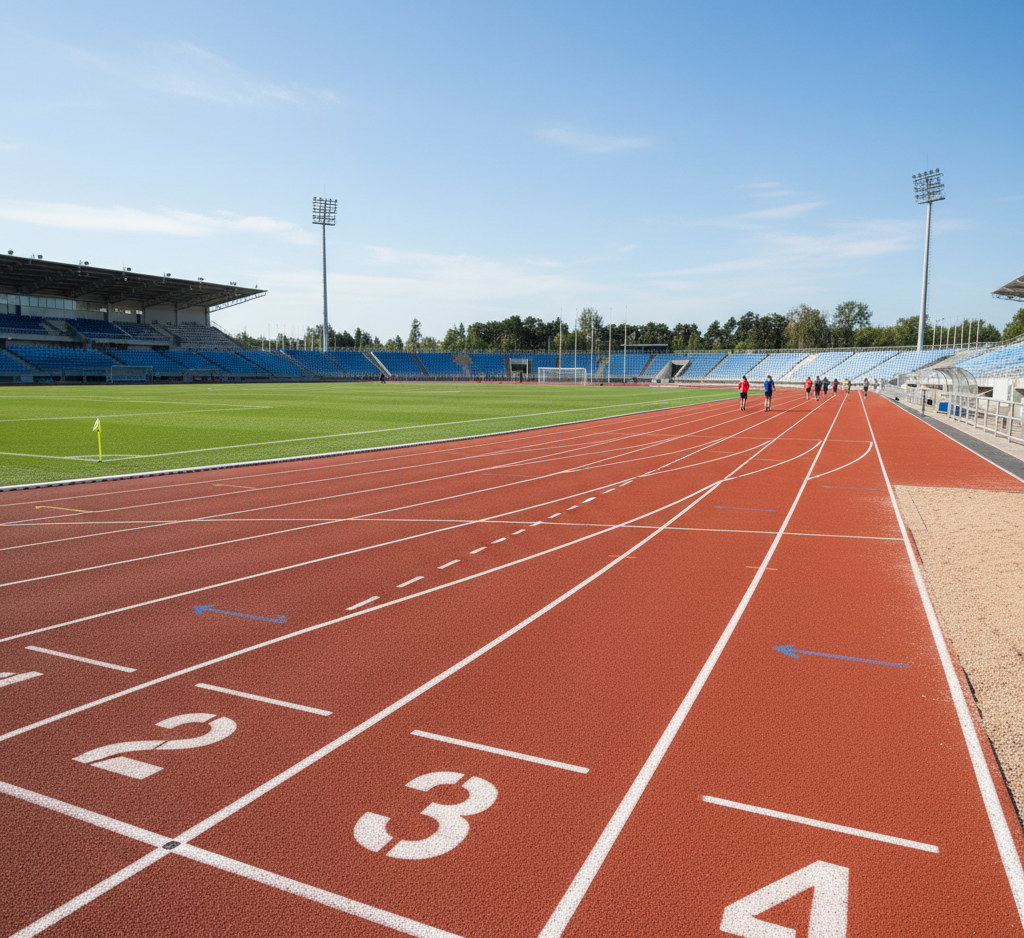
Modern sports infrastructure demands innovation, safety, and long-lasting performance — and the rubber running track perfectly embodies all three. Designed to deliver comfort, resilience, and speed, rubberized track systems have become the foundation of professional and recreational athletics worldwide. Whether for a school playground, training arena, or Olympic-level stadium, rubber tracks ensure athletes experience the best combination of shock absorption, traction, and durability.
1. What is a Rubber Running Track?
A rubber running track is a synthetic athletic surface made primarily from recycled or virgin rubber granules bound together using high-grade polyurethane or latex resin. The result is a smooth, resilient, and slip-resistant surface suitable for sprinting, jogging, and field events.
Rubber tracks are known for their comfort and flexibility, reducing the risk of injuries caused by repetitive impact. They also provide consistent performance in all weather conditions, making them ideal for both indoor and outdoor installations.
2. Evolution of Rubber Track Systems
Before synthetic tracks became standard, athletes ran on cinder or dirt tracks that often changed texture with weather and usage. The introduction of rubberized synthetic tracks in the 1960s transformed athletics forever.
Today’s rubber tracks are engineered with advanced materials that enhance energy return, durability, and comfort. They come in various systems — from economical spray coats to high-performance full-pour polyurethane surfaces — catering to different levels of competition and budget requirements.
3. Types of Rubber Running Track Systems
Different systems suit different needs based on budget, usage, and performance expectations. The most common types include:
a. Spray-Coated Rubber Track
An affordable option where a base mat of rubber granules is installed, then coated with a thin polyurethane or latex layer. Best suited for schools, training grounds, and recreational tracks.
b. Sandwich System
This system features a rubber base mat sealed with polyurethane and topped with a spray coat. It offers excellent elasticity and moderate cost — ideal for colleges and semi-professional sports facilities.
c. Full Pour Polyurethane System
A premium system where rubber and polyurethane layers are poured on-site to create a seamless, high-performance surface. It provides maximum energy return, weather resistance, and lifespan, preferred for professional competitions.
d. Prefabricated Rubber Track
Factory-made rubber sheets are rolled out and bonded to the base surface. These tracks offer precise uniformity and fast installation, commonly used in multipurpose or indoor arenas.
4. Key Features of Rubber Running Tracks
Rubber running tracks are renowned for their superior mechanical and performance properties. Some of the key features include:
-
Seamless, Joint-Free Surface – Prevents uneven spots and trip hazards.
-
Excellent Shock Absorption – Reduces impact stress on knees, ankles, and joints.
-
All-Weather Performance – Maintains traction and resilience even during rain or heat.
-
Slip and Spike Resistance – Ensures stability and grip for runners.
-
Eco-Friendly Material – Often made using recycled rubber granules, supporting sustainability.
-
Vibrant Color Options – Available in red, blue, green, or customized colors to suit your facility design.
5. Benefits of Rubber Running Track Flooring
1. Athlete Safety
The cushioning properties of rubber minimize the risk of muscle fatigue and injuries. The surface provides a soft landing and controlled rebound, making it safer for runners of all ages.
2. Durability
Rubber tracks can last 10–15 years or more with proper maintenance. The materials are UV-stable, water-resistant, and capable of withstanding heavy use and harsh weather.
3. Consistent Performance
Unlike natural tracks that vary with weather, rubber tracks maintain uniform bounce, traction, and hardness — ensuring fair competition and consistent results.
4. Eco-Conscious Construction
Many rubber tracks use recycled tires and eco-friendly binders, helping reduce environmental impact while creating world-class athletic surfaces.
5. Low Maintenance
Rubber tracks are easy to clean and require minimal maintenance. Routine sweeping and occasional washing keep them in optimal condition.
6. Versatility
These tracks are suitable for multiple athletic events and can also double as multipurpose courts or jogging pathways in schools, universities, and fitness parks.
6. Rubber Running Track Construction Process
The construction of a rubber running track requires precision engineering and expert craftsmanship. The typical process involves:
-
Site Preparation:
Leveling the ground, compacting the soil, and installing a proper drainage system. -
Base Construction:
A solid asphalt or concrete base is laid to ensure a stable foundation. -
Rubber Layer Installation:
Rubber granules are mixed with polyurethane or latex binder and spread evenly to form the cushioning layer. -
Surface Coating or PU Layer:
Depending on the system type, a top polyurethane coating or additional rubber layer is applied for durability and weatherproofing. -
Line Marking:
Lanes, numbers, and event markings are painted using durable, UV-resistant paint. -
Final Testing:
The surface undergoes tests for friction, shock absorption, and hardness to meet World Athletics (IAAF) standards.
7. Maintenance Tips for Longevity
To ensure long-lasting performance, rubber tracks should be maintained properly:
-
Clean Regularly: Remove dirt, leaves, and debris that may affect traction.
-
Inspect Frequently: Check for surface wear, cracks, or drainage blockages.
-
Avoid Sharp Objects: Prevent damage from metal spikes, heavy vehicles, or tools.
-
Re-Coat When Needed: After several years, apply a new top coat to restore performance and aesthetics.
-
Ensure Proper Drainage: Keep the drainage system unclogged to prevent water stagnation.
8. Applications of Rubber Running Tracks
-
Olympic & International Stadiums
-
School & University Grounds
-
Community Sports Centers
-
Professional Training Facilities
-
Jogging Parks & Fitness Trails
-
Indoor Athletics Arenas
Its versatility makes it suitable for both competitive and casual environments.
9. Environmental & Economic Benefits
Rubber running tracks contribute positively to sustainability. Most systems utilize recycled rubber tires, reducing landfill waste and promoting circular material use. Additionally, their long lifespan and low maintenance reduce operational costs, making them a cost-effective choice for long-term sports infrastructure planning.
10. Comparison: Rubber vs Other Track Surfaces
| Feature | Rubber Track | Asphalt Track | Grass Track |
|---|---|---|---|
| Shock Absorption | Excellent | Poor | Moderate |
| Weather Resistance | High | Low | Low |
| Maintenance | Low | High | High |
| Lifespan | 10–15 years | 3–5 years | 2–4 years |
| Safety | Very Safe | Moderate | Moderate |
| Surface Uniformity | Excellent | Uneven | Variable |
Rubber tracks clearly outperform traditional materials in every key metric — making them the smart, modern choice for athletic flooring.
11. Why Choose a Professional Rubber Track Installer
While materials are important, proper installation determines the performance and lifespan of a rubber track. A certified athletic track construction company ensures:
-
Correct base preparation and leveling
-
Optimal material mixing and curing
-
Compliance with international standards
-
Long-lasting, visually appealing results
Professional installation guarantees that the surface delivers consistent performance and safety for years.
12. Conclusion
A rubber running track is more than just an athletic surface — it’s a commitment to quality, performance, and sustainability. Designed for athletes of all levels, it provides an optimal balance of speed, comfort, and safety. Whether you’re constructing a professional stadium or a school track, investing in rubber flooring ensures durability, reduced maintenance, and world-class performance.