Pickleball is one of the fastest-growing sports worldwide, attracting players of all ages and skill levels. As the game gains popularity, the demand for safe, durable, and player-friendly court surfaces continues to rise. Among the many surface options available today, rubber flooring for pickleball courts stands out as a reliable and versatile solution—especially for indoor facilities and multi-purpose spaces.
Rubber flooring offers superior shock absorption, excellent traction, reduced noise, and long-term durability. Whether installed in gyms, sports complexes, community centers, or residential indoor courts, rubber flooring creates a comfortable and safe playing environment while keeping maintenance simple and cost-effective.
This comprehensive guide explores everything you need to know about rubber flooring for pickleball courts, including its benefits, types, installation requirements, applications, maintenance, and long-term value.
What Is Rubber Flooring for Pickleball Courts?
Rubber flooring is manufactured from natural rubber, synthetic rubber, or a blend of both, engineered to deliver resilience, flexibility, and grip. It is commonly available in interlocking tiles, rolled sheets, or cushioned mats, allowing for customization based on court size, usage level, and installation needs.
For pickleball courts, rubber flooring is designed to support quick lateral movements, rapid direction changes, and repeated impact, all while reducing stress on players’ joints. Its shock-absorbing and slip-resistant properties make it especially suitable for indoor environments where safety and comfort are top priorities.
Key Advantages of Rubber Flooring for Pickleball Courts
1. Superior Shock Absorption
Pickleball involves frequent stopping, pivoting, and short bursts of movement. Rubber flooring absorbs impact efficiently, reducing stress on knees, ankles, hips, and the lower back. This makes it an excellent option for senior players and recreational users who prioritize joint protection.
2. Slip Resistance and Enhanced Safety
Rubber flooring provides a naturally textured surface that offers consistent grip, even during fast footwork. This reduces the risk of slips and falls, improving overall player safety—especially in indoor courts where moisture or dust may be present.
3. Long-Lasting Durability
Designed for high-traffic environments, rubber flooring resists wear, scuffs, dents, and impact damage. It maintains its performance and appearance over time, even with daily use, making it a cost-effective long-term investment.
4. Low Maintenance Requirements
Unlike wood or synthetic coatings that require periodic refinishing, rubber flooring is easy to maintain. Regular sweeping and occasional mopping are typically sufficient to keep the surface clean and playable.
5. Noise and Vibration Reduction
Rubber flooring significantly reduces impact noise caused by foot movement and ball contact. This is especially valuable for indoor facilities, residential courts, and shared spaces where noise control is essential.
6. Customizable Design and Colors
Rubber flooring for pickleball courts is available in a wide range of colors and thicknesses. Courts can be customized with contrasting shades for playing zones and crisp line markings, creating a professional and visually appealing environment.
Types of Rubber Flooring for Pickleball Courts
Interlocking Rubber Tiles
Interlocking rubber tiles are one of the most popular choices for pickleball courts.
Key Features:
-
Simple and quick installation
-
Modular design allows easy replacement of damaged tiles
-
Excellent cushioning and traction
Best For:
Indoor pickleball courts, gyms, and multi-purpose facilities where flexibility is required.
Rolled Rubber Flooring
Rolled rubber flooring provides a seamless and uniform playing surface.
Key Features:
-
Professional, continuous appearance
-
Consistent surface performance
-
High durability for frequent play
Best For:
Large indoor pickleball courts and sports complexes seeking a clean, professional look.
Cushioned Rubber Mats
Cushioned rubber mats are portable and versatile.
Key Features:
-
Easy to install and remove
-
Suitable for temporary setups
-
Enhanced comfort and safety
Best For:
Temporary pickleball courts, residential indoor use, or multi-sport spaces.
Installation Considerations for Rubber Flooring for Pickleball Courts
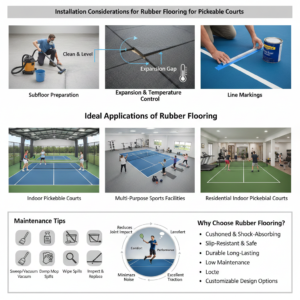
Proper installation is essential to maximize the performance and lifespan of rubber flooring.
Subfloor Preparation
The subfloor must be:
-
Clean and dust-free
-
Completely level
-
Dry and structurally sound
Any unevenness can affect ball bounce and player movement.
Expansion and Temperature Control
Rubber flooring naturally expands and contracts with temperature changes. Proper expansion gaps should be incorporated during installation to prevent buckling or lifting.
Line Markings
Court lines should be applied using high-quality, durable paint or tape designed for rubber surfaces. Accurate line placement ensures compliance with pickleball court dimensions and improves playability.
Professional Installation
While some rubber flooring systems allow DIY installation, professional installation is recommended for permanent courts to ensure correct alignment, adhesion, and performance.
Ideal Applications of Rubber Flooring for Pickleball Courts
Indoor Pickleball Courts
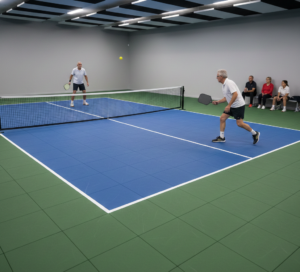
Rubber flooring is especially well-suited for indoor pickleball courts, offering a cushioned, non-slip surface that supports safe and comfortable play year-round.
Multi-Purpose Sports Facilities
In gyms and recreation centers, rubber flooring allows spaces to be used for pickleball, fitness training, aerobics, and other sports without compromising performance.
Residential Indoor Pickleball Courts
For homeowners, rubber flooring provides a quiet, safe, and low-maintenance solution that blends well with home gym environments.
Maintenance Tips for Rubber Flooring Pickleball Courts
Maintaining rubber flooring is simple and cost-effective.
-
Sweep or vacuum regularly to remove dust and debris
-
Clean with a damp mop using mild, non-abrasive cleaners
-
Wipe spills immediately to prevent staining
-
Inspect tiles or seams periodically and replace damaged sections
-
Avoid dragging heavy equipment across the surface
With basic care, rubber flooring can maintain its performance for many years.
Performance and Player Experience
Rubber flooring for pickleball courts creates a balanced playing environment. While it offers excellent comfort and safety, it also provides consistent traction and reliable foot response. Although ball bounce may be slightly softer compared to hard acrylic surfaces, many recreational and indoor players prefer the added comfort and reduced physical strain.
This makes rubber flooring an excellent choice for training, casual play, community programs, and facilities catering to a wide range of age groups.
Summary: Why Choose Rubber Flooring for Pickleball Courts?
Rubber flooring delivers a unique combination of safety, comfort, durability, and versatility. It reduces joint impact, minimizes noise, and offers excellent traction, making it ideal for indoor pickleball courts and multi-purpose facilities.
Key Benefits at a Glance:
-
Cushioned and shock-absorbing
-
Slip-resistant and safe
-
Durable and long-lasting
-
Low maintenance
-
Customizable design options
Conclusion
As pickleball continues to grow in popularity, selecting the right court surface becomes increasingly important. Rubber flooring for pickleball courts provides a dependable, player-friendly solution that supports safety, performance, and long-term value.
Whether you are developing an indoor sports complex, upgrading a gym, or building a residential pickleball court, rubber flooring offers a professional-quality surface that meets modern performance expectations while remaining easy to maintain.