Introduction
Badminton is one of the most widely played sports in schools across India, combining physical fitness, agility, and strategic thinking. However, a high-quality badminton experience requires a well-maintained court. Over time, surfaces degrade due to regular use, exposure to weather, or natural wear and tear. This is where resurfacing badminton courts becomes essential to restore safety, aesthetics, and playability.
For schools, constructing a dedicated badminton court involves careful planning to balance cost, safety, durability, and multi-use functionality. This guide explores resurfacing techniques, school court construction, and multi-purpose project planning to ensure a long-lasting, high-performance facility.
1. Why Resurfacing Badminton Courts is Important
Even premium courts lose their efficiency over time. Resurfacing plays a crucial role in:
-
Restoring Grip and Traction: Worn surfaces can be slippery, increasing injury risk.
-
Maintaining Bounce Consistency: Ensures the shuttlecock reacts predictably on impact.
-
Enhancing Safety: Corrects uneven surfaces, cracks, and minor damage.
-
Improving Visual Appeal: Repainting lines and refreshing surface color gives a professional look.
-
Extending Court Life: Delays the need for a complete replacement, saving cost.
Resurfacing is particularly essential in schools, where courts face high daily usage and varied player skill levels.
2. Key Considerations for School Badminton Court Construction
School badminton courts require special planning to accommodate multiple users, safety standards, and budget constraints.
A. Court Size and Dimensions
Standard BWF (Badminton World Federation) dimensions should be followed:
-
Singles Court: 13.4m × 5.18m
-
Doubles Court: 13.4m × 6.1m
-
Recommended Clearance: Minimum 2m around the court for safety
Adhering to standard dimensions ensures compatibility with competitions and training programs.
B. Flooring Type Selection
For school courts, flooring must be:
-
Durable: Withstand frequent use by children and adolescents.
-
Safe: Non-slip and shock-absorbing to reduce injury risk.
-
Cost-Effective: Affordable yet long-lasting material for budget-conscious institutions.
Popular Options:
-
Vinyl Flooring: Cushioned, slip-resistant, and easy to maintain.
-
PU (Polyurethane) Flooring: Durable, seamless, and offers professional-grade bounce.
-
Wooden Flooring: Premium option, excellent shock absorption, ideal for indoor school gyms.
-
Acrylic Flooring: Suitable for outdoor courts; weather-resistant and low-maintenance.
3. Resurfacing Badminton Courts – Step-by-Step
Resurfacing involves restoring a court to optimal playing condition. The process varies by surface type.
A. Wooden Courts
-
Inspection: Identify scratches, warping, or loose panels.
-
Sanding: Remove the old finish and minor surface imperfections.
-
Repairs: Replace damaged planks or fill cracks with wood filler.
-
Polishing/Coating: Apply polyurethane or professional wood finish.
-
Line Repainting: Use BWF-approved paint for accurate markings.
B. Vinyl or PU Courts
-
Deep Cleaning: Remove dust, grease, and debris.
-
Minor Repairs: Patch cracks or tears using adhesive vinyl/PU compounds.
-
Surface Coating: Apply a protective layer for grip and shine.
-
Line Renewal: Restore faded court markings.
C. Acrylic Outdoor Courts
-
Cleaning: Remove dirt, moss, and debris.
-
Filling Cracks: Use acrylic filler compounds for small surface damage.
-
Recoating: Apply primer and acrylic layers for uniform finish.
-
Line Marking: Use weather-resistant paint for boundary and service lines.
Benefits of Resurfacing:
-
Restores professional performance and aesthetics
-
Reduces risk of injuries
-
Extends court lifespan by 5–10 years
-
Cost-effective compared to full replacement
4. Multi-Use Considerations for School Courts
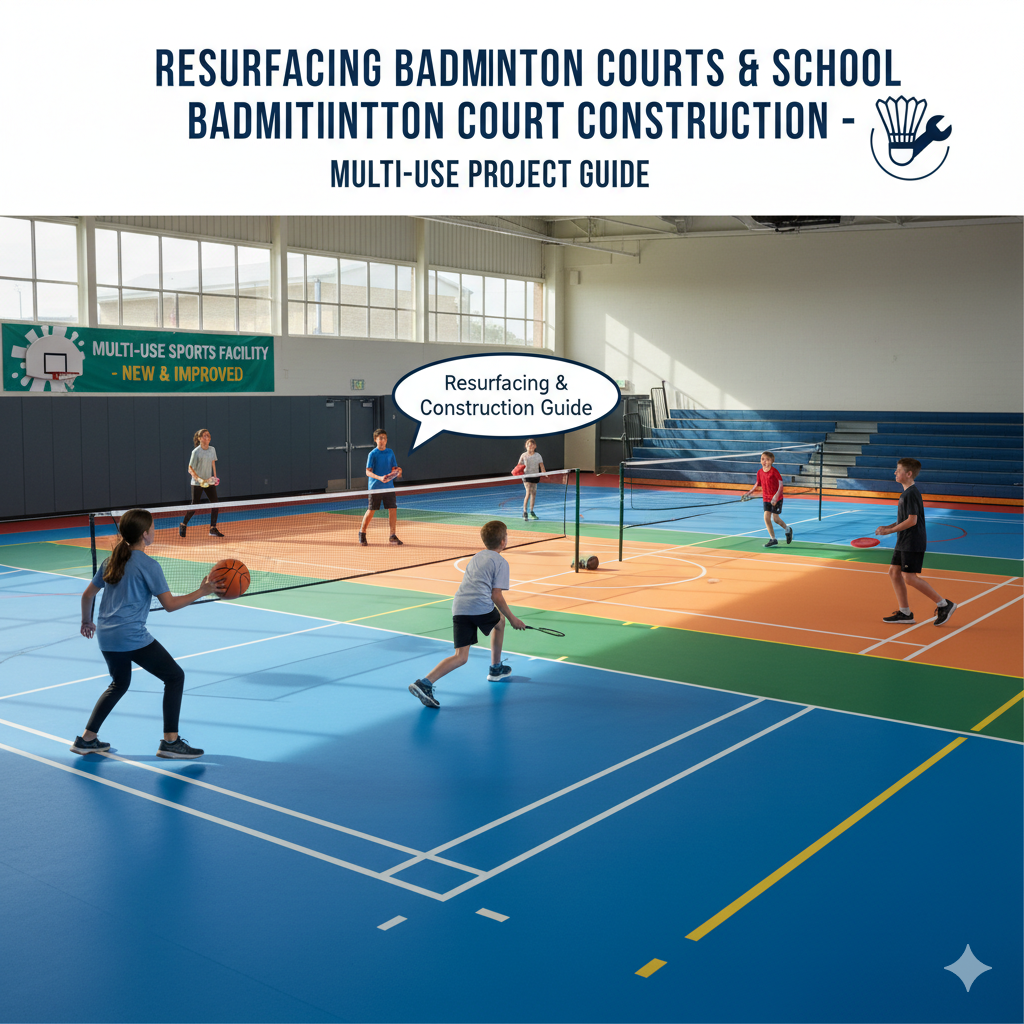
Schools often use badminton courts for multi-sport purposes, such as basketball, volleyball, or indoor activities. Planning a multi-use court involves:
-
Flexible Line Markings: Paint multiple sport lines in contrasting colors for clarity.
-
Floor Cushioning: Select materials (vinyl or PU) that absorb impact for various sports.
-
Lighting and Ventilation: Ensure bright, evenly distributed light and proper airflow.
-
Safety Measures: Install protective padding, anti-slip surfaces, and sufficient space around the court.
-
Budget Optimization: Multi-use courts reduce overall infrastructure cost by accommodating several sports in one area.
5. Cost Factors for School Badminton Court Construction
Building a school badminton court depends on flooring choice, court type (indoor/outdoor), and additional facilities.
| Component | Approx. Cost (₹) |
|---|---|
| Flooring Material (Vinyl/PU/Acrylic) | 2,00,000 – 5,00,000 |
| Base Preparation (Concrete Leveling) | 50,000 – 1,00,000 |
| Line Marking | 15,000 – 30,000 |
| Net, Posts & Accessories | 25,000 – 50,000 |
| Lighting & Ventilation (Indoor) | 50,000 – 1,00,000 |
| Miscellaneous (Labor & Transport) | 30,000 – 60,000 |
| Total Estimated Cost | 3,70,000 – 8,00,000 |
Prices vary based on region, material brand, and project complexity.
6. Maintenance Tips for School Badminton Courts
A well-maintained court ensures safety, longevity, and performance. Key practices include:
-
Daily Cleaning: Sweep debris and mop with suitable cleaning agents.
-
Weekly Inspection: Check for minor surface cracks, loose panels, or worn markings.
-
Annual Resurfacing/Recoating: Keeps the court professional-grade.
-
Proper Footwear: Encourage students to use court-specific shoes to prevent damage.
-
Moisture Control: Especially important for indoor wooden or vinyl floors.
-
Drainage Management: For outdoor acrylic courts, avoid water accumulation.
7. Benefits of Resurfacing and School Court Construction
-
Enhanced Player Safety: Reduces slips and joint injuries.
-
Improved Game Quality: Restores proper bounce and traction.
-
Aesthetic Appeal: Fresh colors and lines make courts inviting.
-
Long-Term Savings: Prevents expensive replacements and major repairs.
-
Multi-Use Functionality: Optimizes space for multiple sports, maximizing school facility utilization.
8. Choosing the Right Contractor
For both resurfacing and school court construction:
-
Select experienced sports flooring contractors familiar with BWF standards.
-
Check references for previous school or multi-use projects.
-
Ensure transparent costing with detailed quotations for materials, labor, and finishing.
-
Verify warranty and post-installation support.
A professional contractor ensures precise leveling, proper surface finish, and long-lasting performance.
Conclusion
Resurfacing badminton courts and constructing school badminton courts are vital for ensuring safety, durability, and excellent playing conditions. Regular refurbishment, combined with proper maintenance, restores surface quality, enhances aesthetics, and extends lifespan.
Multi-use school courts provide flexibility, accommodating multiple sports in one facility, while being cost-effective and space-efficient. By choosing the right flooring, planning carefully, and hiring expert contractors, schools can provide students with professional-grade badminton courts that encourage physical activity, skill development, and a love for sports.