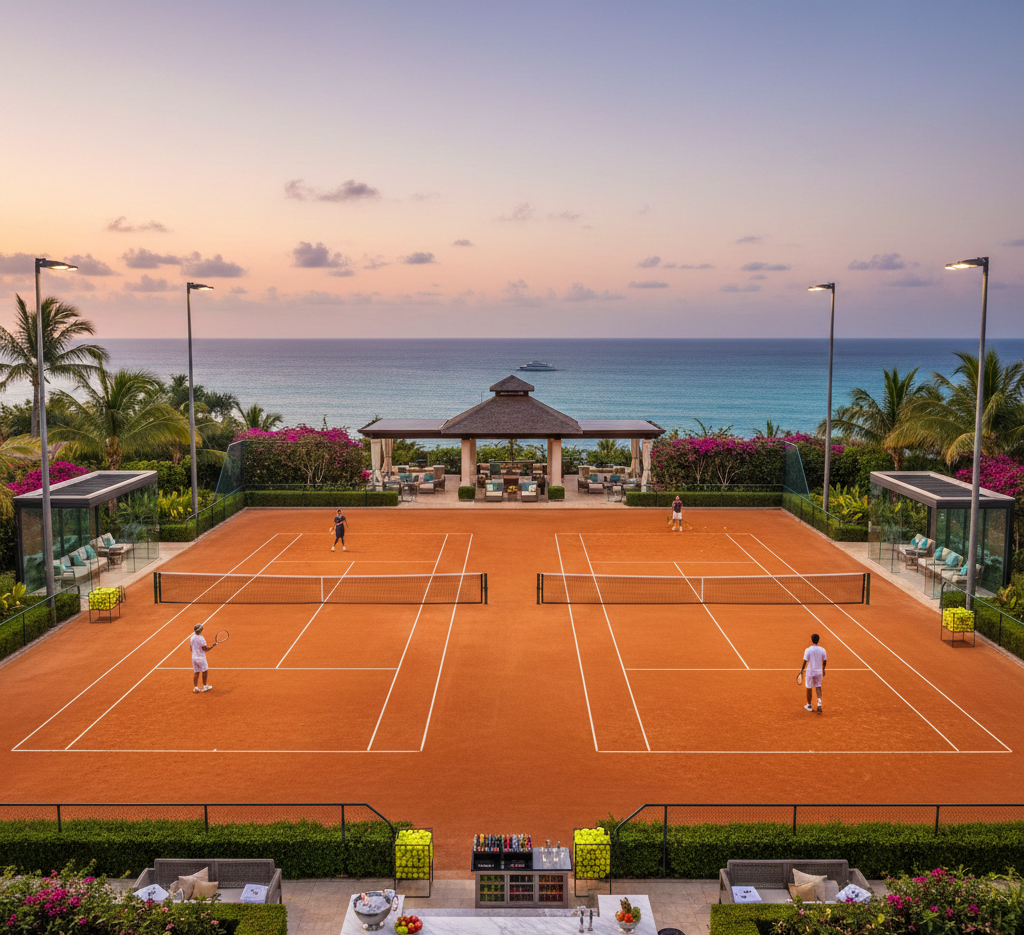
A professionally executed resort tennis court setup is far more than a recreational addition—it is a symbol of quality, luxury, and attention to guest experience. In today’s competitive hospitality industry, resorts are expected to offer premium sports and wellness amenities that match international standards. A well-designed tennis court enhances guest satisfaction, elevates brand image, and significantly increases the overall value of the property.
From surface performance and safety to aesthetics and durability, every detail matters. A thoughtfully planned resort tennis court setup ensures seamless integration with the resort’s landscape while delivering a superior playing experience for guests ranging from casual vacationers to serious tennis enthusiasts.
This comprehensive guide explores every aspect of resort tennis court setup, including planning, design, surface selection, construction process, costs, maintenance, and long-term benefits.
Importance of Professional Resort Tennis Court Setup
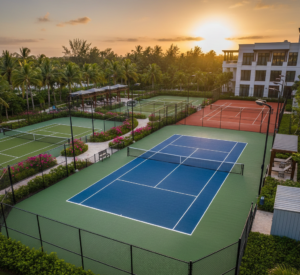
Resorts serve a wide variety of guests with different skill levels and expectations. A professionally built tennis court ensures consistency, safety, and enjoyment for everyone.
Key Benefits of a High-Quality Resort Tennis Court
Enhanced Guest Experience
Smooth surfaces, reliable ball bounce, and proper traction significantly improve playability and comfort.
Safety and Injury Prevention
Anti-slip coatings, proper fencing, shock-absorbing surfaces, and correct run-off areas reduce the risk of injuries.
Luxury Appeal and Visual Harmony
A tennis court designed to complement the resort’s architecture and landscaping enhances overall aesthetics.
Durability and Cost Efficiency
High-quality construction materials reduce surface wear, lowering long-term maintenance and repair costs.
Compliance with International Standards
ITF-compliant court dimensions, markings, and safety features ensure professional-level quality.
A premium resort tennis court setup attracts discerning guests and encourages longer stays and repeat visits.
Essential Planning Considerations for Resort Tennis Court Setup
1. Court Dimensions and Layout
Standard ITF tennis court dimensions include:
-
Length: 78 ft (23.77 m)
-
Width: 36 ft (10.97 m) for doubles, 27 ft (8.23 m) for singles
-
Run-Off Area: Minimum 12–15 ft around the court for player safety
In resort environments, additional surrounding space is often incorporated for landscaping, seating, and walkways.
2. Court Orientation
Proper orientation is crucial for guest comfort. Courts are ideally aligned north–south to minimize sun glare during morning and evening play. This consideration is especially important for outdoor resort tennis court setups in tropical and coastal regions.
Surface Selection for Resort Tennis Court Setup
Choosing the right surface impacts gameplay, maintenance, and guest satisfaction.
Acrylic / Hard Courts
Most popular choice for resorts
-
Durable and weather-resistant
-
Suitable for all skill levels
-
Low maintenance
-
Consistent ball bounce
Ideal for resorts seeking reliability and long-term performance.
Clay Tennis Courts
Classic and premium appeal
-
Slower ball speed, softer on joints
-
Preferred by professional players and training programs
-
Requires regular maintenance
Clay courts add traditional charm and exclusivity to luxury resorts.
Synthetic Turf Tennis Courts
Comfort-focused and visually appealing
-
Soft playing surface, reduced joint impact
-
Lower maintenance than clay
-
Excellent drainage
Ideal for resorts prioritizing guest comfort and aesthetics.
Indoor Tennis Courts
Premium offering for high-end resorts
-
Climate-controlled, year-round usability
-
Ideal for luxury wellness resorts
-
Higher construction investment
Indoor courts elevate the exclusivity of a resort tennis facility.
Drainage and Base Design for Long-Term Performance
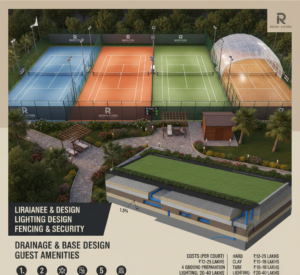
Effective drainage is critical in resort tennis court setup, especially in regions with heavy rainfall.
-
Court slopes of 1–1.5% prevent water stagnation
-
Sub-surface drainage systems ensure rapid water runoff
-
Waterproof base layers protect surface integrity
Proper drainage extends court life and minimizes maintenance disruptions.
Lighting Design for Resort Tennis Courts
Lighting enhances usability and guest convenience, allowing play beyond daylight hours.
-
LED floodlights for uniform, glare-free illumination
-
300 lux for recreational play
-
500 lux or more for professional-level courts
-
Energy-efficient systems reduce operational costs
Well-planned lighting ensures safety and enhances the premium feel of the facility.
Fencing, Security, and Perimeter Design
High-quality fencing is essential for safety and functionality.
-
Vinyl-coated or chain-link fencing (6–10 ft height)
-
Secure access gates
-
Optional windbreaks and privacy screens
Fencing design should align with the resort’s overall aesthetic.
Guest Amenities Around the Tennis Court
A complete resort tennis court setup includes thoughtful guest amenities:
-
Shaded seating and viewing areas
-
Landscaped pathways
-
Equipment storage rooms
-
Optional scoreboards and windscreens
These features enhance comfort and elevate the guest experience.
Step-by-Step Resort Tennis Court Setup Process
Step 1: Site Assessment
A detailed evaluation of soil condition, terrain, sunlight exposure, and available space ensures optimal court placement and longevity.
Step 2: Design and Planning
A conceptual layout is developed, integrating court design, surface type, fencing, lighting, and surrounding amenities.
Step 3: Ground Preparation and Sub-Base Construction
-
Excavation and leveling
-
Compacted gravel and sand layers
-
Drainage system installation
Step 4: Surface Installation
Depending on the chosen surface:
-
Acrylic coating layers for hard courts
-
Rolled and leveled clay layers
-
Synthetic turf installation with infill
Step 5: Equipment and Accessories
-
Professional net posts and nets
-
Fencing, benches, windscreens
-
Optional branding and logos
Step 6: Lighting and Final Inspection
Lighting systems are installed, followed by quality checks for surface uniformity, safety, and compliance.
Resort Tennis Court Setup Cost in India
Costs vary depending on surface type, materials, and amenities.
Approximate Cost Range (Per Court)
-
Acrylic / Hard Court: ₹12–25 lakhs
-
Clay Court: ₹8–15 lakhs
-
Synthetic Turf Court: ₹10–18 lakhs
-
Indoor Tennis Court: ₹20–40 lakhs
-
Lighting & Accessories: ₹2–5 lakhs
Final pricing depends on site conditions and customization requirements.
Maintenance Guidelines for Resort Tennis Courts
Regular maintenance ensures courts remain guest-ready.
-
Hard Courts: Cleaning and recoating every 4–6 years
-
Clay Courts: Daily brushing, watering, and rolling
-
Synthetic Turf: Brushing, debris removal, infill leveling
-
Indoor Courts: Dust control and lighting inspections
Professional maintenance programs preserve surface quality and appearance.
Advantages of a Professionally Executed Resort Tennis Court Setup
-
Superior guest satisfaction
-
Reduced long-term maintenance costs
-
Compliance with ITF standards
-
Enhanced resort branding and prestige
-
Long-lasting, weather-resistant construction
A high-quality tennis court strengthens a resort’s recreational offering and competitive position.
Conclusion: Elevate Your Resort with a Premium Tennis Court
A professionally planned resort tennis court setup is a valuable investment that blends recreation, luxury, and durability. From surface selection and drainage to lighting, fencing, and guest amenities, every element contributes to a world-class tennis experience.
By choosing expert design and construction, resorts can offer a safe, visually striking, and performance-driven tennis facility that enhances guest satisfaction, increases property value, and reinforces the resort’s reputation for excellence.
Frequently Asked Questions (FAQ) – Resort Tennis Court Setup: Creating a World-Class Tennis Experience for Luxury Resorts
1. What type of tennis court is best for a luxury resort?
Most luxury resorts prefer acrylic hard courts due to durability and low maintenance. However, clay courts offer a premium, traditional experience, while synthetic grass courts provide a softer playing surface. The choice depends on the resort’s brand positioning and guest expectations.
2. How many tennis courts should a resort have?
The number depends on resort size and target clientele. Boutique resorts may install 1–2 courts, while large luxury resorts often feature multiple courts, sometimes including different surface types for variety.
3. What is the standard size of a resort tennis court?
A standard tennis court measures 78 ft x 36 ft (doubles play), but the total recommended construction area is approximately 120 ft x 60 ft to allow proper runoff space and fencing.
4. How long does it take to construct a resort tennis court?
Construction typically takes 4 to 10 weeks, depending on site conditions, climate, surface selection, and additional features such as lighting, seating, and landscaping.
5. What foundation is required for a professional-quality court?
A high-quality court requires:
-
Proper site excavation
-
Compacted sub-base
-
Reinforced concrete or asphalt base
-
Accurate slope for drainage
-
Multi-layer surface system
Professional installation ensures long-term performance and durability.
6. Is professional sports lighting necessary?
Yes. Resorts often install LED sports lighting (300–500+ lux) for evening play. High-end resorts may opt for tournament-level lighting to host events or tennis camps.
7. What additional amenities enhance the tennis experience at a resort?
Luxury resorts often include:
-
Shaded spectator seating
-
Practice walls
-
Tennis pro shops
-
Locker rooms and showers
-
Professional coaching services
-
Ball machines
-
Court-side refreshment areas
8. How important is drainage for resort tennis courts?
Proper drainage is critical, especially in tropical or high-rainfall regions. Poor drainage can lead to surface damage, downtime, and safety issues.
9. What maintenance is required for resort tennis courts?
Maintenance depends on surface type:
-
Hard courts: cleaning and resurfacing every 4–6 years
-
Clay courts: daily watering and rolling
-
Synthetic turf: brushing and periodic infill leveling
Resorts typically schedule routine inspections to maintain premium playing conditions.
10. Can a resort host tournaments on its tennis courts?
Yes, if built to regulation standards. With proper lighting, seating, and surface quality, resorts can host local tournaments, corporate events, and tennis retreats.
11. Does installing tennis courts increase a resort’s revenue potential?
Yes. Tennis facilities enhance brand image, attract high-end guests, support sports tourism, and allow resorts to offer coaching programs and event bookings.