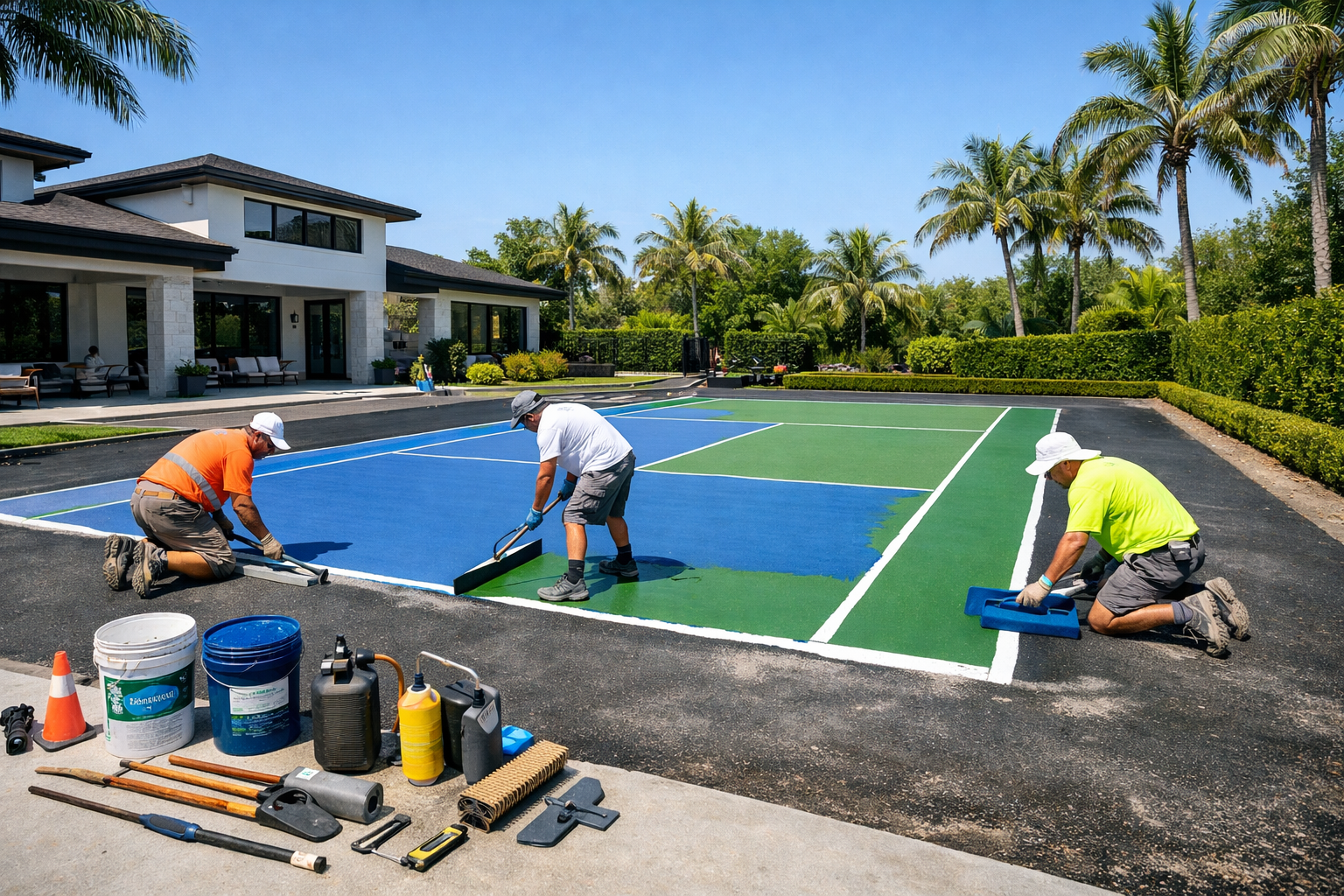
A private tennis court at home is more than a luxury; it’s an investment in health, recreation, and property value. Whether you are an avid player or a family looking to enjoy outdoor sports, residential tennis court construction provides the perfect solution for year-round play in the comfort of your own home.
At [SPORTS-FACILITY], we specialize in designing and constructing residential tennis courts in India. Our team combines professional expertise, high-quality materials, and ITF-compliant construction standards to create courts that are durable, safe, and aesthetically pleasing.
Why Residential Tennis Court Construction Matters
Building a residential tennis court is not just about marking a flat surface. Proper construction ensures performance, safety, and longevity, while enhancing the overall beauty and value of your property.
Here’s why professional residential tennis court construction is important:
-
Optimized Play Quality: Smooth surfaces, proper ball bounce, and consistent traction.
-
Safety for Family & Guests: Correct slope, fencing, and drainage prevent injuries and waterlogging.
-
Durable Investment: Quality construction materials ensure your court lasts decades.
-
Property Value Enhancement: A professionally built tennis court increases real estate appeal.
-
Low Maintenance: Proper design reduces wear and tear, making upkeep cost-effective.
Key Considerations in Residential Tennis Court Construction
1. Court Dimensions & Layout
The standard ITF tennis court dimensions are:
-
Length: 78 ft (23.77 m)
-
Width: 36 ft (10.97 m) for doubles, 27 ft (8.23 m) for singles
-
Run-off Area: Minimum 12–15 ft around the court for safe movement
We also consider yard space, landscaping, accessibility, and aesthetics while planning the layout to integrate seamlessly with your home environment.
2. Surface Selection
Choosing the right surface is crucial. Popular residential options include:
-
Acrylic / Hard Courts: Durable, low-maintenance, and ideal for all-weather use
-
Synthetic Turf Courts: Soft on joints, visually appealing, and easy to maintain
-
Clay Courts: Slower play, traditional feel, suitable for serious players
-
Indoor Courts: Climate-controlled option for uninterrupted play
Surface choice affects maintenance, play style, and overall investment.
3. Foundation & Drainage
A solid foundation and proper drainage are critical for residential courts. We ensure:
-
Stable sub-base: Prevents cracks and uneven surfaces
-
Drainage slope (1–1.5%): Avoids waterlogging after rain
-
Waterproof layers: Protects surface integrity and longevity
4. Fencing & Net Installation
Safety and functionality are key. We install:
-
Durable fencing (6–10 ft high) to prevent stray balls
-
Professional net posts and nets for tournament-grade play
-
Optional windbreaks or privacy screens for aesthetics and comfort
5. Lighting & Night Play
For residential courts used after sunset:
-
LED floodlights for even illumination
-
300–500 lux lighting intensity depending on play level
-
Energy-efficient design for minimal electricity consumption
Our Residential Tennis Court Construction Process
Step 1: Site Assessment
We inspect soil type, sunlight orientation, slope, and space availability to create an optimized court design.
Step 2: Custom Design
We prepare a 3D design layout, showcasing court placement, surface selection, fencing, lighting, and landscaping. Clients can approve or modify before construction.
Step 3: Excavation & Foundation
The ground is leveled, compacted, and excavated to install a stable sub-base, including gravel and sand layers for drainage.
Step 4: Surface Installation
Depending on your choice, we lay acrylic layers, synthetic turf, or clay, ensuring smooth, even, and durable play surfaces.
Step 5: Net & Fence Installation
We install high-quality net posts, nets, and fencing to meet ITF standards while enhancing safety and aesthetics.
Step 6: Lighting & Accessories
Optional LED floodlights, benches, and storage areas are added for convenience and professional play.
Step 7: Final Inspection
Before handover, we check surface evenness, net alignment, drainage, and overall quality, ensuring your court is match-ready and safe.
Benefits of Professional Residential Tennis Court Construction
-
High-quality materials: Durable surfaces, nets, and fencing
-
Safe and comfortable: Proper slope, drainage, and protective fencing
-
Customizable design: Surface type, color, and layout options
-
Low maintenance: Professional construction reduces upkeep
-
Increased property value: Adds a premium feature to your home
-
Year-round play: Outdoor and optional indoor solutions
Residential Tennis Court Construction Cost in India
The cost varies depending on surface type, materials, lighting, fencing, and amenities. Approximate ranges:
| Surface Type | Cost (₹) per court |
|---|---|
| Acrylic / Hard Court | ₹12–25 lakhs |
| Synthetic Turf Court | ₹10–18 lakhs |
| Clay Court | ₹8–15 lakhs |
| Indoor Court | ₹20–40 lakhs |
| Lighting & Accessories | ₹2–5 lakhs |
We provide customized quotes after a site visit to ensure transparent pricing and high-quality results.
Maintenance Tips for Residential Tennis Courts
To preserve your investment, regular maintenance is essential:
-
Acrylic / Hard Courts: Clean surface regularly, reseal every 4–6 years
-
Synthetic Turf: Brush fibers, check infill, and remove moss periodically
-
Clay Courts: Watering, rolling, and top dressing as needed
-
Indoor Courts: Dust cleaning, check lighting and surface wear
Professional maintenance ensures longevity, performance, and safety.
Why Choose Us for Residential Tennis Court Construction
-
Experienced team specializing in residential and private courts
-
ITF-compliant construction standards for all surfaces
-
Nationwide execution with timely project completion
-
High-quality materials for durable, low-maintenance courts
-
Custom designs tailored to your home and preferences
-
Post-construction support for maintenance and resurfacing
Conclusion – Your Dream Tennis Court at Home
A professionally constructed residential tennis court offers a private space for fitness, recreation, and family fun, while enhancing your property value. With expert planning, ITF-compliant construction, and premium materials, your court will deliver decades of safe, high-quality play.
📞 Contact us today for a free site inspection and customized residential tennis court design quote.
Bring the joy of tennis to your home with a court built for performance, aesthetics, and durability.
Frequently Asked Questions (FAQ) – Residential Tennis Court Construction: Your Private Court, Professionally Built
1. What is the standard size of a residential tennis court?
A standard full-size tennis court measures 78 feet (23.77 m) in length and 36 feet (10.97 m) in width for doubles play. For comfortable residential installation, a total area of approximately 120 ft x 60 ft is recommended to allow proper runoff space around the court.
2. How much space do I need to build a tennis court at home?
Ideally, you need a minimum area of 7,200 sq. ft. to accommodate the court, fencing, and safe playing space. However, space requirements may vary based on design and property layout.
3. What are the best surface options for a residential tennis court?
Common surface types include:
-
Acrylic hard court (low maintenance and durable)
-
Clay court (slower play, higher maintenance)
-
Synthetic grass court
-
Artificial turf with sand infill
-
PU cushioned surface (extra comfort and shock absorption)
Hard acrylic courts are the most popular for residential use.
4. How much does it cost to build a tennis court at home?
The cost depends on surface type, site preparation, fencing, lighting, drainage, and additional features. Acrylic hard courts are generally more cost-effective, while clay and cushioned courts require higher investment and maintenance.
5. How long does construction take?
Residential tennis court construction typically takes 4 to 8 weeks, depending on groundwork, weather conditions, and surface curing time.
6. What foundation is required for a tennis court?
A strong and stable foundation is critical. Construction usually includes:
-
Excavation and sub-base preparation
-
Compacted aggregate base
-
Reinforced concrete or asphalt base
-
Proper slope for drainage
7. Is fencing necessary around a tennis court?
Yes, fencing is highly recommended. Standard fencing height ranges from 10 to 12 feet, which prevents balls from leaving the court area and ensures safety.
8. What type of lighting is required?
For recreational play, 300–500 lux LED sports lighting is recommended. Proper positioning reduces glare and ensures even illumination.
9. How much maintenance does a residential tennis court require?
Maintenance depends on the surface:
-
Hard courts: occasional cleaning and resurfacing every 4–6 years
-
Clay courts: regular watering, rolling, and line maintenance
-
Synthetic turf: brushing and infill leveling
10. Can a tennis court increase property value?
Yes. A professionally constructed tennis court enhances property appeal, especially in luxury homes and villas, and can significantly boost resale value.
11. Can a tennis court be customized?
Yes. Custom options include:
-
Court colors and branding
-
Cushion layers for comfort
-
Seating areas
-
Practice walls
-
Landscaping integration
-
Multi-sport line markings