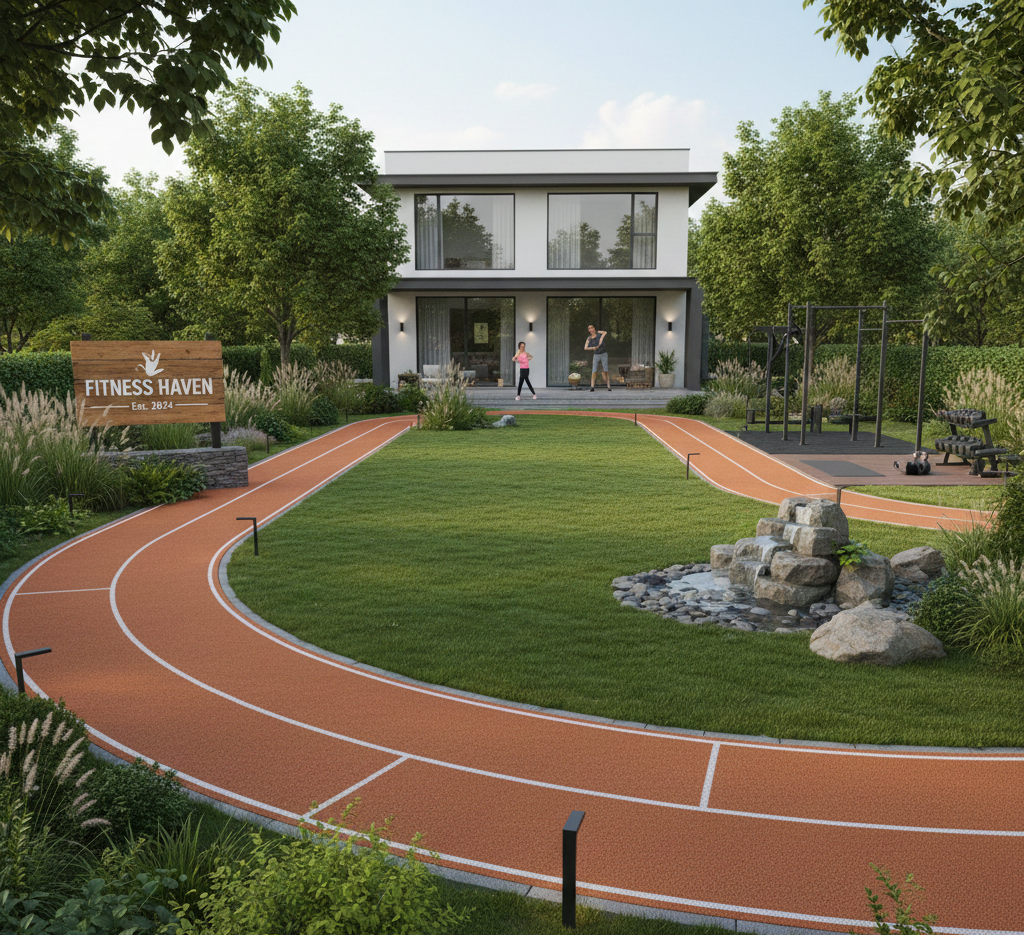
In today’s fast-paced lifestyle, maintaining physical fitness has become a priority for homeowners. A residential jogging track is not just a luxury—it’s an investment in health, wellness, and a more active lifestyle. Whether you have a spacious backyard, a rooftop terrace, or a dedicated open area, a well-designed jogging track can turn your property into a personal fitness haven.
Why Choose a Residential Jogging Track?

1. Health and Fitness Benefits
Running or walking regularly on a dedicated track improves cardiovascular health, strengthens muscles, and enhances endurance. Unlike running on concrete or uneven surfaces, a properly constructed jogging track reduces impact on joints and minimizes the risk of injuries.
2. Convenience at Your Doorstep
With a residential jogging track, you can enjoy your morning run or evening walk without leaving your home. It eliminates the need to commute to gyms or parks and ensures that fitness becomes a seamless part of your daily routine.
3. Privacy and Safety
Unlike public parks or roads, a private jogging track offers a secure and private environment for exercise. It’s perfect for families with children or elderly members, as it allows safe outdoor activity without traffic hazards or crowded spaces.
Key Considerations for Residential Jogging Track Installation
1. Space Planning
Before installation, assessing available space is crucial. Residential tracks can be customized to fit gardens, rooftops, or backyards. Even smaller plots can accommodate a 100–200 meter track using creative looping or winding layouts.
2. Surface Material
The surface material plays a vital role in durability and comfort. Common options include:
-
Synthetic Rubber: Provides shock absorption and a smooth running experience.
-
Turf or Grass: Offers a natural feel and eco-friendly aesthetics.
-
Asphalt or Concrete: Highly durable but may require anti-slip coatings to protect joints.
-
EPDM or PU Coating: Professional-grade sports surfaces with superior grip and resilience.
3. Track Width and Length
A standard residential track typically ranges from 1.2 to 2 meters in width, allowing comfortable running space for one or two people. Length can vary according to space availability, with winding designs maximizing distance within limited areas.
4. Safety Features
Safety is paramount in residential tracks. Consider:
-
Proper lighting for evening workouts
-
Anti-slip surfaces
-
Gentle slopes for drainage
-
Clear boundaries or low fencing to prevent accidents
5. Landscaping Integration
A jogging track can double as a visual asset for your home. Integrating plants, trees, and shrubs along the track enhances the aesthetics while providing shade and improving air quality. A well-landscaped track also creates a serene and motivating environment for exercise.
Installation Process
-
Site Survey and Design: Experts analyze available space, terrain, and user requirements to design a personalized track layout.
-
Ground Preparation: Leveling, compacting, and drainage preparation ensures a stable foundation.
-
Surface Laying: Depending on the chosen material, layers of asphalt, rubber, turf, or synthetic coating are applied.
-
Finishing Touches: Landscaping, lighting, benches, and safety markings complete the track setup.
Professional installation ensures durability, minimal maintenance, and long-term usability.
Maintenance Tips
-
Regularly clean the surface to remove debris and prevent moss or algae growth.
-
Inspect for cracks or wear, especially in synthetic or asphalt tracks, and repair promptly.
-
Trim surrounding vegetation to avoid overgrowth on the track.
-
Apply protective coatings periodically for synthetic surfaces to maintain performance.
Why Choose Us for Your Residential Jogging Track?
With years of experience in designing and installing sports and fitness surfaces, we specialize in creating residential jogging tracks tailored to your lifestyle and space. Our team ensures:
-
Customized track designs to suit any property size
-
High-quality materials for longevity and comfort
-
Expert installation and post-installation support
-
Attention to aesthetics and safety for the perfect blend of fitness and luxury
Invest in a residential jogging track and bring the benefits of professional fitness right to your doorstep. Transform your outdoor space into a personal wellness sanctuary and enjoy a healthier, more active life every day.
Frequently Asked Questions (FAQ) – Residential Jogging Track Installation: Transform Your Home into a Fitness Haven
1. How much space is required for a residential jogging track?
The space required depends on the design. A simple straight jogging lane may require minimal space, while a loop track around a garden typically needs a larger perimeter. Most residential jogging tracks are customized to fit available outdoor or terrace space.
2. What is the ideal width for a home jogging track?
For comfortable single-person jogging, a width of 1–1.5 meters (3–5 feet) is sufficient. If multiple users will jog simultaneously, a wider track is recommended.
3. What materials are best for a residential jogging track?
Common materials include:
-
EPDM rubber flooring (shock-absorbing and durable)
-
PU (Polyurethane) sports surface
-
Synthetic acrylic flooring
-
Interlocking rubber tiles
-
Compacted gravel (budget option)
Rubberized surfaces are preferred for comfort and injury prevention.
4. How much does it cost to install a jogging track at home?
Costs vary based on track length, surface material, groundwork, and customization. Premium rubberized or PU tracks cost more than basic gravel or concrete pathways.
5. How long does installation take?
Installation typically takes 1 to 3 weeks, depending on site preparation, weather conditions, and surface curing time.
6. Is drainage important for a jogging track?
Yes. Proper drainage prevents water accumulation, surface damage, and slipping hazards. Outdoor tracks must be slightly sloped for efficient water runoff.
7. Can a jogging track be installed around a garden or lawn?
Yes. Many homeowners design circular or oval tracks around their garden perimeter, integrating landscaping for an attractive and functional fitness space.
8. Is a rubber jogging track better than concrete?
Yes. Rubber surfaces provide better shock absorption, reduce joint stress, and lower the risk of injuries compared to hard concrete surfaces.
9. Does a residential jogging track require maintenance?
Minimal maintenance is required. Regular cleaning, debris removal, and occasional surface inspection help maintain performance and longevity.
10. Can I install a jogging track on a terrace or rooftop?
Yes, but a structural assessment is necessary. Lightweight rubber or modular flooring systems are recommended for rooftop installations.