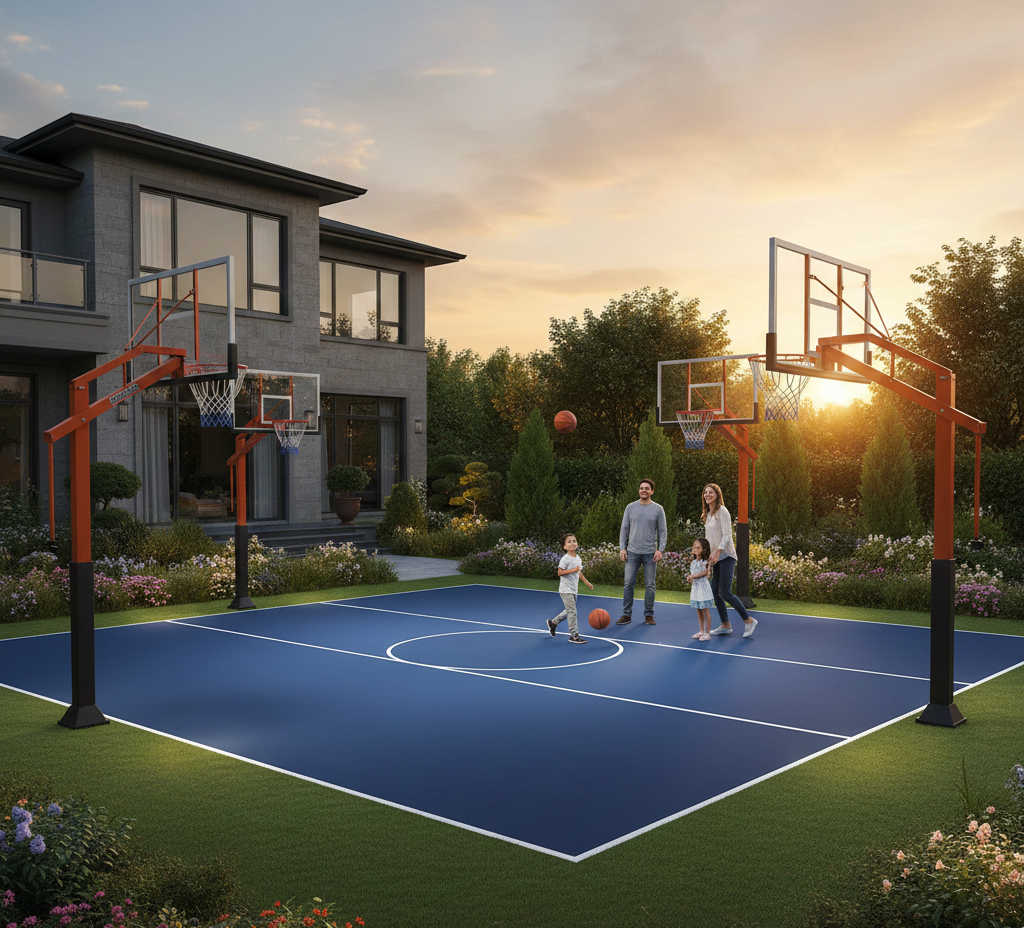
Residential basketball court installation is rapidly becoming one of the most sought-after home upgrades for families who value fitness, recreation, and quality time together. A well-designed home basketball court transforms unused space into an active lifestyle zone, offering convenience, entertainment, and long-term property value.
This detailed guide explains every aspect of residential basketball court installation—from planning and design to flooring choices, construction steps, cost factors, maintenance, and long-term benefits.
Why Residential Basketball Court Installation Is a Smart Investment
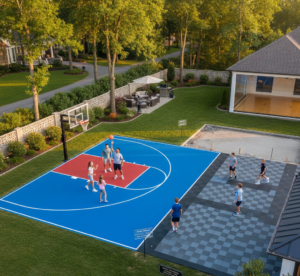
Key Advantages of a Residential Basketball Court
Daily Fitness at Home
Basketball improves cardiovascular endurance, strength, coordination, and agility. Having a court at home encourages regular physical activity without travel.
Safe Recreation for All Ages
A professionally installed residential basketball court provides a controlled and secure environment for children, teenagers, and adults.
Family Bonding and Social Interaction
Home courts create opportunities for family games, friendly competitions, and community engagement.
Skill Development and Training
Increased Property Appeal
A high-quality residential basketball court adds a premium recreational feature that enhances resale value.
Planning a Residential Basketball Court Installation
Careful planning is the foundation of a successful residential basketball court installation.
Space Requirements
The size of the court depends on available space and intended usage:
-
Half Court: Approximately 30 ft × 50 ft
-
Residential Full Court: Approximately 50 ft × 84 ft
-
Driveway Court: Custom dimensions based on driveway size
Adequate clearance around the playing area improves safety and comfort.
Court Orientation
Permissions and Regulations
-
Local building permits
-
Homeowners association (HOA) guidelines
-
Noise, fencing, or lighting restrictions
Early approval prevents delays and compliance issues.
Indoor vs Outdoor Residential Basketball Court Installation
Outdoor Residential Basketball Courts
Outdoor courts are the most popular option for residential basketball court installation.
Benefits
-
Utilizes backyards, driveways, or open spaces
-
Durable, weather-resistant materials available
Considerations
-
Exposure to sun, rain, and temperature changes
-
Requires proper drainage and UV protection
Indoor Residential Basketball Courts
Indoor courts are typically installed in basements, garages, or dedicated sports rooms.
Benefits
-
Year-round usability
-
Controlled environment
-
Premium playing experience
Considerations
-
Higher construction cost
-
Requires sufficient ceiling height and ventilation
Flooring Options for Residential Basketball Court Installation
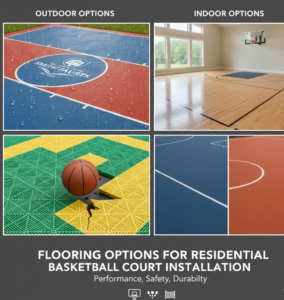
Flooring selection is the most critical decision in residential basketball court installation, affecting performance, safety, and durability.
Concrete or Asphalt Base
Most outdoor residential courts begin with a concrete or asphalt foundation.
Advantages
-
Strong and long-lasting
-
Cost-efficient
-
Easy to resurface
This base supports multiple surface finishes.
Acrylic Basketball Court Surface
Acrylic systems are widely used for outdoor residential basketball courts.
Advantages
-
Slip-resistant texture
-
UV and weather resistance
-
Custom colors and designs
-
Low maintenance
Acrylic coatings are ideal for homeowners seeking durability and affordability.
Interlocking Modular Sports Tiles
Modular sports tiles are a premium option gaining popularity in residential installations.
Advantages
-
Shock absorption for joint protection
-
Quick installation
-
Excellent drainage system
-
Individual tile replacement
They are ideal for families prioritizing comfort and safety.
Indoor Basketball Flooring Options
For indoor basketball court installation, common choices include:
-
Hardwood maple flooring
-
Synthetic sports vinyl
-
Polyurethane sports flooring
These surfaces provide professional-level performance and superior impact absorption.
Custom Design Features for Basketball Courts
Modern basketball court installation allows extensive customization.
Court Markings
-
Recreational or professional-style layouts
-
Youth-friendly dimensions
-
Multi-sport line integration
Basketball Hoops and Backboards
-
In-ground adjustable hoop systems
-
Wall-mounted hoops for driveways
-
Tempered glass backboards for professional feel
Lighting Systems
-
LED floodlights for night play
-
Energy-efficient and glare-free designs
Fencing and Safety Enhancements
-
Perimeter fencing to contain the ball
-
Protective padding near walls or poles
Step-by-Step Basketball Court Installation Process
Professional residential basketball court installation follows a structured process.
Step 1: Site Inspection and Measurement
Experts assess space availability, slope, soil condition, and drainage requirements.
Step 2: Ground Preparation
-
Excavation and leveling
-
Sub-base compaction
-
Drainage system setup
Base Construction
-
Concrete or asphalt pouring
-
Proper curing to prevent cracks
Surface Installation
-
Acrylic coating layers or modular tile placement
-
Anti-slip texture application
Line Marking
-
Precision layout
-
Durable, fade-resistant paint
Equipment Installation
-
Basketball poles and nets
-
Lighting and fencing
Final Inspection
Quality checks ensure safety, durability, and playability.
Cost of Basketball Court Installation
The cost of residential basketball court installation depends on several factors.
Key Cost Influencers
-
Court size (half or full)
-
Flooring material
-
Drainage and lighting systems
-
Custom designs or logos
-
Labor and site conditions
General Cost Range (Indicative)
-
Basic outdoor half court: Budget-friendly
-
Acrylic-coated court: Mid-range
-
Modular tile court: Higher initial investment
-
Indoor premium court: Highest cost
A professional site assessment provides the most accurate estimate.
Maintenance Tips for Basketball Courts
Proper maintenance ensures long-term performance.
-
Sweep leaves and debris regularly
-
Pressure wash outdoor courts periodically
-
Inspect surfaces for cracks or wear
-
Repaint court lines every few years
-
Check hoop stability and net condition
Routine care extends the lifespan of your residential basketball court.
Safety Considerations in Basketball Court Installation
Safety is essential for all home sports facilities.
-
Non-slip playing surfaces
-
Shock-absorbing flooring
-
Rounded court edges
-
Adequate lighting
-
Securely installed equipment
These features reduce injury risk and ensure peace of mind.
Long-Term Value of Basketball Court Installation
A professionally installed residential basketball court delivers lasting benefits:
-
Promotes an active and healthy lifestyle
-
Encourages children to engage in outdoor play
-
Adds a premium recreational feature to your home
-
Reduces reliance on public courts
Conclusion
basketball court installation is a powerful way to elevate your home’s functionality, wellness appeal, and entertainment value. With proper planning, high-quality materials, and professional execution, homeowners can enjoy a safe, durable, and visually impressive basketball court for years to come.
Here is a fresh, professionally written FAQ section for:
Frequently Asked Questions (FAQ) – Residential Basketball Court Installation: A Complete Homeowner’s Guide
1. What size basketball court can I build at home?
Homeowners typically install:
-
Half-court: 30 ft x 30 ft to 50 ft x 40 ft (most popular option)
-
Full court: 94 ft x 50 ft (requires large property)
-
Custom practice court: Based on available space
The size depends on your yard area and intended use.
2. What is the best surface for a residential basketball court?
The most common options include:
-
Concrete with acrylic sports coating (durable and weather-resistant)
-
Modular interlocking sport tiles (shock-absorbing and low maintenance)
-
Asphalt with color coating
-
PU or wooden flooring (for indoor courts)
Outdoor courts generally use acrylic-coated concrete for longevity.
3. How much does it cost to install a basketball court at home?
Costs vary depending on size, surface material, fencing, lighting, and customization. Basic half-courts are more budget-friendly, while premium courts with lighting, fencing, and logos require a higher investment.
4. How long does installation take?
Installation typically takes 2 to 5 weeks, depending on groundwork, concrete curing time, and weather conditions.
5. What foundation is required?
A strong and level base is essential. Most residential courts require:
-
Proper excavation
-
Compacted sub-base
-
Reinforced concrete slab
-
Slope for water drainage
Good drainage prevents cracks and surface damage.
6. Do I need fencing around the court?
Fencing is optional but recommended. It improves safety, prevents balls from leaving the area, and protects surrounding property.
7. What type of basketball hoop is best for home use?
Options include:
-
In-ground hoops (most stable and durable)
-
Wall-mounted hoops
-
Portable systems
In-ground hoops are preferred for long-term residential installations.
8. Is lighting necessary?
If you plan to play in the evenings, LED sports lighting is recommended. Around 200–300 lux is suitable for recreational play.
9. How much maintenance does a home basketball court require?
Maintenance includes:
-
Regular cleaning
-
Checking for cracks
-
Repainting court lines
-
Resurfacing every 4–6 years (for acrylic courts)
Modular tile systems require minimal upkeep.
10. Can I customize the court design?
Yes. Homeowners can customize:
-
Court colors
-
Logos and initials
-
Multi-sport markings
-
Custom fencing and seating
-
Adjustable height hoops