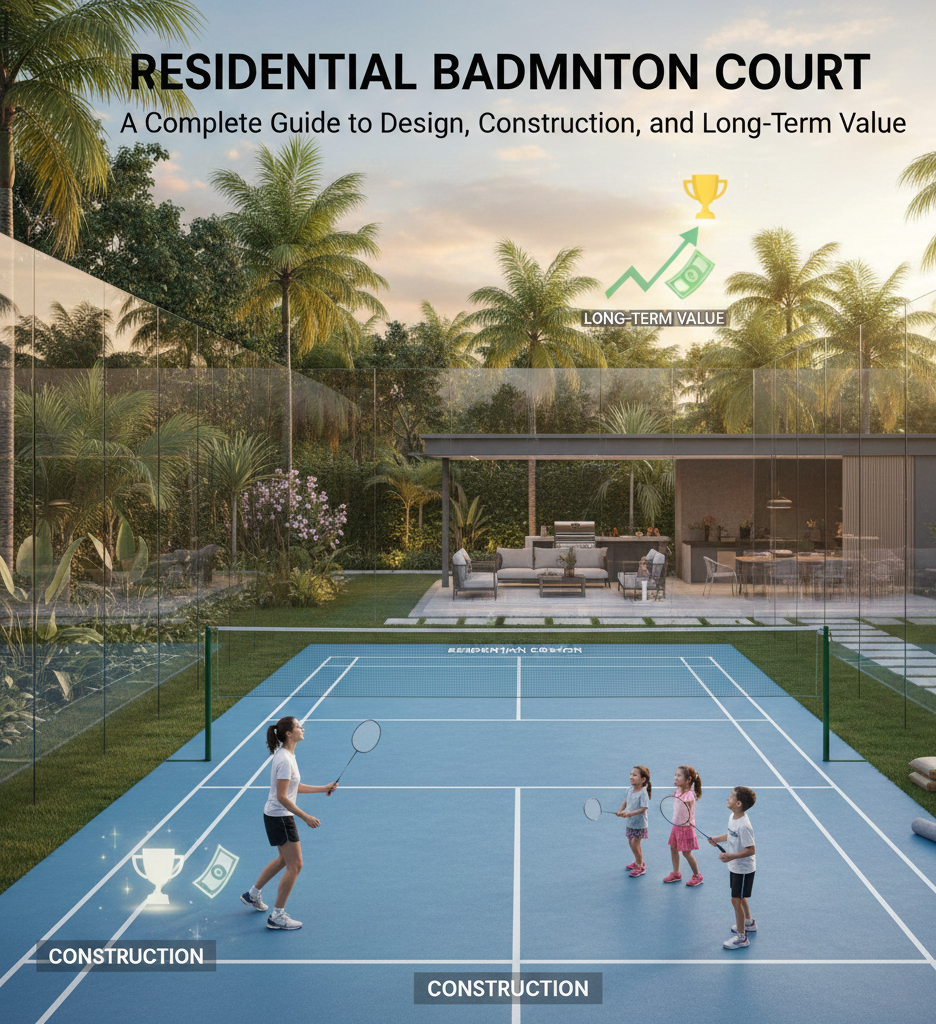
Badminton is one of the most accessible and rewarding sports, offering excellent physical fitness, agility, and mental focus. As modern homeowners increasingly prioritize health and recreation within their living spaces, the demand for a residential badminton court has grown significantly. Whether for casual family play, fitness routines, or focused training, a well-designed home badminton court delivers convenience, comfort, and lasting value.
Unlike commercial or institutional facilities, a residential badminton court must be carefully customized to suit available space, lifestyle needs, budget, and design preferences. From flooring selection and court layout to lighting, safety, and maintenance, thoughtful planning ensures a safe, durable, and enjoyable playing experience.
This comprehensive guide explores every aspect of building a residential badminton court, helping homeowners make informed decisions and achieve professional-quality results at home.
Why Invest in a Residential Badminton Court?
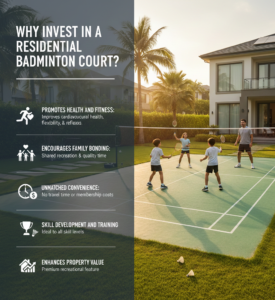
A residential badminton court offers more than recreation—it becomes an integral part of a healthy lifestyle.
Key Benefits of a Residential Badminton Court
Promotes Health and Fitness
Regular badminton play improves cardiovascular endurance, flexibility, coordination, and reflexes, encouraging active living for all age groups.
Encourages Family Bonding
A home court creates opportunities for shared recreation, friendly matches, and quality family time.
Unmatched Convenience
Having a badminton court at home eliminates travel time and membership costs, making daily play effortless.
Skill Development and Training
Ideal for children learning the sport, amateur players refining techniques, or even professional-level practice at home.
Enhances Property Value
A well-built residential badminton court adds a premium recreational feature, increasing the overall appeal and market value of the property.
Design Planning for a Residential Badminton Court
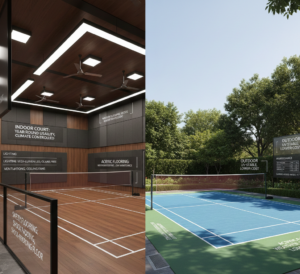
Design is the foundation of a successful residential badminton court. Proper planning ensures safety, playability, and long-term performance.
Space and Court Dimensions
Standard Dimensions
-
Doubles court: 13.4 m × 6.1 m
-
Singles court: 13.4 m × 5.18 m
Residential Adaptations
When space is limited, courts can be slightly reduced while maintaining proportions and safe movement zones.
Clearance Space
-
Minimum 1.5–2 meters around the court for player safety
-
Indoor ceiling height of at least 6–7 meters to allow free shuttle movement
Careful space planning ensures comfortable and injury-free play.
Flooring Options for a Residential Badminton Court
Flooring is the most critical element of a residential badminton court, directly affecting safety, comfort, and performance.
Wooden Badminton Flooring
Wooden flooring is the premium choice for indoor residential courts.
Advantages
-
Excellent shock absorption
-
Consistent bounce and foot response
-
Elegant appearance
Considerations
-
Requires humidity control
-
Periodic sanding and polishing needed
Vinyl Badminton Flooring
Vinyl flooring is a popular, cost-effective solution for home courts.
Advantages
-
Cushioned and non-slip surface
-
Easy to clean and maintain
-
Suitable for multi-purpose rooms
Considerations
-
Slightly less premium feel than wood
PU (Polyurethane) Flooring
PU flooring offers a seamless, durable surface suitable for frequent play.
Advantages
-
High elasticity and joint protection
-
Long-lasting and wear-resistant
-
Professional-grade performance
Considerations
-
Requires recoating every few years
Acrylic Flooring
Acrylic flooring is ideal for outdoor residential badminton courts.
Advantages
-
Weather-resistant and UV-stable
-
Low maintenance
-
Durable for outdoor use
Considerations
-
Less cushioning than indoor systems
Indoor vs Outdoor Residential Badminton Courts
Indoor Residential Badminton Court
Benefits
-
Protected from weather
-
Year-round usability
-
Flooring options include wood, vinyl, and PU
Requirements
-
Adequate lighting
-
Proper ventilation or air-conditioning
-
Moisture and humidity control
Outdoor Residential Badminton Court
Benefits
-
Utilizes open spaces such as backyards or terraces
-
Lower construction costs
Requirements
-
Acrylic or synthetic flooring
-
Proper drainage systems
-
UV-resistant coatings
Lighting and Ventilation for Home Courts
Proper lighting and airflow enhance comfort and visibility.
Lighting
-
High-lumen LED lights mounted at 6–7 meters
-
Glare-free and shadow-free illumination
-
Energy-efficient options with dimming controls
Ventilation
-
Ceiling fans, natural airflow, or air-conditioning
-
Prevents humidity buildup
-
Protects flooring and improves player comfort
Safety Features in a Badminton Court
Safety is essential, especially for homes with children.
-
Shock-absorbing flooring to reduce joint stress
-
Non-slip surface textures
-
Clear buffer zones around the court
-
Wall padding or corner protectors
-
High-quality nets, posts, and fixtures
These measures minimize injury risks and enhance confidence during play.
Maintenance of a Badminton Court
Regular care ensures long-lasting performance.
-
Daily sweeping or mopping
-
Immediate repair of minor surface damage
-
Periodic repainting of court lines
-
Recoating PU or vinyl floors every 4–6 years
-
Sanding and polishing wooden floors every 5–7 years
-
Ensuring proper drainage for outdoor courts
Consistent maintenance protects both safety and appearance.
Cost of Building a Residential Badminton Court
The cost of a badminton court depends on design, flooring type, and accessories.
Estimated Cost Range (India)
| Component | Approx. Cost (₹) |
|---|---|
| Flooring System | 2,00,000 – 5,00,000 |
| Base Preparation | 50,000 – 1,00,000 |
| Lighting & Ventilation | 25,000 – 75,000 |
| Net & Accessories | 20,000 – 40,000 |
| Line Marking | 10,000 – 25,000 |
| Miscellaneous | 20,000 – 40,000 |
| Total Estimated Cost | 3,25,000 – 6,80,000 |
Costs vary based on location, materials, and project scope.
Multi-Purpose Badminton Court Designs
A badminton court can serve multiple functions:
-
Home gym or yoga studio
-
Casual volleyball or basketball with adjustable nets
-
Family recreation and fitness activities
Multi-purpose planning maximizes space utilization and value.
Importance of Hiring a Professional Contractor
Professional installation ensures:
-
Proper floor leveling and shock absorption
-
Use of certified materials
-
Accurate court markings as per BWF guidelines
-
Safe lighting and ventilation design
-
Long-term durability and post-installation support
Expert execution guarantees a high-quality badminton court.
Conclusion
A badminton court transforms a home into a private fitness and recreation hub. With thoughtful planning, the right flooring choice, proper safety measures, and professional installation, homeowners can enjoy a premium badminton experience without leaving their property.
Frequently Asked Questions (FAQ) – Residential Badminton Court: A Complete Guide to Design, Construction, and Long-Term Value
1. What is the standard size of a residential badminton court?
A standard badminton court measures 13.4 meters (44 feet) in length and 6.1 meters (20 feet) in width for doubles play. For singles, the width is 5.18 meters (17 feet). For residential setups, additional clearance space of at least 3–5 feet around the court is recommended.
2. Can a badminton court be built at home?
Yes, a badminton court can be constructed in a backyard, terrace, basement, or indoor hall, depending on available space and structural feasibility. Proper flooring, lighting, and ventilation are key considerations.
3. What flooring is best for a residential badminton court?
Common options include:
-
Synthetic PVC sports flooring
-
Acrylic flooring
-
Wooden flooring (maple or engineered wood)
-
PU (Polyurethane) sports surfaces
Indoor courts typically use wooden or PVC flooring, while outdoor courts often use acrylic or PU systems.
4. How much space is required for a home badminton court?
Ideally, you should have a minimum area of 30 ft x 60 ft to allow for proper movement and safety clearance around the court.
5. What is the approximate cost of building a residential badminton court?
The cost depends on materials, location, and whether it’s indoor or outdoor. In India, residential badminton courts typically range from moderate to premium budgets based on flooring type, lighting, and structural work.
6. How long does construction take?
Construction usually takes 2–6 weeks, depending on site preparation, flooring system, roofing (if indoor), and weather conditions.
7. Is an indoor or outdoor badminton court better?
Indoor courts are preferred because they are protected from wind, rain, and harsh sunlight, ensuring consistent gameplay. Outdoor courts are more economical but require weather-resistant materials.
8. What type of lighting is required?
LED sports lighting with uniform illumination and minimal glare is recommended. For indoor courts, 300–500 lux lighting is generally suitable for recreational play.
9. Does a residential badminton court increase property value?
Yes, a professionally built sports facility enhances property appeal, promotes a healthy lifestyle, and can increase resale value, especially in premium residential properties.
10. What maintenance does a badminton court require?
Regular cleaning, checking surface wear, repainting lines when needed, and ensuring proper drainage (for outdoor courts) are essential. Indoor wooden floors may require periodic polishing or refinishing.