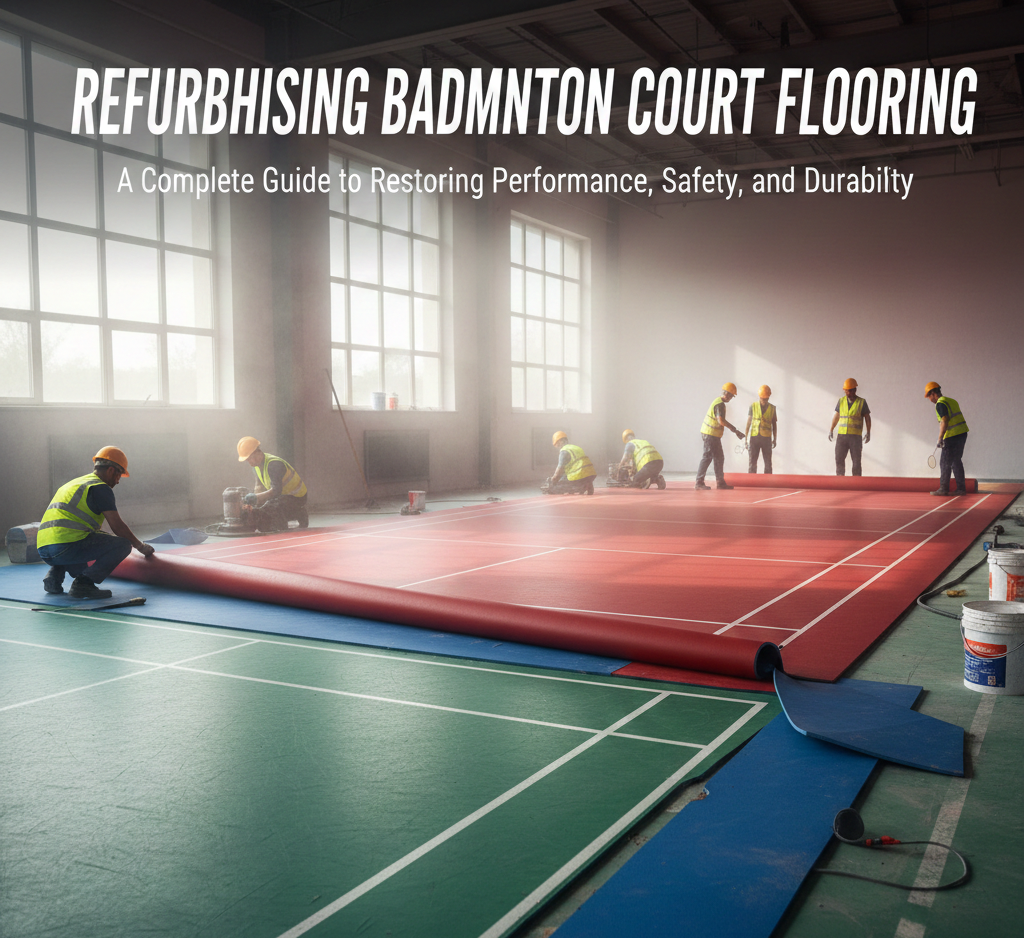
A badminton court is far more than a playing surface—it is a critical asset that directly affects player safety, game performance, and the overall reputation of a facility. Over time, even the highest-quality badminton court flooring can show signs of wear due to continuous play, environmental exposure, and natural aging. Scratches, fading lines, loss of grip, and surface unevenness are common issues that gradually reduce play quality.
Refurbishing badminton court flooring is a cost-effective and practical solution to restore the court’s original performance without the need for complete replacement. When done correctly, refurbishment enhances safety, improves aesthetics, extends floor lifespan, and brings the court back to tournament-ready standards.
This detailed guide explains why refurbishing badminton court flooring is essential, how to identify the right time for refurbishment, techniques for different flooring types, cost factors, professional recommendations, and post-refurbishment maintenance strategies.
Why Refurbishing Badminton Court Flooring Is Essential
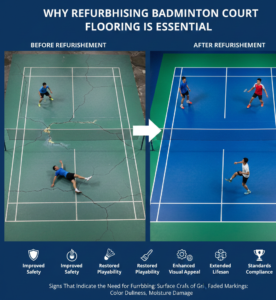
Even with regular cleaning and care, badminton flooring is subjected to constant stress from foot movement, impact, sweat, and cleaning chemicals. Over time, these factors affect surface performance and safety.
Key Reasons to Refurbish Badminton Court Flooring
Improved Player Safety
Worn-out surfaces lose traction and shock absorption, increasing the risk of slips, falls, and joint injuries. Refurbishment restores grip and cushioning, ensuring safer play.
Restored Playability
Refurbishing badminton court flooring improves shuttle response, foot movement, and surface consistency, allowing players to perform at their best.
Enhanced Visual Appeal
Discolored surfaces, scratches, and faded court lines are corrected, giving the court a clean, professional appearance.
Extended Flooring Lifespan
Timely refurbishment prevents minor damage from turning into structural failure, delaying full replacement and reducing long-term costs.
Standards Compliance
Competitive courts must meet BWF (Badminton World Federation) requirements. Refurbishment helps maintain compliance for tournaments and professional training.
Ignoring early signs of damage often leads to expensive repairs later, making refurbishment a smart preventive investment.
Signs That Indicate the Need for Refurbishing Badminton Court Flooring
Knowing when to refurbish is just as important as how to refurbish. Common warning signs include:
-
Surface Cracks or Peeling: Especially visible in wooden, PU, and acrylic courts
-
Loss of Grip: Slippery feel due to worn coatings or smoothened surfaces
-
Uneven Surface or Bounce: Caused by compressed cushioning or subfloor damage
-
Faded or Damaged Court Markings: Poor visibility affects gameplay and officiating
-
Color Dullness or Discoloration: Common in high-traffic areas
-
Moisture Damage: Warping in wooden floors or adhesive failure in vinyl systems
If any of these issues are present, refurbishing badminton court flooring should be prioritized.
Refurbishing Badminton Court Flooring by Material Type
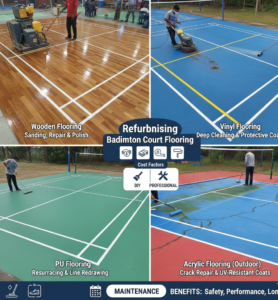
Each flooring system requires a specific refurbishment approach to ensure optimal results.
A. Refurbishing Wooden Badminton Court Flooring
Wooden flooring is popular for professional and indoor courts due to its excellent shock absorption and performance characteristics.
Refurbishment Process:
-
Detailed inspection to identify damaged or loose planks
-
Machine sanding to remove old coatings, scratches, and surface imperfections
-
Repair or replacement of cracked or warped boards
-
Application of multiple layers of polyurethane or sports-grade polish
-
Repainting of court lines using BWF-approved markings
Benefits:
-
Restores bounce uniformity and elasticity
-
Enhances visual finish with a fresh sheen
-
Extends floor life by 5–10 years with proper care
B. Refurbishing Vinyl Badminton Court Flooring
Vinyl flooring is widely used in multipurpose halls and academies due to its resilience and ease of maintenance.
Refurbishment Process:
-
Deep mechanical cleaning to remove embedded dirt
-
Repair of minor cuts or tears using vinyl patching or heat welding
-
Application of protective coatings to restore grip
-
Renewal of faded or damaged court lines
Benefits:
-
Improves traction and slip resistance
-
Restores surface color and appearance
-
Avoids full flooring replacement
C. Refurbishing PU (Polyurethane) Badminton Court Flooring
PU flooring is known for its seamless finish, cushioning, and durability.
Refurbishment Process:
-
Surface inspection for cracks, wear, or discoloration
-
Light abrasion or sanding to prepare the surface
-
Application of a new PU coating layer
-
Redrawing of all badminton court markings
Benefits:
-
Restores elasticity and smoothness
-
Improves player comfort and confidence
-
Extends court usability by several years
D. Refurbishing Acrylic Badminton Court Flooring (Outdoor)
Acrylic courts are commonly used outdoors and require refurbishment due to weather exposure.
Refurbishment Process:
-
Thorough cleaning to remove dirt, moss, or algae
-
Crack filling using acrylic repair compounds
-
Application of primer and multiple acrylic coats
-
Repainting of lines with UV-resistant paint
Benefits:
-
Enhances weather and UV resistance
-
Improves surface grip and safety
-
Restores bright, professional court appearance
Cost Factors in Refurbishing Badminton Court Flooring
The cost of refurbishing badminton court flooring varies depending on several factors:
-
Type of Flooring Material
-
Level of Surface Damage
-
Total Court Area
-
Number of Coating Layers Required
-
Line Marking and Branding Needs
-
Quality of Materials Used
Approximate Refurbishment Costs in India (2025)
| Flooring Type | Cost per sq. ft (₹) |
|---|---|
| Wooden Flooring | 400 – 700 |
| Vinyl Flooring | 200 – 400 |
| PU Flooring | 250 – 500 |
| Acrylic Flooring | 150 – 300 |
Actual costs may vary based on region, contractor expertise, and brand selection.
DIY vs Professional Refurbishing Badminton Court Flooring
While routine cleaning and minor touch-ups can be handled in-house, professional refurbishment is strongly recommended for:
-
Sanding and recoating wooden floors
-
PU and acrylic resurfacing
-
Precision line marking
-
Crack repair and leveling
-
Compliance with safety and BWF standards
Professional contractors use specialized tools, materials, and techniques that ensure uniform results and long-term durability.
Maintenance After Badminton Court Flooring
Post-refurbishment maintenance is crucial to protect the investment:
-
Clean floors regularly using flooring-specific methods
-
Address minor surface damage immediately
-
Restrict usage to court-specific footwear
-
Control indoor humidity for wooden courts
-
Ensure proper drainage for outdoor courts
-
Schedule periodic inspections
With correct maintenance, refurbished badminton court flooring can remain in excellent condition for 5–10 additional years.
Benefits of Badminton Court Flooring
-
Restores professional-level performance
-
Improves player safety and comfort
-
Enhances facility aesthetics
-
Reduces long-term operational costs
-
Extends overall court lifespan
-
Maintains tournament readiness
Refurbishment ensures that the court remains suitable for coaching, competitions, and recreational play alike.
Conclusion
badminton court flooring is a vital process that protects player safety, restores game performance, and preserves the value of your sports facility. Over time, wear and tear are inevitable, but timely refurbishment can transform an aging court into a high-performance playing surface once again.
Whether the flooring is wooden, vinyl, PU, or acrylic, using the correct refurbishment techniques and professional expertise ensures long-lasting results. For schools, academies, sports complexes, and recreational centers, badminton court flooring is a smart, cost-effective investment that guarantees quality play for years to come.