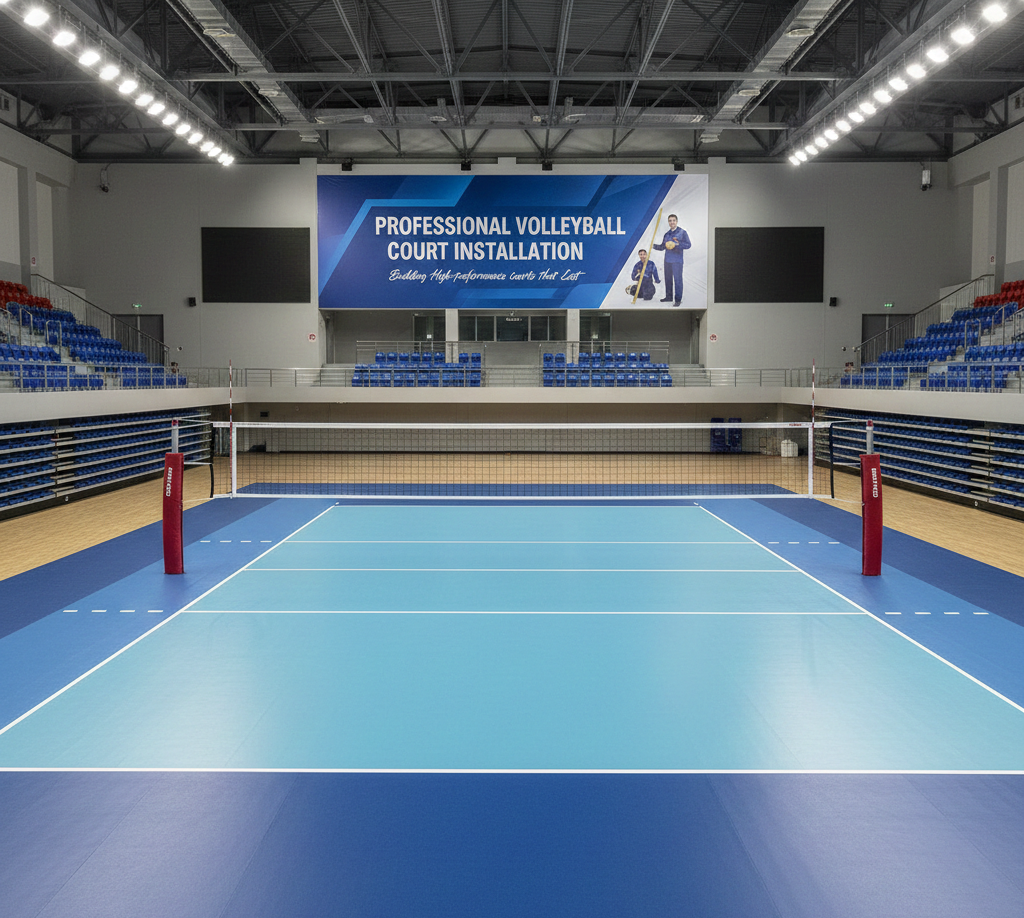
A volleyball court is more than just a marked playing area—it is a carefully engineered sports surface designed to support speed, agility, power, and safety. Proper installation plays a decisive role in how the game is played, how athletes perform, and how long the court remains functional. Professional volleyball court installation ensures that every element, from surface grip to line accuracy, meets recognized standards and delivers a consistent, injury-free playing experience.
Whether the court is being developed for a school, university, sports academy, residential society, stadium, or private facility, professional installation guarantees quality, durability, and compliance with international norms.
Why Professional Volleyball Court Installation Is Essential
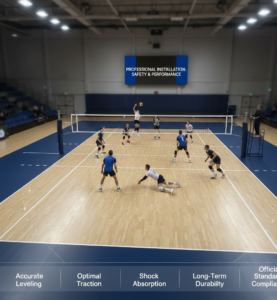
Volleyball is a high-impact sport that involves frequent jumping, diving, quick directional changes, and repetitive movements. Any compromise in court quality can directly affect player performance and safety. Professionally installed courts are designed to eliminate these risks while enhancing gameplay.
Key reasons professional installation is critical include:
-
Accurate leveling and surface uniformity to ensure predictable ball bounce
-
Correct traction levels to prevent slipping during fast movements
-
Shock absorption to reduce stress on knees, ankles, and joints
-
Long-term durability under continuous play and varying conditions
-
Compliance with official standards for dimensions, markings, and safety zones
Improper installation often leads to uneven surfaces, water stagnation, fading lines, or premature surface damage—issues that can be avoided only through expert planning and execution.
Standard Volleyball Court Dimensions and Layout
A professional volleyball court must strictly follow standard dimensions to ensure fair play and competitive compatibility.
Indoor and Outdoor Court Dimensions
-
Playing Area: 18 meters × 9 meters
-
Center Line: Divides the court into two equal halves
-
Attack Line: Drawn 3 meters from the center line on each side
-
Service Zone: Located behind the end lines
-
Line Width: Typically 5 centimeters
Additional free zones around the court are required for safe movement, especially in professional and international-level venues. Professional installers ensure precise measurements and flawless line marking that remain visible and durable over time.
Types of Volleyball Courts and Installation Approaches
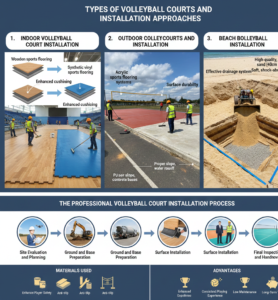
Professional volleyball court installation varies depending on the location, usage, and level of play. Each court type requires a specific flooring system and construction method.
1. Indoor Volleyball Court Installation
Indoor volleyball courts are commonly built in schools, universities, stadiums, and sports complexes. These courts prioritize comfort, shock absorption, and consistent performance.
Common indoor flooring options include:
-
Wooden sports flooring
-
Synthetic vinyl sports flooring
-
Polyurethane (PU) seamless flooring
Indoor installations focus on controlled conditions, precision leveling, and enhanced cushioning to protect players during intense gameplay.
2. Outdoor Volleyball Court Installation
Outdoor volleyball courts must withstand environmental exposure such as heat, rain, humidity, and UV radiation. Surface durability and drainage are critical factors.
Popular outdoor surfaces include:
-
Acrylic sports flooring systems
-
PU-coated concrete bases
Professional installation ensures proper slope, water runoff, and weather-resistant coatings that prevent surface deterioration while maintaining excellent grip.
3. Beach Volleyball Court Installation
Beach volleyball requires a specialized installation approach distinct from traditional courts.
Key requirements include:
-
High-quality, clean sand with a minimum depth of 40 cm
-
Effective drainage system beneath the sand layer
-
Soft, shock-absorbing base
-
Clear boundary lines and safety zones
Professional installers ensure sand quality, correct layering, and long-term stability to meet international beach volleyball standards.
The Professional Volleyball Court Installation Process
A systematic and well-planned installation process is the foundation of a high-quality volleyball court. Each stage is executed with precision to ensure long-lasting performance.
Site Evaluation and Planning
The process begins with a detailed site inspection. Factors such as soil condition, slope, drainage capability, space availability, and intended usage are carefully assessed. This stage determines the most suitable flooring system and construction method.
Ground and Base Preparation
A strong and level base is essential for any volleyball court. This includes:
-
Excavation and compaction
-
Concrete or asphalt base construction
-
Moisture barriers where required
-
Drainage slope engineering
Proper base preparation prevents cracks, uneven surfaces, and water accumulation.
Surface Installation
Once the base is ready, the selected sports flooring system is installed. This may involve:
-
Layered application of PU or acrylic coatings
-
Installation of synthetic sheets or tiles
-
Sand placement and leveling for beach courts
Each layer is applied with precision to achieve the correct thickness, elasticity, and texture.
Final Inspection and Handover
Before handover, the court undergoes a comprehensive quality check.
Materials Used in Professional Volleyball Court Installation
The quality of materials directly influences court performance and lifespan. Professional installations use certified, sports-grade materials designed for heavy use.
Common materials include:
-
Acrylic and PU sports coatings
-
Shock-absorbing underlay systems
-
UV-resistant pigments
-
Anti-slip surface textures
-
Corrosion-resistant fixtures and net posts
Using premium materials minimizes maintenance requirements and extends the court’s operational life.
Advantages of Professionally Installed Volleyball Courts
Investing in professional volleyball court installation delivers long-term benefits:
Enhanced Player Safety
Proper cushioning and traction reduce injuries caused by impact, slipping, or uneven surfaces.
Consistent Playing Experience
Uniform surface response ensures predictable ball bounce and reliable footing for players at all levels.
Low Maintenance Requirements
High-quality materials and expert installation reduce repair frequency and maintenance costs.
Visual and Functional Excellence
Clean line markings, smooth finishes, and customizable colors enhance the court’s appearance and usability.
Long-Term Value
A professionally installed court maintains performance for years, making it a cost-effective investment for institutions and facilities.
Who Benefits from Professional Volleyball Court Installation?
Professional volleyball courts are ideal for:
-
Schools and educational institutions
-
Universities and sports academies
-
Residential societies and clubhouses
-
Government and municipal sports facilities
-
Stadiums and commercial sports complexes
Conclusion
Professional volleyball court installation is the foundation of safe, high-quality, and long-lasting volleyball infrastructure. From precise planning and base preparation to advanced flooring systems and accurate markings, every detail plays a role in creating a court that meets global standards and supports peak athletic performance.