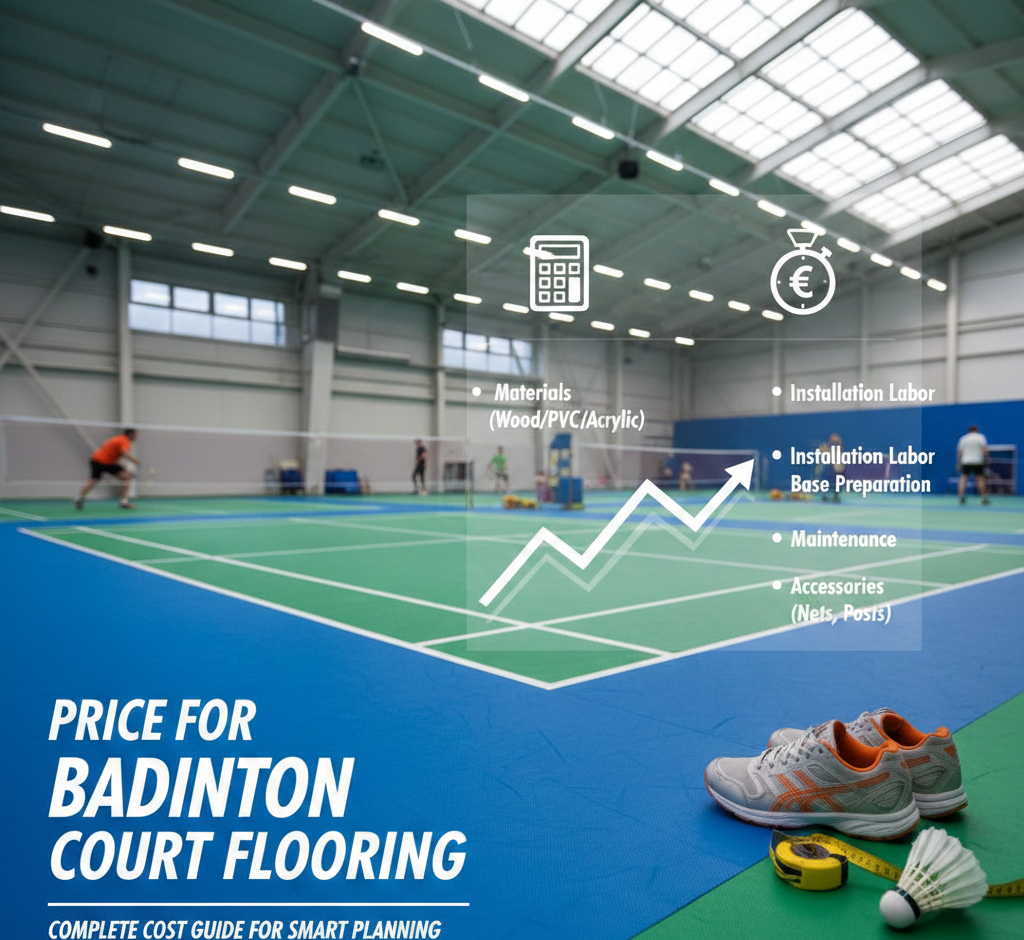
Constructing a badminton court is a strategic investment that goes far beyond drawing boundary lines and installing a net. One of the most critical decisions in this process is selecting the right flooring—and understanding the price for badminton court flooring plays a key role in planning a successful project.
The flooring determines how the game feels, how safe players remain, and how long the court lasts. In India, badminton court flooring prices vary widely depending on material type, installation method, location, and performance requirements. Choosing the right surface is not about finding the lowest cost—it’s about achieving the best balance between budget, durability, and professional play standards.
This comprehensive guide explains badminton court flooring prices, available material options, cost-influencing factors, and budgeting tips to help you make a confident and informed decision.
Why Flooring Quality Directly Impacts Cost and Performance
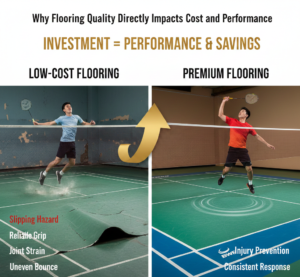
Badminton is a high-intensity indoor sport that requires quick direction changes, jumps, and rapid footwork. Flooring must support these movements while minimizing stress on the body. When evaluating the price for badminton court flooring, it’s essential to understand what quality flooring delivers:
-
Reliable grip to prevent slipping
-
Shock absorption to reduce joint strain
-
Consistent surface response for footwork accuracy
-
Resistance to wear from continuous use
-
Compliance with Badminton World Federation (BWF) guidelines
Low-cost flooring may seem attractive initially but often leads to higher maintenance, frequent repairs, or injury risks. Investing in the right surface from the start results in long-term savings and better playing conditions.
Types of Badminton Court Flooring and Their Prices
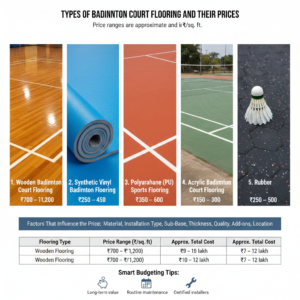
Different flooring systems are designed for different budgets, usage levels, and facility types. Below is a detailed breakdown of the most commonly used badminton court flooring options in India, along with their approximate price ranges.
1. Wooden Badminton Court Flooring
Best suited for: Professional indoor courts, academies, clubs, and tournament venues
Price range: ₹700 – ₹1,200 per sq. ft.
Wooden flooring is the most premium and internationally recognized badminton court surface. It is typically constructed using high-quality hardwood such as maple, teak, or beech, installed over a shock-absorbing substructure.
Why it costs more:
-
Multi-layer installation system
-
Natural wood material
-
Resilient underfloor cushioning
-
Precision engineering and skilled labor
Benefits:
-
Excellent shock absorption and player comfort
-
Natural grip and consistent performance
-
Long lifespan (10–15 years with maintenance)
-
Meets international competition standards
Wooden flooring has a higher upfront cost but delivers unmatched playability and long-term value.
2. Synthetic Vinyl Badminton Flooring
Best suited for: Schools, colleges, clubs, and indoor multipurpose halls
Price range: ₹250 – ₹450 per sq. ft.
Vinyl flooring is one of the most popular choices due to its affordability and reliable performance. It is manufactured in rolls or tiles with multiple layers, including a wear-resistant top layer and cushioned foam backing.
Benefits:
-
Anti-slip and comfortable surface
-
Good shock absorption
-
Quick installation
-
Wide range of colors and thickness options
-
Low maintenance requirements
Vinyl flooring offers excellent value for institutions looking for a balance between cost and quality.
3. Polyurethane (PU) Sports Flooring
Best suited for: Indoor sports halls and multi-sport facilities
Price range: ₹350 – ₹600 per sq. ft.
PU flooring is a seamless, poured-in-place surface that provides uniform elasticity and durability. It is increasingly popular for badminton courts where versatility and performance consistency are important.
Benefits:
-
Seamless, joint-free surface
-
High resilience and impact absorption
-
Long service life
-
Moisture-resistant and easy to maintain
PU flooring sits in the mid-to-high price range and is ideal for facilities hosting multiple indoor sports.
4. Acrylic Badminton Court Flooring
Best suited for: Outdoor badminton courts
Price range: ₹150 – ₹300 per sq. ft.
Acrylic flooring is primarily used for outdoor courts due to its weather-resistant properties. It is applied in layers over a concrete or asphalt base.
Benefits:
-
UV-resistant and weatherproof
-
Slip-resistant texture
-
Cost-effective for large outdoor areas
-
Customizable colors and finishes
While acrylic is not suitable for professional indoor badminton, it is a practical choice for outdoor or semi-covered courts.
5. Rubber Flooring
Best suited for: Training areas, gyms, and recreational courts
Price range: ₹250 – ₹500 per sq. ft.
Rubber flooring provides excellent cushioning and safety but is generally used for practice or multipurpose spaces rather than competitive badminton.
Benefits:
-
High shock absorption
-
Anti-fatigue and sound-dampening
-
Durable and eco-friendly
-
Easy to clean
Rubber flooring is best suited for informal play and training environments.
Factors That Influence the Price for Badminton Court Flooring
Several variables affect the final project cost. Understanding these factors helps in realistic budgeting:
1. Type of Flooring Material
Premium materials like wood cost more than synthetic alternatives but offer superior performance.
2. Indoor vs. Outdoor Installation
Outdoor courts require weather-resistant coatings and additional base treatment, affecting cost.
3. Sub-Base Preparation
Proper leveling, moisture barriers, and concrete finishing are essential and add to the total expense.
4. Thickness and Specification
Thicker vinyl or PU layers improve comfort and durability but increase material cost.
5. Installation Quality
Experienced installers charge more but ensure accuracy, safety, and longer lifespan.
6. Accessories and Add-ons
Nets, poles, lighting, line markings, and padding increase overall project cost.
7. Location and Logistics
Material transport, labor rates, and taxes vary by region and impact pricing.
Estimated Total Cost for a Standard Badminton Court
A standard badminton court measures approximately 13.4 m × 6.1 m (excluding buffer zones).
| Flooring Type | Price Range (₹/sq. ft.) | Approx. Total Cost |
|---|---|---|
| Wooden Flooring | 700 – 1,200 | ₹7 – ₹12 lakh |
| Vinyl Flooring | 250 – 450 | ₹3 – ₹6 lakh |
| PU Flooring | 350 – 600 | ₹4 – ₹8 lakh |
| Acrylic Flooring | 150 – 300 | ₹2 – ₹4 lakh |
| Rubber Flooring | 250 – 500 | ₹3 – ₹6 lakh |
Prices are indicative and may vary depending on specifications and site conditions.
Smart Budgeting Tips for Badminton Court Flooring
-
Focus on long-term value rather than lowest cost
-
Choose flooring based on usage intensity
-
Ensure proper sub-base preparation
-
Hire certified and experienced installers
-
Plan for routine maintenance
-
Consider multi-sport compatibility if required
These steps help avoid hidden costs and ensure lasting performance.
Long-Term Cost Efficiency and Maintenance
High-quality badminton flooring reduces long-term expenses by minimizing repairs and replacements. Synthetic floors such as vinyl, PU, and acrylic require minimal maintenance, while wooden floors demand periodic polishing and humidity control but deliver superior playing standards.
Over time, investing in quality flooring proves more economical than frequent surface replacement.
Conclusion
The price for badminton court flooring depends on material selection, installation quality, and facility requirements. From budget-friendly vinyl and acrylic surfaces to premium wooden courts, each option offers unique benefits and cost implications.
Price for Badminton Court Flooring — FAQs
1. How much does badminton court flooring cost?
The price of badminton court flooring varies widely based on:
-
Type of flooring (wood, PU, vinyl, modular tiles)
-
Indoor vs outdoor installation
-
Quality, brand and material grade
-
Installation complexity and site preparation
Typical price ranges (approximate, India market):
-
Modular PVC/PP sports tiles: ₹250–₹800 per sq ft
-
PU (Polyurethane) sports flooring: ₹500–₹1,500 per sq ft
-
Vinyl / Synthetic court flooring: ₹400–₹1,200 per sq ft
-
Engineered wooden badminton flooring: ₹1,200–₹2,500+ per sq ft
Note: These are ballpark rates and can vary based on suppliers, region, and project specifications.
2. What influences the price of badminton court flooring?
Key pricing factors include:
-
Material type and quality
-
Thickness and layering (shock absorption, wear layer)
-
Base preparation work
-
Sub-base leveling, moisture mitigation
-
Installation labor and transport
-
Court line marking and finishing
More advanced shock-absorbing systems cost more but provide better performance.
3. Does the base (existing surface) affect the cost?
Yes. A properly prepared base is critical:
✔ Minor leveling on existing floor — low extra cost
✔ Major leveling, crack repair, moisture suppression — adds to total cost
✔ Constructing a new concrete base — significant cost increase
Good base work improves durability and reduces future maintenance.
4. Are there cost differences between indoor and outdoor flooring?
Yes. Outdoor badminton flooring often requires:
-
UV-resistant coatings
-
Weatherproof materials
-
Enhanced drainage
This can raise material and installation costs compared to indoor systems.
5. Is professional installation included in the price?
Most quoted rates should include:
✔ Material supply
✔ Installation labor
✔ Court marking
✔ Basic site measurements
Always verify what’s included in any quote. Installation quality significantly affects performance and lifespan.
6. Does the brand affect price?
Yes. Premium brands and certified sports flooring systems usually cost more, but deliver better:
-
Durability
-
Shock absorption
-
Warranty support
-
Performance under competitive play
Budget brands may be cheaper but can wear faster.
7. What is the cost of court line marking?
Line marking is often included in quotes, but if charged separately, expect ₹3–₹15 per linear foot depending on paint quality and precision required.
Proper lines are essential for regulation play and visibility.
8. Are there recurring costs after installation?
Yes. Potential ongoing costs:
-
Maintenance and cleaning
-
Recoating (for PU/coated surfaces)
-
Tile replacement (if modular)
-
Repair of blemishes or surface wear
Premium surfaces generally require less frequent maintenance.
9. Do warranties affect price?
Yes—products with longer and stronger warranties typically cost more upfront. A good warranty can reduce long-term risk and maintenance expense.
10. Can I install flooring in stages to spread cost?
Yes. Some facilities:
✔ Install base and essential sections first
✔ Add cushioning layers later
✔ Upgrade to premium materials in future years
Staged installation helps budget planning.