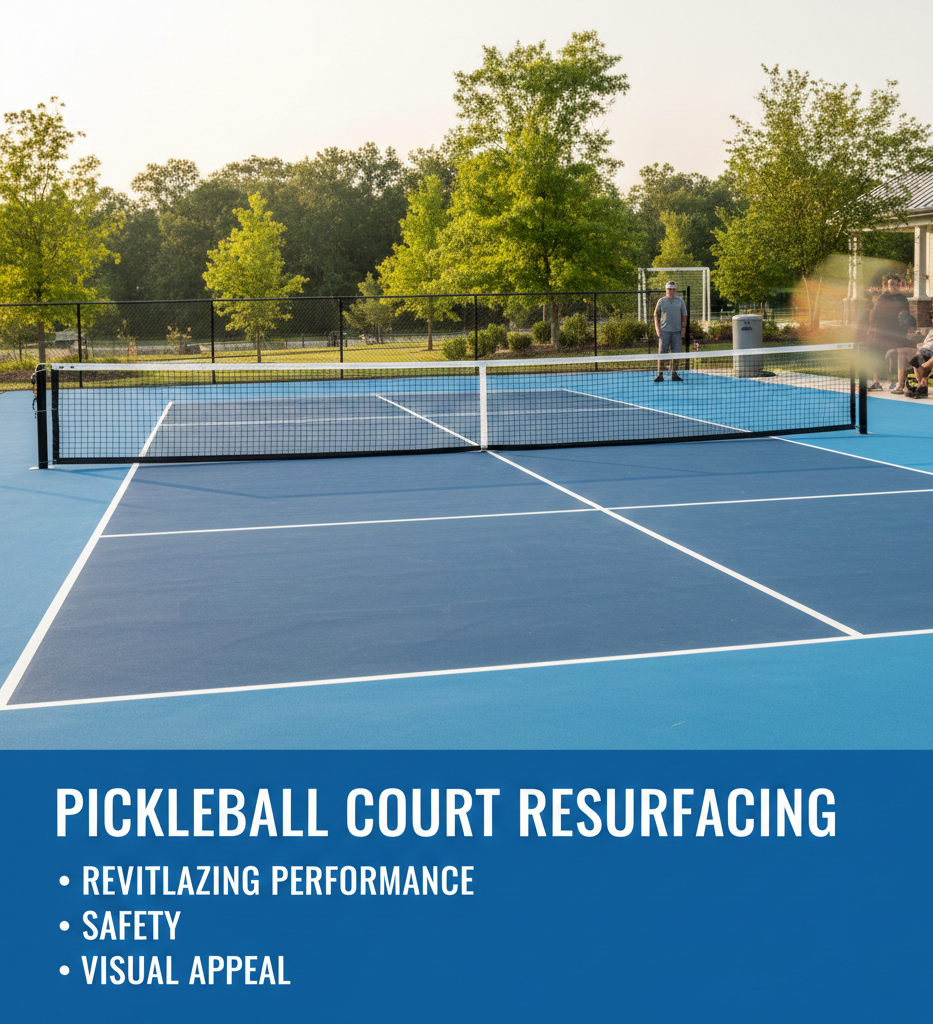
Pickleball courts are designed to deliver fast, enjoyable, and competitive gameplay. However, no matter how well a court is constructed, time and usage eventually take their toll. Continuous exposure to sunlight, rain, temperature fluctuations, and repeated foot traffic can lead to surface deterioration. Cracks begin to form, colors fade, traction reduces, and ball bounce becomes inconsistent—all of which impact both player safety and game quality.
Pickleball court resurfacing is the most effective way to restore an aging or worn court to near-new condition. Rather than replacing the entire court, resurfacing renews the existing surface, enhancing performance, appearance, and durability at a fraction of the cost of reconstruction. With professional resurfacing, your court can regain its original playability while meeting modern safety and aesthetic standards.
What Is Pickleball Court Resurfacing?
Pickleball court resurfacing is a specialized process that rejuvenates an existing court by repairing damage and applying new surface coatings. It is designed to restore the court’s texture, color, and responsiveness while correcting minor imperfections that affect gameplay.
The resurfacing process typically includes:
-
Thorough surface cleaning and preparation
-
Repairing cracks, chips, and surface defects
-
Leveling uneven or low spots
-
Applying fresh acrylic or synthetic coatings
-
Repainting regulation pickleball court lines
-
Adding protective layers for long-term durability
The result is a smooth, slip-resistant, visually appealing court with consistent ball bounce and improved player confidence.
Why Pickleball Court Resurfacing Is Important
Over time, neglected surface issues can develop into serious structural problems. Small cracks allow moisture to seep into the base, causing further expansion and damage. Worn textures increase the risk of slipping, while faded lines reduce visibility during play.
Professional resurfacing helps:
-
Restore safe playing conditions
-
Improve traction and surface grip
-
Ensure accurate and predictable ball bounce
-
Protect the underlying court structure
-
Extend the usable life of the court by several years
By addressing surface wear early, resurfacing prevents costly repairs and preserves the quality of the playing experience.
Signs Your Pickleball Court Needs Resurfacing
A court may look usable at first glance, but subtle issues can significantly affect performance. You should consider resurfacing if you notice:
-
Faded, dull, or peeling surface colors
-
Hairline cracks or small surface chips
-
Rough or slippery playing texture
-
Uneven ball bounce or water puddling
-
Reduced visibility of court lines
Timely resurfacing ensures minor surface issues do not escalate into major damage that requires full reconstruction.
Our Pickleball Court Resurfacing Process
Our resurfacing services are carefully structured to ensure long-lasting results, safety, and professional-grade performance.
1. Surface Cleaning and Preparation
The first step in resurfacing is comprehensive cleaning. Dirt, dust, algae, moss, and debris are removed using non-abrasive methods that protect the existing surface. This step ensures proper bonding of repair materials and new coatings.
A clean surface is essential for durability, uniform finish, and consistent performance.
2. Crack Repair and Surface Patching
Cracks, chips, and surface imperfections are repaired using high-performance fillers designed specifically for sports courts. These materials remain flexible, allowing for natural surface movement while preventing moisture intrusion.
Proper crack repair:
-
Restores surface smoothness
-
Prevents further structural damage
-
Enhances safety for players
-
Improves the overall lifespan of the court
3. Surface Leveling and Slope Correction
Uneven surfaces and low spots cause inconsistent bounce and water accumulation. Our resurfacing team corrects these issues by leveling affected areas and ensuring proper slope for drainage.
This step is critical for:
-
Eliminating water pooling
-
Maintaining uniform playability
-
Protecting the base layers
-
Reducing long-term maintenance issues
4. Application of New Court Coatings
Once repairs are completed, fresh acrylic or synthetic coatings are applied. These coatings are engineered for pickleball play and offer excellent traction, UV resistance, and weather durability.
Available coating options include:
-
Standard acrylic systems
-
Cushioned coatings for shock absorption
-
Anti-slip finishes for enhanced safety
The new surface restores vibrant color, consistent texture, and professional-level play conditions.
5. Line Marking and Protective Finishing
After the surface has cured, precise pickleball court lines are painted according to regulation dimensions. High-visibility, non-slip, and weather-resistant paints ensure long-lasting clarity.
A final protective layer seals the surface, improving resistance to wear, sunlight, and moisture while extending the resurfacing lifespan.
Benefits of Pickleball Court Resurfacing
Resurfacing delivers both immediate and long-term advantages:
-
Restores original court appearance and color
-
Improves traction and reduces slipping risks
-
Ensures consistent ball bounce and gameplay accuracy
-
Enhances player safety and confidence
-
Prevents moisture-related structural damage
-
Extends court lifespan by 5–8 years or more
-
Provides a cost-effective alternative to rebuilding
A professionally resurfaced court feels and performs like new, without the expense of full replacement.
Types of Pickleball Courts We Resurface
Our resurfacing services are compatible with a wide range of pickleball court systems, including:
-
Acrylic-coated courts
-
Asphalt-based courts
-
Concrete pickleball courts
-
Modular tile surfaces
-
Synthetic and cushioned sports flooring
Each project is customized based on surface type, usage level, and environmental conditions to ensure optimal results.
Why Choose Us for Pickleball Court Resurfacing
Choosing the right resurfacing partner ensures quality workmanship and lasting performance. Our approach combines technical expertise with attention to detail.
What sets us apart:
-
Experienced professionals specializing in sports court resurfacing
-
Use of premium, industry-approved materials
-
Precision leveling and smooth surface finishes
-
Accurate regulation line markings
-
Fast turnaround with minimal downtime
-
Cost-effective solutions for residential and commercial courts
We focus on delivering courts that meet performance expectations while enhancing visual appeal.
Maintenance After Pickleball Court Resurfacing
Proper care after resurfacing helps maximize surface lifespan and maintain performance.
Recommended maintenance practices include:
-
Regular cleaning with mild detergent and water
-
Prompt removal of debris and standing water
-
Avoiding heavy equipment or sharp objects on the surface
-
Periodic inspections after heavy rain or extreme weather
-
Recoating every few years based on usage
With routine maintenance, a resurfaced court remains smooth, safe, and attractive year-round.
Ideal Applications for Resurfacing
Pickleball court resurfacing is suitable for:
-
Residential backyard courts
-
Sports clubs and training centers
-
Schools and universities
-
Community and recreational facilities
-
Commercial sports complexes
-
Tournament and professional venues
Whether for casual play or competitive use, resurfacing ensures a high-quality playing experience.
Conclusion
Pickleball court resurfacing is an essential service for maintaining safe, high-performing, and visually appealing courts. By repairing surface damage, restoring texture, and applying new coatings, resurfacing breathes new life into aging courts without the cost of complete reconstruction.
A well-resurfaced pickleball court enhances gameplay, improves safety, and extends the life of your facility for many years to come. Whether residential or commercial, professional resurfacing ensures your pickleball court remains game-ready, durable, and visually impressive.
Pickleball Court Resurfacing – FAQs
1. What is pickleball court resurfacing?
Pickleball court resurfacing is the process of repairing, restoring, and reapplying the playing surface of an existing court to improve appearance, safety, and play performance. It typically includes crack repair, leveling, new coatings, and fresh line markings.
2. When does a pickleball court need resurfacing?
A court should be resurfaced when you notice:
-
Cracks or surface damage
-
Faded colors or worn line markings
-
Slippery or uneven playing areas
-
Poor ball bounce
-
Standing water after rain
Regular resurfacing helps extend the court’s life and maintain safe play conditions.
3. How often should pickleball courts be resurfaced?
Most pickleball courts require resurfacing every 4–8 years, depending on:
-
Frequency of use
-
Climate and weather exposure
-
Quality of the original surface
-
Level of maintenance
High-traffic or outdoor courts may need more frequent attention.
4. What surfaces can be resurfaced?
Pickleball court resurfacing can be done on:
-
Concrete courts
-
Asphalt courts
-
Existing acrylic-coated surfaces
-
Converted tennis or multipurpose courts
A stable base is essential for successful resurfacing.
5. What does the resurfacing process involve?
Typical resurfacing steps include:
-
Cleaning and surface preparation
-
Crack and low-spot repairs
-
Application of acrylic resurfacer
-
Color coating and texture layers
-
Court line marking and curing
The exact process may vary based on court condition.
6. Can resurfacing fix cracks and uneven areas?
Yes. Minor to moderate cracks and low spots can be repaired during resurfacing. However, structural or deep base failures may require more extensive repairs before resurfacing can be effective.
7. Does resurfacing improve ball bounce and traction?
Absolutely. Resurfacing restores consistent ball bounce, proper surface texture, and slip resistance, creating a safer and more enjoyable playing experience.
8. Can pickleball lines be added during resurfacing?
Yes. Resurfacing is an ideal time to:
-
Add new pickleball lines
-
Convert tennis courts to pickleball
-
Refresh faded or incorrect markings
-
Customize court colors and layouts
9. How long does pickleball court resurfacing take?
Most resurfacing projects take 2–5 days, depending on:
-
Court size
-
Surface condition
-
Weather conditions
-
Number of coating layers
Additional curing time may be required before play resumes.
10. How long should the court cure after resurfacing?
Typically, courts require 24–72 hours of curing time before use. This may vary based on climate, humidity, and the coating system used.
11. Is resurfacing more cost-effective than rebuilding?
Yes. Resurfacing is significantly more affordable than full court reconstruction. It extends the life of the existing base while restoring play quality and aesthetics.