Introduction
Rajasthan, the land of royal heritage, vibrant cities, and a growing love for sports, is witnessing a new athletic trend — Pickleball. Known for its simplicity, inclusivity, and fun, pickleball combines elements of tennis, badminton, and table tennis, making it suitable for players of all ages.
As the game gains momentum in cities like Jaipur, Udaipur, Jodhpur, and Kota, one key requirement has become essential — high-quality pickleball court flooring. In a state where the climate ranges from scorching desert heat to cool winter evenings, the right flooring not only enhances performance but also ensures durability, safety, and long-term value.
This guide explains everything about pickleball court flooring in Rajasthan — the best materials, installation process, maintenance tips, and cost — all tailored to the region’s weather and playing conditions.
Why Quality Flooring Matters
A pickleball court’s flooring determines how enjoyable and safe the game feels. The right surface offers perfect grip, consistent bounce, and comfort, while poor flooring can lead to cracks, uneven surfaces, and player injuries.
Key Benefits of Good Pickleball Flooring
-
Player Safety: Non-slip surfaces prevent falls and injuries.
-
Durability: Withstands Rajasthan’s harsh climate and heavy foot traffic.
-
Performance: Provides even bounce and stability for players.
-
Aesthetic Appeal: Adds a professional, vibrant look to the court.
-
Low Maintenance: Reduces repair and cleaning costs.
In Rajasthan’s extreme weather — with dry heat, dust, and occasional monsoon rains — it’s crucial to select flooring materials that can handle temperature variations and require minimal upkeep.
Top Flooring Options for Pickleball Courts in Rajasthan
Different materials serve different purposes depending on whether the court is indoor or outdoor. Below are the best flooring types suited to Rajasthan’s environment.
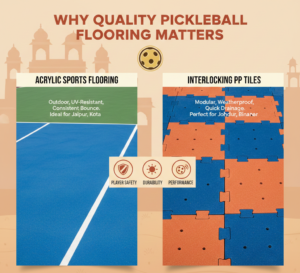
1. Acrylic Sports Flooring
Acrylic sports flooring is the most widely used option for outdoor pickleball courts in India. It’s durable, cost-effective, and offers great traction and ball response.
-
Composition: Multiple layers of acrylic coating applied over a concrete or asphalt base.
-
Features:
-
UV-resistant and non-slip surface
-
Bright, customizable colors
-
Consistent ball bounce
-
Low maintenance and easy to clean
-
Suitable for Rajasthan’s hot and dry weather
-
-
Lifespan: 5–8 years
-
Best For: Outdoor courts in Jaipur, Ajmer, and Kota.
Rajasthan Advantage: Acrylic flooring handles intense heat and dry conditions exceptionally well. Dust and sand can be easily swept away, keeping the surface game-ready throughout the year.
2. Interlocking Polypropylene (PP) Tiles
Interlocking PP tiles are ideal for outdoor pickleball courts, especially in regions with extreme weather. These modular tiles are tough, weatherproof, and easy to install or replace.
-
Composition: Durable polypropylene tiles with interlocking edges and drainage holes.
-
Features:
-
Anti-slip and impact-resistant surface
-
Withstands heat and UV rays
-
Quick water drainage — perfect for occasional rain
-
Easy to install and relocate
-
Available in multiple colors and patterns
-
-
Lifespan: 8–10 years
-
Best For: Outdoor or semi-covered courts in Jodhpur, Bikaner, and Alwar.
Rajasthan Advantage: In desert areas where temperatures soar, PP tiles stay cool and resist cracking — making them one of the best options for outdoor courts.
3. PU (Polyurethane) Indoor Flooring
For indoor pickleball courts, PU flooring provides a premium, cushioned surface ideal for professional training and multipurpose halls.
-
Composition: Multi-layer polyurethane system over a rubber cushion base.
-
Features:
-
Seamless, smooth finish
-
Excellent traction and ball bounce
-
High shock absorption for player comfort
-
Moisture and scratch-resistant
-
Low maintenance
-
-
Lifespan: 10–15 years
-
Best For: Indoor sports complexes in Jaipur, Udaipur, and Kota.
Rajasthan Advantage: PU flooring performs perfectly in climate-controlled indoor environments, unaffected by outdoor heat or dust.
4. Synthetic Cushioned Flooring
Synthetic cushioned flooring offers a blend of comfort and performance, suitable for both indoor and outdoor pickleball courts.
-
Composition: Rubberized cushion base with a synthetic resin top layer.
-
Features:
-
Excellent grip and flexibility
-
Resistant to heat and UV exposure
-
Shock absorbent and anti-slip
-
Customizable thickness and color options
-
-
Lifespan: 8–12 years
-
Best For: Professional training centers and high-performance courts.
Rajasthan Advantage: The cushioned layers help reduce surface heat, keeping the court comfortable even during summer afternoons.
Climate Considerations for Rajasthan
Rajasthan experiences high temperatures (up to 48°C) in summer, dry winds, and minimal rainfall, except during brief monsoons. These conditions demand flooring that is UV-stable, crack-resistant, and easy to maintain.
-
For Desert Areas (Jaisalmer, Barmer): Interlocking PP tiles are best for dust resistance and heat durability.
-
For Urban Zones (Jaipur, Kota): Acrylic surfaces offer a professional look at reasonable cost.
-
For Indoor Facilities: PU or cushioned flooring provides comfort and consistent performance.
Pickleball Court Installation Process
Constructing a long-lasting pickleball court in Rajasthan requires professional expertise and precision.
Step-by-Step Process:
-
Site Preparation: Level the ground and ensure proper drainage.
-
Base Layer Construction: Build a concrete or asphalt base with a slight slope for water runoff.
-
Surface Application:
-
Apply acrylic or synthetic layers evenly, or
-
Lay interlocking PP tiles securely.
-
-
Line Marking: Use UV-resistant paint for court markings.
-
Final Inspection: Check bounce, surface evenness, and traction.
Proper installation ensures your court performs well and remains durable for years.
Maintenance Guidelines
Rajasthan’s dry and dusty environment means maintenance should focus on cleanliness and protection.
-
Regular Cleaning: Sweep or blow off sand and dust.
-
Re-coating: Refresh acrylic layers every 5–6 years.
-
Tile Care: Replace worn PP tiles immediately to maintain surface consistency.
-
Indoor Floors: Mop PU and cushioned floors regularly with mild cleaners.
-
Dust Protection: Use barriers or partial covers if courts are near open fields or roads.
These simple practices help maintain appearance, safety, and performance.
Estimated Cost of Pickleball Court Flooring in Rajasthan
| Flooring Type | Estimated Cost (₹/sq. ft.) | Best For |
|---|---|---|
| Acrylic Flooring | ₹70 – ₹100 | Outdoor community courts |
| Interlocking PP Tiles | ₹110 – ₹150 | Outdoor & semi-covered courts |
| PU Indoor Flooring | ₹160 – ₹250 | Indoor courts & gyms |
| Synthetic Cushioned Flooring | ₹130 – ₹210 | Training academies & professional centers |
Note: Prices depend on site preparation, material brand, and custom design requirements.
Choosing the Right Sports Flooring Contractor in Rajasthan
Selecting an experienced sports flooring contractor ensures your investment delivers lasting performance. Look for companies that:
-
Use ITF-approved or ISI-certified materials
-
Have completed sports infrastructure projects in Rajasthan
-
Offer turnkey services (design, installation, and marking)
-
Provide warranty and after-service support
-
Understand Rajasthan’s local climate conditions
Cities like Jaipur, Jodhpur, and Udaipur now host several reliable flooring experts offering specialized pickleball court construction and customization services.
Pickleball’s Growing Popularity in Rajasthan
Pickleball’s charm lies in its simplicity and accessibility. The game requires less space than tennis and can be enjoyed by players of all ages — from school students to senior citizens. In Rajasthan, sports lovers who already enjoy badminton and tennis are embracing pickleball for its social and fitness benefits.
Housing societies, resorts, and recreation clubs in Jaipur, Ajmer, and Udaipur are beginning to set up dedicated courts. With government initiatives supporting sports development, the state is on track to become a hub for pickleball tournaments and community events.
Conclusion
Pickleball is reshaping the recreational sports scene across Rajasthan. Whether for fun, fitness, or professional play, the quality of the court flooring determines the game’s success.
From acrylic outdoor courts to PU indoor surfaces and interlocking PP tiles, Rajasthan offers a variety of flooring solutions designed to handle its diverse weather conditions.
With expert installation, proper maintenance, and climate-appropriate materials, your pickleball court in Rajasthan can remain safe, durable, and visually appealing for years to come.
In the land of kings and champions, it’s time for pickleball to reign supreme — one court at a time.
Pickleball Court Flooring in Rajasthan — FAQs
1. What flooring types are best for pickleball courts in Rajasthan?
Common and effective flooring options include:
Acrylic-Coated Asphalt or Concrete – Most popular for outdoor courts.
Provides consistent ball bounce, strong grip and good weather resistance — ideal for Rajasthan’s heat.
Synthetic Acrylic Systems (Hard & Cushioned) – Premium outdoor option offering slip resistance, traction and optional cushioning for joint comfort.
Modular Interlocking Tiles – Quick to install; can be used indoor or outdoor, but needs a smooth base.
Polyurethane (PU) or Other Specialist Indoor Flooring – Good for indoor facilities, offers shock absorption.
2. What’s the most recommended surface for outdoor pickleball in Rajasthan?
Synthetic acrylic over asphalt or concrete is widely recommended because it delivers a balanced mix of durability, traction and weather resistance for outdoor play.
3. Can I build a court on my own land?
Yes — many people in Jaipur and other Rajasthan cities build pickleball courts on private land. Just ensure the base is level and stable (usually asphalt or concrete) before applying the top flooring.
4. What surface is best for indoor pickleball courts?
Indoor courts often use cushioned acrylic systems or PU sports flooring, which provide better shock absorption and player comfort. Wooden sport surfaces or roll-out options can also be used if designed for court play.
5. What’s the standard size for a pickleball court?
A regulation pickleball court is 20 ft × 44 ft for both singles and doubles, with at least 10 ft of clearance around each side for safe play.
6. How long does the flooring last?
-
Acrylic surfaces: Typically durable with proper maintenance and can last many years.
-
Modular tiles: Often 3–7 years depending on material and exposure.
Lifespan depends on material quality, weather exposure and how often the court is used.
7. What maintenance does a pickleball court floor require?
-
Regular cleaning: Sweep or hose down to remove dust, sand and debris.
-
Surface checks: Inspect for cracks or uneven spots, especially on asphalt/concrete bases.
-
Resurfacing/recoating: Acrylic courts may need recoating over time for optimal traction and aesthetics.
8. Can courts withstand Rajasthan’s climate (heat, sand, monsoons)?
Yes — good quality acrylic flooring and UV-stabilized tiles are designed to handle heat, sun exposure and rain without significant fading or deterioration.
9. Is shock absorption important?
Yes. Surfaces with cushioning (cushioned acrylic or certain tiles) help reduce impact on players’ knees and joints — especially helpful for frequent play or older players.
10. What’s the approximate cost for flooring in Rajasthan?
Acrylic court flooring varies widely based on materials and installation — basic outdoor acrylic systems can start around several lakh rupees for a full court, and costs increase with cushioning, lighting, fencing and professional installation.
11. Can I play pickleball on other surfaces (like plain concrete or tiles)?
While you can play on plain concrete or temporary tiles, they often provide uneven ball bounce, poor traction or discomfort — making acrylic and professional-grade floors the preferred choice for proper pickleball play.
12. Do colors and line markings matter?
Yes — proper colors and clear line markings enhance play experience and visibility. Most acrylic systems allow customized color schemes and official pickleball lines.