`
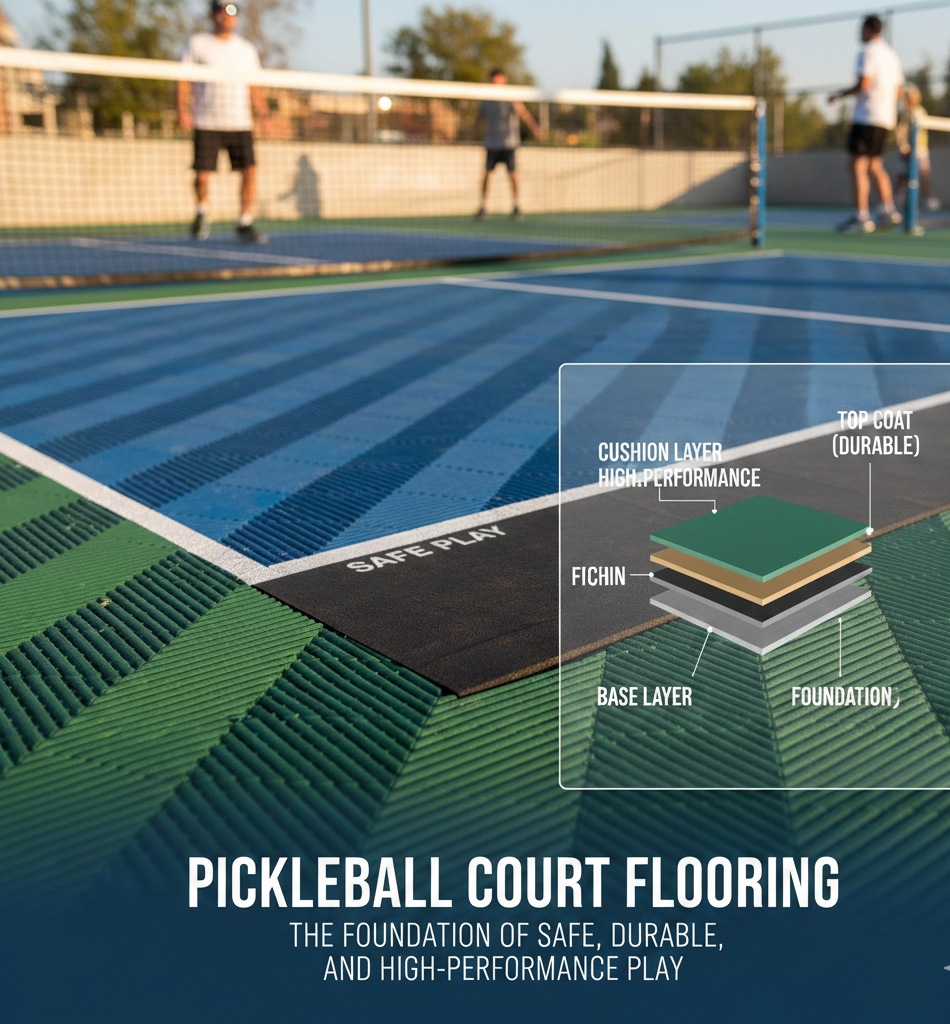
Pickleball is one of the fastest-growing sports in the world, attracting players of all ages due to its simple rules, engaging pace, and social appeal. As the sport continues to grow across residential communities, schools, sports clubs, and commercial facilities, the importance of high-quality pickleball court flooring has become more significant than ever. The right flooring system directly impacts player safety, game performance, and the long-term durability of the court.
Pickleball court flooring is more than just a surface to play on—it is the foundation that supports consistent ball bounce, secure footing, shock absorption, and a professional appearance. Whether you are constructing a new pickleball court or upgrading an existing one, selecting the right flooring material and installation approach is essential for achieving optimal results.
Importance of Quality Pickleball Court Flooring
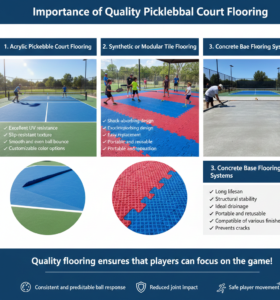
A well-designed pickleball court flooring system enhances the overall playing experience while minimizing maintenance and safety risks. Poor-quality flooring can lead to uneven bounce, slippery conditions, frequent repairs, and player injuries. In contrast, professionally installed flooring provides:
-
Consistent and predictable ball response
-
Slip-resistant surfaces for safe player movement
-
Reduced joint impact and player fatigue
-
Resistance to weather, UV exposure, and wear
-
Long-lasting performance with minimal maintenance
Quality flooring ensures that players can focus on the game without worrying about surface-related issues.
Types of Pickleball Court Flooring
Selecting the right pickleball court flooring depends on several factors, including indoor or outdoor use, budget, climate, and usage frequency. Below are the most commonly used flooring systems.
1. Acrylic Pickleball Court Flooring
Acrylic flooring systems are among the most popular choices for outdoor pickleball courts. Applied as multiple layers over a concrete or asphalt base, acrylic surfaces offer durability, vibrant colors, and consistent playability.
Key Benefits of Acrylic Flooring
-
Excellent UV resistance and color retention
-
Slip-resistant texture suitable for all age groups
-
Smooth and even ball bounce
-
Low maintenance and easy cleaning
-
Wide range of customizable color options
Acrylic pickleball court flooring is ideal for residential courts, community parks, and commercial facilities that require a durable and cost-effective outdoor solution.
2. Synthetic or Modular Tile Flooring
Modular tile flooring systems are increasingly popular for both indoor and outdoor pickleball courts. These interlocking tiles are designed for quick installation and flexibility, making them suitable for multipurpose spaces.
Advantages of Modular Tile Flooring
-
Shock-absorbing design reduces player fatigue
-
Excellent drainage, preventing water accumulation
-
Easy replacement of damaged tiles
-
Portable and reusable for temporary setups
-
High traction and reliable ball rebound
Modular pickleball court flooring is ideal for schools, clubs, and facilities that require adaptability and minimal downtime.
3. Concrete Base Flooring Systems
Concrete flooring serves as the foundation for many pickleball courts, especially outdoor installations. While concrete alone is not suitable as a playing surface, it provides a strong and stable base when combined with acrylic or synthetic coatings.
Features of Concrete Base Flooring
-
Long lifespan and structural stability
-
Ideal for permanent installations
-
Compatible with various surface finishes
-
Cost-effective for large-scale projects
Properly constructed concrete bases prevent cracks and uneven surfaces, ensuring the longevity of the court flooring system.
4. Wooden or Vinyl Flooring for Indoor Courts
Indoor pickleball courts often use wooden or vinyl sports flooring to achieve a professional finish and superior playability. These surfaces are commonly found in gymnasiums, sports halls, and multipurpose indoor facilities.
Highlights of Indoor Flooring Options
-
Smooth, even surface for accurate ball response
-
Cushioned underlayers for joint protection
-
Elegant appearance and professional look
-
Easy maintenance and repair options
Wooden and vinyl pickleball court flooring systems are ideal for year-round indoor play and competitive environments.
Key Considerations When Choosing Pickleball Court Flooring
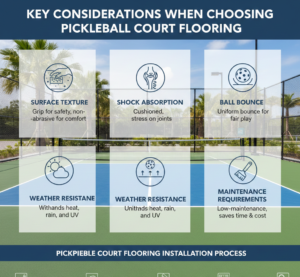
When planning a pickleball court, flooring should meet both performance and safety standards. Important factors include:
Surface Texture
The surface must provide sufficient grip to prevent slipping without being overly abrasive, which can cause discomfort or injury.
Shock Absorption
Cushioned flooring reduces stress on joints, making the court safer and more comfortable, especially for older players.
Ball Bounce Consistency
Uniform ball bounce is essential for fair and enjoyable gameplay. High-quality flooring ensures predictable ball response across the entire court.
Weather Resistance
Outdoor pickleball court flooring must withstand heat, rain, and UV exposure without cracking or fading.
Maintenance Requirements
Low-maintenance flooring systems save time and cost while maintaining long-term performance.
Pickleball Court Flooring Installation Process
Professional installation plays a crucial role in the success of any pickleball court flooring system. A typical installation process includes:
1. Site Preparation
The site is cleared, leveled, and compacted. Proper drainage planning is essential to prevent water pooling.
2. Base Construction
Concrete or asphalt bases are constructed to provide a stable and durable foundation for the flooring system.
3. Surface Application
Acrylic coatings, synthetic tiles, or indoor flooring systems are installed with precision to ensure uniform thickness and traction.
4. Line Marking
Accurate line marking is applied for singles and doubles play, following official pickleball standards.
5. Final Inspection
The court is inspected for smoothness, grip, and bounce consistency before being approved for play.
Maintenance Tips for Court Flooring
Regular maintenance helps preserve the quality and lifespan of your court flooring.
-
Clean the surface regularly to remove dirt, leaves, and debris
-
Inspect for cracks, loose tiles, or uneven areas
-
Recoat acrylic surfaces every few years to restore traction and color
-
Avoid dragging heavy equipment across the court
-
Use proper footwear to reduce surface wear
With proper care, quality court flooring can perform exceptionally for many years.
Benefits of Hiring Professional Pickleball Flooring Installers
Professional installers ensure that every aspect of the flooring system meets industry standards. Benefits include:
-
Correct leveling and slope for drainage
-
Use of certified, high-quality materials
-
Precise surface texture and thickness
-
Compliance with international pickleball standards
-
Long-term durability and performance
Expert installation ensures your investment delivers maximum value.
Conclusion
High-quality is the foundation of a safe, durable, and enjoyable playing experience. From outdoor acrylic surfaces to modular tiles and indoor wooden or vinyl systems, choosing the right flooring material is essential for performance, safety, and aesthetics.
Pickleball Court Flooring – FAQs
1. What is pickleball court flooring?
Pickleball court flooring refers to the specially designed playing surface used for pickleball courts. It is engineered to provide proper ball bounce, player traction, durability, and safety, whether the court is indoor or outdoor.
2. What are the most common types of pickleball court flooring?
The most popular pickleball court flooring options include:
-
Acrylic-coated concrete or asphalt
-
Cushioned acrylic systems
-
Modular interlocking sports tiles
-
PVC/Vinyl or polyurethane sports flooring (mainly indoor)
Each option offers different benefits based on usage, location, and budget.
3. Which flooring is best for outdoor pickleball courts?
Acrylic-coated concrete or asphalt is considered the best choice for outdoor pickleball courts. It offers excellent weather resistance, slip control, UV stability, and consistent ball bounce, making it ideal for long-term outdoor use.
4. What flooring is suitable for indoor pickleball courts?
For indoor courts, common options include:
-
PVC/Vinyl sports flooring
-
Polyurethane (PU) systems
-
Cushioned acrylic surfaces
These provide a smoother playing experience, shock absorption, and easy maintenance in controlled environments.
5. Why is cushioning important in pickleball court flooring?
Cushioned flooring helps reduce impact on joints and muscles, lowering the risk of injuries. It is especially beneficial for frequent players, seniors, schools, and clubs where comfort and safety are a priority.
6. Can pickleball be played on concrete or asphalt without coatings?
While pickleball can be played on bare concrete or asphalt, it is not recommended. Uncoated surfaces are harder on joints, may become slippery when wet, and provide inconsistent traction. Applying a proper sports coating significantly improves performance and safety.
7. How does flooring affect ball bounce and gameplay?
The flooring type directly impacts gameplay:
-
Acrylic surfaces provide consistent, tournament-style bounce.
-
Cushioned systems slightly soften bounce while improving comfort.
-
Modular tiles offer reliable bounce with minor variation depending on design.
-
Indoor vinyl/PU flooring delivers smooth, controlled play.
8. How long does pickleball court flooring last?
Typical lifespan varies by material:
-
Acrylic flooring: 8–12 years with proper maintenance
-
Modular tiles: 5–10 years depending on quality and usage
-
Indoor vinyl/PU flooring: Long-lasting in controlled environments
Regular maintenance can extend the life of any surface.
9. What maintenance does pickleball court flooring require?
Maintenance is generally simple and includes:
-
Regular sweeping or washing
-
Removing debris and standing water
-
Periodic inspection for cracks or wear
-
Recoating acrylic surfaces every few years if needed
10. Can existing courts be converted into pickleball courts?
Yes. Existing tennis, badminton, or multipurpose courts can often be converted into pickleball courts by resurfacing with acrylic coatings, installing modular tiles, and adding proper court markings.