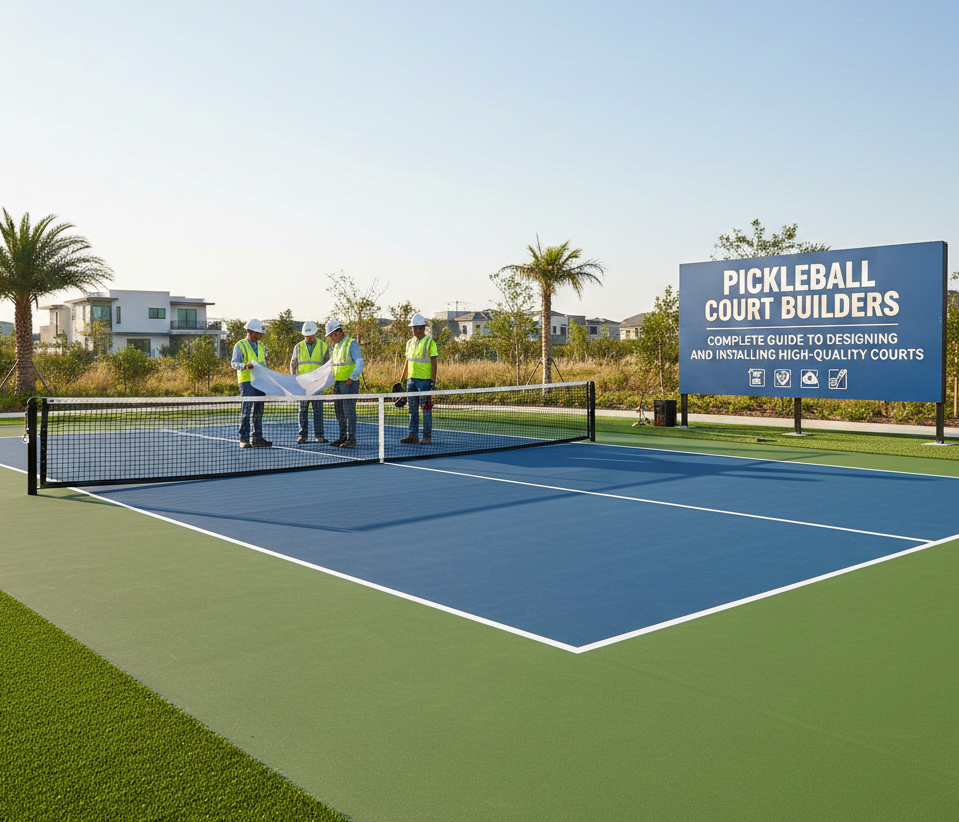
Pickleball is one of the fastest-growing sports in the world, blending elements of tennis, badminton, and ping pong into a fast-paced, enjoyable game for all ages. With its rising popularity, the demand for professional pickleball court builders has surged. Whether you are a homeowner, recreational center, school, or community park, choosing the right pickleball court builder is crucial to ensure safety, performance, and long-term value.
This comprehensive guide covers everything about pickleball court construction, including planning, materials, dimensions, surface options, cost, installation process, maintenance, and tips for selecting the best builders.
1. Why Hire Professional Pickleball Court Builders?
While it might be tempting to DIY a pickleball court, professional builders bring expertise, equipment, and materials that ensure quality and compliance with official standards.
Key benefits of hiring professional builders:
- Proper site assessment and leveling
- Correct court dimensions and line markings
- Selection of suitable flooring material
- Safe and slip-resistant surfaces
- Long-lasting durability under all weather conditions
- Compliance with international or local sports regulations
Professional builders also manage permits, zoning requirements, and drainage solutions, ensuring a hassle-free experience.
2. Planning Your Pickleball Court
Planning is the most critical step in constructing a pickleball court.
Choosing the Location
- Residential backyard: Ideal for personal use
- Community parks: Accessible to multiple players
- School or college campuses: Encourages student participation
- Commercial recreational centers: For high-traffic usage
Ensure sufficient space, proper sun orientation (north-south is preferred), and easy access for players and maintenance.
Court Dimensions
Official pickleball courts have specific dimensions:
- Court size: 20 ft × 44 ft
- Playing surface: Smooth, level, and free of cracks
- Buffer zone: 10–15 ft around the court for safe play
Builders must adhere to these standards for professional play and tournaments.
3. Surface Options for Pickleball Courts
Selecting the right surface is essential for performance, safety, and longevity.
Acrylic Coatings Over Concrete or Asphalt
Benefits:
- Affordable and widely used
- Provides smooth, consistent bounce
- Slip-resistant with texture
- Customizable colors
Interlocking Modular Tiles
Benefits:
- Easy and quick installation
- Excellent drainage
- Shock-absorbing and safe for joints
- Modular tiles can be replaced individually if damaged
Synthetic Turf
Benefits:
- Provides cushioned, low-impact playing experience
- Ideal for multi-sport facilities
- Low maintenance
- Suitable for outdoor recreational courts
Professional builders can recommend the best surface based on your location, climate, and usage frequency.
4. Pickleball Court Construction Process
Professional pickleball court builders follow a structured installation process:
Step 1: Site Survey and Ground Preparation
- Measure the available area
- Level the ground and compact soil
- Install drainage systems if required
Step 2: Base Construction
- Pour concrete or asphalt base for outdoor courts
- Ensure smooth, level surface
- Allow sufficient curing time
Surface Application
- Apply acrylic coatings, install modular tiles, or lay synthetic turf
- Texture surface for slip resistance
- Allow proper drying and curing
Line Marking
- Accurate boundary lines, non-volley zone, and service areas
- Use fade-resistant, non-toxic paint
Equipment Installation
- Nets, posts, and padding (if required)
- Lighting for night play (optional)
Final Inspection
- Check for level surface, proper markings, and safe play area
- Ensure adherence to safety and sports regulations
5. Cost of Building a Pickleball Court
Costs vary based on location, surface, size, and builder experience.
Factors affecting cost:
- Type of surface (acrylic, modular tiles, synthetic turf)
- Site preparation and grading
- Drainage and sub-base requirements
- Court size and number of courts
- Lighting and fencing installation
Approximate cost ranges:
- Basic acrylic court: Budget-friendly
- Modular interlocking tiles: Mid-range investment
- Premium synthetic surfaces: Higher initial investment but low maintenance
Professional builders provide detailed quotations including material, labor, and optional features.
6. Maintenance Tips for Pickleball Courts
Even well-built courts require proper maintenance to maximize longevity.
- Sweep or blow off debris regularly
- Pressure wash acrylic surfaces occasionally
- Inspect tiles for damage and replace if necessary
- Repaint faded court lines every few years
- Check nets and posts for wear and tear
Builders often offer maintenance packages to ensure courts remain in peak condition.
7. Choosing the Right Pickleball Court Builder
Selecting a reliable builder is critical for quality construction and peace of mind.
Factors to consider:
- Experience and portfolio of completed courts
- Knowledge of official pickleball standards
- Reviews or testimonials from previous clients
- Ability to manage permits and zoning requirements
- Transparency in cost and timeline
- Warranty and after-sales support
Visit completed projects and consult multiple builders to make an informed choice.
8. Advantages of Professional Pickleball Courts
A professionally built court offers numerous benefits:
- High-quality playing surface for safety and performance
- Enhanced property value
- Low maintenance requirements
- Long-term durability
- Compliance with local or international standards
- Improved recreational opportunities for players
Professional courts also support tournaments and organized play, increasing the sport’s popularity in your area.
9. Pickleball Court Accessories and Enhancements
Professional builders can install additional features to enhance the playing experience:
- Fencing to prevent balls from escaping
- LED lighting for evening or night play
- Shade structures for outdoor courts
- Benches and seating areas
- Scoreboards for competitive play
These enhancements improve usability, comfort, and aesthetics.
10. Conclusion
Pickleball is rapidly gaining popularity, and having a professionally built court can elevate the experience for players of all ages. Hiring experienced pickleball court builders ensures proper planning, construction, and maintenance while adhering to official standards.
From backyard residential setups to community parks and sports academies, professional builders provide durable, safe, and high-performance courts that last for years. Investing in expert construction and quality surfaces enhances the enjoyment of the game while protecting players and ensuring long-term value.
If you are considering installing a pickleball court, working with experienced builders is the best way to achieve a professional-grade facility that supports recreational play and competitive tournaments alike.
Pickleball Court Builders – FAQ
1. Who are pickleball court builders?
Pickleball court builders are specialized contractors or companies that design, construct, and install pickleball courts according to international standards. They handle everything from site preparation to surfacing, line marking, net installation, and optional amenities like fencing and lighting.
2. What are the official dimensions of a pickleball court?
According to USA Pickleball Association (USAPA) standards:
-
Court length: 44 feet (13.41 m)
-
Court width: 20 feet (6.10 m)
-
Non-volley zone (“kitchen”): 7 feet (2.13 m) from the net on each side
-
Net height: 36 inches (0.914 m) at the sidelines, 34 inches (0.86 m) at the center
Builders ensure all dimensions are precise for competitive and recreational play.
3. What types of pickleball courts can builders construct?
-
Outdoor courts: Acrylic or PU-coated concrete/asphalt, interlocking tiles, or modular surfaces
-
Indoor courts: Wooden flooring or synthetic sports flooring
-
Multi-purpose courts: Shared with tennis or badminton, with proper line markings
4. What is the typical surface material used for high-quality courts?
-
Acrylic or PU coating: Smooth, durable, weather-resistant, ideal for outdoor courts
-
Interlocking modular tiles: Easy installation and maintenance, shock-absorbing
-
Wooden flooring (indoor): High-performance, shock-absorbing surface for tournaments
5. What is the recommended base for outdoor pickleball courts?
-
Concrete slab: 4–6 inches thick, reinforced
-
Asphalt base: Smooth, compacted
-
Proper drainage and slope (1–2%) to prevent water accumulation
6. How long does it take to build a pickleball court?
-
Site preparation and base construction: 1–2 weeks
-
Surface finishing, line marking, net installation: 3–5 days
-
Total construction time: 2–3 weeks for a standard outdoor court
Time may vary based on site conditions, number of courts, and weather.
7. Do builders provide fencing and lighting?
Yes. High-quality court builders often include:
-
Fencing (10–12 ft) to keep balls in play
-
LED floodlights for evening play
-
Optional amenities like benches, shade structures, and court signage
8. What is the cost of building a pickleball court?
Costs depend on materials, surface type, and features:
-
Concrete base + acrylic coating: ₹3–5 lakh
-
Net and poles: ₹20,000–₹50,000
-
Fencing: ₹50,000–₹1.5 lakh
-
Lighting (optional): ₹80,000–₹1.5 lakh
-
Total: ₹4–8 lakh per outdoor court in India
Costs vary based on surface quality, site prep, and location.
9. Can pickleball courts be combined with other sports courts?
Yes. Multi-purpose courts can be marked for:
-
Tennis (half or full)
-
Mini-tennis
-
Badminton (if indoors or suitably sized outdoors)
Builders ensure line colors and spacing comply with regulations.
10. How much maintenance is required for a pickleball court?
-
Sweep or hose down debris regularly
-
Check and tighten nets and posts
-
Repaint lines every 2–3 years
-
Recoat acrylic surfaces every 5–8 years
-
Modular tiles can be replaced individually if damaged