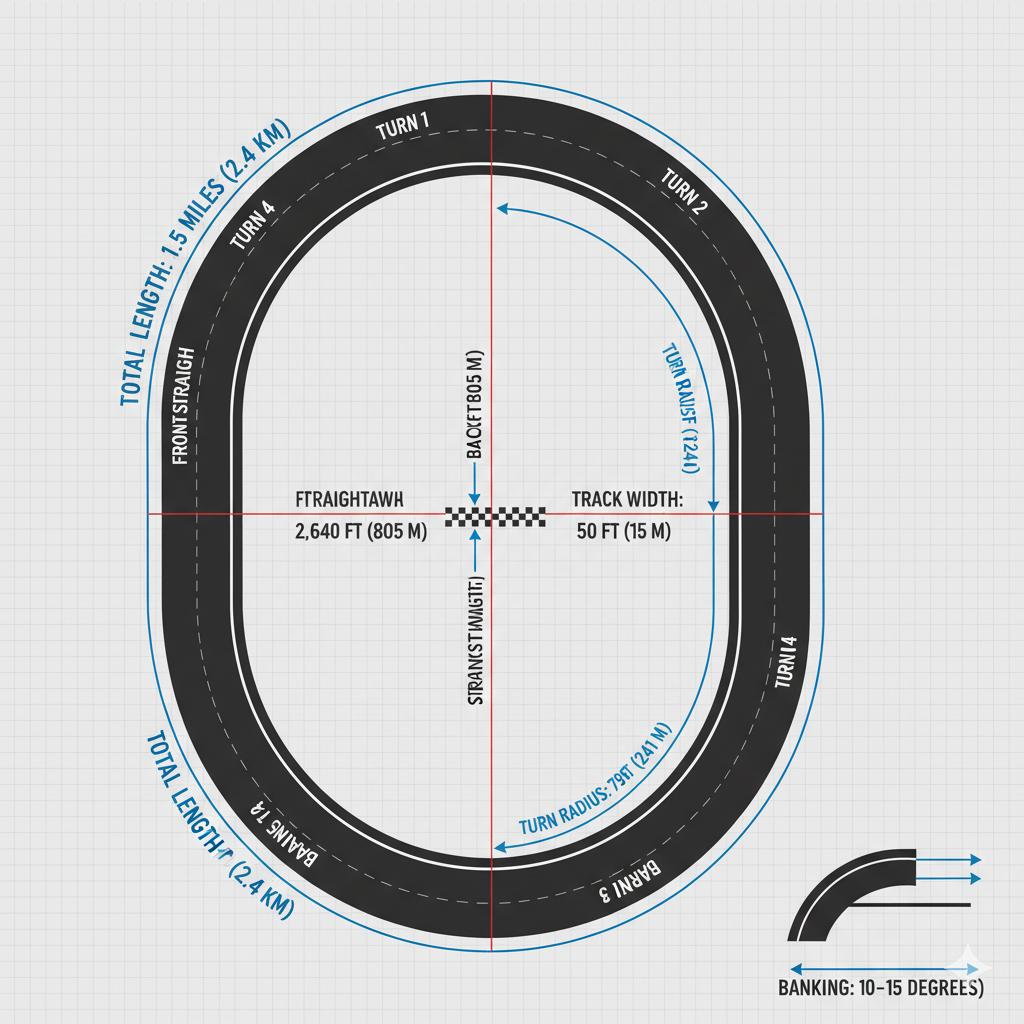
The oval track is the most common design for athletic and running tracks, providing athletes with a safe, standardized, and competition-ready environment. Understanding oval track dimensions is essential for architects, sports facility managers, and construction professionals to ensure athlete safety, compliance with international regulations, and optimal performance.
Whether constructing a 6-lane, 8-lane, synthetic, or polyurethane track, proper oval track dimensions influence lane width, curve radius, straightaway length, and overall track layout, ensuring accuracy and uniformity in training and competitions.
1. Importance of Oval Track Dimensions
-
Compliance with International Standards
-
Adheres to IAAF/World Athletics regulations for official competitions.
-
Ensures proper staggered starts, lane width, and total lap distance.
-
-
Athlete Safety
-
Correct curve radii, lane widths, and straightaway lengths reduce the risk of injuries during sprints, hurdles, and relay races.
-
-
Performance Optimization
-
Standardized dimensions support consistent speed, energy return, and traction throughout the track.
-
-
Event Versatility
-
Accommodates sprints, middle-distance races, relays, hurdles, and field event integration.
-
-
Facility Planning
-
Helps design tracks with proper drainage, spectator areas, and safety zones.
-
2. Standard Oval Track Dimensions
a. Total Lap Length
-
A standard outdoor track measures 400 meters per lap along the innermost lane.
-
Indoor tracks are usually 200 meters per lap, suitable for indoor arenas or training facilities.
b. Lane Width
-
Standard lane width: 1.22 meters (4 feet) per lane.
-
Tracks typically have 6–10 lanes, depending on the facility type.
c. Straightaways and Curves
-
Straight sections: Approximately 84–100 meters.
-
Curved sections: Radius of 36.5 meters for a standard 400-meter outdoor track.
d. Safety Zones
-
Recommended 1–2 meters of buffer space around the track for field events, spectators, and emergency access.
3. Geometry of an Oval Track
An oval track is designed with a combination of straightaways and semicircular curves:
-
Straightaways
-
Provide a linear running path for sprints and relay segments.
-
Length depends on the total lap and curve radius.
-
-
Curves
-
Two symmetrical curves connect straight sections.
-
Curves are engineered for uniform lane width and safe centrifugal forces during turns.
-
-
Lane Staggering
-
Staggered starts are calculated based on lane width and curve radius to ensure equal running distance in all lanes.
-
4. Total Track Width
-
For a 6-lane track: Approx. 7.32 meters excluding safety zones.
-
For an 8-lane track: Approx. 9.76 meters excluding safety zones.
-
Additional space is required for safety, field events, and maintenance access.
5. Track Surface Considerations
-
Synthetic Surfaces
-
Polyurethane, Tartan, and EPDM provide traction, weather resistance, and shock absorption.
-
Ideal for professional, school, and community tracks.
-
-
Asphalt Tracks
-
Budget-friendly alternative; may require a synthetic overlay for high-performance use.
-
-
Rubberized or Spray-Coated Tracks
-
Cost-effective for recreational or training tracks.
-
The surface choice impacts athlete performance, maintenance, and durability.
6. Applications of Standard Oval Track Dimensions
-
Professional Stadiums
-
Comply with IAAF standards for sprints, hurdles, relays, and middle-distance events.
-
-
Schools and Universities
-
Provide safe training and competition environments for students.
-
-
Community and Recreational Tracks
-
Enable running, jogging, and walking activities while maintaining standard measurements.
-
-
Indoor Athletic Facilities
-
Indoor tracks with smaller dimensions (200 meters) use tighter curves and may include banked bends to maintain speed.
-
7. Maintenance Considerations
-
Surface Inspection: Repair cracks, worn areas, or uneven spots promptly.
-
Line Marking Maintenance: Refresh lane markings every 2–3 years.
-
Drainage: Maintain slopes and drains to prevent water pooling.
-
Cleaning: Remove debris and leaves to maintain traction and prevent surface damage.
Proper maintenance ensures safety, durability, and compliance with track standards.
8. Benefits of Using Standard Oval Track Dimensions
-
Athlete Safety: Reduces risk of injuries during sprints, hurdles, and relays.
-
Performance Consistency: Uniform lane width and curve radius optimize running efficiency.
-
Regulatory Compliance: Meets international athletics standards.
-
Versatility: Accommodates various track events and field activities.
-
Long-Term Investment: Proper dimensions support durability, safety, and low maintenance over the track’s lifespan.
9. Summary of Standard Oval Track Dimensions
| Feature | Standard Measurement |
|---|---|
| Lap Length (outdoor) | 400 meters (innermost lane) |
| Lap Length (indoor) | 200 meters |
| Lane Width | 1.22 meters |
| Number of Lanes | 6–10 lanes |
| Straight Section Length | 84–100 meters |
| Curve Radius | 36.5 meters (outdoor) |
| Safety Zone Width | 1–2 meters |
These dimensions ensure safe, compliant, and performance-oriented tracks suitable for competitive and recreational use.
10. Conclusion
Understanding oval track dimensions is critical for building safe, durable, and competition-ready athletic facilities. Proper design ensures lane uniformity, curve safety, and compliance with international standards.