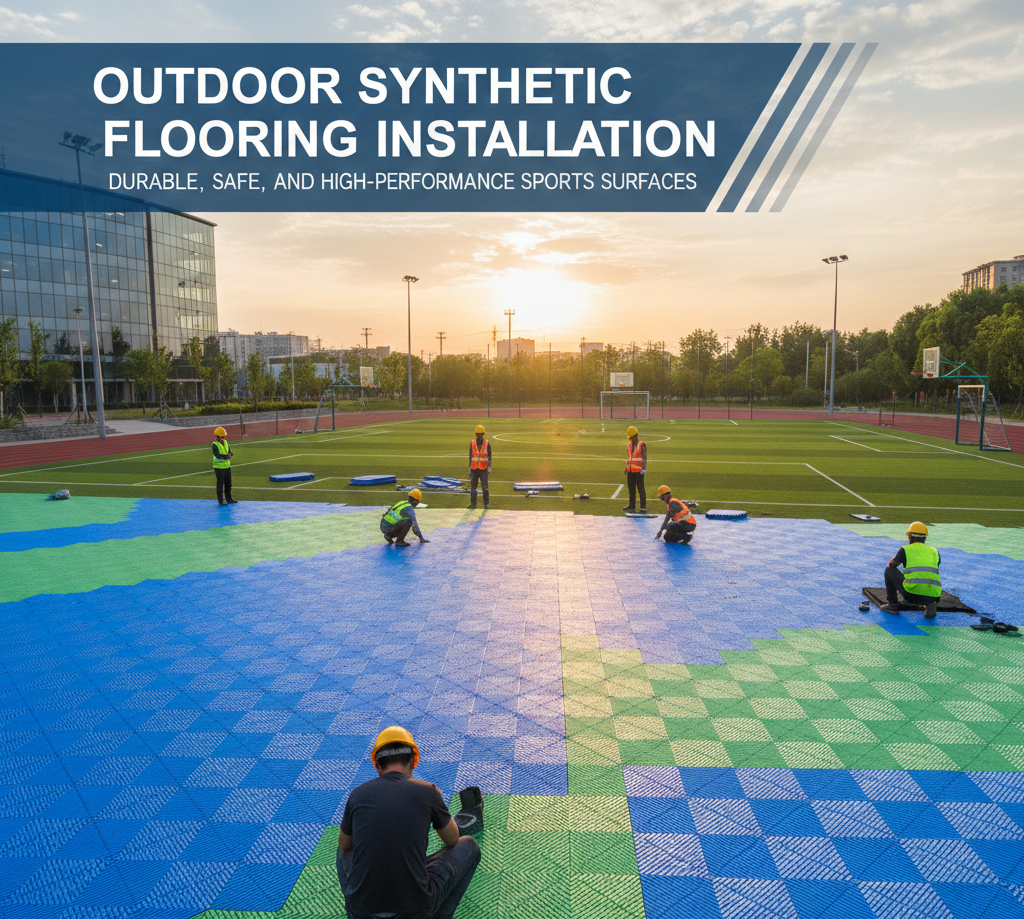
Outdoor synthetic flooring installation has transformed the way sports and recreational spaces are designed and used today. With growing demand for safe, long-lasting, and low-maintenance surfaces, synthetic flooring has become the preferred choice for outdoor sports courts, play areas, jogging tracks, and community fitness zones. From schools and residential societies to sports academies, clubs, and public parks, professionally installed synthetic flooring delivers superior performance in every environment.
Unlike traditional concrete or natural surfaces, outdoor synthetic flooring is engineered to handle heavy usage, changing weather conditions, and intense sporting activities while maintaining comfort, safety, and visual appeal. When installed correctly by experienced professionals, it becomes a long-term investment that enhances usability and reduces maintenance costs.
Understanding Outdoor Synthetic Flooring
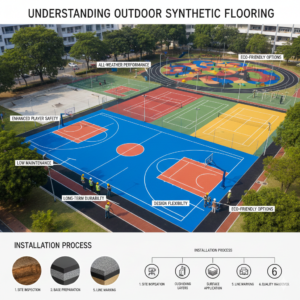
Outdoor synthetic flooring refers to sports and recreational surfaces created using advanced synthetic materials such as polyurethane (PU), acrylic systems, EPDM rubber, or synthetic turf. These materials are specifically designed for outdoor use and offer a combination of strength, flexibility, grip, and weather resistance.
The flooring systems are layered over a well-prepared base and finished with textured, anti-slip coatings that ensure consistent performance. Each type of synthetic flooring is developed to meet the requirements of different sports and activities, making it a versatile solution for multi-purpose outdoor spaces.
Outdoor synthetic flooring is widely used for:
-
Basketball and tennis courts
-
Badminton and volleyball courts
-
Multi-purpose sports arenas
-
Jogging and walking tracks
-
Children’s play areas
-
Skating and fitness zones
-
School playgrounds and park facilities
Why Outdoor Synthetic Flooring Is the Preferred Choice
The popularity of outdoor synthetic flooring installation is driven by its numerous practical and performance-related advantages.
All-Weather Performance
Synthetic flooring systems are built to withstand heat, rain, humidity, and UV exposure. Unlike natural surfaces that degrade over time, synthetic floors retain their texture, color, and grip across seasons.
Enhanced Player Safety
Shock-absorbing layers reduce impact stress on joints and muscles, minimizing the risk of injuries. Anti-slip textures provide reliable traction even during wet conditions.
Low Maintenance Requirements
Synthetic floors do not require watering, mowing, or frequent repairs. Simple cleaning and periodic inspections are enough to keep the surface in excellent condition.
Long-Term Durability
High-quality synthetic materials resist cracking, fading, and surface wear, ensuring years of reliable use even in high-traffic areas.
Design Flexibility
Available in a wide range of colors, textures, and layouts, synthetic flooring can be customized to suit specific sports, branding needs, or aesthetic preferences.
Eco-Friendly Options
Many modern synthetic flooring materials are non-toxic, recyclable, and environmentally safe, making them suitable for schools and community spaces.
Outdoor Synthetic Flooring Installation Process
Professional installation plays a crucial role in the performance and lifespan of synthetic flooring. A systematic and well-executed process ensures a flawless finish and long-term durability.
1. Site Inspection and Technical Planning
The installation process begins with a detailed site assessment. Experts evaluate:
-
Soil condition and load-bearing capacity
-
Existing surface quality
-
Slope and drainage patterns
-
Space dimensions and intended usage
Based on these factors, a customized installation plan is developed to suit the specific sport, location, and budget.
2. Base Preparation
A strong and stable base is essential for successful outdoor synthetic flooring installation. The base preparation typically includes:
-
Excavation and removal of loose soil
-
Compaction of the subgrade
-
Installation of granular or stone layers
-
Application of asphalt or concrete base
Proper leveling and slope formation ensure effective drainage and prevent water accumulation on the surface.
3. Cushioning and Shock Absorption Layers
For enhanced comfort and safety, cushioning layers made from rubber or EPDM granules are installed. These layers absorb impact forces, making the surface joint-friendly and suitable for prolonged play.
4. Synthetic Surface Application
This stage determines the surface’s grip, elasticity, and overall performance. High-quality materials and skilled workmanship are essential for achieving professional results.
5. Line Marking and Surface Finishing
UV-resistant paints ensure clear visibility and long-lasting color retention.
Final finishing touches enhance the surface’s appearance and functionality, ensuring it meets performance benchmarks.
6. Quality Inspection and Handover
Before project completion, the flooring undergoes thorough quality checks for:
-
Surface evenness
-
Traction and grip
-
Cushioning performance
-
Drainage efficiency
Types of Outdoor Synthetic Flooring Systems
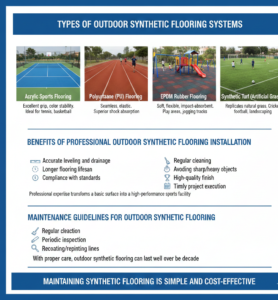
Acrylic Sports Flooring
Acrylic flooring is one of the most popular outdoor sports surfaces. It offers excellent grip, color stability, and durability, making it ideal for tennis, basketball, and multi-sport courts.
Polyurethane (PU) Flooring
PU flooring provides a seamless, elastic surface with superior shock absorption.
EPDM Rubber Flooring
EPDM flooring is soft, flexible, and impact-absorbent, making it ideal for children’s play areas, jogging tracks, and recreational zones.
Synthetic Turf (Artificial Grass)
Synthetic turf replicates the look and feel of natural grass without maintenance challenges. It is suitable for cricket, football, and landscaping applications.
Benefits of Professional Outdoor Synthetic Flooring Installation
Choosing professional installation ensures:
-
Accurate leveling and drainage design
-
Longer flooring lifespan
-
Reduced maintenance and repair costs
-
Compliance with sports federation standards
-
High-quality finish using certified materials
-
Timely project execution
Professional expertise transforms a basic surface into a high-performance sports facility.
Maintenance Guidelines for Outdoor Synthetic Flooring
Maintaining synthetic flooring is simple and cost-effective. Recommended practices include:
-
Regular cleaning to remove dirt and debris
-
Avoiding sharp or heavy objects on the surface
-
Periodic inspection for surface wear
-
Recoating or repainting lines when required
With proper care, outdoor synthetic flooring can last well over a decade while maintaining its appearance and performance.
Applications of Outdoor Synthetic Flooring
Outdoor synthetic flooring is suitable for a wide range of environments, including:
-
Schools and educational institutions
-
Residential complexes and clubhouses
-
Sports academies and training centers
-
Corporate recreational spaces
-
Public parks and municipal facilities
-
Community fitness and play zones
Its versatility makes it an ideal solution for both professional and recreational use.
Conclusion
Outdoor synthetic flooring installation is a smart and future-ready solution for modern sports and recreational infrastructure. With superior durability, enhanced safety, and minimal maintenance requirements, synthetic flooring offers unmatched value for outdoor spaces. When installed by experienced professionals using high-quality materials, it delivers consistent performance and long-term reliability.
1. What is outdoor synthetic flooring?
Outdoor synthetic flooring is a durable, weather-resistant surface designed for sports and recreational activities. It is typically made from materials like PU (polyurethane), EPDM rubber, acrylic, or modular interlocking tiles and is used for tennis, basketball, badminton, multipurpose courts, and walking/jogging tracks.
2. What are the common types of outdoor synthetic flooring?
-
PU (Polyurethane) flooring: Smooth, shock-absorbing, ideal for high-performance courts
-
EPDM rubber flooring: Flexible, slip-resistant, suitable for playgrounds and jogging tracks
-
Acrylic coating on concrete/asphalt: Cost-effective, UV-resistant surface
-
Modular interlocking tiles: Easy installation and maintenance
3. What are the standard thicknesses of synthetic flooring?
-
PU or EPDM coatings: 8–12 mm for recreational play, 12–20 mm for professional sports
-
Modular interlocking tiles: 12–18 mm per tile
Thickness affects shock absorption and comfort.
4. What base is required for installation?
A strong, level base is essential for durability:
-
Concrete slab: Minimum 100–150 mm, properly reinforced
-
Asphalt base: Must be smooth, compacted, and well-drained
-
Slope and drainage: 1–2% slope recommended to prevent water accumulation
5. Can synthetic flooring be installed on multipurpose outdoor courts?
Yes. Synthetic flooring is versatile and supports multiple sports, including:
-
Basketball
-
Volleyball
-
Badminton
-
Tennis
-
Futsal
-
Pickleball
Line markings can be customized for each sport.
6. What is the typical lifespan of outdoor synthetic flooring?
-
PU / EPDM / Acrylic: 8–12 years with proper maintenance
-
Modular tiles: 10–15 years, depending on usage
Regular cleaning and minor repairs extend the life of the surface.
7. How long does installation take?
-
Small courts (1–2 court areas): 3–7 days
-
Large or multipurpose courts: 10–15 days
-
Installation includes site preparation, base leveling, surface application, line marking, and curing.
8. What are the cost factors for outdoor synthetic flooring installation in India?
Costs depend on:
-
Flooring material (PU, EPDM, acrylic, or tiles)
-
Base preparation and leveling
-
Court size and shape
-
Drainage and slope adjustments
-
Optional features: fencing, lighting, line markings
Typical costs range from ₹1,500 to ₹3,500 per sq. ft for high-quality synthetic sports flooring.
9. How much maintenance is required?
Maintenance is minimal:
-
Sweep or wash regularly
-
Remove debris and standing water
-
Repaint lines every 2–3 years
-
Check for wear or damage in high-traffic areas
10. Is outdoor synthetic flooring safe for athletes?
Yes. High-quality synthetic flooring offers:
-
Shock absorption to reduce joint stress
-
Slip resistance for safe movement
-
Uniform ball bounce for sports like basketball or tennis