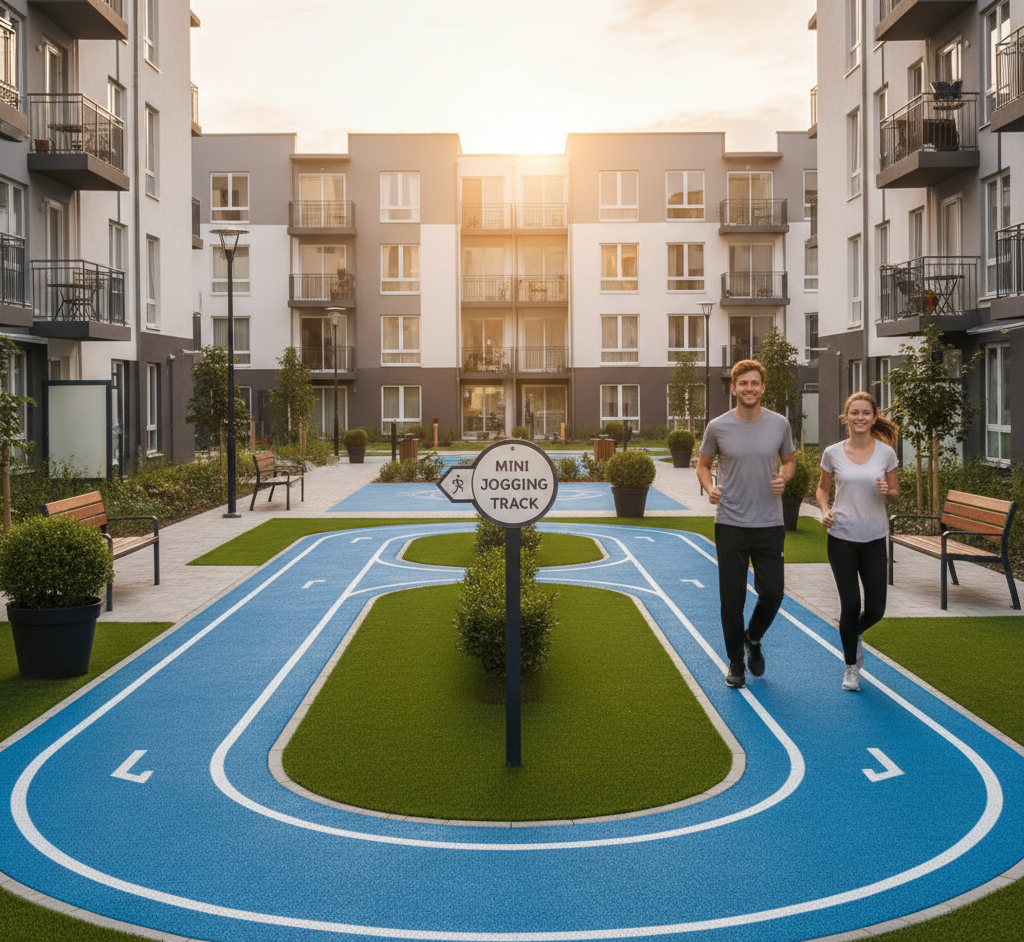
In today’s urban lifestyle, maintaining health and physical fitness has become a priority for individuals, institutions, and communities alike. However, space limitations in residential societies, schools, corporate campuses, and commercial premises often make it difficult to develop large outdoor fitness areas. This challenge has led to the growing popularity of mini jogging track installation—a practical, space-saving, and cost-efficient solution that brings fitness closer to people.
A mini jogging track allows users to enjoy the benefits of walking, jogging, and light running without the need for a full-scale athletic track. Designed with modern materials and professional engineering, these tracks provide comfort, safety, and durability while fitting seamlessly into compact environments such as rooftops, gardens, courtyards, and indoor spaces.
What Is a Mini Jogging Track?
A mini jogging track is a smaller version of a conventional jogging or running track, customized to suit limited areas while maintaining the performance characteristics of professional fitness surfaces. These tracks are typically designed in lengths ranging from 50 meters to 200 meters, depending on the available space and intended usage.
Mini jogging tracks can be installed in various shapes, including oval, circular, straight-loop, or fully customized layouts that adapt to the site conditions. Despite their reduced size, they are constructed using high-quality synthetic or rubberized materials that offer excellent shock absorption, slip resistance, and long-term resilience.
The primary goal of mini jogging track installation is to create a safe, comfortable, and accessible fitness zone that encourages regular physical activity for users of all age groups.
Importance of Mini Jogging Track Installation in Modern Spaces
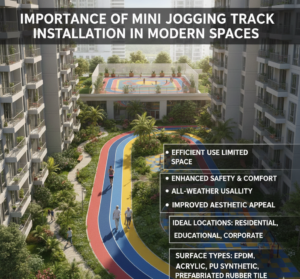
Urban development often prioritizes buildings and infrastructure, leaving limited room for open fitness areas. Mini jogging tracks bridge this gap by transforming underutilized spaces into functional wellness zones. They promote healthier lifestyles while enhancing the overall value and usability of a property.
Whether installed in a residential complex, educational campus, or corporate facility, a mini jogging track serves as a daily fitness motivator, making exercise convenient and accessible.
Key Benefits of Mini Jogging Track Installation
1. Efficient Use of Limited Space
One of the biggest advantages of mini jogging tracks is their ability to fit into compact areas. From rooftops and terraces to small parks and indoor halls, these tracks maximize space utilization without compromising functionality.
2. Encourages Regular Physical Activity
Having a jogging track within the premises eliminates common barriers such as travel time and overcrowded public parks. This convenience motivates residents, students, and employees to engage in daily walking or jogging routines.
3. Enhanced Safety and Comfort
Mini jogging tracks are designed with cushioned surfaces that reduce impact on joints and muscles. This makes them suitable for children, adults, and senior citizens, minimizing the risk of injuries during exercise.
4. Low Maintenance Requirements
Modern track surfaces such as EPDM rubber, PU synthetic, and acrylic coatings are weather-resistant and easy to maintain. Simple cleaning and periodic inspections are usually sufficient to keep the track in excellent condition.
5. All-Weather Usability
Unlike natural surfaces, synthetic jogging tracks can be used throughout the year. They maintain grip and stability during rain, heat, or mild cold, ensuring consistent performance in different weather conditions.
6. Improved Aesthetic Appeal
A well-designed mini jogging track adds visual value to the surroundings. With customizable colors, patterns, borders, and markings, the track can complement the landscape or architectural theme of the property.
Ideal Locations for Mini Jogging Track Installation
Mini jogging tracks are highly versatile and can be installed in a wide range of environments, including:
-
Residential societies and apartment complexes
-
School and college campuses
-
Corporate offices and IT parks
-
Hotels, resorts, and wellness retreats
-
Gyms and fitness centers
-
Public parks and recreational gardens
-
Government and municipal facilities
-
Indoor sports complexes and community halls
Each installation can be customized based on the available area, user group, and functional requirements.
Types of Surfaces Used in Mini Jogging Track Installation
Selecting the right surface material is critical to the performance and longevity of a mini jogging track. Common surface options include:
EPDM Rubber Jogging Track
EPDM rubber flooring is widely used for mini jogging tracks due to its flexibility and cushioning properties. Made from eco-friendly rubber granules, it offers excellent shock absorption and slip resistance. EPDM tracks are available in multiple colors and are ideal for outdoor and rooftop installations.
Acrylic Surface Track
Acrylic surfaces are a cost-effective option for mini jogging tracks, especially in schools and community spaces. They provide a smooth finish, good durability, and UV resistance. Acrylic tracks are also suitable for multi-purpose use.
PU Synthetic Jogging Track
PU (polyurethane) tracks deliver professional-grade performance with high elasticity and durability. They are highly resistant to weather changes and heavy foot traffic, making them suitable for institutional and high-use areas.
Prefabricated Rubber Tile Track
Prefabricated rubber tiles are modular and quick to install. They are ideal for indoor spaces or temporary setups. Individual tiles can be replaced easily, reducing long-term maintenance costs.
Step-by-Step Mini Jogging Track Installation Process
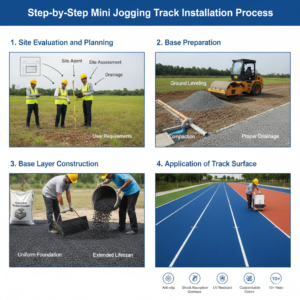
A professionally installed mini jogging track follows a structured and systematic process to ensure quality and durability.
1. Site Evaluation and Planning
The process begins with a detailed site inspection to assess space availability, surface condition, drainage, and user requirements.
2. Base Preparation
The ground is leveled and compacted to create a stable foundation. Proper slope and drainage systems are incorporated to prevent water accumulation and surface damage.
3. Base Layer Construction
This layer ensures uniformity and extends the lifespan of the track.
4. Application of Track Surface
This stage determines the cushioning, texture, and performance characteristics of the jogging track.
Key Features of a Professional Mini Jogging Track
-
Anti-slip and skid-resistant surface
-
High shock absorption for joint protection
-
UV and weather-resistant coating
-
Smooth and uniform finish
-
Customizable colors and designs
-
Long service life (often 10 years or more)
-
Environmentally friendly materials
Maintenance Tips for Long-Term Performance
Proper maintenance helps extend the life of a mini jogging track:
-
Clean regularly using mild detergent and water
-
Repair minor cracks or surface damage promptly
-
Avoid movement of heavy vehicles on the track
-
Inspect drainage systems periodically
-
Conduct routine inspections every 6 to 12 months
Cost of Mini Jogging Track Installation
The cost of mini jogging track installation depends on factors such as surface type, total area, base preparation, and site location. In India, installation costs generally range from ₹300 to ₹900 per square foot. While the initial investment may vary, the long-term benefits in terms of durability, safety, and user satisfaction make it a cost-effective solution.
Why Choose Professional Mini Jogging Track Installation?
Professional installation ensures correct material application, accurate design, and reliable performance. Experienced contractors use tested materials, advanced tools, and proven techniques to deliver a high-quality finish. They also offer warranties and maintenance guidance, ensuring peace of mind for clients.
Conclusion
Mini jogging track installation is more than just a construction project—it is a long-term investment in health, convenience, and community well-being. By converting compact spaces into dedicated fitness zones, these tracks make daily exercise accessible, safe, and enjoyable.
Mini Jogging Track Installation – FAQ
1. What is a mini jogging track?
A mini jogging track is a compact running or walking track designed for limited spaces such as homes, schools, parks, residential societies, gyms, or rooftops. It provides a safe and convenient surface for daily fitness activities.
2. What are the standard dimensions of a mini jogging track?
Mini jogging tracks are flexible in size. Common configurations include:
-
Length: 30–100 meters (loop or straight)
-
Width: 1–2 meters per lane
3. What surface materials are used for mini jogging tracks?
Popular surface options include:
-
EPDM rubber flooring
-
Synthetic track systems
-
PU (polyurethane) flooring
-
Interlocking rubber tiles
Each material offers shock absorption, slip resistance, and durability.
4. Is a mini jogging track suitable for indoor and outdoor use?
Yes. Mini jogging tracks can be installed both:
-
Indoors: gyms, basements, indoor sports halls
-
Outdoors: parks, terraces, school grounds, residential areas
Material selection depends on weather exposure and usage intensity.
5. How much space is required to install a mini jogging track?
A minimum of 1 meter width and 30 meters length is enough for a basic track. Circular or loop designs can be created in smaller areas with smart planning.
6. How long does mini jogging track installation take?
Installation time usually ranges from:
-
2–5 days for small projects
-
7–10 days for larger or customized layouts
This depends on surface preparation, material choice, and weather conditions.
8. What maintenance does a mini jogging track require?
Maintenance is minimal and includes:
-
Regular cleaning
-
Periodic inspection for wear
-
Occasional surface recoating (for PU tracks)
Proper care extends the lifespan of the track.
9. Can the track be customized with markings and colors?
Absolutely. Custom options include:
-
Lane markings
-
Distance markers
-
Color combinations
-
Logos or motivational graphics
Customization enhances aesthetics and usability.
10. What is the lifespan of a mini jogging track?
Depending on material and usage:
-
Rubber tiles: 5–8 years
-
EPDM / PU tracks: 8–12 years
Proper installation and maintenance can extend durability.