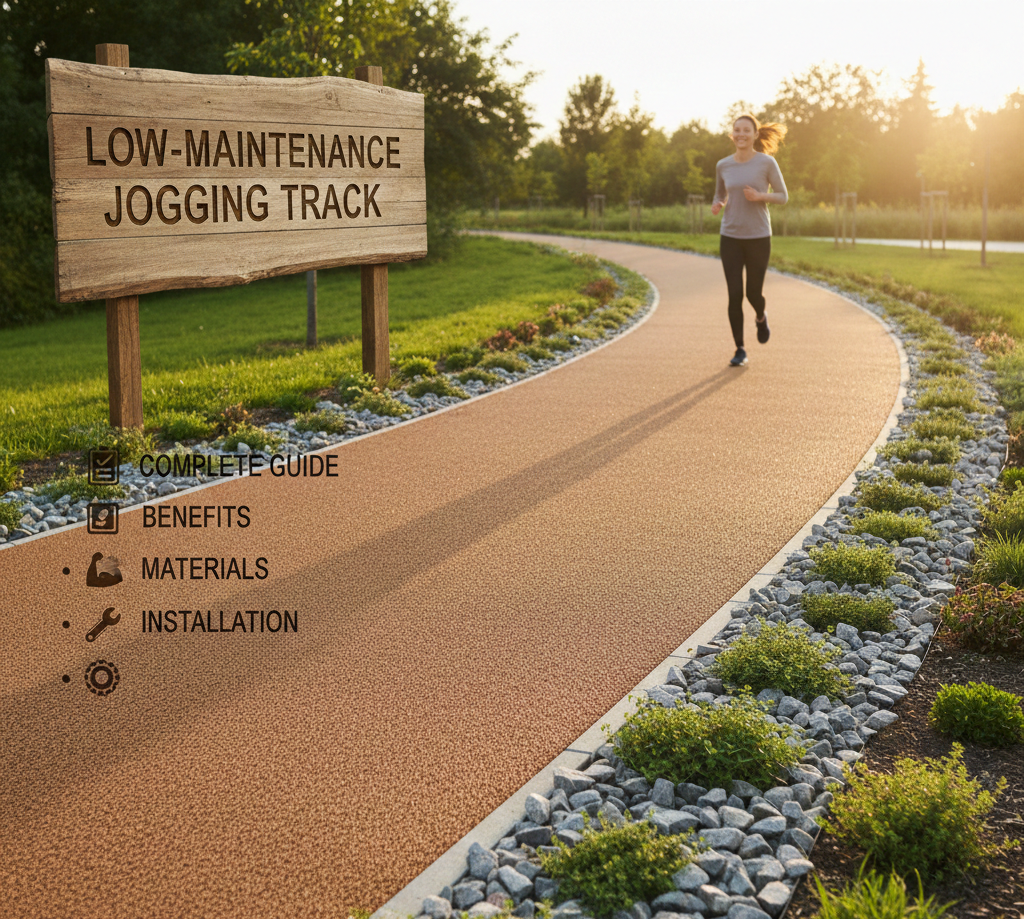
Jogging tracks today are not just limited to stadiums and large sports arenas. Residential communities, corporate campuses, schools, wellness centers, parks, farmhouses, hotels, and private villas are increasingly investing in jogging paths that look good, perform well, and last long with minimal upkeep. Among all modern surface systems, a low-maintenance jogging track has become a preferred choice because it reduces cleaning effort, lowers repair costs, and offers a long service life without constant supervision.
This comprehensive guide explains everything about low-maintenance jogging track flooring—its materials, benefits, design elements, installation process, durability features, and why it has become the most practical option for long-term use.
What Is a Low-Maintenance Jogging Track?
A low-maintenance jogging track is a specially engineered surface designed to withstand daily foot traffic, weather exposure, and environmental stress without requiring frequent repair, repainting, or resurfacing. These tracks use durable materials like EPDM rubber, acrylic coatings, polyurethane systems, and interlocking rubber tiles that naturally resist wear and tear.
Such tracks are ideal for:
-
Outdoor parks and gardens
-
Residential societies and townships
-
School playgrounds
-
Commercial fitness pathways
-
Corporate wellness zones
-
Private bungalows and farmhouses
-
Recreational walking & jogging circuits
The goal is simple—maximum performance with minimum maintenance effort.
Why Choose a Low-Maintenance Jogging Track?
A good jogging track should not only be comfortable and safe for users but also economically sustainable for facility owners. Here’s why low-maintenance tracks are in high demand:
1. Lower Upkeep Costs
Traditional tracks require repainting, filling cracks, and resurfacing every year. Low-maintenance surfaces need minimal repair, reducing annual expenses drastically.
2. Weather-Resistant Performance
Premium jogging track materials are resistant to heat, UV rays, rainfall, and humidity, making them perfect for Indian climates.
3. Longer Lifespan
Durable track systems last 10–15 years depending on material choice and usage conditions.
4. Smooth & Comfortable Running Experience
These tracks maintain consistent traction and cushioning throughout their lifespan, even with minimal upkeep.
5. Easy Cleaning & Quick Drying
Most surfaces only need water spraying, sweeping, or occasional soft-brush scrubbing.
6. Slip-Resistant & Safe
Anti-skid textures reduce the risk of slips and injuries, even during light rain.
7. Ideal for High Foot Traffic
These tracks handle continuous jogging, walking, group workouts, and daily community use without rapid deterioration.
Top Flooring Materials for Low-Maintenance Jogging Tracks
Choosing the right surface material is the most important factor behind a low-maintenance track. Below are the best options widely used across modern facilities.
1. EPDM Rubber Flooring
EPDM (Ethylene Propylene Diene Monomer) is one of the most durable materials used for high-quality running and jogging surfaces.
Key Advantages:
-
Extremely long-lasting
-
Elastic and shock absorbing
-
UV- and heat-resistant
-
Easy to wash
-
Color does not fade quickly
-
Seamless finish
Best suited for:
Parks, schools, residential tracks, fitness paths, premium wellness circuits
2. Interlocking Rubber Tiles
For facilities needing quick installation and minimal maintenance, interlocking tiles are a top choice.
Advantages:
-
No adhesives required
-
Easy to replace in case of damage
-
Strong grip and impact absorption
-
Perfect for curved pathways
-
Low cleaning requirement
Best suited for:
Community jogging paths, private gardens, indoor jogging tracks
3. Acrylic Sports Flooring
Acrylic is a cost-effective, weather-resistant coating system frequently used for outdoor tracks.
Key Advantages:
-
Low cost
-
Fast installation
-
Anti-skid texture
-
UV-resistant
-
Easy resurfacing
Suitable for:
Public parks, school grounds, budget-friendly jogging tracks
4. Polyurethane (PU) Track Systems
PU tracks are premium-grade and widely used in professional athletics.
Advantages:
-
Excellent elasticity
-
High-performance cushioning
-
Long lifespan
-
Stain-resistant and easy to clean
Ideal for:
High-end recreational projects, training grounds, semi-professional tracks
Design Considerations for a Low-Maintenance Jogging Track
A well-planned track design reduces maintenance needs and increases performance. Key design factors include:
1. Track Width
Typical jogging tracks range from 1.2 meters to 2.5 meters, depending on location and expected foot traffic.
-
1.2–1.5 m: Private gardens
-
1.5–2 m: Society and community pathways
-
2–2.5 m: Parks, schools, and public circuits
2. Track Shape
Popular layouts include:
-
Oval loop
-
Circular track
-
Freeform or organic shapes
-
Linear pathway in parks
-
Multi-curve design for landscaping integration
3. Drainage Planning
Proper drainage prevents waterlogging and increases track durability.
-
Slight surface slope
-
Side drainage channels
-
Porous underlayers for water absorption
4. Sub-base Construction
A strong and even sub-base ensures long-term performance.
Typical layers include:
-
Compacted soil
-
Granular sub-base
-
Concrete or asphalt base
-
Cushion layer
-
Final track surface
5. Markings & Signage
Optional but beneficial features include:
-
Distance markers
-
Warning signs
-
Directional arrows
-
Fitness zone markings
Installation Process for a Low-Maintenance Jogging Track
Although details vary by material, the general installation process includes:
1. Site Preparation
-
Clean vegetation, debris, stones
-
Ensure soil compaction
-
Level the entire surface
2. Base Layer Formation
Depending on the project budget, either concrete or asphalt is used.
-
Concrete base for maximum strength
-
Asphalt base for better cushioning
3. Cushion Layer Application
Rubber granules or shock pads are installed to provide impact absorption.
4. Final Surface Application
Depending on flooring material:
-
EPDM rubber is poured and trowel-finished
-
PU system is layered using machines
-
Acrylic coats are applied with rollers
-
Interlocking tiles are assembled manually
5. Final Finishing & Marking
-
Surface curing
-
Line marking
-
Cleaning and quality inspection
How to Maintain a Low-Maintenance Jogging Track
Although maintenance is minimal, here are simple steps to ensure track longevity:
1. Regular Cleaning
-
Weekly sweeping
-
Monthly washing with water
-
Occasional detergent cleaning for stains
2. Avoid Heavy Loads
Do not drive cars, bikes, or heavy machinery on the track.
3. Repair Small Damages Immediately
Minor cracks or tile replacements must be fixed quickly to prevent expansion.
4. Keep Drainage Clear
Ensure water flows properly to avoid surface weakening.
5. Recoat (If Acrylic)
Every 4–5 years, apply a fresh acrylic coat for renewed color and grip.
Where Low-Maintenance Jogging Tracks Are Commonly Installed
These tracks are suitable for multiple environments such as:
-
Residential societies
-
Public gardens
-
Township roadsides
-
Corporate campuses
-
Resorts and hotels
-
School playgrounds
-
Farmhouses & villa pathways
-
Municipal parks
Conclusion
A low-maintenance jogging track is one of the smartest investments for any modern facility that wants a durable, weather-resistant, and user-friendly running surface. Whether it’s EPDM, acrylic, PU, or interlocking tiles, the right material ensures comfort for joggers, long lifespan, and minimal upkeep cost. With proper design, installation, and occasional care, these tracks can easily last more than a decade while delivering consistent performance.