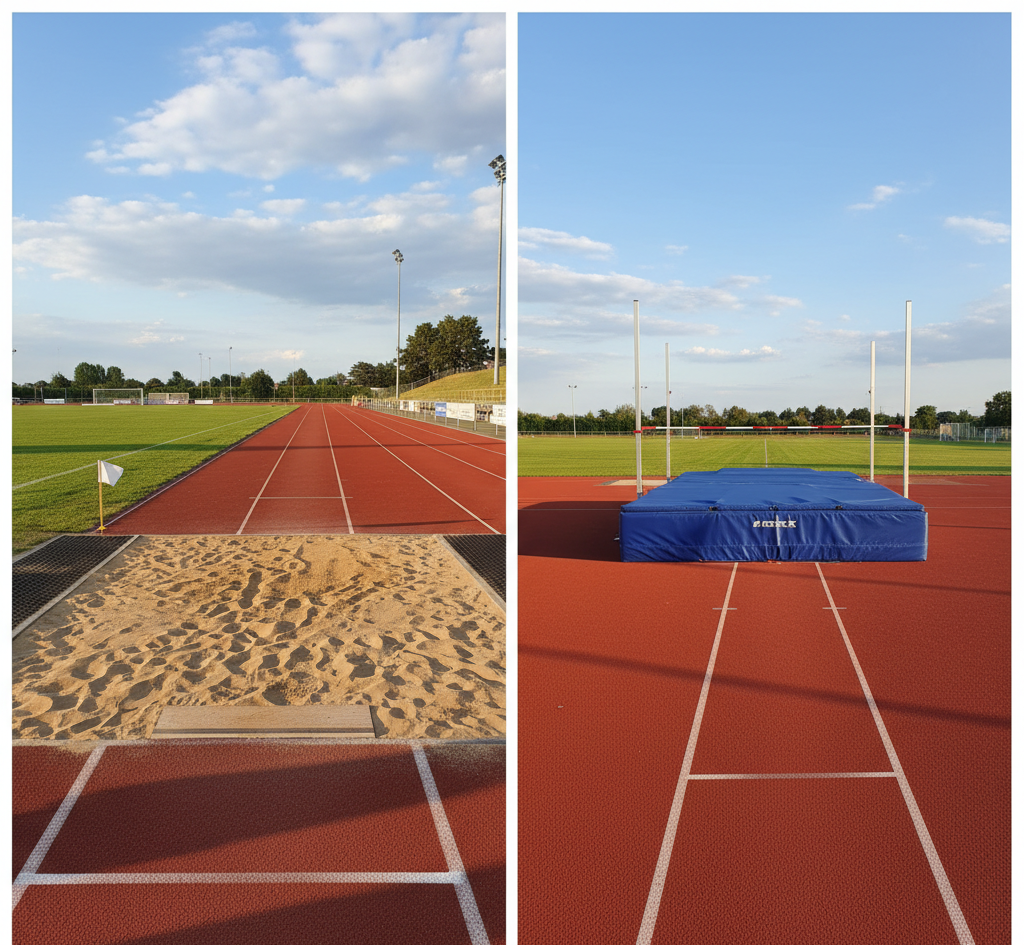
The long jump and high jump pit are critical components of track and field athletics, providing athletes with safe, standardized areas for jumping events. Proper design and installation ensure athlete safety, performance optimization, and compliance with international standards.
Whether building facilities for schools, universities, community sports centers, or professional stadiums, adhering to IAAF/World Athletics specifications is essential for functional, durable, and competition-ready jumping pits.
1. Importance of Proper Long Jump and High Jump Pits
-
Athlete Safety
-
Cushioned landing areas minimize impact-related injuries during jumps.
-
Proper pit size and depth prevent accidents from falls or missteps.
-
-
Performance Optimization
-
Standardized runway, take-off board, and landing areas enable optimal jumping distance and height.
-
Smooth surfaces and consistent materials improve athlete confidence and technique.
-
-
Regulatory Compliance
-
Long jump and high jump pits must meet IAAF/World Athletics standards for official competitions.
-
Ensures eligibility to host national and international events.
-
-
Versatility
-
Pits support training, school competitions, and professional meets.
-
Can be designed for indoor or outdoor facilities.
-
2. Long Jump Pit Design and Specifications
a. Runway
-
Length: 40–45 meters for outdoor tracks.
-
Width: 1.22–1.25 meters, providing enough space for safe approach.
-
Surface: Synthetic track, polyurethane, or asphalt for traction and durability.
b. Take-Off Board
-
Length: 1.22 meters, width 20 cm, flush with runway surface.
-
Material: Wood or synthetic, providing a solid platform for take-off.
-
Placement: Within the runway, measured from the pit edge according to athlete skill level.
c. Landing Pit
-
Length: 6–9 meters, width 2.75–3 meters.
-
Depth: 0.5 meters of sand to cushion landings.
-
Sand Quality: Fine, dry, and leveled for safety and accurate measurement.
d. Safety Considerations
-
Maintain clear zones around the pit free of obstacles.
-
Use pit covers when not in use to prevent contamination.
3. High Jump Pit Design and Specifications
a. Approach Area
-
Runway length: 15–20 meters, width 1–2 meters.
-
Surface: Synthetic track, polyurethane, or grass.
b. Take-Off Area
-
Marked area of 1 meter wide by 1 meter long at the end of the approach.
-
Solid, flat surface for a safe and consistent jump.
c. Landing Pit (Mat)
-
Dimensions: Minimum 5 meters long, 3 meters wide, 0.75–1 meter thick.
-
Materials: High-density foam covered with weather-resistant vinyl.
-
Safety: Ensure pit extends beyond the take-off area to allow safe landing.
d. Safety Measures
-
Surrounding areas free of obstacles or hard surfaces.
-
Padded landing zones prevent injury during failed jumps.
4. Materials Used in Long Jump and High Jump Pits
-
Runway Materials – Synthetic, polyurethane, or asphalt for grip and durability.
-
Take-Off Boards – Wood or synthetic with anti-slip finish.
-
Landing Surfaces – Sand for long jump; high-density foam for high jump.
-
Covers and Protective Equipment – Tarpaulin or mats to protect pits when not in use.
-
Measurement Tools – Rulers, tape measures, and markers for accurate results.
5. Steps in Installing Long Jump and High Jump Pits
Step 1: Site Assessment
-
Evaluate available space, topography, and soil type.
-
Allocate sufficient buffer zones around runways and landing pits.
Step 2: Excavation and Base Preparation
-
Excavate pit areas to the required depth.
-
Compact base soil to ensure stable and level surfaces.
-
Surface Installation
-
Long Jump: Lay take-off board flush with runway; fill pit with leveled sand.
-
High Jump: Install foam mats and protective covers; ensure take-off area is flush and firm.
-
Marking and Measurement
-
Long jump: Mark take-off line, foul line, and distance indicators.
-
High jump: Position standards and crossbar with adjustable heights.
-
Safety Measures
-
Install protective padding around high jump bars.
-
Ensure landing pits are clear of debris and properly maintained.
Final Inspection
-
Verify dimensions, alignment, and surface quality.
-
Test pit firmness, runway traction, and foam mat resilience.
6. Factors Affecting Installation Cost
-
Surface Material: Synthetic runways and foam mats cost more than grass or sand.
-
Pit Size: Larger pits require more material and preparation.
-
Equipment Quality: Take-off boards, standards, and mats influence total cost.
-
Labor and Site Preparation: Excavation, leveling, and surface installation require skilled labor.
-
Maintenance Considerations: Cover systems and drainage may add to initial costs.
Typical installation costs range from $10,000 to $40,000 depending on materials, pit size, and site conditions.
7. Maintenance Considerations
-
Long Jump Sand Pit
-
Rake and level sand regularly.
-
Remove debris and ensure sand is dry.
-
Replace or refill sand periodically.
-
-
High Jump Mats
-
Check for foam integrity and vinyl cover condition.
-
Store mats in dry, shaded areas to prevent deterioration.
-
Clean mats regularly to maintain hygiene and surface quality.
-
-
Runway
-
Keep clean and free of debris for safe footing.
-
Repair cracks or uneven areas promptly.
-
-
Safety Checks
-
Ensure all equipment is properly positioned before competitions.
-
Inspect protective padding and take-off boards regularly.
-
8. Benefits of Properly Designed Jump Pits
-
Athlete Safety: Cushioned landings reduce risk of injury.
-
Performance Accuracy: Consistent surfaces support maximum jump distance and height.
-
Regulatory Compliance: Meets IAAF/World Athletics standards for official events.
-
Durability: Proper installation extends the life of runways, mats, and sand pits.
-
Enhanced Training Environment: Athletes can practice with confidence and accuracy.
9. Applications
-
Professional Stadiums: Hosting national and international competitions.
-
Schools and Universities: Supports athletics programs and inter-school competitions.
-
Community Sports Facilities: Enables recreational jumping and fitness training.
-
Indoor Arenas: Foam mats and synthetic runways allow indoor long jump and high jump events.
Proper pit design ensures that athletes of all levels can train and compete safely and effectively.
10. Conclusion
The long jump and high jump pit is a vital component of any track and field facility. Proper design, installation, and maintenance ensure athlete safety, performance optimization, and compliance with international standards.