Introduction
Kabaddi, one of India’s oldest and most dynamic sports, symbolizes teamwork, strength, and strategy. In the vibrant state of Telangana, the sport continues to thrive at schools, colleges, local tournaments, and professional leagues. Cities like Hyderabad, Warangal, Nizamabad, and Karimnagar have become active hubs for kabaddi, with a growing emphasis on modern sports infrastructure.
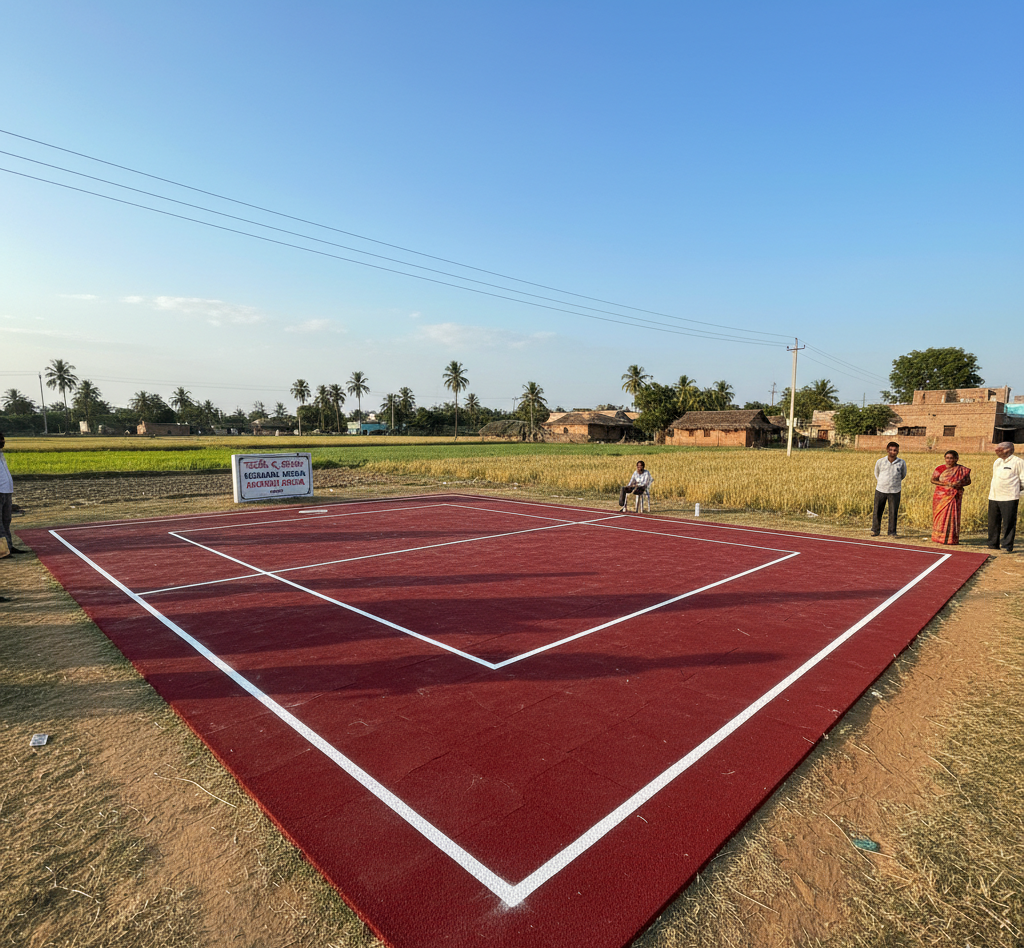
As kabaddi gains popularity in both rural and urban Telangana, there’s a rising need for high-quality kabaddi court flooring that meets international standards. Proper flooring not only ensures player safety and better performance but also enhances the reputation of the venue for hosting competitive events.
Importance of Kabaddi Court Flooring
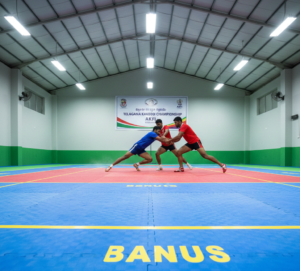
Kabaddi is an intense physical game that requires quick movements, rapid reflexes, and body contact. Players dive, tackle, and twist on the floor continuously during matches and training sessions. For this reason, the flooring must offer:
-
Excellent traction and grip for agile movement
-
Shock absorption to reduce injury risks
-
Durability to withstand repeated impact
-
Resistance to moisture, heat, and wear
-
Low maintenance and easy cleaning
A professionally installed kabaddi floor transforms any open ground or indoor hall into a safe, long-lasting, and tournament-ready sports arena.
Climate and Local Conditions in Telangana
Telangana experiences hot summers, moderate monsoons, and mild winters. Outdoor kabaddi courts often face harsh sunlight, occasional rains, and dust. Therefore, the flooring material must be capable of withstanding:
-
High temperatures up to 45°C
-
Sudden weather changes
-
UV exposure
-
Humidity during the monsoon season
Modern synthetic materials such as EVA mats and PU flooring are ideal for Telangana because they provide stability, all-weather performance, and longevity in these climatic conditions.
Standard Kabaddi Court Dimensions
The Amateur Kabaddi Federation of India (AKFI) recommends the following dimensions for kabaddi courts:
-
Men’s and Junior Boys’ Court: 13 meters × 10 meters
-
Women’s and Junior Girls’ Court: 12 meters × 8 meters
-
Safety Margin: At least 1–2 meters around the court
This layout ensures a professional playing experience while allowing players enough room to perform dives and tackles beyond the main playing zone.
Best Flooring Options for Kabaddi Courts in Telangana
1. Traditional Clay or Mud Flooring
In many villages and community playgrounds across Telangana, kabaddi is still played on natural mud surfaces.
Advantages:
-
Very low cost
-
Locally available materials
-
Natural grip and cushioning
Disadvantages:
-
Requires daily maintenance (watering and leveling)
-
Becomes slippery in rain and hard in dry heat
-
Unsuitable for professional tournaments
While mud courts preserve traditional play, modern flooring solutions are essential for competitive training and organized matches.
2. EVA Interlocking Mat Flooring (Synthetic Surface)
EVA (Ethylene Vinyl Acetate) interlocking mats are among the most popular flooring options for kabaddi courts across India, including Telangana.
Advantages:
-
Excellent shock absorption and anti-slip properties
-
Heat and UV resistant — ideal for Telangana’s climate
-
Easy to install, remove, and replace
-
Low maintenance cost
-
Available in multiple colors (blue, red, green) for professional aesthetics
Technical Specifications:
-
Thickness: 25–40 mm
-
Density: 120–140 kg/m³
-
Size: Interlocking tiles (1m × 1m)
EVA mats are best suited for schools, colleges, and local sports academies in Telangana looking for affordable yet professional-grade kabaddi flooring.
3. PU (Polyurethane) or Rubberized Flooring
PU or rubberized flooring is commonly used in indoor sports arenas and professional training centers.
Advantages:
-
Smooth, uniform, and durable surface
-
High resilience and flexibility
-
Excellent traction and comfort for players
-
Long-lasting and weather-resistant
Disadvantages:
-
Slightly expensive compared to EVA mats
-
Needs skilled installation and curing
This type of flooring is recommended for indoor kabaddi stadiums or multi-purpose sports complexes in cities like Hyderabad and Warangal.
4. Hybrid Flooring Systems
Hybrid systems combine a solid concrete base with a synthetic top layer (EVA, PU, or rubber). They provide a balance of durability, grip, and comfort, making them suitable for both indoor and outdoor kabaddi courts.
Kabaddi Court Construction Process in Telangana
Step 1: Site Preparation
-
Clear the area and level the ground.
-
Ensure a solid, compacted surface with proper slope for drainage.
Step 2: Base Construction
-
Lay a reinforced concrete base (100–150 mm thick) with a 1% slope for water runoff.
3: Moisture Barrier Layer
-
Apply a polymer-based waterproof membrane to protect against moisture damage.
4: Shock Absorbent Layer (Optional)
-
Install a 10 mm thick foam or rubber underlay to enhance cushioning and player comfort.
5: Top Flooring Installation
-
Fix EVA mats or apply PU coating evenly over the base.
-
Ensure all joints are secure and the surface is perfectly level.
6: Court Line Marking
-
Mark the standard kabaddi lines — midline, baulk line, bonus line, and lobby area — with 5 cm-wide white or yellow paint.
7: Final Finishing and Inspection
-
Smooth all edges for safety.
-
Test surface grip, shock absorption, and drainage performance.
8: Maintenance
-
Regular sweeping and occasional mopping with mild detergent.
-
Monthly inspection of joints and line markings.
-
Repainting or resealing as required.
Recommended Technical Specifications
| Component | Specification |
|---|---|
| Court Size (Men) | 13 m × 10 m |
| Court Size (Women) | 12 m × 8 m |
| Safety Margin | 2 m all around |
| Base Material | RCC Concrete (150 mm) |
| Moisture Barrier | Waterproof polymer coating |
| Top Surface | EVA mats / PU or rubber coating |
| Mat Thickness | 30–40 mm |
| Line Width | 5 cm contrasting color |
Estimated Cost of Kabaddi Court Flooring in Telangana
| Flooring Type | Approximate Cost (₹) |
|---|---|
| Clay Court | ₹40,000 – ₹60,000 |
| EVA Mat Flooring | ₹2.5 – ₹4.5 lakh |
| PU/Rubber Flooring | ₹5 – ₹7 lakh |
| Hybrid System | ₹4 – ₹6 lakh |
Costs may vary depending on location, area size, and material quality.
Advantages of Modern Kabaddi Flooring
-
Player Safety: Prevents injuries through superior shock absorption.
-
All-Weather Performance: Withstands Telangana’s heat and humidity.
-
Professional Appearance: Ideal for hosting tournaments and leagues.
-
Low Maintenance: Easy to clean, durable, and long-lasting.
-
Quick Installation: Interlocking mats can be set up in a few hours.
-
Portable and Reusable: EVA mats can be moved or reinstalled at new venues.
Promoting Kabaddi Infrastructure in Telangana
The Government of Telangana and various sports authorities are encouraging better sports infrastructure under initiatives like Khelo India and Rural Sports Development Programs. Cities such as Hyderabad and Karimnagar have already started adopting synthetic kabaddi court flooring in schools and training centers.
By upgrading from traditional clay courts to professional flooring systems, Telangana can enhance player safety, host more competitions, and groom the next generation of kabaddi champions.
Conclusion
Kabaddi is a symbol of India’s sporting spirit, and Telangana is keeping that legacy alive by investing in modern facilities and training systems. Choosing the right kabaddi court flooring—be it EVA, PU, or hybrid—ensures safety, consistency, and durability for players at every level.
Kabaddi Court Flooring in Telangana – FAQ
1. What types of flooring are suitable for a Kabaddi court in Telangana?
You can choose different flooring types depending on whether the court will be indoor or outdoor:
-
Synthetic interlocking mats: PVC/PU mats provide excellent shock absorption, grip, and safety — ideal for indoor or multi‑sports venues.
-
Wooden flooring: Hardwood floors with anti‑slip finishes are used for professional indoor arenas and high‑level competitions.
-
Clay/soil courts: Traditional outdoor surfaces often used in villages and local tournaments.
-
Rubber or polyurethane flooring: Durable and easy to maintain for indoor community centers and schools.
2. What is the official size of a Kabaddi court?
The standard dimensions for a professional Kabaddi court are:
-
Men’s court: 13 m × 10 m
-
Women’s court: 12 m × 8 m
Make sure to allow extra space around the court for player safety and movement.
3. What are approximate costs to install Kabaddi flooring in Telangana?
Cost depends on flooring type and quality:
-
Interlocking synthetic mats: Typically ₹750–₹850 per mat (1 m × 1 m) but bulk discounts may apply.
-
Professional full court construction: Building a high‑quality court with certified materials and installation can range from several lakhs depending on materials used (e.g., PVC mats, wooden indoor flooring, and site prep).
Exact costs vary by supplier, site conditions, and finish — it’s best to get multiple quotes.
4. How long does installation take?
-
Synthetic interlocking mats: A few days (2–4) for whole court installation once the base is ready.
-
Wooden flooring: Around 5–7 days including subfloor work.
-
Clay courts: Around 7–10 days for leveling and compaction.
Professional installers help ensure a level, smooth, safe playing surface.