Strengthening the Legacy of a Traditional Indian Sport
Introduction
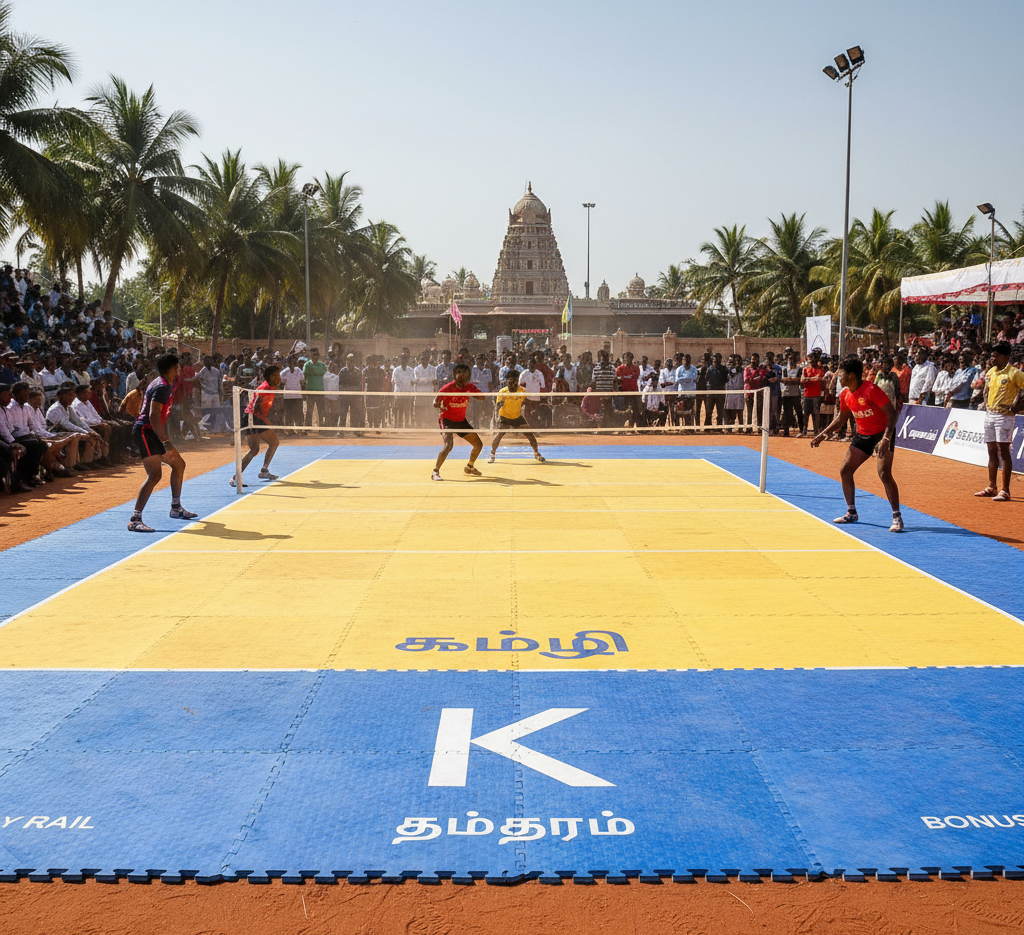
Kabaddi, one of India’s most dynamic and indigenous sports, holds a special place in the hearts of people across Tamil Nadu. From the bustling streets of Chennai to the rural playgrounds of Madurai, Trichy, Coimbatore, and Thanjavur, kabaddi continues to thrive as a sport of strength, strategy, and teamwork.
As the state becomes a major hub for sports development, there is an increasing demand for professional kabaddi court flooring in Tamil Nadu. Proper flooring ensures player safety, enhances performance, and gives athletes the confidence to train and compete at a professional level.
Whether it’s for schools, colleges, sports academies, or stadiums, investing in the right kabaddi court flooring helps preserve the sport’s cultural roots while introducing modern infrastructure standards.
The Growing Popularity of Kabaddi in Tamil Nadu
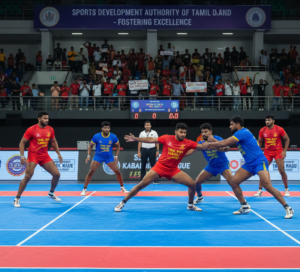
Tamil Nadu has produced several national-level kabaddi players and has hosted major league tournaments. The state’s commitment to sports, supported by initiatives from the Sports Development Authority of Tamil Nadu (SDAT) and private academies, has made kabaddi more than just a rural pastime—it’s now a professionally recognized sport.
To keep up with this growth, there’s a strong need for durable, safe, and professional-grade kabaddi flooring systems that align with international standards.
Importance of Proper Kabaddi Court Flooring
Kabaddi is a fast-paced, high-contact sport involving constant jumping, running, and tackling. Poor-quality flooring can lead to severe injuries, reduced player performance, and frequent maintenance issues.
Professional kabaddi court flooring in Tamil Nadu offers:
-
Shock absorption to minimize joint and muscle strain.
-
Non-slip surfaces for quick movements and turns.
-
Weather resistance, crucial for outdoor installations.
-
Durability to handle intense matches and training sessions.
-
Low maintenance, reducing long-term upkeep costs.
High-quality flooring not only improves player experience but also attracts tournaments, fostering sports tourism and local participation.
Kabaddi Court Dimensions
According to the Amateur Kabaddi Federation of India (AKFI), standard kabaddi court dimensions are as follows:
-
Men’s Court: 13 meters × 10 meters
-
Women’s Court: 12 meters × 8 meters
-
Safety Margin: 1–2 meters on all sides
Markings include the midline, baulk line, bonus line, and lobby areas — all crucial for professional gameplay.
Flooring Options for Kabaddi Courts in Tamil Nadu
1. Traditional Clay or Mud Flooring
For decades, kabaddi in Tamil Nadu was played on natural clay courts. Many villages and schools still prefer this surface due to its familiarity and low cost.
Advantages:
-
Affordable and easy to prepare.
-
Natural grip and cushioning.
-
Keeps the traditional essence of the game alive.
Disadvantages:
-
Requires daily watering and leveling.
-
Becomes hard in hot weather and slippery in rain.
-
Unsuitable for professional or indoor games.
While clay courts are ideal for traditional tournaments, modern kabaddi now demands synthetic and standardized flooring.
2. EVA Interlocking Mat Flooring (Synthetic Surface)
EVA (Ethylene Vinyl Acetate) interlocking mats are widely used across India, especially in states like Tamil Nadu, for both indoor and outdoor kabaddi courts.
Advantages:
-
Excellent shock absorption and grip.
-
UV and heat-resistant—ideal for Tamil Nadu’s tropical climate.
-
Easy installation, portability, and low maintenance.
-
Available in bright, professional colors (blue, red, green).
Technical Specifications:
-
Thickness: 25–40 mm
-
Density: 120–140 kg/m³
-
Tile Size: 1 m × 1 m (interlocking system)
This type of flooring is suitable for schools, universities, sports academies, and local training centers.
3. PU (Polyurethane) or Rubberized Flooring
PU flooring is commonly used for indoor kabaddi courts and professional sports complexes in cities like Chennai and Coimbatore.
Advantages:
-
Smooth, uniform surface ideal for competitive play.
-
Excellent elasticity, grip, and player comfort.
-
Long-lasting and resistant to moisture, dust, and wear.
Disadvantages:
-
Slightly higher cost.
-
Requires skilled installation.
This flooring is ideal for indoor kabaddi stadiums and multipurpose sports halls.
4. Hybrid Flooring Systems
Hybrid flooring combines a reinforced concrete base with a synthetic top surface such as EVA or PU. It offers the durability of a solid foundation with the comfort of a cushioned finish.
This system is gaining popularity in sports academies and government-funded playgrounds across Tamil Nadu.
Kabaddi Court Construction Process in Tamil Nadu
Step 1: Site Preparation
-
Clear debris and level the area.
-
Ensure proper soil compaction and slope for drainage.
2: Concrete Base Construction
-
Lay a 100–150 mm thick RCC base with a 1% slope for water runoff.
3: Moisture Barrier Layer
-
Apply waterproofing to protect from humidity and rain.
4: Shock Absorbent Layer (Optional)
-
Add a 10 mm foam or rubber base to enhance player comfort.
5: Flooring Installation
-
Install EVA mats or apply PU coating evenly.
-
Ensure joints are tight and surface is level.
6: Marking and Finishing
-
Paint standard kabaddi lines using white or yellow paint (5 cm wide).
-
Inspect for uniformity, grip, and safety.
Recommended Technical Specifications
| Component | Specification |
|---|---|
| Court Size (Men) | 13 m × 10 m |
| Court Size (Women) | 12 m × 8 m |
| Base Material | RCC Concrete (150 mm) |
| Top Surface | EVA Mats / PU or Rubber Flooring |
| Mat Thickness | 30–40 mm |
| Line Width | 5 cm contrasting color |
Estimated Cost of Kabaddi Court Flooring in Tamil Nadu
| Flooring Type | Approximate Cost (₹) |
|---|---|
| Clay Court | ₹40,000 – ₹60,000 |
| EVA Mat Flooring | ₹2.5 – ₹4.5 lakh |
| PU/Rubber Flooring | ₹5 – ₹7 lakh |
| Hybrid Flooring System | ₹4 – ₹6 lakh |
Note: Prices vary depending on location, size, material quality, and customization.
Advantages of Modern Kabaddi Flooring
-
Injury Prevention: Superior cushioning reduces impact on joints.
-
All-Weather Use: Performs well under heat and humidity.
-
Professional Appeal: Suitable for state and national tournaments.
-
Durability: Long lifespan with minimal maintenance.
-
Ease of Installation: Quick setup using interlocking systems.
-
Reusable and Portable: Mats can be relocated if required.
Government and Institutional Support in Tamil Nadu
The Tamil Nadu government, through its sports policies, encourages schools and colleges to build modern kabaddi courts. Under the Khelo India initiative and SDAT programs, funding is available for sports infrastructure, including kabaddi floors.
District-level kabaddi associations and private academies are also setting up synthetic flooring courts to promote professional training. Cities like Chennai, Trichy, and Erode have seen rapid development in sports infrastructure catering to kabaddi.
Conclusion
Kabaddi is more than just a sport in Tamil Nadu—it’s a celebration of tradition, teamwork, and resilience. As the state continues to embrace modern sports infrastructure, professional kabaddi court flooring plays a vital role in shaping the next generation of champions.
Whether you’re building a court for a school, academy, or sports complex, choosing the right flooring system—EVA, PU, or hybrid—ensures safety, durability, and performance.
By blending tradition with technology, Tamil Nadu is not only preserving its kabaddi heritage but also paving the way for a future where the sport shines on national and international platforms.