Introduction
Kabaddi, one of India’s most indigenous and exciting sports, has deep roots across southern India, including Kerala. Known for its athletic spirit, discipline, and teamwork, kabaddi has become an integral part of school games, local tournaments, and state-level championships.
From the lush fields of Thrissur and Palakkad to modern indoor arenas in Kochi, Kozhikode, and Thiruvananthapuram, Kerala has shown a strong commitment to developing world-class sports facilities. As kabaddi continues to grow in popularity, the demand for professional kabaddi court flooring in Kerala has increased dramatically.
Proper flooring is essential to ensure player safety, durability, and consistent performance—especially in a state known for its humid tropical climate.
The Growing Importance of Kabaddi Flooring in Kerala
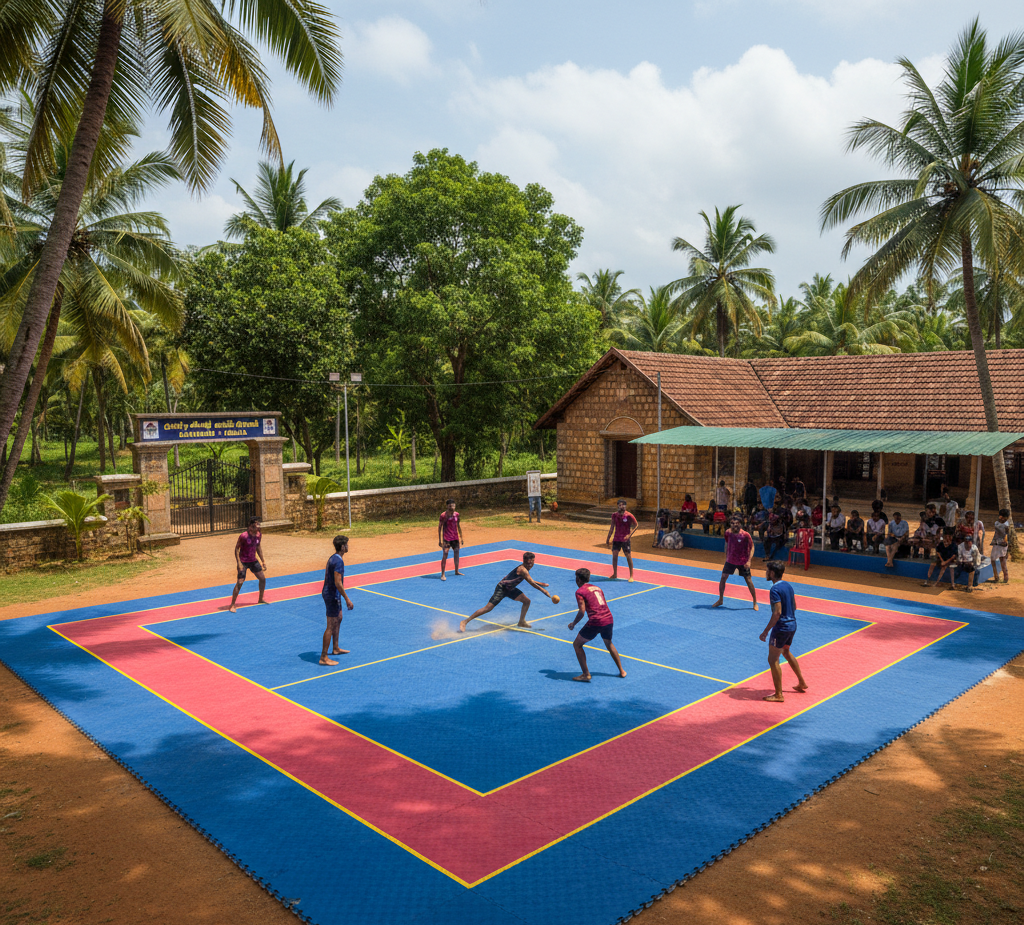
Kabaddi is a game of agility, strength, and strategy. Players perform frequent dives, tackles, and rapid turns on the court, which demands a safe, resilient surface. Traditional clay surfaces, while common in the past, are now being replaced with synthetic kabaddi floors that meet modern standards.
High-quality kabaddi flooring ensures:
-
Shock absorption to reduce joint and muscle injuries.
-
Slip resistance for fast movements.
-
Uniform surface for fair play.
-
Durability against weather and heavy use.
-
Low maintenance and easy cleaning.
With the right flooring, kabaddi players can train efficiently and perform confidently, whether at the school, district, or professional level.
Climate Considerations in Kerala
Kerala’s humid and rainy climate demands flooring that can resist moisture, temperature variations, and fungal growth. Traditional mud courts often become slippery or uneven during monsoons, making them unsafe.
That’s why synthetic kabaddi flooring systems like EVA interlocking mats or PU (polyurethane) flooring have become the preferred choice—they’re weather-resistant, easy to clean, and long-lasting, even in coastal conditions.
Standard Kabaddi Court Dimensions
According to the Amateur Kabaddi Federation of India (AKFI), the standard court sizes are:
-
Men’s and Junior Boys’ Court: 13 meters × 10 meters
-
Women’s and Junior Girls’ Court: 12 meters × 8 meters
-
Safety Margin: At least 1–2 meters on all sides
These measurements ensure enough space for raiding, defending, and safe player movement. Courts must also include proper line markings like the midline, baulk line, bonus line, and lobby area.
Types of Kabaddi Court Flooring in Kerala
1. Traditional Clay or Mud Flooring
Many rural and school-level kabaddi games in Kerala still use natural clay floors. They’re cost-effective but need frequent maintenance.
Advantages:
-
Very affordable.
-
Soft and natural surface.
-
Easy to prepare using local materials.
Disadvantages:
-
Requires daily watering and maintenance.
-
Becomes slippery in rain and hard in dry heat.
-
Not suitable for official tournaments.
Clay courts are ideal for traditional play but not for professional kabaddi or indoor facilities.
2. EVA Interlocking Mat Flooring (Synthetic Surface)
EVA (Ethylene Vinyl Acetate) flooring is the most popular kabaddi court surface across India and is perfect for Kerala’s weather.
Advantages:
-
Shock-absorbent and anti-slip surface.
-
UV and moisture resistant.
-
Easy installation and portability.
-
Comfortable for training and competitive matches.
-
Available in bright colors (red, blue, green) for professional appearance.
Technical Details:
-
Thickness: 25–40 mm
-
Density: 120–140 kg/m³
-
Tile Size: 1 m × 1 m (interlocking design)
EVA mats are ideal for schools, colleges, and sports academies in Kerala looking for durable, low-maintenance kabaddi flooring.
3. PU (Polyurethane) or Rubberized Flooring
PU or rubberized flooring is recommended for indoor kabaddi arenas and sports complexes in Kerala’s urban centers.
Advantages:
-
Smooth, consistent surface for professional play.
-
Excellent grip and resilience.
-
Long-lasting and easy to clean.
-
Resistant to moisture and temperature changes.
Disadvantages:
-
Slightly more expensive than EVA mats.
-
Requires expert installation.
PU flooring offers a premium playing experience and is used in multi-sport indoor stadiums and district-level training centers.
4. Hybrid Flooring Systems
A hybrid system combines a reinforced concrete base with a synthetic top surface (EVA or PU).
Advantages:
-
Strong foundation with flexible top.
-
All-weather performance.
-
Suitable for both indoor and outdoor courts.
-
Long lifespan with minimal maintenance.
Hybrid flooring is increasingly popular in government-funded sports projects and private academies across Kerala.
Kabaddi Court Construction Process in Kerala
Step 1: Site Preparation
-
Select a level area and clear debris.
-
Compact the soil properly and provide slope for drainage.
Step 2: Base Construction
-
Create a 100–150 mm RCC base with a 1% slope for water runoff.
3: Moisture Barrier
-
Apply waterproof coating to prevent moisture seepage from the ground.
4: Shock Absorbent Layer
-
Install a 10 mm foam or rubber layer beneath for cushioning.
5: Top Flooring Installation
-
Install interlocking EVA mats or apply PU coating evenly.
-
Ensure joints are tight and the surface is level.
6: Court Line Marking
-
Paint standard kabaddi markings using contrasting colors (usually white or yellow).
7: Final Finishing & Inspection
-
Check for grip, bounce, and surface consistency.
-
Ensure edges are smooth and safe for players.
Recommended Technical Specifications
| Component | Specification |
|---|---|
| Court Size (Men) | 13 m × 10 m |
| Court Size (Women) | 12 m × 8 m |
| Base Material | RCC Concrete (150 mm thick) |
| Top Surface | EVA Mats / PU or Rubber Flooring |
| Mat Thickness | 30–40 mm |
| Line Width | 5 cm contrasting color |
| Safety Margin | Minimum 2 m on all sides |
Cost of Kabaddi Court Flooring in Kerala
| Flooring Type | Approximate Cost (₹) |
|---|---|
| Clay Court | ₹40,000 – ₹60,000 |
| EVA Mat Flooring | ₹2.5 – ₹4.5 lakh |
| PU/Rubber Flooring | ₹5 – ₹7 lakh |
| Hybrid Flooring System | ₹4 – ₹6 lakh |
Note: Prices may vary based on court size, material quality, and installation requirements.
Advantages of Modern Kabaddi Flooring
-
Player Safety: Reduces injuries with shock-absorbent layers.
-
All-Weather Durability: Withstands Kerala’s humid and rainy conditions.
-
Professional Appearance: Suitable for official tournaments and training.
-
Low Maintenance: Easy to clean and highly durable.
-
Quick Installation: EVA mats can be set up or moved easily.
-
Eco-Friendly Options: Synthetic flooring materials are recyclable.
Sports Development in Kerala
The Kerala State Sports Council and Khelo India initiatives have promoted investment in modern sports infrastructure. New synthetic kabaddi courts are being built in district stadiums, schools, and colleges to encourage youth participation.
With Kerala’s emphasis on grassroots sports, kabaddi flooring is evolving from basic mud courts to professional-grade systems that meet international standards.
Conclusion
Kabaddi is not just a sport in Kerala—it’s a reflection of strength, discipline, and teamwork. As the state continues to modernize its sports infrastructure, professional kabaddi court flooring plays a pivotal role in shaping the future of this traditional game.
Choosing the right flooring—EVA, PU, or hybrid—ensures long-term durability, safety, and comfort for players. From community grounds to international-level stadiums, Kerala is setting new benchmarks in sports development.
By combining its rich sporting culture with modern engineering, Kerala is building a future where kabaddi continues to inspire, unite, and create champions.
Frequently Asked Questions (FAQ) – Kabaddi Court Flooring in Kerala
1. What types of kabaddi court flooring are suitable for Kerala?
Suitable options include:
-
Synthetic mats (stitched or interlocking) – weather-resistant and low maintenance
-
PU (Polyurethane) sports flooring – professional-grade with good shock absorption
-
Wooden flooring – best for indoor professional or academy courts
-
Outdoor mats with weatherproof coatings – ideal for schools, parks, and community courts
2. What are the official dimensions of a kabaddi court?
-
Men’s professional court: 13 m × 10 m
-
Women’s professional court: 12 m × 8 m
Other recreational or training courts may be slightly adapted based on space availability.
3. Why is good flooring important for kabaddi?
Proper flooring ensures:
-
Player safety by reducing impact injuries
-
Excellent grip and traction for fast movements
-
Shock absorption for dives and tackles
-
Durability and consistent performance
4. Can kabaddi courts be installed outdoors in Kerala’s climate?
Yes — modern synthetic and PU flooring systems are designed to resist:
-
Heavy monsoon rains
-
High humidity and coastal conditions
-
UV exposure and moisture
Proper drainage and installation protect the flooring from water damage.
5. How is kabaddi court flooring installed?
Typical steps include:
-
Site preparation: level and compact the base (soil, sand, or concrete)
-
Sub-base setup: optional concrete or leveling layer
-
Flooring installation: lay mats, PU sheets, or wooden panels
-
Fix and secure tiles/mats (if applicable)
-
Line marking per official dimensions
-
Final inspection for safety and level finish
6. How much does kabaddi court flooring cost in Kerala?
Approximate cost ranges (varies by material & quality):
-
Synthetic mats: ₹300–₹800 per sq. meter
-
PU flooring: ₹900–₹2,500 per sq. meter
-
Wooden indoor flooring: ₹1,500–₹3,000 per sq. meter
7. Can kabaddi court flooring be used for other activities?
Yes — many flooring systems are multi-purpose, suitable for:
-
Martial arts, wrestling, yoga, and fitness training
-
School PE classes and recreational sports
-
Indoor events and practice drills
8. How do I maintain kabaddi court flooring in Kerala?
-
Regular cleaning to remove dust, mud, and moisture
-
Check for wear and tear on mats or tiles
-
Ensure drainage after rain to prevent water pooling
-
Repaint lines when faded
9. Are there professional standards for kabaddi court flooring?
Yes — professional courts should follow:
-
Pro Kabaddi or National Kabaddi Federation standards
-
Adequate shock absorption, anti-slip surface, and safety requirements
-
Proper dimension and line markings
10. Who provides kabaddi court flooring services in Kerala?
Sports flooring contractors in Kerala can supply:
-
Flooring materials (mats, PU systems, wood)
-
Professional installation and line marking
-
Custom designs (indoor/outdoor) and maintenance guidance
11. Can kabaddi court flooring handle Kerala’s monsoon season?
Yes — quality PU and synthetic systems are moisture resistant and can be installed with good drainage to avoid surface damage and mold growth.
12. How long does kabaddi court flooring last?
With proper installation and care:
-
Synthetic mats: 5–8 years
-
PU flooring: 10–12 years
-
Wooden indoor flooring: 12–15 years
Lifespan increases with regular maintenance.
13. Can outdoor kabaddi courts in Kerala be converted to indoor courts?
Yes — outdoor courts can be upgraded to PU or wooden indoor flooring, which:
-
Protects the surface from harsh weather
-
Extends usable life
-
Supports professional training and competition
14. Are kabaddi floors safe for children and beginners?
Absolutely — cushioned surfaces reduce impact from falls, improve grip, and are suitable for school students, beginners, and recreational players.