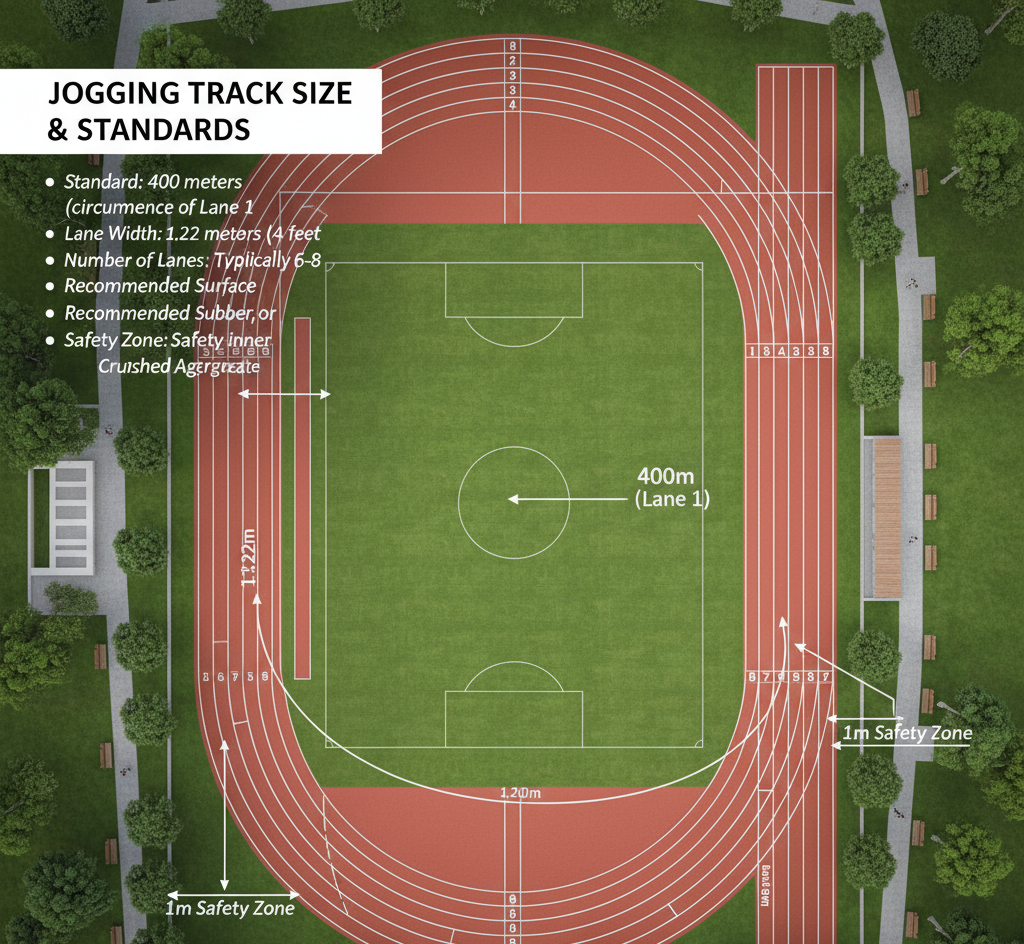
A jogging track is more than just a fitness path—it’s a carefully designed structure built to promote health, safety, and performance. Whether for schools, sports complexes, corporate campuses, or residential societies, understanding jogging track size and standards is essential to ensure proper functionality, comfort, and compliance with global guidelines.
From 400-meter standard tracks to compact tracks for smaller spaces, every jogging track follows a set of engineering, material, and dimensional standards to ensure durability, performance, and safety for all users.
🏃 What is a Jogging Track?
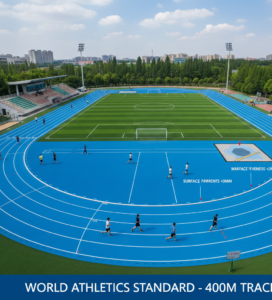
A jogging track is a purpose-built looped pathway designed for walking, jogging, or running. It features a smooth, cushioned, and slip-resistant surface, providing a safe environment for exercise. The design prevents joint stress and minimizes injury risks compared to running on hard surfaces like concrete or asphalt roads.
Jogging tracks can be constructed in oval, circular, or straight-loop designs, depending on the space available. The materials used—such as synthetic PU, EPDM rubber, or acrylic coatings—offer longevity and comfort under all weather conditions.
⚙️ Standard Jogging Track Sizes
The size of a jogging track can vary depending on the type of facility and available area. However, 400 meters is the standard jogging track size globally recognized for both athletics and recreational running.
Below is a detailed overview of different standard and compact jogging track dimensions:
| Track Type | Perimeter (1 Lap) | Approx. Area Required | Common Use |
|---|---|---|---|
| Standard Track | 400 meters | 5,500 – 6,000 sq. meters | Professional athletics, schools, sports complexes |
| Half Track | 200 meters | 2,500 – 3,000 sq. meters | Schools, fitness centers, small grounds |
| Compact Track | 150 meters | 1,800 – 2,200 sq. meters | Residential or community parks |
| Mini Track | 100 meters | 1,000 – 1,500 sq. meters | Apartments, rooftops, clubs |
| Indoor Track | 50 meters | 400 – 800 sq. meters | Gyms, wellness centers, terraces |
🧭 Standard Jogging Track Layout and Shape
The oval shape is the most common and efficient design for jogging tracks. It consists of:
-
Two straight sections (for acceleration and steady pace)
-
Two semicircular curved ends (for smooth turns and rhythm)
Standard 400-Meter Track Dimensions (World Athletics Standard)
| Specification | Measurement |
|---|---|
| Total Track Length | 400 meters |
| Shape | Oval (2 straights + 2 curves) |
| Lane Width | 1.22 meters |
| No. of Lanes | 6–8 lanes (optional) |
| Inner Radius | 36.50 meters |
| Straight Section Length | 84.39 meters each |
| Total Width (8 lanes) | 9.76 meters |
| Total Area | Approx. 5,500–6,000 sq. meters |
📏 Measurement Standard:
The 400m is measured 30 cm from the inner edge of the first lane, ensuring consistent lap length across all tracks worldwide.
🧱 Other Common Jogging Track Standards (India & Global)
While the 400-meter layout follows World Athletics standards, smaller tracks are designed according to national or site-specific guidelines, particularly in schools, parks, and residential complexes.
Common Indian design standards include:
-
Lane width: 1.2 m for single-lane; 2.4 m for two-way jogging.
-
Minimum curve radius: 20–25 meters for smaller tracks.
-
Surface thickness: 10–15 mm for EPDM or PU tracks.
-
Slope for drainage: 1% lateral slope to prevent waterlogging.
-
Perimeter marking: White reflective paint for visibility and safety.
🧩 Material Standards for Jogging Tracks
Selecting the right surface material ensures comfort, safety, and long life. Below are standard materials and their characteristics:
| Material Type | Features | Recommended For |
|---|---|---|
| PU (Polyurethane) Synthetic Track | Professional-grade, highly elastic, long lifespan | Stadiums, universities, sports complexes |
| EPDM Rubber Track | Eco-friendly, shock-absorbent, slip-resistant | Schools, parks, housing projects |
| Acrylic Surface Track | Cost-effective, UV-resistant, smooth finish | Public parks, budget installations |
| Rubber Tiles / Modular Tracks | Quick installation, portable | Rooftops, gyms, indoor facilities |
Each material type meets global environmental and safety standards for surface friction, cushioning, and weather performance.
🛠️ Construction Standards & Process
Building a jogging track requires strict adherence to international and national construction standards. The process involves several stages:
1. Site Survey and Layout Design
-
Assess site area, soil type, and slope.
-
Design the track according to the desired shape and dimensions.
2. Base Preparation
-
Compact the soil and build a granular sub-base.
-
Apply asphalt or concrete base for structural strength.
3. Surface Layer Application
-
Apply primer and then layers of PU, EPDM, or acrylic coating.
-
Ensure smooth, even thickness and consistent surface texture.
4. Markings and Finishing
-
Paint lane lines, start/finish points, and safety edges.
-
Install curbing and drainage along track sides.
5. Testing and Handover
-
Conduct friction, water permeability, and evenness tests before final approval.
🌿 Safety and Quality Standards
High-quality jogging tracks follow specific ISO and World Athletics standards for performance and safety:
-
Slip Resistance: Meets ASTM F2157 (minimum coefficient of friction).
-
Shock Absorption: 35–50% energy return to reduce impact injuries.
-
UV Resistance: Surface does not fade or crack under sun exposure.
-
Water Permeability: Track should drain water within 30 minutes of rainfall.
-
Surface Evenness: Level tolerance ≤ 3mm under 4m straightedge.
Compliance with these ensures that the jogging track is safe for all weather and age groups.
💰 Estimated Cost Based on Standards
The cost of constructing a jogging track depends on its size, surface material, and structural base.
| Track Type | Material | Average Cost (₹/sq.ft) | Usage |
|---|---|---|---|
| 400m Standard Track | PU / EPDM | ₹600 – ₹1,200 | Athletics, professional training |
| 200m Semi-Standard | EPDM / Acrylic | ₹350 – ₹800 | Schools, societies |
| 100m Compact Track | Acrylic / Rubber Tiles | ₹300 – ₹700 | Rooftops, fitness zones |
🧮 Example:
A 400m 8-lane track (~6,000 sq.m) typically costs between ₹60 – ₹100 lakhs, including base, surfacing, and markings.
🔧 Maintenance Standards
Proper maintenance extends lifespan and performance.
Follow these maintenance best practices:
-
Clean debris and water regularly.
-
Avoid metal spikes or high heels on track.
-
Repair cracks or tears immediately.
-
Repaint markings every 2–3 years.
-
Inspect drainage and slope annually.
Routine care ensures consistent grip, color, and safety for years.
🏆 Advantages of Following Jogging Track Standards
-
Ensures athlete safety and comfort.
-
Promotes accurate lap measurement and performance tracking.
-
Provides long-lasting, low-maintenance surface.
-
Enhances property or facility value.
-
Meets professional and recreational needs alike.
🏁 Conclusion
Choosing the correct jogging track size and standards is vital for any fitness or sports development project. The 400-meter oval track remains the universal benchmark for quality, functionality, and precision. However, smaller customized tracks (100m–200m) also follow standard proportions and design principles to deliver safe, durable, and enjoyable jogging experiences.
Frequently Asked Questions (FAQ) – Jogging Track Size & Standards
1. What are jogging track size standards?
Jogging track size standards refer to recommended dimensions, lane widths, and clearances designed for safe and comfortable running or walking, based on traffic, space availability, and usage type.
2. What is the standard width of a jogging track?
-
Single-lane track: 1.2–1.5 meters
-
Double-lane track: 2.0–2.5 meters
-
Multi-lane tracks: 3–5 meters or more for professional or public tracks
Wider tracks allow safe passing and simultaneous use by multiple users.
3. What is the recommended track length?
-
Residential or park tracks: 100–400 meters loops
-
School or college tracks: 200–400 meters per lap
-
Professional or stadium tracks: 400–1,000 meters or more, depending on available space
4. How much clearance is needed around a jogging track?
-
Minimum 0.5–1 meter on sides for safety
-
Space should be free of obstacles like trees, poles, or benches near the running lanes
5. What slope is recommended for jogging tracks?
-
1–2% slope for proper water drainage
-
Avoids waterlogging and slippery surfaces
6. What is the standard thickness of jogging track surfaces?
-
Interlocking rubber/PVC tiles: 15–40 mm
-
PU or synthetic tracks: 10–25 mm
-
EPDM rubberized tracks: 20–40 mm
Thickness depends on shock absorption requirements, traffic, and usage type.
7. Can jogging tracks have multiple lanes?
Yes, multi-lane tracks are common for:
-
Parks and public spaces
-
Residential complexes
-
Sports clubs or professional tracks
Lane width typically 1.2–2 meters per lane.
8. Are there standard distances marked on jogging tracks?
Yes, tracks often include distance markers every 100 m, 200 m, or 500 m to:
-
Assist runners in tracking performance
-
Organize training and fitness programs
-
Conduct competitions or timed events
9. Can jogging track size be customized?
Yes, jogging tracks can be designed according to:
-
Available space
-
Number of expected users
-
Type of usage (recreational, fitness, or professional)
-
Environmental conditions (indoor or outdoor)
10. Who sets jogging track standards?
There are no strict international regulations for jogging tracks, but best practices follow:
-
Safety guidelines for public spaces
-
Sports and fitness recommendations for shock absorption and surface type
-
Urban planning standards for parks and recreational areas
11. Are there indoor jogging track standards?
Indoor tracks generally follow similar width and lane recommendations:
-
Minimum 1.2 meters per lane
-
Proper shock-absorbing surfaces
-
Sufficient ceiling height clearance to allow safe running
12. How much space should a jogging track require?
-
Small residential loop: 100–200 sq. meters
-
Park or school track: 400–1,000 sq. meters
-
Professional track or stadium loop: 1,000–5,000+ sq. meters
Space depends on track length, number of lanes, and additional amenities.
13. Can jogging track standards improve safety?
Yes, following size and standard recommendations ensures:
-
Reduced risk of collisions
-
Proper lane separation for runners and walkers
-
Comfortable running experience for all ages
14. How are jogging track standards applied during construction?
-
Site survey and design planning based on space and expected usage
-
Lane widths, track length, and clearances implemented according to recommendations
-
Surface thickness and slope designed for drainage and shock absorption
-
Optional lane markings, distance markers, and additional features